

AI-Powered LMS for Automotive
AI-Powered LMS for Automotive: Faster Onboarding, Consistent Brand Storytelling, Higher Conversion
Automotive training has never been only about specs.
New models, EVs, software, and aftersales programs change constantly, yet customers still buy confidence, emotion, and a distinctive brand experience.
The next generation of LMS is therefore not a generic AI that writes courses on its own. It is a hybrid system: human learning designers and brand teams stay in the lead, while AI acts as a creative assistant that structures content, accelerates production, translates, generates visuals, and personalizes paths.
You start from validated product knowledge and brand guidelines; AI never replaces the story. The result is faster onboarding, consistent storytelling across every dealer and market, and teams that sell with the brand’s own voice not a generalist one.

The new generation of LMS is hybrid, not generic AI
The new generation of LMS is not an AI that writes training on its own.
Automotive learning has always been technical, fast-changing, and brand-sensitive: new models, EVs, ADAS, aftersales, and a luxury or premium experience that cannot sound generic. What works is a hybrid system. Human learning designers and brand teams stay in the lead; AI acts as a powerful assistant that structures, accelerates, and scales.
Everything starts from trusted, validated product knowledge. Humans keep control of the story, the tone, and the experience. AI never flattens the brand into a generalist voice.
That matters on the dealer floor: sales and aftersales teams do not only transfer specs — they sell emotion, confidence, and a brand world. A generic AI voice would dilute exactly that.
In short:
- Automotive training is technical, fast-moving, and highly brand-sensitive.
- The new LMS generation is hybrid: humans lead, AI assists.
- Trusted brand knowledge comes first; AI does not replace it.
- Humans keep control of story, tone, and experience.
- Dealers sell emotion and a brand world — a generic AI voice would weaken that.
Why automotive needs this shift now
Automotive training faces a double challenge. On one side, products are highly technical: powertrains, software, ADAS, care, and compliance must be mastered with precision.
On the other, selling especially in premium and luxury is emotional and experiential. Customers buy confidence and a brand world, not a spec sheet. Classic training rarely bridges that gap.
Onboarding is slow, messaging varies from dealer to dealer and market to market, content is outdated as soon as a new model or campaign launches, and modules stay stuck at the “features” level.
Faster onboarding, consistent storytelling, and higher conversion therefore require both speed and brand control. A hybrid AI + human LMS delivers that: humans decide the story, tone, and experience; AI handles structure, variations, translation, visuals, and personalization so one source of truth stays on-brand everywhere, without losing quality or voice.
In short:
- Technical complexity + emotional / brand-experience selling.
- Typical failures: slow onboarding, inconsistent dealer messaging, outdated content, specs-only training.
- The goal (speed + conversion + consistency) needs both velocity and brand control.
- Hybrid approach: humans own the story; AI accelerates structure, translation, visuals, and personalization.
- One on-brand source of truth across every market and dealership.

AI-Assisted Authoring: Human leads. AI is the creative assistant
AI-assisted authoring starts with people, not with a prompt.
Learning teams upload validated sources product books, brand guidelines, technical documents, campaign briefs so every course is built on trusted brand knowledge, never on generic AI content.
From there, AI acts as a creative assistant: it structures the material, extracts key learning points, proposes objectives, generates quizzes and selling scenarios, and applies the content to professionally designed, on-brand templates. Learning designers stay in control of the narrative, the visuals, and the final tone.
In automotive, that means an 80-page model launch pack can become a short, confident selling module in days instead of weeks — in the brand’s own voice, not a generic car-brochure tone.
In short:
- Start from validated brand and product sources, never from generic AI.
- AI structures, extracts, proposes objectives, and generates quizzes and scenarios.
- Branded templates are applied automatically; humans keep creative control.
- Designers own the story, visuals, and tone.
- A full model launch pack becomes an on-brand selling module in days, not weeks.
AI Automatic Translation
AI translation is built into the authoring flow, not added at the end.
Once the master course is approved, it can be localised quickly while preserving tone, technical accuracy, and brand language.
A quality layer through partners such as Lionbridge, DeepL, and similar tools keeps the result far above raw machine translation.
For automotive brands, that means one model or campaign launch can go live across dealer networks in every required language, with the same brand experience in Zurich, Paris, or Dubai.
In short:
- Translation sits inside the authoring process, not as a separate step.
- Tone, technical terms, and brand language are preserved.
- Quality is reinforced through specialised partners, not raw machine output.
- One approved launch can reach all dealer languages fast.
- The brand experience stays consistent from market to market.

AI-Powered Image Generation in LMS: Transforming Visual Learning
AI-powered image generation lives inside the authoring tool, so learning teams no longer wait for a design queue or fall back on generic stock.
They can create on-brand visuals for the product in context, lifestyle and aspiration, selling scenarios, before-and-after, or feature call-outs.
Humans still select, refine, and lock the visual world so it stays premium and consistent. In automotive, that means showing the car in real use, the showroom experience, or a customer conversation — not clip-art vehicles that could belong to any brand.
In short:
- Visuals are generated inside the LMS, not in a separate design workflow.
- No stock-photo look and no delay waiting for a design team.
- Use cases: product in context, lifestyle, scenarios, call-outs.
- Humans choose, refine, and lock the visual world so it stays premium.
- Automotive content shows real use and brand experience, not generic cars.
AI-Powered Chatbot in LMS: Smart, Scalable Learning Support
AI-powered image generation lives inside the authoring tool, so learning teams no longer wait for a design queue or fall back on generic stock.
They can create on-brand visuals for the product in context, lifestyle and aspiration, selling scenarios, before-and-after, or feature call-outs.
Humans still select, refine, and lock the visual world so it stays premium and consistent. In automotive, that means showing the car in real use, the showroom experience, or a customer conversation — not clip-art vehicles that could belong to any brand.
In short:
- Visuals are generated inside the LMS, not in a separate design workflow.
- No stock-photo look and no delay waiting for a design team.
- Use cases: product in context, lifestyle, scenarios, call-outs.
- Humans choose, refine, and lock the visual world so it stays premium.
- Automotive content shows real use and brand experience, not generic cars.
AI-Powered Personalised Learning Path: Smarter, Adaptive Training
An AI-powered personalised learning path adapts to the person, not the other way around. It reads role (sales, aftersales, reception), experience, and performance, then delivers the right content at the right moment.
New hires get a shorter, focused onboarding; experienced advisors receive updates and advanced selling scenarios instead of repeating the basics.
Weak points are reinforced automatically. In automotive, a new salesperson becomes productive faster, and a veteran is never forced through the same generic course as a beginner.
In short:
- Paths adapt by role, experience, and performance.
- New hires get focused onboarding; experts get updates and advanced scenarios.
- Weak points are reinforced automatically.
- Training stays relevant instead of one-size-fits-all.
- New advisors reach the floor faster; veterans stay challenged and on-brand.
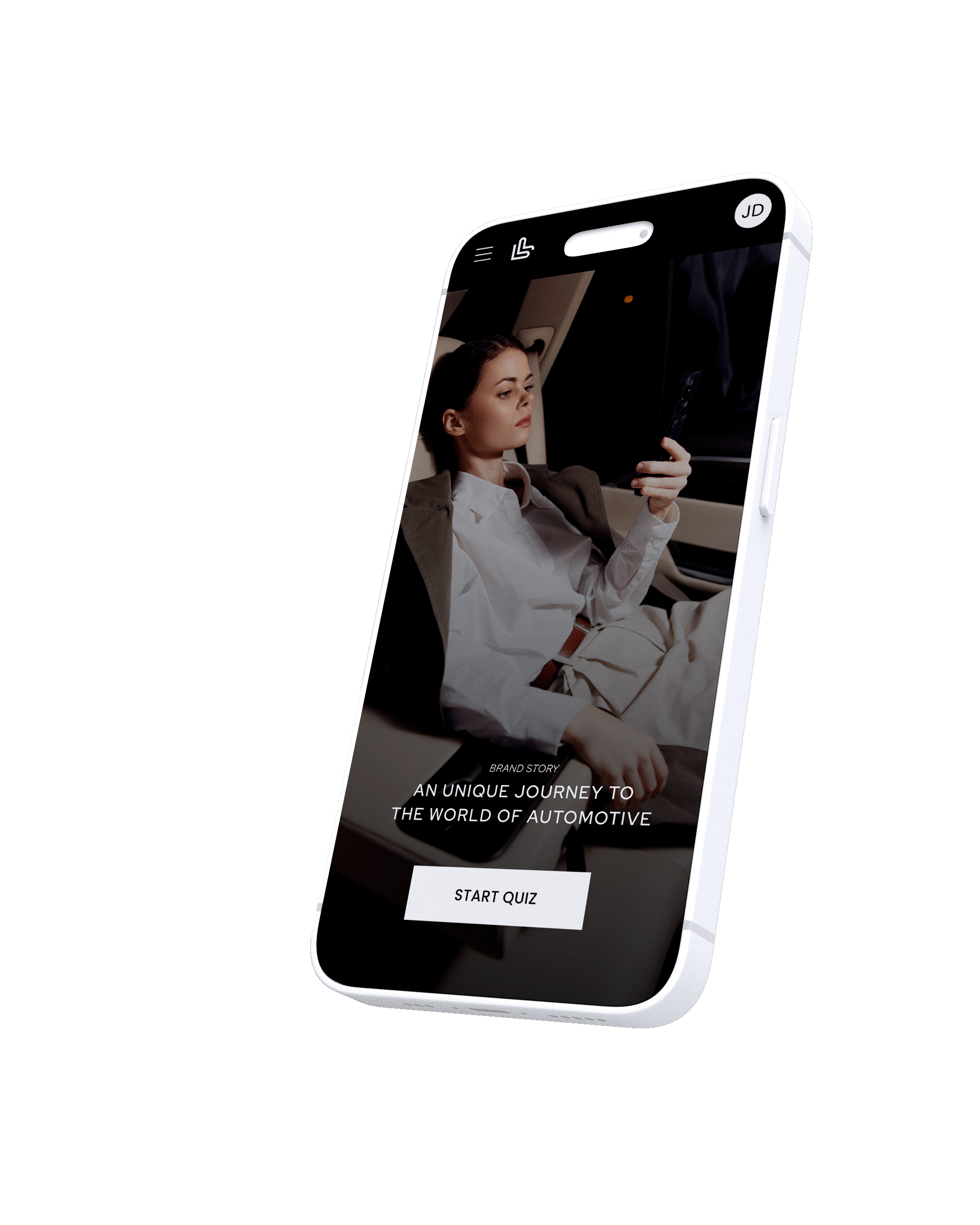
The business impact: faster onboarding, one brand story, higher conversion
When automotive brands turn technical knowledge into confident selling, the effect is commercial as well as cultural. New dealers and staff reach the floor sooner, already carrying the right story.
The same narrative and brand experience hold across markets, even with high turnover. Teams stop reciting specs and start recommending with confidence so the brand is delivered, not just described.
In automotive, knowledge alone is not enough. Confidence and a distinctive brand experience close the sale. A hybrid AI-powered, retail-first LMS makes that scalable, with humans still leading the story.
In short:
- Faster onboarding: new staff arrive on the floor with the right story, sooner.
- Consistent storytelling: the same brand experience across dealers and markets, despite turnover.
- Higher conversion: confident recommendations instead of spec recitals.
- Product expertise becomes part of the customer experience.
- Humans keep the lead; AI makes the approach scalable.
Conclusion: AI-Powered LMS for Automotive: Faster Onboarding, Consistent Brand Storytelling, Higher Conversion
In automotive, knowledge alone is not enough.
Confidence and a distinctive brand experience are what close the sale. Brands that succeed do not let AI write the story for them.
They keep humans in the lead on tone, narrative, and experience and use AI to structure, accelerate, translate, visualise, and personalise at scale.
The result is faster onboarding, consistent storytelling across every dealer and market, and teams that inspire customers instead of reciting specifications. A hybrid, retail-first LMS makes that transformation possible without flattening the brand into a generic voice.
Key takeaways:
- Knowledge is the starting point; confidence and brand experience close the sale.
- The new LMS generation is hybrid: humans lead, AI assists.
- Speed only creates value when the story stays on-brand.
- One source of truth, delivered consistently, turns training into conversion.