

Clienteling in Luxury Retail Starts with Culture, Not Software
How luxury brands turn customer knowledge, store rituals, and staff training into stronger relationships and measurable retail growth
Luxury clienteling is often presented as a technology topic, but that is only half true. The stronger view, and the more useful one, is that clienteling is a relationship discipline first and a digital system second. Bayretail describes its platform as a way to connect stores, clients, and brands through one clienteling solution for luxury service.
That matters because luxury differentiation no longer lives in product alone. Product remains essential, of course, but in categories where craftsmanship, heritage, exclusivity, and service are already expected, the real separation often happens in the quality of the relationship. Bayretail’s own luxury positioning emphasizes personalized recommendations, real time communication, and brand loyalty built through customer data and human connection, while The Learning Lab’s luxury training content stresses that training should reflect brand DNA and help teams deliver brand specific excellence rather than generic retail behavior.
Successful clienteling depends on a whole operating model. Teams need to know customers better. Communication needs to feel personalized and timely. Store associates need a clear method for capturing information naturally. Headquarters needs qualitative KPIs, not only raw volume. And none of this works unless training, brand culture, and technology reinforce each other instead of pulling in different directions.
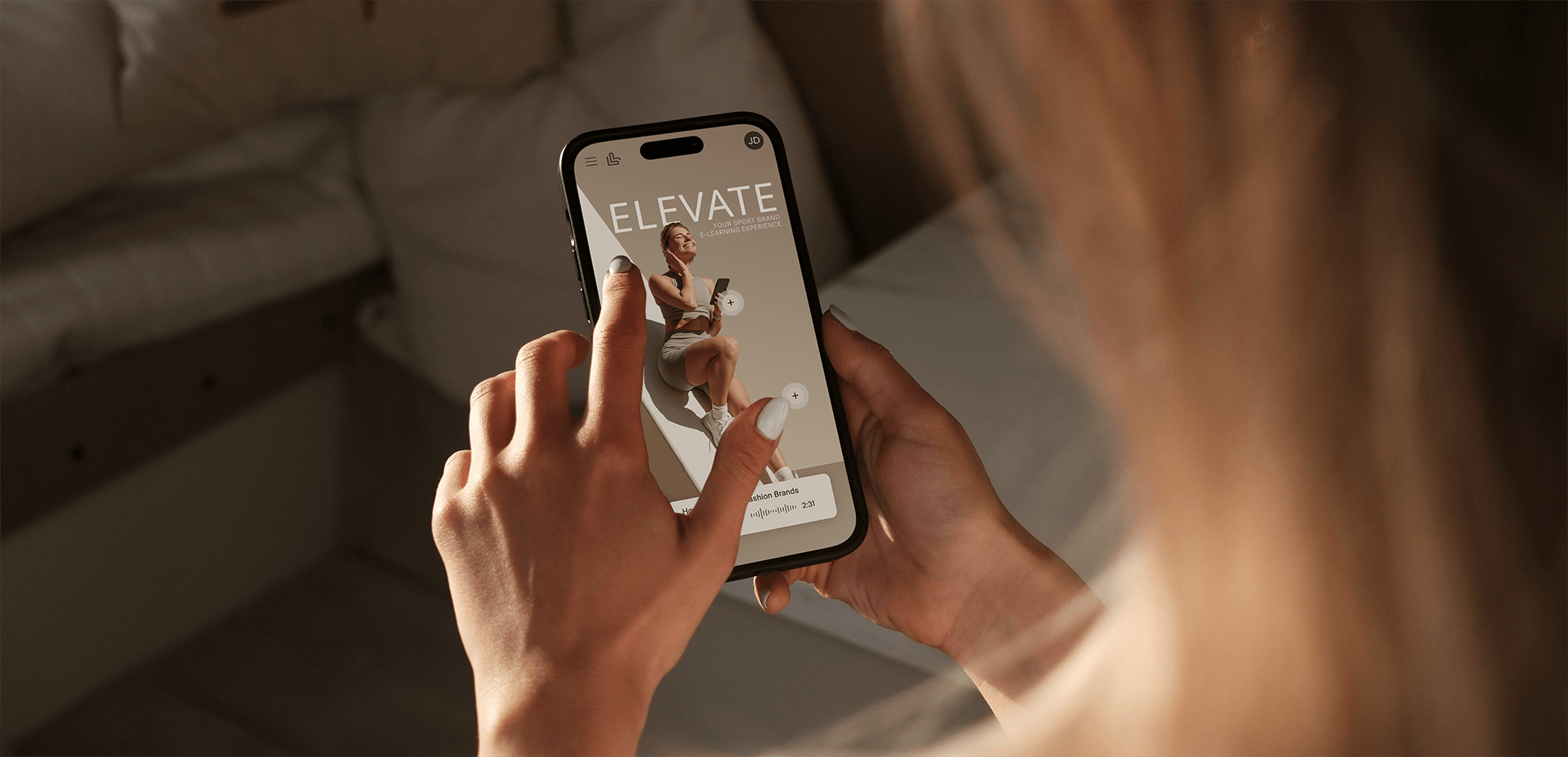
That is exactly where the link with The Learning Lab becomes meaningful. A clienteling tool can structure interactions, but a learning platform makes those interactions repeatable. The Learning Lab is designed for fashion and luxury brands with branded environments, local voice, peer led learning, and training formats that support clienteling and brand culture in store. In luxury retail, that is the real equation. The tool helps teams act. The learning environment helps them act well, consistently, and in a way that feels unmistakably on brand.
In luxury retail, product is the entry ticket, but relationship is the differentiator.
Strong clienteling stands on three pillars, customer knowledge, personalization, and anticipation.
Consent and data capture work better when the value exchange is clear and human.
The most powerful clienteling systems support the associate in the flow of the sale.
Headquarters needs qualitative clienteling KPIs, not only sales totals.
Endless aisle and assisted selling protect revenue that stores would otherwise lose.
Training is what turns clienteling from a tool into a culture.
The Learning Lab is the right LMS environment to make luxury clienteling scalable.
Luxury differentiation now depends on relationship quality
In premium retail, the product must be excellent, but excellence alone rarely creates lasting preference.
One of the sharpest ideas in the interview is that luxury brands need great products, yet the real difference often comes from the savoir faire, the brand story, and the quality of the relationship built around them. That fits well with Bayretail’s own positioning, which says luxury retail is not only about transactions but about personalized, engaging shopping experiences and enduring brand connections. It also fits with The Learning Lab’s luxury training approach, which argues that teams must be immersed in the brand universe, client profiles, and retail context in order to deliver brand specific excellence rather than generic service.
This is a useful correction to the common mistake of treating clienteling as a high end CRM routine. Luxury retail is not only trying to remember a name or a purchase history. It is trying to create a feeling that the brand recognizes the customer as an individual, understands preferences, and knows how to continue the relationship with taste and relevance. Bayretail’s high end retail content describes recommendations that feel handpicked and communications that deepen the bond between brand and customer, which is exactly the kind of emotional precision luxury brands want.
Product quality is expected in luxury, so relationship quality becomes more decisive.
Heritage, storytelling, and brand culture make the client experience more distinctive.
Clienteling matters because it gives the relationship continuity between visits and across channels.
Training matters because the brand story has to be delivered with the right tone and depth.
Luxury brands do not win only by being desirable. They win by making the customer feel known, remembered, and understood in a way that no generic retail interaction can match.
Great clienteling rests on three practical pillars
A simple structure that deserves to be kept because it is clear and operational.
The first pillar is customer knowledge. Teams need to know not just what the customer bought, but when the relationship started, what interactions have already happened, and what preferences are visible across time. Bayretail’s clienteling positioning supports exactly this logic by giving associates a full view of customers, purchase related context, and real time workflows that help personalize engagement across retail touchpoints.
The second pillar is personalization. Communication has to feel genuinely tailored, not mass distributed under the appearance of intimacy. Bayretail emphasizes recommendations based on customer data and behavior, while The Learning Lab highlights that luxury learning should be brand specific, local, and context aware, which is the training equivalent of the same principle. The third pillar is anticipation. Once a brand understands preferences well enough, it can suggest the next relevant product, invite the client at the right moment, or prepare a more relevant in store interaction before the customer asks.
Customer knowledge gives the associate context for the relationship.
Personalization makes communication feel precise instead of automated.
Anticipation turns memory into service.
All three pillars depend on disciplined store behavior, not only software capability.
Clienteling becomes powerful when it moves from recorded information to thoughtful action. That is what transforms data into service.
Consent works when the value exchange is obvious
The best luxury data capture is not aggressive and not vague. It is useful, well timed, and clearly explained.
Real time communication, tailored insights, and exclusive invitations are presented as a way to strengthen loyalty and create a more personal connection. In other words, the consent moment works better when the associate can explain the benefit in human terms, not only in legal terms.
That does not reduce the importance of compliance. Bayretail’s case materials and platform descriptions make clear that the system is built around structured customer interaction and identifiable profiles. What matters operationally is how the moment is handled. Asking for an email with no context feels transactional. Explaining that the customer can receive invitations, product news, appointment support, or highly relevant follow up makes the relationship feel reciprocal.
Consent is easier when the associate explains the practical value clearly.
Luxury customers often welcome communication when it feels selective and relevant.
Data capture should feel like the start of a better service promise, not a forced admin step.
The quality of the explanation is a training issue as much as a legal issue.
The relationship begins at the moment of trust. If consent is handled with clarity and elegance, the clienteling system feels helpful from the first interaction.

The strongest clienteling tools support the sale in real time
The real power of a luxury clienteling platform is not the database. It is what the associate can do with it during the live interaction.
Bayretail’s public material repeatedly points to a mobile first store environment where associates can check product availability, build wishlists, capture preferences, communicate in real time, and continue the experience beyond the boutique. That is important because clienteling only becomes operational when it is present inside the selling moment rather than sitting in a separate system used after the fact.
Preferences are captured during the relationship, not only before or after. Size, fit, occasion, prior conversations, and follow up intent all become useful when they can be added naturally while the interaction is still fresh. The timeline logic matters too. Bayretail’s Lanvin case describes mobile applications that give associates a full view of customers and allow more personalized shopping experiences across retail platforms.
Mobile access keeps clienteling close to the actual selling moment.
Preference capture matters most when it happens naturally inside the interaction.
Timelines are useful because they preserve the continuity of the relationship.
A good store app helps the associate feel more prepared, not more burdened.
The best clienteling platform does not interrupt the luxury experience. It strengthens the associate’s memory, timing, and confidence while staying almost invisible to the client.
Headquarters needs better KPIs than volume alone
Mature clienteling programs are measured not only by what was sent, but by the quality and completeness of the relationship data behind the action.
Qualitative indicators such as profile completion, interaction history quality, and store level follow through matter just as much. That logic aligns with Bayretail’s case study language, which highlights a full view of customers, engagement across platforms, and the ability to connect actions with outcomes in omnichannel customer experience.
This is also where clienteling becomes more strategic: Profile completion rates, outreach performance, timeline visibility, and RFM style thinking around recency, frequency, and monetary value. Those are useful because they move the conversation away from vague ideas about relationships and toward visible customer quality signals. Broader retail KPI guidance also supports the importance of basket size and customer level metrics because they are closely tied to profitability and repeat behavior.
Good clienteling needs customer quality KPIs, not only activity KPIs.
Profile completion is powerful because incomplete knowledge limits personalization.
Recency, frequency, and monetary logic helps teams identify different customer priorities.
Retail leaders should connect clienteling actions to traffic, conversion, and basket outcomes.
What gets measured shapes what gets repeated. If brands only measure volume, they get noise. If they measure relationship quality, they get stronger clienteling.
Endless aisle protects revenue and protects the relationship
One of the most underrated clienteling benefits is not losing the sale when the product is not physically present.
Bayretail’s store app content explicitly highlights product availability across stores and warehouses, smart alternatives when an item is unavailable, assisted sales, and home delivery from the store environment. That matters because in luxury retail, a stock out should not automatically become a dead end. If the relationship is strong and the system is connected, the associate can keep the momentum alive.
Endless aisle and assisted selling are not only logistics features. They are relationship protection features. The customer does not hear a simple no. The customer hears that the brand still knows how to serve them. Bayretail’s app store description also frames the platform as unified commerce that helps brands deliver real customer experience and sell more in store, online, and beyond.
Stock visibility reduces lost sales when local inventory is missing.
Assisted selling keeps the associate in control of the experience.
Home delivery from the store context protects convenience without losing the boutique relationship.
Endless aisle is commercially valuable because it turns friction into continuity.
Luxury service is often judged in the moment where something is not available. A smart endless aisle flow shows whether the brand can still deliver care when the easy sale is gone.

Training is what turns clienteling into culture
Clienteling does not scale through software installation alone. It scales when store teams learn how to use judgment, timing, and brand tone inside the system.
Clienteling is not only a technology project. It is also about learning and culture. That line is deeply consistent with The Learning Lab’s point of view, especially in luxury content that argues for brand immersion before design, peer to peer sharing, clienteling techniques, and premium learning experiences that reflect the brand’s visual and cultural standards.
Bayretail’s own approach also supports this. The company presents clienteling as a way for associates to create profound connections with customers through personalized engagement, appointment support, real time communication, and cross channel visibility. Those capabilities only become consistent when headquarters, store managers, and associates are trained on how to collect information naturally, when to register it, how to follow up, and how to keep the interaction premium rather than mechanical.
Training helps associates know what to capture, when to capture it, and how to use it well.
Managers need training too because clienteling culture depends on coaching and follow through.
Premium brands need premium learning formats that reflect their own standards.
Peer led learning is especially useful because strong client advisors often carry the most practical expertise.
Technology can enable the process, but culture determines the quality. Without training, clienteling remains a feature. With training, it becomes a habit and then a brand advantage.
The Learning Lab is the right LMS environment for luxury clienteling
A luxury clienteling strategy needs a learning environment that respects brand image, store reality, and international consistency.
The Learning Lab is a strong fit here because it is positioned specifically for fashion and luxury brands, with a retail first approach that supports clienteling techniques, premium design standards, peer learning, and global consistency with local voice. That is exactly the kind of environment luxury brands need when they want to align boutiques, regions, and headquarters around one relationship standard without flattening the brand personality.
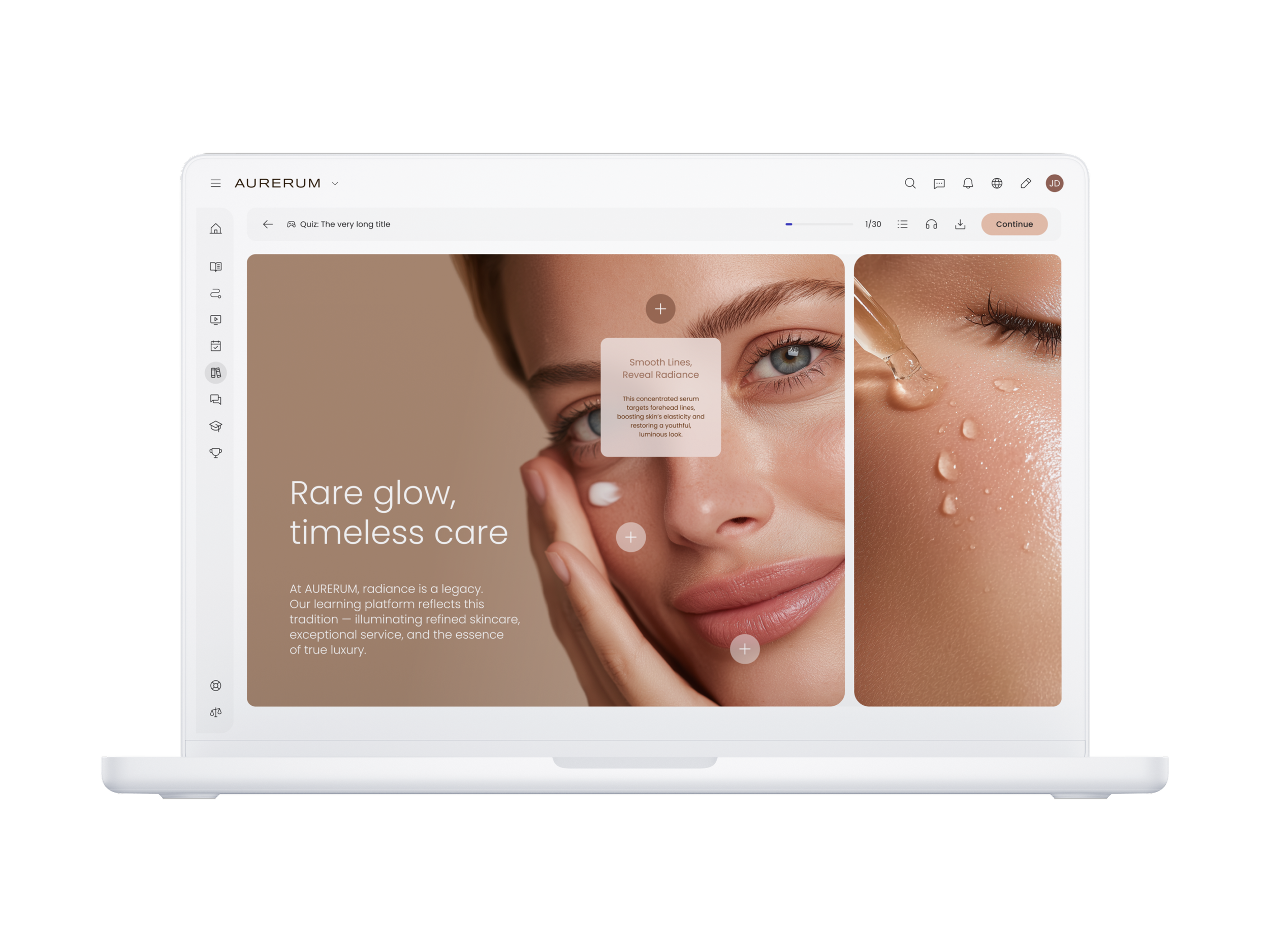
It also matters that The Learning Lab is not presented as a generic training portal. Its broader platform story emphasizes branded learning experiences, dynamic learning pathways, and a structure designed for high end retail expectations. In practical terms, that means luxury brands can train teams not only on product and service, but on how to use clienteling as part of brand culture, how to handle customer data with confidence, how to personalize follow up, and how to make technology feel elegant rather than intrusive.
A branded LMS helps luxury learning feel coherent with the maison’s image.
Retail first learning is important because boutique teams learn in real operating conditions.
Clienteling training needs global structure with local nuance.
The Learning Lab can help turn a clienteling rollout into a living capability rather than a one time launch.
Luxury brands do not just need a clienteling platform. They need a learning environment that teaches people how to make clienteling feel natural, personal, and fully aligned with the brand. That is why The Learning Lab is such a strong match.
Clienteling in luxury retail is not mainly a software story
It is a relationship story supported by software.
Product remains necessary, but what truly differentiates one maison from another is often the quality of the connection it creates around the product, the memory it keeps, the personalization it delivers, and the confidence with which store teams continue the relationship over time. Bayretail’s own materials reinforce that view by positioning the platform around personalized engagement, omnichannel visibility, real time communication, and long term brand loyalty rather than simple transaction management.
Brands need strong customer knowledge. They need personalization that feels real. They need anticipation that turns preference data into service. They need elegant consent moments. They need store tools that support the live sale. They need qualitative KPIs, profile quality, and relationship visibility. They need endless aisle capability so stock gaps do not break the client bond. Most of all, they need training, because clienteling only becomes powerful when teams understand the method and repeat it with the right tone every day.
That is where The Learning Lab becomes the perfect pick for the LMS environment. Its luxury and fashion positioning, retail first logic, brand immersion philosophy, and support for peer learning and clienteling techniques make it the right place to scale this type of behavior across boutiques and markets. Bayretail can give luxury brands the operational engine for clienteling. The Learning Lab can give them the cultural engine that makes the system work beautifully in real life.
