

7 Tips to Create Engaging Mobile Learning for Fashion Retail Teams
Designing Mobile Learning That Engages Fashion Retail Teams
Designing mobile learning that truly engages fashion retail teams means aligning training with the rhythm, aesthetics, and realities of the shop floor.
It’s not about adapting desktop content to smaller screens, but about creating short, visually compelling, and highly practical experiences that can be accessed in the flow of work.
Effective mobile learning in fashion blends strong brand storytelling with real-life scenarios how to style a look, engage a client, or narrate product craftsmanship delivered through intuitive, swipe-based interactions.
When done right, it becomes a daily performance tool: fast, relevant, and fully on-brand, supporting teams exactly when they need it, without disrupting the client experience.
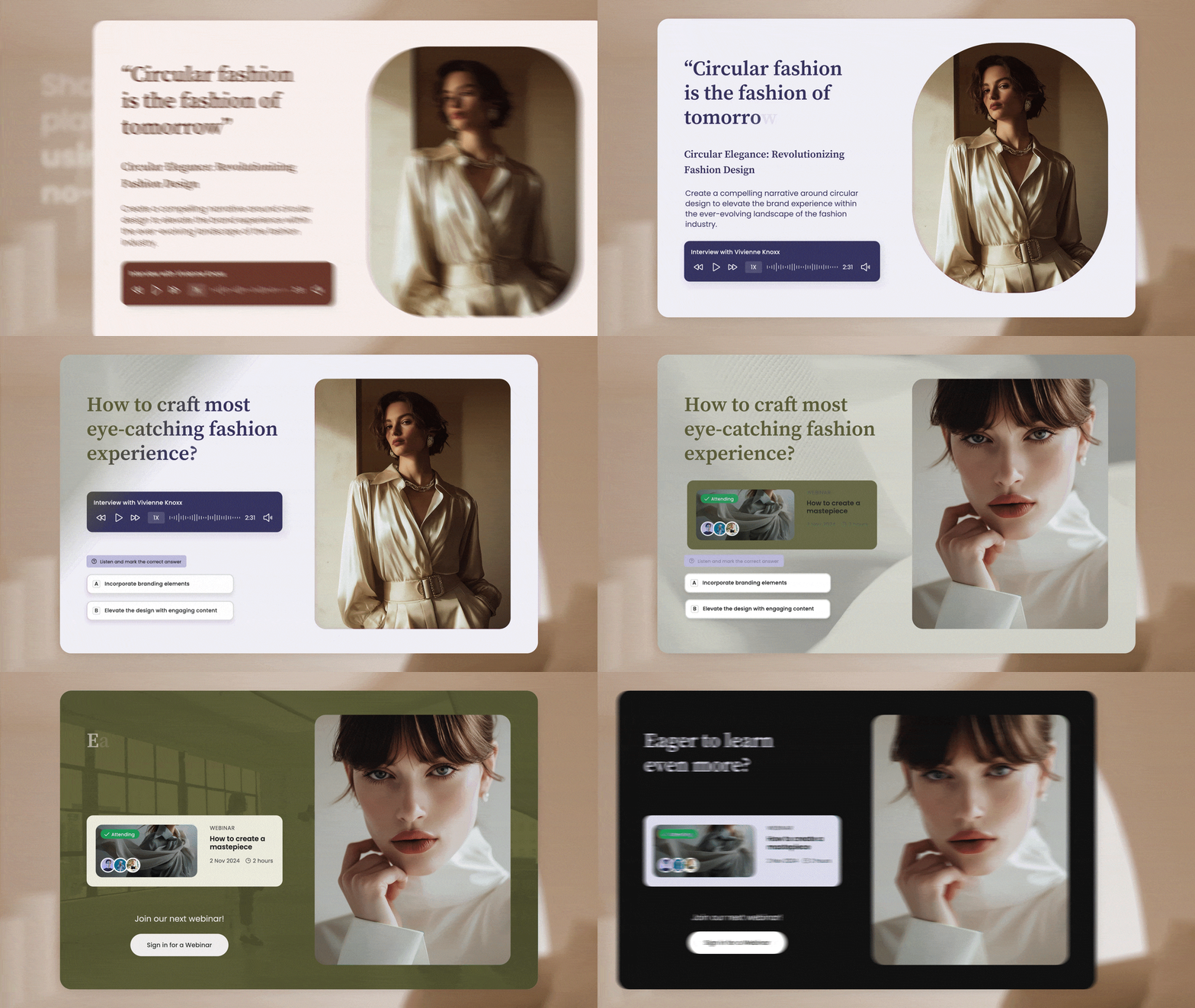
1. InstaLearning: Micro-Moments That Drive Fashion Retail Performance
In fast-paced retail environments, attention is short and timing is everything.
InstaLearning transforms training into ultra-short, high-impact learning moments designed to fit seamlessly into the day-to-day of fashion teams.
Delivered in 30 seconds to a few minutes, these swipeable, mobile-first modules focus on one key message—whether it’s a product highlight, a styling tip, or a service gesture.
Fully aligned with the brand’s visual identity, InstaLearning turns training into a continuous flow of inspiration and reinforcement, keeping teams engaged, informed, and ready to perform at any moment.
Key Benefits of InstaLearning:
Ultra-Short Format (30 sec – 3 min):
Perfect for quick consumption between client interactions.Single Focus, Maximum Impact:
One idea, one skill, one message per module for better retention.Mobile-First & Swipeable:
Designed for intuitive use directly on the shop floor.Always On-Brand:
Visual storytelling aligned with the brand’s aesthetic and tone.Just-in-Time Learning:
Access key information exactly when it’s needed.Continuous Content Flow:
Regular “drops” to keep engagement high and content fresh.Boosts Retention & Engagement:
Short formats increase completion rates and repeat usage.Supports Daily Performance:
Helps teams stay sharp, confident, and client-ready at all times.Scalable Across Markets:
Easily deployed globally with fast updates and localization.
2. Visual-First, Always On-Brand: Turning Training into a True Brand Experience
In fashion retail, visuals are not just support they are the language of the brand.
Training should reflect this same level of aesthetic excellence and storytelling.
A visual-first approach ensures that every learning experience feels like an extension of the brand universe, using imagery, video, typography, and editorial layouts that mirror campaigns, lookbooks, and in-store identity.
When training looks and feels like the brand, it creates emotional engagement, reinforces positioning, and transforms learning from a functional tool into an immersive brand experience.
Key Principles of a Visual-First, On-Brand Approach:
Training as a Brand Touchpoint:
Treat learning as an extension of the brand experience, not a separate tool.High-Quality Imagery & Video:
Use campaign visuals, product shoots, and rich media to elevate engagement.Editorial Layouts:
Design content like a magazine or lookbook to create a premium feel.Consistent Visual Identity:
Respect brand guidelines—colors, fonts, tone, and visual codes.Storytelling Through Visuals:
Let imagery and video carry the narrative, not just text.Emotional Engagement:
Create desire and connection, not just knowledge transfer.Differentiation Across Brands:
Adapt the visual experience for each Maison or collection.Elevated Perception of Training:
When it looks premium, it feels valuable and worth engaging with.
3. Creative Authoring Tool: Empowering Brand-Led Learning Experiences
In fashion retail, content creation must be as refined as the brand itself.
A powerful creative authoring tool enables teams to design fully branded, editorial-quality learning experiences directly within the LMS without relying on external tools or technical skills.
By combining flexible layouts, drag-and-drop components, and device-specific formatting, it allows content creators to craft visually rich, mobile-first training that respects every detail of the brand identity.
The result is faster production, stronger consistency, and learning experiences that feel as premium as the products they represent.
Key Benefits of a Creative Authoring Tool:
Full Brand Control:
Create content that perfectly reflects brand guidelines—fonts, colors, layouts, and tone.Editorial-Quality Design:
Build training that feels like a lookbook or campaign, not a traditional course.Drag-and-Drop Simplicity:
Empower teams to create without technical dependency.Flexible Layouts:
Freedom to design unique, non-template-driven experiences.Mobile-First Formatting:
Optimize content specifically for mobile, tablet, and desktop.Faster Content Production:
Reduce time-to-launch while maintaining high creative standards.Consistency at Scale:
Ensure global alignment across markets and teams.No Compromise on Experience:
Combine speed, creativity, and brand integrity in one environment.Seamless Updates:
Easily adapt content for new collections, campaigns, or market needs.

4. Scenario-Based Learning: Training Real Client Moments
In fashion retail, performance is defined by how teams interact with clients in real situations.
Scenario-based learning brings training to life by recreating authentic client interactions styling advice, handling objections, storytelling around products, or managing difficult conversations.
Instead of passively consuming information, learners actively engage, make decisions, and experience consequences in a safe environment. This approach builds confidence, sharpens instincts, and ensures that knowledge translates directly into action on the shop floor.
Key Benefits of Scenario-Based Learning:
Real-Life Application:
Mirror actual client situations to make training directly relevant.Active Learning:
Learners make decisions, not just absorb content.Improved Retention:
Experiential formats increase memory and understanding.Confidence Building:
Practice before facing real clients reduces hesitation.Stronger Storytelling Skills:
Train teams to narrate product craftsmanship and brand heritage.Handling Objections Effectively:
Prepare teams for challenging client interactions.Consistent Client Experience:
Align behaviors across stores and markets.Engaging & Immersive:
Interactive formats increase motivation and completion rates.Safe Environment to Learn:
Make mistakes without real-world consequences.
5. Mobile-Native Interaction: Designing for the Way Retail Teams Actually Use Their Phones
In fashion retail, mobile is not a secondary channel it’s the primary touchpoint for learning.
To truly engage teams, interactions must feel instinctive, fluid, and aligned with everyday mobile behavior.
Designing mobile-native means embracing gestures like swipe, tap, and scroll as core mechanics, rather than adapting desktop experiences to smaller screens. This creates a seamless, intuitive experience that reduces friction, accelerates engagement, and allows learning to happen naturally in the flow of work.
Key Principles of Mobile-Native Interaction:
Gesture-Driven Experience:
Leverage swipe, tap, and scroll as primary interactions.Designed for Thumbs, Not Mice:
Optimize layouts and buttons for one-handed use on the shop floor.Instant Access & Navigation:
Reduce clicks and loading time to access content in seconds.Short Interaction Cycles:
Keep actions quick and fluid to match fast retail environments.Immersive Flow:
Create continuous, scrollable experiences rather than fragmented pages.No Desktop Legacy:
Avoid heavy menus, small buttons, or complex navigation structures.Engagement Through Simplicity:
The easier it feels, the more it’s used.Seamless Across Devices:
Ensure consistency while prioritizing mobile-first design logic.Supports Learning in Motion:
Perfect for quick access between client interactions.
6. Short Video as a Core Format: Bringing Fashion Training to Life
In fashion retail, storytelling is visual, emotional, and experiential—making video the most powerful format for training.
Short-form video allows brands to showcase product details, service rituals, and expert techniques in a dynamic and engaging way that static content simply cannot match.
By focusing on concise, high-quality clips, teams can quickly absorb key messages, see best practices in action, and replicate them on the shop floor. When integrated as a core format, video transforms training into a living, breathing brand experience.
Key Benefits of Short Video in Training:
Visual Storytelling:
Showcase product craftsmanship, styling, and brand narratives in action.Higher Engagement:
Video captures attention more effectively than text or slides.Faster Understanding:
Complex concepts are easier to grasp when seen, not read.Perfect for Mobile:
Short clips fit naturally into on-the-go learning moments.Demonstration of Best Practices:
Show exactly how to engage clients, present products, or perform rituals.Expert-Led Content:
Bring in brand ambassadors, stylists, or managers for credibility.Increased Retention:
Learners remember visual and emotional content more easily.Reusable & Scalable:
Easily deployed across markets and updated when needed.Aligned with Brand Aesthetics:
Maintain a premium, on-brand visual experience throughout training.

7. Just-in-Time Access: Delivering Knowledge Exactly When It Matters
In fashion retail, timing is everything. Teams don’t have the luxury to search through long courses while assisting a client they need instant access to the right information at the right moment.
Just-in-time learning ensures that content is easily searchable, quickly accessible, and directly usable on the shop floor.
Whether it’s a product detail, a styling tip, or a key selling argument, learners can find what they need in seconds, turning the LMS into a real-time performance tool rather than a static training library.
Key Benefits of Just-in-Time Access:
Instant Searchability:
Find relevant content in seconds with intuitive, keyword-based search.Accessible on the Shop Floor:
Designed for real-time use during client interactions.Micro-Content Ready:
Short, focused modules that answer specific questions quickly.Reduces Friction:
No need to navigate complex structures or long courses.Supports Sales Performance:
Provides immediate answers to improve client engagement and conversion.Contextual Relevance:
Surface the right content based on role, product, or situation.Always Up-to-Date:
Ensure teams access the latest information and collections.Drives Daily Usage:
Transforms the LMS into a go-to tool, not just a training platform.Empowers Autonomy:
Teams can find answers independently, without waiting for support.
Why The Learning Lab LMS Is the Best Platform for Designing Mobile Learning in Fashion Retail
Designing mobile learning for fashion retail is not just about accessibility it’s about creating a seamless, branded, and performance-driven experience that fits the rhythm of the shop floor.
This is precisely where The Learning Lab stands apart. Unlike generic LMS platforms, it is purpose-built for retail and luxury environments, combining mobile-first design, premium branding, and experiential learning into one ecosystem.
What Makes It Truly Different
1. Mobile-First by Design (Not an Afterthought)
The platform is designed specifically for on-the-go usage, enabling teams to access training anytime, anywhere—whether between client interactions or on the shop floor.
👉 This aligns perfectly with real retail behavior, where time is fragmented and speed matters.
2. Fully Branded Experience (Critical for Fashion)
Fashion is about identity, and The Learning Lab allows full white-label customization, turning the LMS into a true extension of the brand.
👉 Training doesn’t feel like software—it feels like the Maison itself.
3. Creative Authoring Tool (A Game Changer)
Its no-code authoring tool enables teams to create editorial-quality, visually rich content without technical skills.
👉 This is essential for mobile learning, where design quality directly impacts engagement.
4. Video-First & Visual Learning DNA
The Learning Lab is built around video and multimedia—perfect for fashion storytelling, styling, and product education.
👉 Mobile + video = the most effective combination for retail training.
5. Built for Real Retail Use Cases
Unlike generic LMS platforms, it is retail-first, designed specifically for:
Product storytelling
Client interaction scenarios
Sales performance on the floor
👉 It’s not just learning—it’s sales enablement.
6. Microlearning & InstaLearning Ready
The platform supports short, mobile-native formats that fit perfectly into daily retail workflows.
👉 Ideal for “learn → apply immediately” moments.
7. Interactive & Experiential Learning
With interactive videos, quizzes, and simulations, learning becomes active—not passive.
👉 This drives higher engagement and retention.
8. Global Scalability with AI & Translation
Built-in AI and multilingual capabilities allow brands to scale training across markets instantly.
👉 Critical for global fashion brands.
The Real Strategic Advantage
The Learning Lab:
✅ Designs mobile-first from the ground up
✅ Focuses on brand experience + performance
✅ Creates emotion, engagement, and real impact on sales
Bottom Line
The Learning Lab LMS is the best for mobile learning in fashion retail because it doesn’t treat learning as content delivery—it treats it as a brand experience and performance tool, fully aligned with how retail teams actually work.
👉 It’s where design, storytelling, and mobile learning converge to drive real business impact.