

The Future of Luxury Retail LMS Platforms
From Product Knowledge to Emotional Selling: The Evolution of Luxury Retail Learning
Luxury retail training is no longer limited to memorizing product specifications, collections, or technical features.
While product knowledge remains essential, the true differentiator in modern luxury retail increasingly lies in emotional selling, storytelling, personalization, and the ability to create meaningful client relationships.
Today’s luxury advisors are expected not only to inform clients, but to embody the brand universe, understand emotions, anticipate desires, and create memorable experiences that build long-term loyalty and emotional connection.
As a result, luxury retail learning is evolving toward far more experiential and human-centered training approaches. Brands are increasingly integrating scenario-based learning, interactive storytelling, role-play simulations, clienteling journeys, and emotional intelligence development into their learning ecosystems.
Training now focuses on helping retail teams develop:
Emotional connection and empathy
Active listening and personalization
Luxury storytelling techniques
VIP clienteling behaviors
Confidence and conversational agility
Relationship-building and client memory
Service rituals and experiential selling
In this new model, the objective is not simply to teach what a product is, but to teach how the product should be emotionally experienced, narrated, and connected to the client’s aspirations and lifestyle.
Luxury retail learning is therefore becoming less transactional and more experiential — transforming advisors into true brand ambassadors capable of delivering emotion, culture, and unforgettable client experiences.
Human-Led AI: Why the Future of LMS Platforms Must Be Hybrid
AI has the power to significantly accelerate and enhance modern learning ecosystems, but its role within an LMS platform should remain that of an intelligent assistant not a replacement for human expertise, creativity, and brand control.
The most effective learning strategies today are built around hybrid workflows where AI supports operational efficiency, adaptive learning, data analysis, translation, recommendations, and content scalability, while humans remain fully in control of the learning experience, tone of voice, storytelling, and pedagogical quality.
AI can help analyze learner behaviors, identify knowledge gaps, recommend personalized content, and dynamically generate adaptive learning paths tailored to each learner’s profile and performance. However, when it comes to emotional engagement, brand culture, creativity, luxury storytelling, and content validation, human direction remains essential.
This balance is increasingly important as concerns around over-automation continue to grow. Research from Oxford University Press revealed that 62% of students believe AI negatively impacts their learning and skill development, while 12% reported that it reduces creative thinking and problem-solving abilities. These findings highlight the importance of using AI carefully and responsibly within learning environments.
The future of learning is therefore not fully AI-generated education, but rather human-led experiences enhanced by AI capabilities where technology supports scale and efficiency, while humans preserve emotion, creativity, critical thinking, and authentic brand identity.
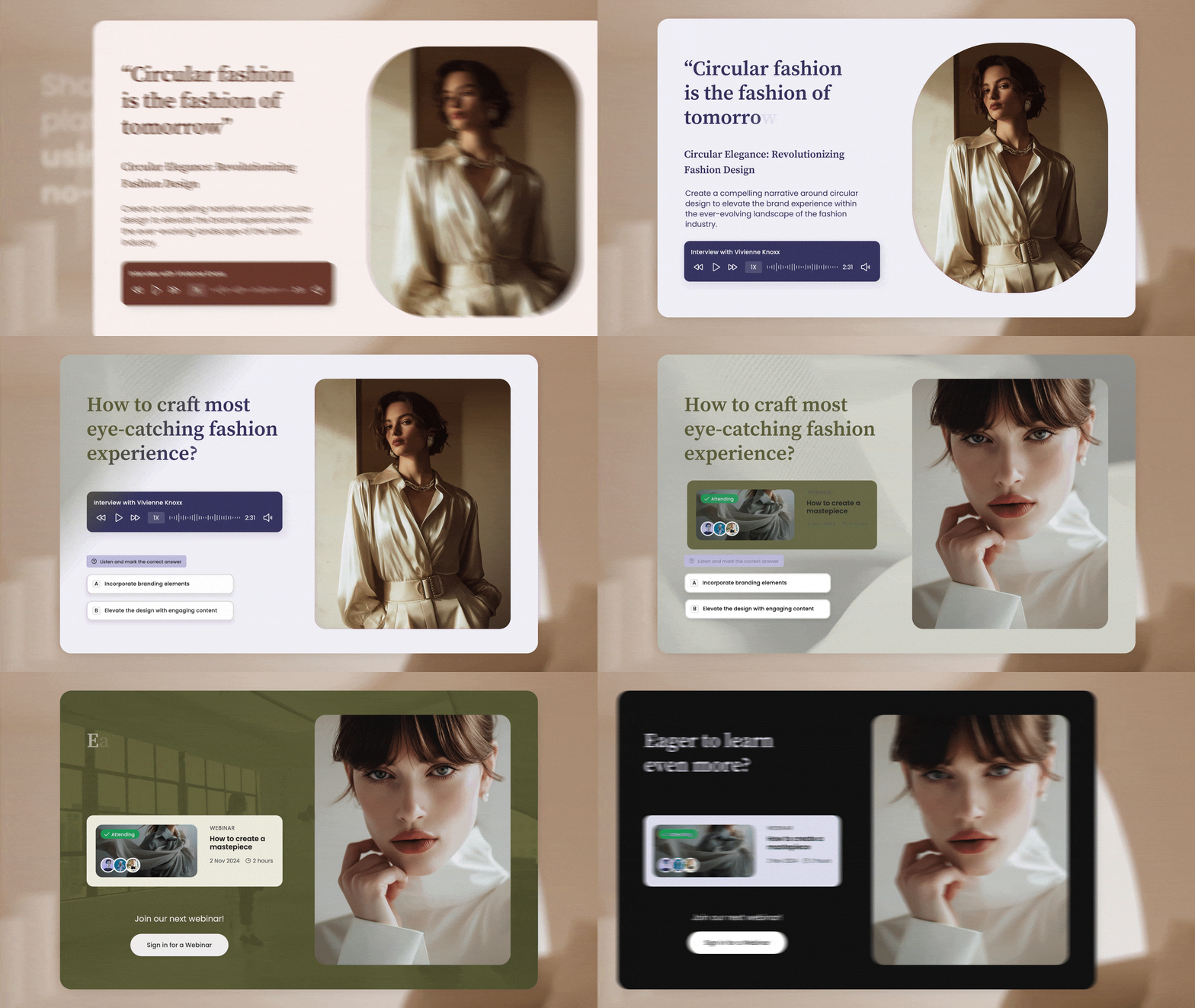
The LMS as a Creative Ecosystem: Where Content, Workflow & Brand Experience Come Together
Modern LMS platforms can no longer function as simple repositories for PDFs, PowerPoint files, or static corporate courses.
The era of disconnected folders, Chrome files, and fragmented content production workflows is coming to an end.
Today, the LMS must evolve into a centralized creative ecosystem where learning content, collaboration, workflow management, brand experience, and learner engagement all come together within one unified environment.
The new generation of LMS platforms must empower teams to create, manage, localize, adapt, and deploy content directly inside the platform through powerful integrated authoring tools and collaborative workflows.
This means combining project management capabilities, automated translation systems, branded slide galleries, AI-assisted content creation, adaptive learning logic, and scalable publishing workflows into one seamless experience.
At the same time, learning experiences themselves must become far more immersive, interactive, and editorial in nature. Brands increasingly need tools that allow them to create rich digital learning environments featuring advanced interactions such as:
Interactive videos and video hotspots
Scenario branching journeys
Carousels and swipeable storytelling experiences
Flashcards and microlearning modules
Video quizzes and gamified interactions
Editorial layouts and branded storytelling components
Mobile-first immersive experiences
Community and collaborative learning features
The objective is no longer simply to “deliver training,” but to create a fully branded digital learning experience that reflects the identity, culture, and emotional universe of the brand itself.
In this new model, the LMS becomes not only a learning platform, but also a production studio, a creative hub, a workflow engine, and a strategic brand experience tool enabling organisations to move faster, collaborate better, and create significantly more engaging learning journeys at scale.
From Social Media to InstaLearning: Rethinking Learning Formats for Modern Retail Teams
Modern learning platforms have a tremendous amount to learn from social media behaviors and digital content consumption habits.
Traditional macro-learning formats long, static training modules are progressively evolving toward more agile, mobile-first, and highly consumable learning experiences inspired by the way people naturally interact with content every day.
After the rise of microlearning, a new generation of formats is emerging: InstaLearning. These ultra-short, highly visual, and instantly accessible learning capsules are designed to deliver quick but memorable bursts of knowledge directly adapted to the fast pace of retail environments.
Inspired by social media interactions and dopamine-driven engagement mechanics, InstaLearning formats allow brands to push concise and impactful content around:
Product knowledge
Collection launches
Sales techniques
Clienteling tips
Service rituals
Styling recommendations
Brand storytelling
Operational reminders
The objective is not necessarily to replace deeper learning journeys, but to create continuous learning reflexes through very short and emotionally engaging touchpoints. Each capsule can then naturally redirect learners toward more complete training sessions, certifications, or immersive modules when deeper exploration is needed.
This approach is particularly powerful for luxury retail teams, where advisors often have only a few minutes between client interactions. Learning therefore becomes:
Instant
Mobile-first
Frictionless
Visual
Easy to consume
Highly memorable
InstaLearning transforms training into an everyday habit integrated directly into the rhythm of boutique life creating continuous engagement instead of isolated learning moments.
Why Luxury Retail Training Must Become a Brand Experience, Not a Corporate Process
Luxury brands are increasingly rethinking training not as a corporate obligation, but as an extension of the Maison itself.
In an industry driven by emotion, desirability, craftsmanship, and storytelling, traditional corporate LMS environments often fail to reflect the premium universe brands work so carefully to build for their clients and retail teams.
Modern luxury retail training is therefore evolving toward fully immersive brand ecosystems where every detail from the interface design and typography to the storytelling formats, animations, videos, and interactions becomes part of the brand experience itself.
The objective is no longer simply to distribute information, but to transmit culture, emotion, savoir-faire, and client experience in a way that feels aspirational, engaging, and deeply connected to the brand identity.
Luxury brands increasingly seek learning environments capable of reflecting:
Craftsmanship and heritage
Editorial storytelling and visual excellence
Emotional client experience
Collection narratives and product universes
Retail rituals and service culture
The tone, aesthetics, and DNA of the Maison
This transformation is also changing the role of the LMS itself. The platform becomes more than a training tool it becomes a digital flagship for learning, capable of creating emotional engagement, reinforcing brand culture globally, and elevating the perceived value of training internally.
In luxury retail, the learning experience must feel as premium and intentional as the client experience itself. Because when training reflects the brand universe authentically, engagement, memorization, and emotional connection naturally become stronger.
How Community Learning Is Reshaping Luxury Retail Culture
Luxury retail learning is progressively evolving from isolated training moments toward more collaborative, community-driven experiences where knowledge, inspiration, and best practices are continuously shared across markets, boutiques, and teams.
Modern learning platforms are no longer simply repositories for courses they are becoming social ecosystems that strengthen retail culture globally by encouraging peer learning, user-generated content (UGC), manager engagement, and everyday collaboration between retail teams.
This shift is particularly powerful in luxury environments, where the transmission of savoir-faire, styling expertise, service rituals, and clienteling techniques often happens through observation, exchange, and shared experience rather than formal training alone.
Community learning features now allow retail teams to:
Share successful client experiences and best practices
Publish photos, videos, styling ideas, and boutique initiatives
Exchange selling techniques and service rituals
Celebrate achievements and retail excellence
Encourage coaching and manager feedback
Create stronger emotional connection between teams globally
Managers also play an increasingly important role within these ecosystems by acting not only as operational supervisors, but as learning facilitators, coaches, and culture ambassadors who can guide engagement directly from the shop floor.
By integrating community-driven experiences into the LMS environment, luxury brands can create more dynamic and human learning cultures where training becomes continuous, social, and emotionally engaging rather than static and transactional.
In a global retail environment where consistency and local engagement must coexist, community learning helps strengthen alignment, brand culture, and emotional connection across all regions while giving retail teams a greater sense of participation, recognition, and belonging.
From Product Knowledge to Emotional Selling: The Evolution of Luxury Retail Learning
Luxury retail training is rapidly evolving beyond traditional product knowledge and operational learning.
While understanding collections, materials, craftsmanship, and technical specifications remains essential, today’s luxury advisors are increasingly expected to master emotional intelligence, storytelling, personalization, and experiential selling.
In modern luxury retail, clients are not simply purchasing products they are seeking emotion, identity, aspiration, and meaningful experiences. As a result, learning programs must now prepare retail teams not only to explain a product, but to create emotional connections, build trust, and deliver highly personalized interactions.
This transformation is reshaping the way luxury brands approach training. Learning experiences are becoming far more immersive, human-centered, and experiential through the integration of:
Storytelling and narrative-driven learning
VIP clienteling simulations
Scenario-based selling journeys
Emotional intelligence development
Personalized service rituals
Conversational agility and active listening
Relationship-building techniques
Experiential and hospitality-inspired selling approaches
The objective is to help retail teams move from transactional selling toward emotional engagement — where advisors become true ambassadors of the Maison capable of translating brand culture, craftsmanship, and lifestyle into memorable client experiences.
Modern LMS platforms therefore play a key role in enabling this evolution through immersive formats such as interactive video, scenario branching, role-play simulations, community learning, and mobile-first microlearning experiences adapted to the reality of boutique life.
In luxury retail, the future of learning is no longer simply about transmitting information it is about developing emotional connection, human sensitivity, and the art of creating unforgettable experiences.
The Future of Luxury Retail LMS Platforms: Why Generic Corporate LMS Solutions No Longer Work
Luxury retail brands are increasingly moving away from traditional corporate LMS platforms that were originally designed for compliance training, administrative learning management, and standardized enterprise education.
In an industry driven by emotion, desirability, storytelling, and visual excellence, generic corporate learning systems often fail to reflect the sophistication and experiential nature of luxury brands.
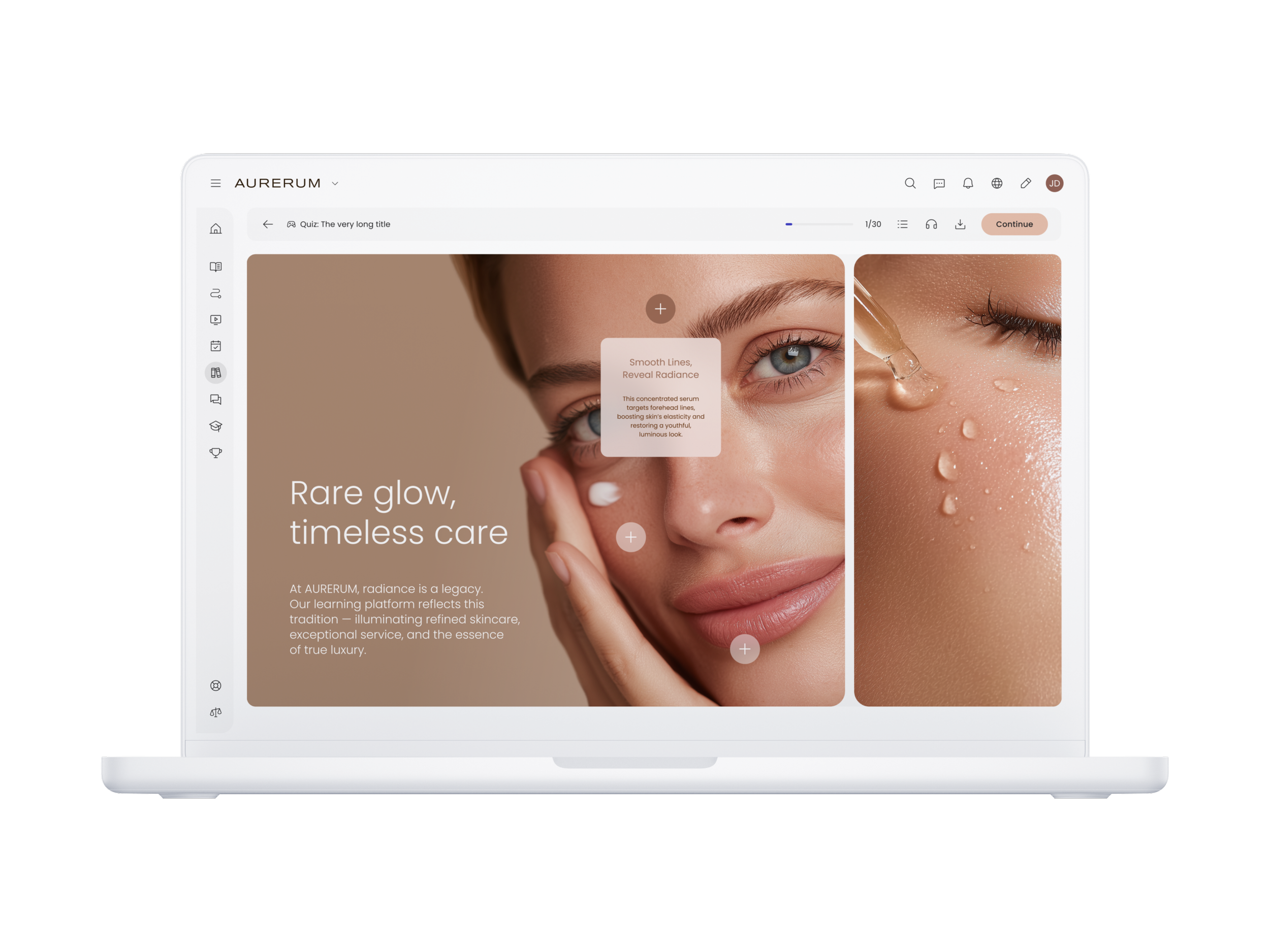
Modern luxury retail requires learning platforms that feel less like internal HR tools and more like immersive digital brand environments. The LMS is progressively evolving into a true “Digital Flagship for Learning” — a branded ecosystem where training, culture, storytelling, and retail engagement come together within a premium and emotionally engaging experience.
Luxury brands now expect learning platforms to deliver:
Fully branded and white-label environments
Editorial-style layouts and storytelling experiences
Mobile-first and visually immersive interfaces
Interactive video and experiential learning formats
Community-driven and social learning experiences
Scenario-based clienteling simulations
Microlearning and InstaLearning formats adapted to boutique life
Advanced creative authoring capabilities with rich interactions and animations
The objective is no longer simply to distribute courses, but to create emotional engagement, strengthen brand culture globally, and support the transmission of savoir-faire and luxury service excellence at scale.
This shift is also transforming expectations around content creation and workflow management. Modern luxury LMS platforms increasingly integrate:
AI-assisted content creation and translation
Branded template galleries
Interactive authoring studios
Collaborative workflows and project management tools
Adaptive learning and data-driven personalization
Rich multimedia storytelling capabilities
In luxury retail, learning must feel as premium and intentional as the client experience itself. Because when the learning environment authentically reflects the brand universe, engagement, memorization, and emotional connection naturally become stronger.
The future of luxury retail learning therefore belongs to platforms capable of combining technology, creativity, storytelling, and human experience — not traditional corporate LMS systems built for generic enterprise training.
Why Mobile-First Learning Is Becoming Essential for Luxury Retail Teams
Luxury retail happens on the shop floor not behind a desk. Advisors, boutique managers, and retail teams operate in fast-paced environments where time is limited, client interactions are continuous, and access to traditional desktop learning is often impractical.
As a result, mobile-first learning is becoming an essential component of modern luxury retail training strategies.
Today’s retail teams need learning experiences that are instantly accessible, frictionless, visually engaging, and fully adapted to the rhythm of boutique life. Mobile-first LMS platforms allow advisors to access training directly from their smartphones or tablets between client appointments, before a product launch, during quieter boutique moments, or even while traveling.
This shift enables brands to move from occasional training sessions toward continuous and integrated learning habits embedded into everyday retail operations.
Mobile learning is particularly effective for:
Product launches and collection updates
Daily sales tips and clienteling techniques
Service rituals and operational reminders
Styling inspiration and storytelling content
Short video-based learning capsules
Instant access to product knowledge on the shop floor
Regional and multilingual training deployment
Modern mobile learning experiences are also heavily inspired by social media interactions and content consumption behaviors. Swipeable storytelling, short-form video, microlearning, InstaLearning formats, push notifications, and interactive experiences create more intuitive and engaging learning journeys adapted to the expectations of modern retail teams.
In luxury retail, mobile learning is not simply about convenience — it is about enabling agility, responsiveness, and continuous engagement while keeping learning directly connected to the client experience.
The future of luxury retail training is therefore increasingly mobile-first, immersive, and integrated into the daily reality of boutique teams worldwide.

Why The Learning Lab Represents the Future of Luxury Retail LMS Platforms
The Learning Lab was specifically designed to answer the unique challenges of luxury retail learning a reality where traditional corporate LMS platforms often fall short.
While most enterprise LMS systems were built primarily for compliance, administration, and standardized corporate training, The Learning Lab was created as a fully branded, experiential, and retail-first learning ecosystem.
In luxury retail, training cannot feel generic. The learning experience itself must reflect the identity, emotion, aesthetics, and storytelling standards of the Maison. This is precisely where The Learning Lab differentiates itself.
The platform combines the technological power of a modern LMS with the creative flexibility of an immersive digital brand environment, allowing luxury brands to transform training into a true extension of their universe and culture.
The Learning Lab enables brands to create:
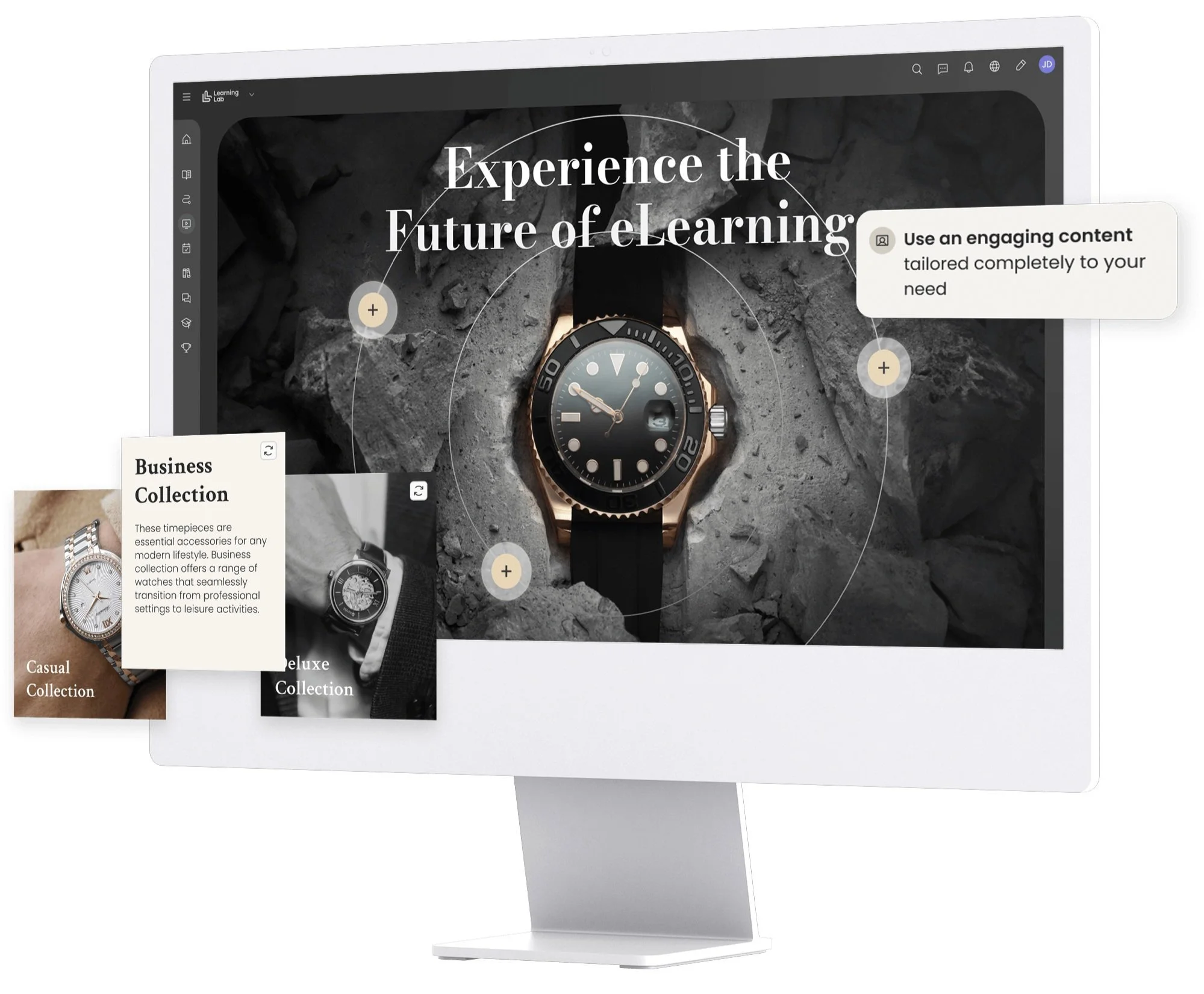
Fully white-label and visually immersive learning environments
Editorial-style learning journeys inspired by luxury digital experiences
Mobile-first and InstaLearning formats adapted to boutique life
Interactive storytelling through videos, hotspots, carousels, flashcards, and branching scenarios
Community-driven learning ecosystems connecting global retail teams
AI-assisted translation, adaptive learning, and intelligent content workflows
Highly creative and interactive content directly inside the platform through advanced authoring tools
Unlike traditional LMS platforms that often rely on static SCORM modules and rigid structures, The Learning Lab was designed to centralize creativity, workflow management, content production, localization, collaboration, and learning engagement into one unified ecosystem.
The platform also reflects the operational realities of luxury retail teams:
Learning directly on the shop floor
Fast deployment of collection updates and product launches
Multilingual global retail environments
High expectations regarding visual quality and brand consistency
The growing importance of emotional selling and experiential clienteling
What also makes The Learning Lab unique is its positioning as a boutique, fashion-first LMS specialized in luxury retail, fashion, beauty, watchmaking, hospitality, and premium client experience sectors. Every feature, interaction, and workflow has been designed around the realities of luxury brands and retail excellence.
In this vision, the LMS is no longer simply a training tool. It becomes:
A digital flagship for learning
A creative production studio
A global retail culture platform
A community and engagement ecosystem
A strategic brand experience environment
The future of luxury retail learning requires platforms capable of combining creativity, emotion, operational agility, storytelling, AI acceleration, and human-centered learning experiences. This is exactly the vision The Learning Lab was built to deliver.