

Onboarding a Luxury Sales Advisor in 14 Days
Onboarding a Luxury Sales Advisor in 14 Days: A Practical Path to Brand Codes, Product Confidence, and Clienteling
A luxury advisor does not have six weeks to find their feet. The boutique is already open, the client is already in front of the vitrine, and a half-trained welcome costs the Maison more than an empty chair.
Fourteen days is not enough to master the archive. It is enough to become floor-ready: to greet in the tone of the House, to tell the story of a few hero pieces, and to hold a first conversation without rushing to the discount. The path is practical. Brand codes first ritual, discretion, presence so they belong to the Maison before they sell it.
Product confidence next not two hundred references, but the icons and the newness they will actually be asked about, seen, touched, and put into one clear line. Then clienteling: listen, place the client, offer an alternative, know when to step back.
Video, short practice, and a manager’s yes-or-not-yet on day 14. Fully formed takes a career. Floor-ready, without diluting the House, can take two weeks — if the onboarding is designed like the boutique, not like a handbook.
The Cost of a Slow Start: Why Luxury Onboarding Cannot Afford Improvisation
An empty chair in a boutique is not an HR delay. It is a missed client. Every day a selling position stays vacant, a ritual fails to begin and a sale that should have belonged to the House simply walks out.
A half-trained advisor is more damaging still: they reach for the discount too quickly, miss the codes, break the tone and quietly erode the very experience the brand spent decades constructing.
Classic onboarding—binder, shadowing, hope—produces different versions of the Maison from one door to the next. The cost is not only slower ramp-up; it is diluted brand equity from the first client interaction. A 14-day programme designed with the same precision as the collection itself consistently outperforms six weeks of improvisation.
Résumé
- An unoccupied chair is lost revenue, not an administrative lag.
- Incomplete training creates advisors who undermine price integrity and the House ritual.
- Binder-and-shadowing methods deliver inconsistent results from store to store.
- A structured 14-day onboarding, built to the standards of the Maison, protects both competence and client experience.
What “Ready” Means on Day 14
A luxury advisor is not ready when they know the entire catalogue. They are ready when they can represent the House without damaging it.
On day 14 that means they welcome in the tone of the Maison, place the client—who they are and what they might actually need—and tell the story of three to five hero pieces rather than reciting the full collection.
They handle a simple objection without reaching for the discount, they know exactly when to call the manager, and they never compromise trust, privacy or the ritual. Set the bar at “knows everything” and onboarding never ends. Set it at “will not embarrass the House” and fourteen days becomes realistic, measurable and repeatable from door to door.
Résumé
- Welcome in the exact tone of the Maison.
- Place the client: who they are and what they might need.
- Tell the story of 3–5 hero pieces, not the whole catalogue.
- Handle a simple objection without defaulting to discount.
- Know when to involve the manager.
- Protect trust, privacy and the ritual at every step.
- The workable standard is “will not embarrass the House,” not encyclopedic mastery.
The Design Rules
A 14-day luxury onboarding only works if it is designed like the House itself: precise, consistent and usable in the real rhythm of the boutique. Learning happens on mobile, in the gaps between two clients not only in a back room.
Brand comes first, SKU second: codes, hospitality, silence and posture before two hundred references.
Knowledge is delivered by film, craft by a buddy, standard by the manager. Each sitting has one format and one outcome an InstaLearn, an expert film, a hotspot, a quiz or a short scenario. There is a gate, not a vibe: a video assessment before anyone flies solo. And the path is identical in every boutique. The Maison cannot afford forty versions of day one.
Résumé
- Mobile, between two clients: new joiners learn in the gaps, not only in a training room.
- Brand first, SKU second: codes, hospitality, silence and posture before the catalogue.
- Video + practice + a person: film for knowledge, buddy for craft, manager for the standard.
- One format, one outcome per sitting (InstaLearn, expert film, hotspot, quiz, short scenario).
- A gate, not a vibe: video assessment before they sell alone.
- One path in every boutique: the Maison cannot have 40 versions of day one.
Days 1–3 — Belong to the House
The first three days are not for selling. They are for belonging. Before a new advisor touches a single reference, they must feel the Maison: its history, its codes, its silence, its way of standing on the floor.
The manager’s role is presence, not a dump of SKUs. Open with a forty-page product bible and you have already lost the tone.
Film, short rehearsal and a buddy are enough. By the end of day three the joiner can say who the House is in thirty seconds, greet as the House greets, and stand on the floor without creating a wrong first impression.
Résumé
- Goal: they feel the brand before they sell it.
- Manager role: presence, not a catalogue download.
- Do not open with a 40-page product bible.
- Day-3 bar: 30-second House story, correct greeting, correct presence, safe on the floor.
Days 4–7 — Hero Products, Not the Archive
Days 4 to 7 are not a tour of the archive. They are a precise brief on the pieces that will actually walk into the boutique this week.
Five to eight hero products at most: the icon, the newness, the entry point, and high jewellery or high watchmaking when it belongs to the door. For each piece the advisor sees the body or on-wrist shot, the craft close-up, who it is for, the exact client line, and the alternative. Hotspots open construction, movement and material.
One sixty-second film from a buyer or craftsman gives the family its voice. Styling, how to wear, how to offer the next piece, care, size and what never to say complete the frame. At the end of week one there is a video quiz and a manager floor check. If they cannot tell three stories, they do not receive more SKUs. They repeat.
Résumé
- Goal: sell the pieces that walk in this week, not the full catalogue.
- Cap at 5–8 heroes (icon, newness, entry, high jewellery / high watchmaking if relevant).
- For each piece: body/on-wrist, craft close-up, who it is for, client line, alternative.
- Hotspots on construction, movement, material.
- One 60-second buyer or craftsman film per family.
- Styling, next-piece offer, care, size, and what not to say.
- Gate at end of week 1: video quiz + manager floor check. No three stories, no more SKUs. Repeat.
Days 8–11. The Client, Not the Product
By day eight the product is no longer the subject. The conversation is.
The advisor learns to listen before they show, to hold memory, preference and privacy as part of clienteling, and to meet the three objections that arrive every day: price, “I’ll think about it,” and “I’m just looking.”
Mini branching scenarios last ninety seconds, one path, one better answer. They learn when to step back and when to invite the manager.
After-sales, alteration and service are treated as the continuation of the relationship, not an afterthought. The buddy watches live, then takes ten minutes to debrief. Each day the new advisor posts one question; a top seller answers with one tip. The House is teaching judgement, not scripts.
Résumé
- Goal: own the conversation, not the catalogue.
- Discovery: listen before you show.
- Clienteling: memory, preference, privacy.
- Objections: price, “I’ll think about it,” “I’m just looking.”
- Mini branching: 90 seconds, one path, one better answer.
- Know when to step back and when to call the manager.
- After-sales, alteration, service — the relationship after the sale.
- Buddy: live observation + 10-minute debrief.
- Community: one question a day from the joiner, one tip from a top seller.

Days 12–14, Supervised Floor, Then the Gate
The last three days exist for one reason: proof. Days 12 and 13 put the advisor in front of real clients with a manager or senior in earshot.
Day 14 is the gate: a video assessment covering the ritual, one hero story and one objection, followed by manager sign-off. A pass means they can take a client with a safety net still in place. A fail does not send them back to a generic week.
It produces three targeted recaps and another attempt. Everyone who crosses the gate leaves with a personal plan for the next thirty days: collection depth, one category to master, and the start of a clienteling book. The House now has evidence, not hope.
Résumé
- Goal: proof, not more content.
- Days 12–13: real clients, manager or senior in earshot.
- Day 14: video assessment (ritual + one hero story + one objection) + manager sign-off.
- Pass = they can take a client with a safety net.
- Not yet = 3 targeted recaps, not another full week of generic material.
- Personal plan for the next 30 days: collection depth, one category, clienteling book.
The Manager’s 14-Day Job (Short, Non-Negotiable)
The LMS does not replace the manager. It makes the manager’s time count.
Day one requires a welcome in person. After that, ten minutes a day is enough—never an hour. Week one is codes and heroes.
Week two is two observed conversations. Day fourteen is a binary decision: yes, or not yet. “We’ll see” is not a verdict. Without this rhythm the platform is only a library. With it, fourteen days holds from door to door.
Résumé
- Day 1: welcome in person.
- Daily: 10 minutes, not an hour.
- Week 1: codes and heroes.
- Week 2: two observed conversations.
- Day 14: yes / not yet — never “we’ll see.”
- Without the manager, the LMS is a library. With the manager, 14 days holds.
What to Stop Doing
Most luxury onboarding fails for ordinary reasons, not mysterious ones.
Shadowing with no curriculum produces forty versions of the House. A different programme in every flagship does the same. Heritage day before they can greet puts story before presence. Two hundred SKUs in week one puts archive before the client who walks in today.
“You’re with Marie, she’ll show you” is not a plan. Time served without assessment is not readiness. Stop these six habits and the fourteen-day path becomes possible.
Résumé
- Shadowing with no curriculum.
- Different onboarding in every flagship.
- Heritage day before they can greet.
- 200 SKUs in week one.
- “You’re with Marie, she’ll show you” as the whole plan.
- No assessment — only time served.
Why This Only Works on a Luxury-First LMS
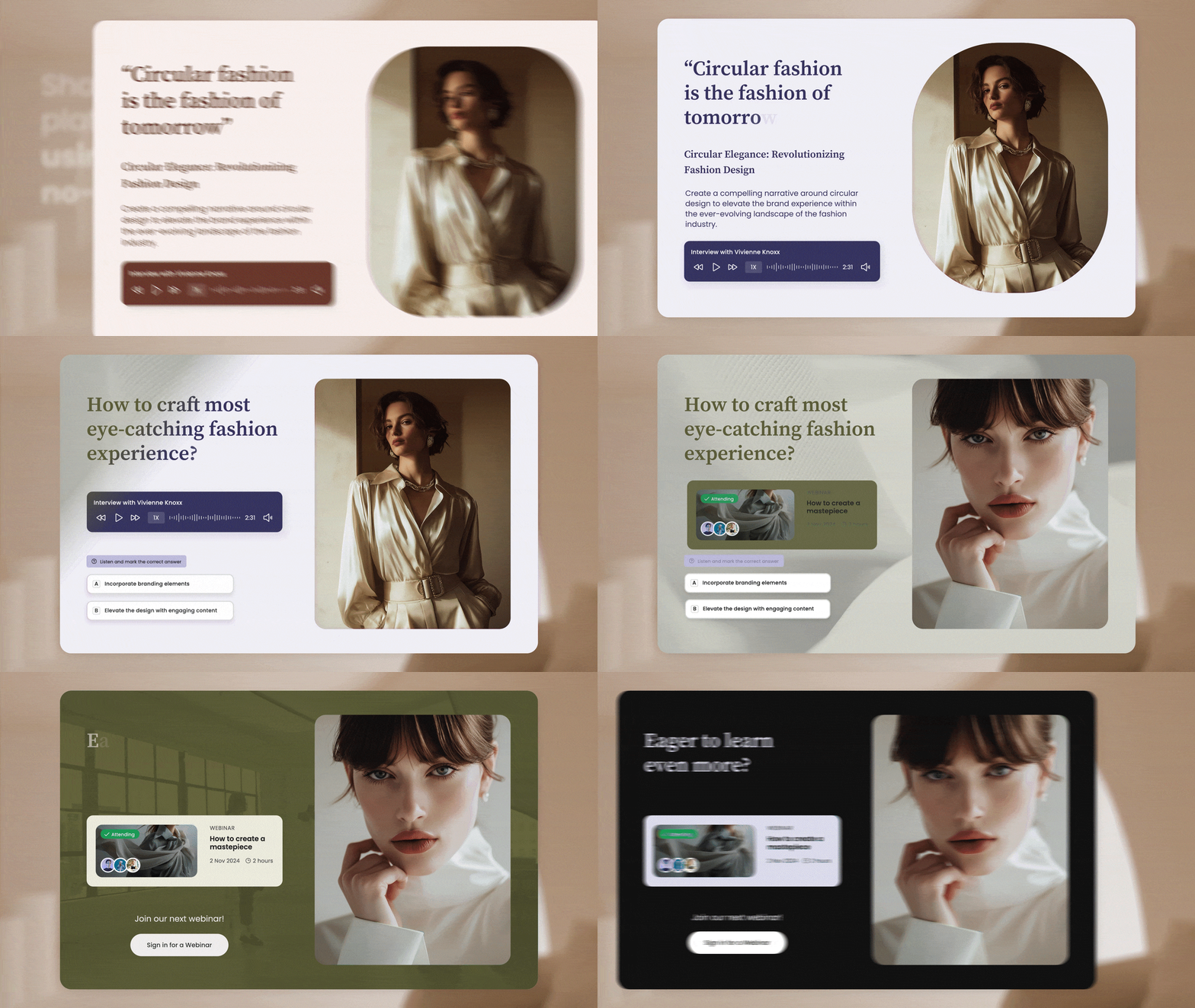
A fourteen-day path only holds if the tool itself already feels like the Maison. The portal is a first impression; it cannot look like a generic academy.
InstaLearn, expert films, hotspots, branching scenarios and video assessment must live in one continuous path not five disconnected platforms.
Learning stays mobile, on the floor, between two clients, with weekly drops when the range moves. The standard is identical in every door; local language changes the words, not the craft.
Analytics show who is ready on day 14, which boutique is slow, and which module fails. Fourteen days is a standard, not a miracle. The Learning Lab is how a Maison runs that standard without diluting the House.
Résumé
- Branded like the Maison: the portal is already a first impression.
- One path: InstaLearn + expert films + hotspots + branching + assessment.
- Mobile on the floor; weekly drops when the range moves.
- Same standard in every door; local language without rewriting the craft.
- Analytics: ready on day 14, slow boutiques, failing modules.
- 14 days is a standard, not a miracle. The Learning Lab is how the Maison keeps it.