

How to Train Fashion Advisors Faster for Successful Product Launches
Product Launch Training for Fashion Retail: How to Prepare Thousands of Advisors
Every fashion collection is the result of months of creativity, product development, craftsmanship, merchandising, and marketing. Behind every launch lies a significant investment, with brands expecting each new collection to capture attention, strengthen their identity, and drive commercial performance from day one.
Yet even the most exceptional collection can fall short if retail teams are not fully prepared. Fashion advisors are the ones who transform a product into a memorable customer experience. They need to understand not only the technical details of each piece, but also the inspiration behind the collection, the craftsmanship, the styling possibilities, and the stories that bring the brand to life.
The challenge for Learning & Development teams is no longer creating training materials. Today’s tools make content production faster than ever. The real challenge is ensuring that thousands of fashion advisors, spread across hundreds of stores and multiple countries, receive the right knowledge, in the right language, at the right moment—before launch day.
As product cycles become shorter and collections more frequent, successful brands are rethinking how they prepare their retail teams. Training must become faster, more engaging, more visual, and accessible wherever advisors are. Because when launch day arrives, every fashion advisor should be ready to inspire customers with confidence from the very first interaction.
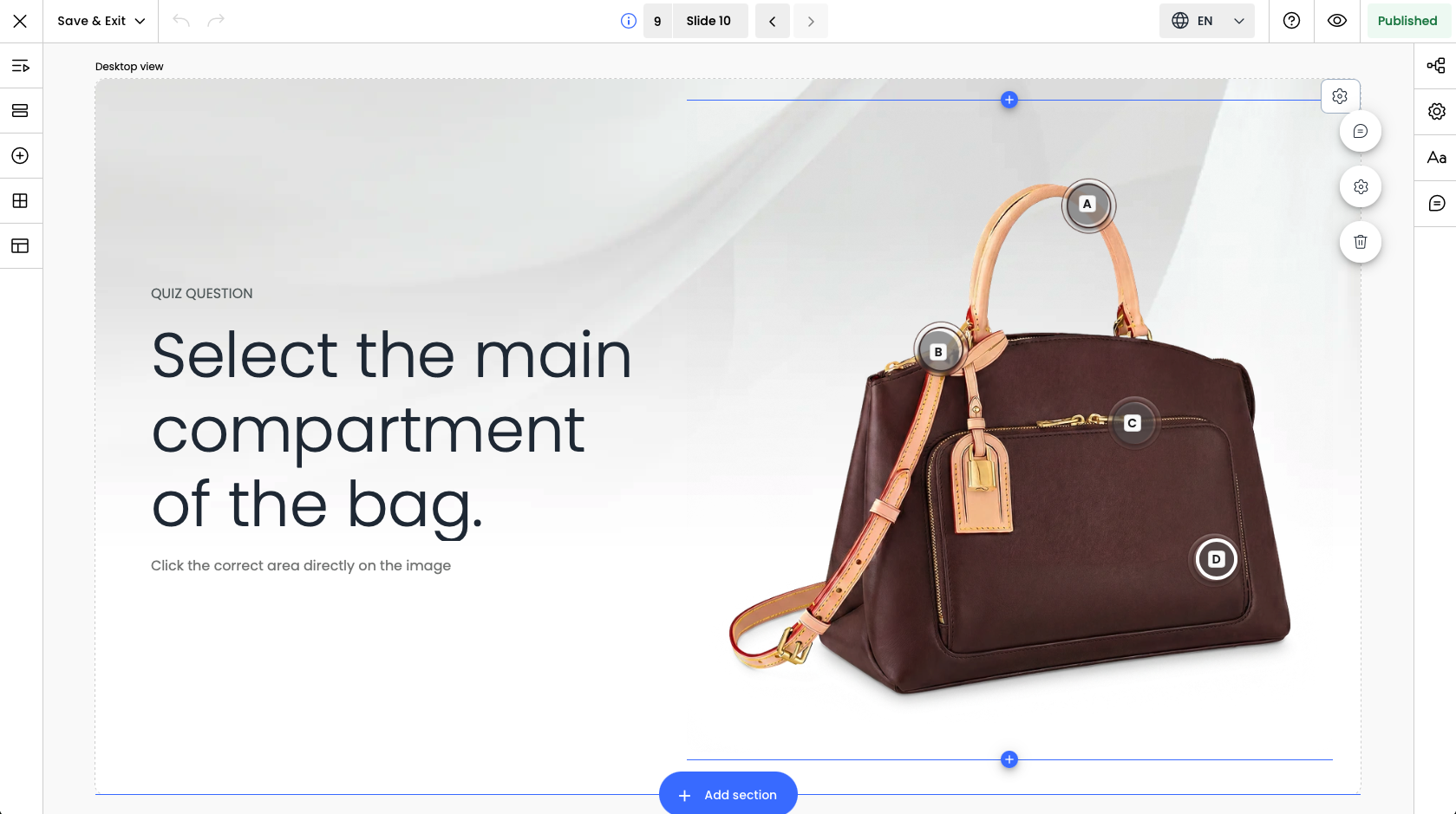
1. Fashion Product Launches Are No Longer Seasonal
Fashion retail has undergone a fundamental transformation.
Traditional seasonal collections have given way to a continuous flow of product launches, capsule collections, exclusive collaborations, regional assortments, and limited-edition drops. Instead of preparing for just two or four major launches each year, retail teams must now adapt to a constant stream of new products arriving in stores.
This acceleration creates a significant challenge for Learning & Development teams. Every launch requires fashion advisors to quickly understand new products, brand stories, materials, styling opportunities, and customer messaging. The time available to train thousands of employees has become increasingly shorter, while customer expectations continue to rise.
To keep pace with modern merchandising, learning must become as agile as the product calendar itself. Training can no longer be a one-time event—it must be continuous, fast, engaging, and immediately accessible across every store and every market.
Key Takeaways
More collections and product launches throughout the year
Growing number of capsule collections and exclusive drops
Frequent collaborations requiring dedicated product training
Regional assortments with market-specific launches
Shorter product life cycles reduce training windows
Retail teams must be ready before products reach the sales floor
Learning must move at the same speed as merchandising
2. Thousands of Employees Need the Same Knowledge—Fast
Launching a new fashion collection is not simply about delivering products to stores—it is about ensuring every fashion advisor is prepared to tell the same story.
Whether a customer visits a flagship boutique in Paris, a department store in New York, or a franchise location in Singapore, they should receive the same level of product expertise, styling advice, and brand experience.
For global fashion brands, this is a considerable operational challenge. Training must reach thousands of employees across multiple countries, time zones, languages, and retail formats, often within just a few days. At the same time, retailers must accommodate newly hired staff, seasonal employees, and franchise partners, all of whom need immediate access to the latest product knowledge.
Maintaining this level of consistency requires more than simply distributing training materials. Learning must be centrally managed, instantly accessible, multilingual, and designed to scale globally while remaining relevant to each local market. The objective is simple: every fashion advisor, regardless of location, should feel equally confident presenting the new collection on launch day.
Key Takeaways
Deliver consistent product knowledge across global retail networks
Train owned stores, franchises, and partners simultaneously
Support multiple languages without delaying launches
Reach employees across different time zones
Onboard temporary and seasonal staff rapidly
Ensure every advisor delivers the same brand story and customer experience
Scale learning globally while maintaining local relevance
3. Product Knowledge Is Only the Beginning
Knowing product specifications is essential, but it is no longer enough to create exceptional customer experiences.
Today’s customers often arrive in store having already researched products online, compared materials, read reviews, and explored collections on social media. What they expect from a fashion advisor is something they cannot obtain from a website: expertise, inspiration, and meaningful guidance.
Successful product launches therefore require advisors to go beyond features and technical details. They need to understand the inspiration behind the collection, the designer’s creative vision, the craftsmanship and materials, the styling possibilities, and the stories that make each product unique. They must also be able to recommend complementary pieces, build complete looks, and adapt their conversation to each customer’s needs and lifestyle.
Modern retail learning should focus on developing these consultative skills. Rather than teaching employees to memorize information, it should equip them to engage customers through storytelling, confidence, and personalized recommendations. When fashion advisors understand the “why” behind a collection, they become brand ambassadors capable of transforming a product presentation into an unforgettable luxury experience.
Key Takeaways
Product specifications are only the foundation of product expertise
Understand the inspiration and creative vision behind each collection
Highlight craftsmanship, materials, and attention to detail
Develop styling recommendations for different customer profiles
Use storytelling to create emotional connections with customers
Identify cross-selling and complete-look opportunities naturally
Train advisors to inspire customers, not simply recite product features
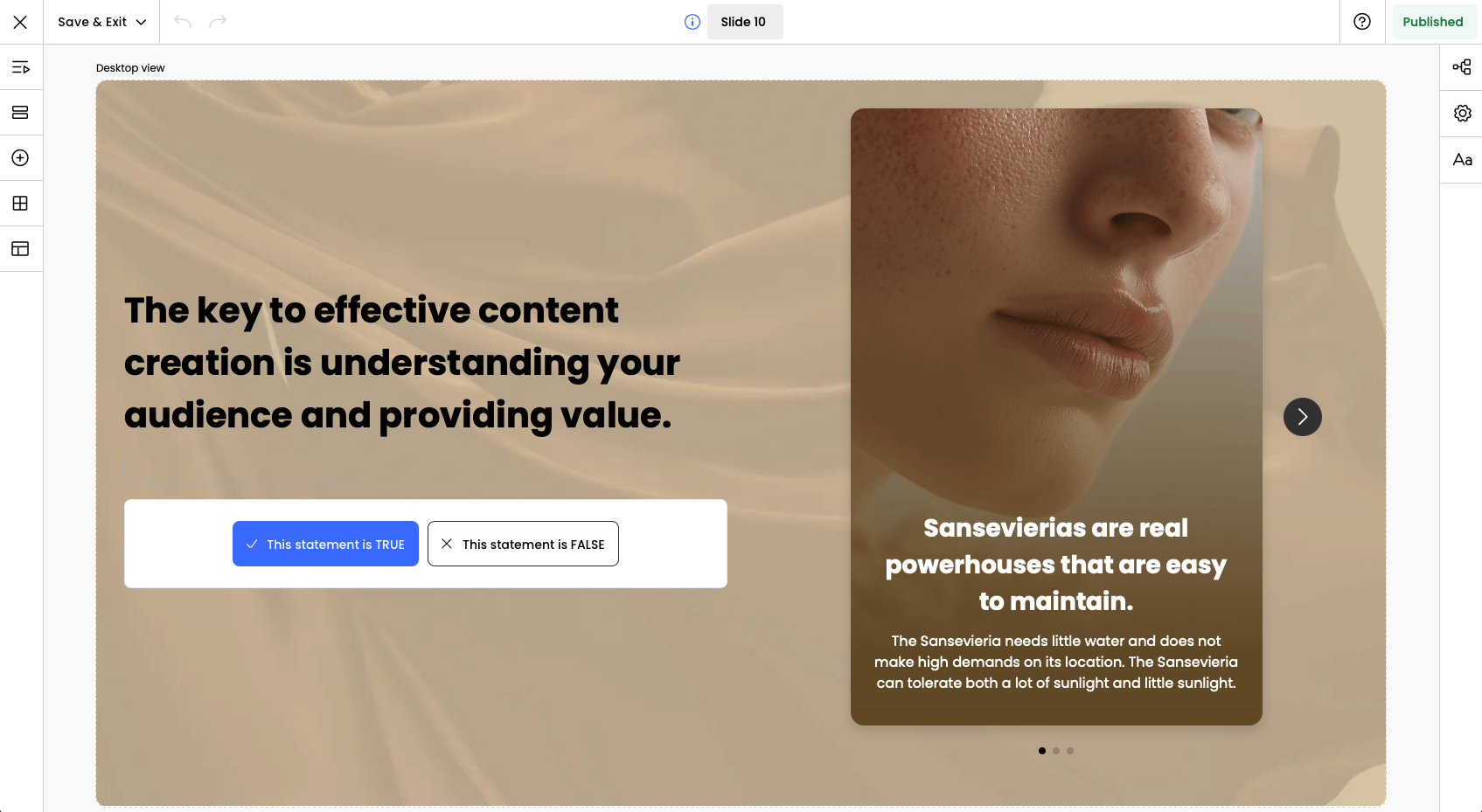
4. Traditional Training Cannot Keep Up
The pace of modern fashion retail has exposed the limitations of traditional training methods.
Product information is still too often distributed through lengthy PowerPoint presentations, PDF documents, email attachments, or classroom sessions that require employees to step away from the sales floor. While these formats can communicate information, they struggle to deliver knowledge quickly enough for today’s rapid product launch cycles.
Fashion advisors work in fast-paced retail environments where time is limited and customer priorities always come first. Long e-learning modules are often interrupted, forgotten, or postponed, while overflowing inboxes make it easy for critical product information to be overlooked. Even when training is completed, the amount of information presented at once can make retention difficult, reducing confidence when interacting with customers.
Modern retail learning needs to adapt to the reality of the sales floor. Training should be short, engaging, visual, and available whenever advisors have a few minutes between customer interactions. Rather than asking employees to stop working in order to learn, learning should become a natural part of their daily routine, enabling them to stay informed without disrupting their productivity.
Key Takeaways
Traditional PowerPoint presentations and PDF documents slow product readiness
Email overload makes important launch information easy to miss
Classroom sessions are difficult to organize at a global scale
Retail teams have limited time available for formal training
Long courses reduce engagement and knowledge retention
Learning should fit naturally into the daily rhythm of retail work
Short, engaging, mobile-first experiences help advisors stay launch-ready
5. Mobile-First Learning Accelerates Product Readiness
Retail teams rarely have the luxury of sitting at a desk to complete training.
Their workplace is the sales floor, where every minute is dedicated to serving customers, replenishing products, and maintaining the in-store experience. To prepare advisors effectively for a product launch, learning must be available wherever they are and whenever they have a few moments to engage.
A mobile-first approach allows fashion advisors to access training directly from their smartphones, making learning faster, more flexible, and better integrated into the rhythm of retail. Short videos, bite-sized learning modules, interactive product exploration, and instant notifications enable employees to stay informed without interrupting their daily responsibilities. Offline access further ensures that learning remains available even in locations with limited connectivity.
The objective is not to increase the amount of training, but to make learning more accessible and more relevant. When knowledge is delivered in small, engaging moments throughout the day, advisors retain information more effectively and arrive on launch day feeling confident and prepared. Learning becomes a continuous habit rather than an occasional event.
Key Takeaways
Deliver learning directly to associates’ smartphones
Use microlearning to fit naturally into busy retail schedules
Explain new collections through short, engaging videos
Encourage discovery with interactive product experiences
Keep teams informed with timely push notifications
Enable offline access for uninterrupted learning
Allow associates to learn between customer interactions
Increase product readiness without taking employees off the sales floor
6. Video Is the Most Effective Way to Present a Collection
Fashion has always been a visual industry. A collection is not simply a series of products—it is a combination of movement, styling, craftsmanship, textures, colors, and emotion. These elements are difficult to communicate through text or static images alone.
Video, on the other hand, brings the collection to life in a way that immediately captures attention and reflects the immersive experience brands want customers to feel.
Video-based learning allows fashion advisors to experience a collection much as a customer would. Collection walkthroughs reveal the overall narrative, styling demonstrations show how pieces can be combined, designer interviews provide insight into the creative vision, and catwalk footage highlights the movement and personality of each garment. Interactive videos and embedded knowledge checks transform passive viewing into active learning, reinforcing understanding while maintaining engagement.
More than simply improving knowledge retention, video creates an emotional connection with the brand. It helps advisors understand not only what they are selling, but why the collection matters. As a result, they become more confident, more authentic in their recommendations, and better equipped to deliver a premium customer experience from the very first day of the launch.
Key Takeaways
Present collections through immersive video experiences
Showcase complete collection walkthroughs and product highlights
Demonstrate styling techniques and outfit combinations
Share designer interviews and creative inspiration
Use catwalk footage to communicate movement and brand identity
Increase engagement with interactive videos and embedded quizzes
Reinforce learning through video-based assessments
Create stronger emotional connections while improving product understanding
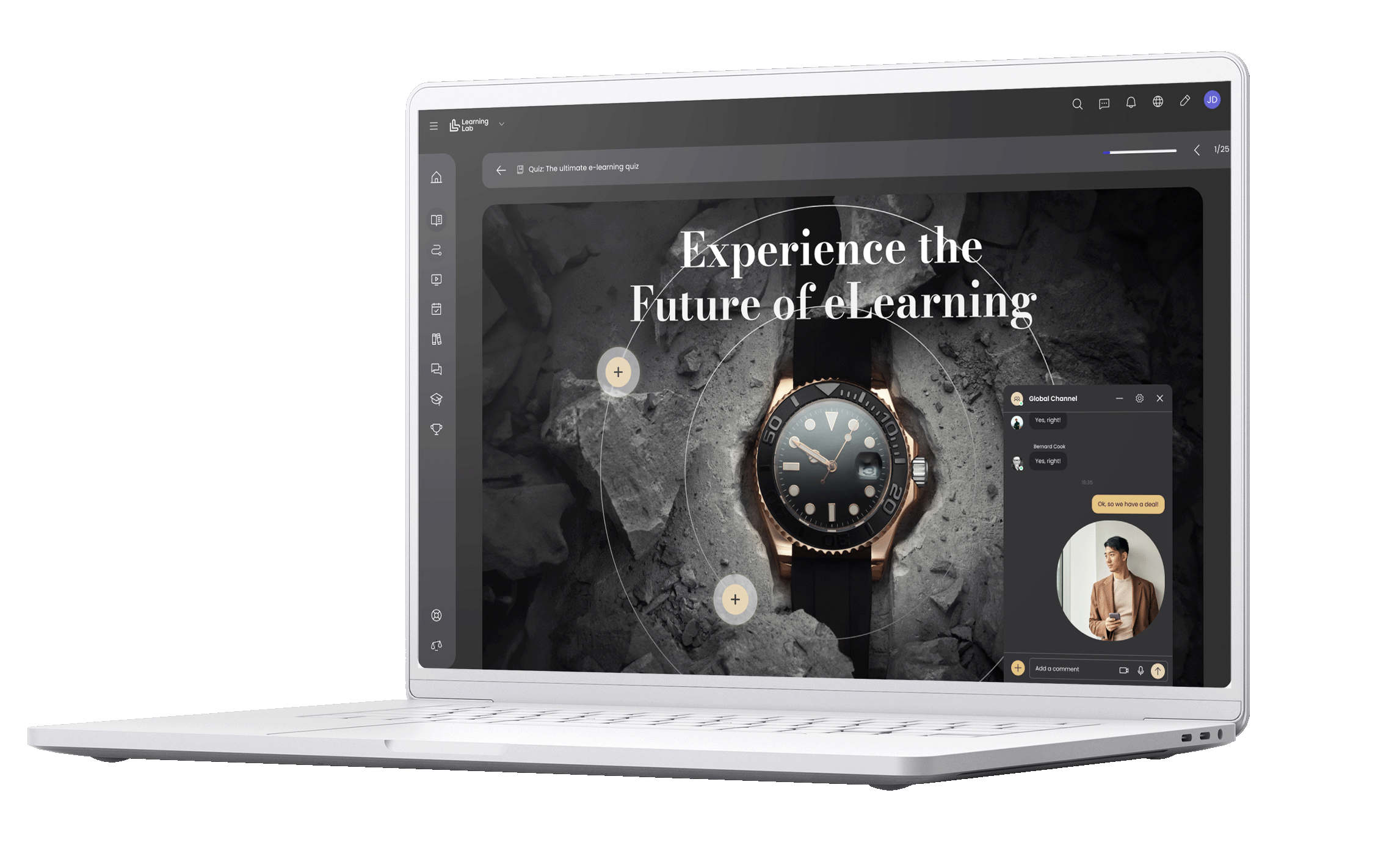
7. AI Can Help Produce Launch Training Faster
As product launches become more frequent, Learning & Development teams face increasing pressure to create high-quality training content in less time.
They must transform product briefs, lookbooks, marketing assets, and technical documentation into engaging learning experiences, often within just a few days. Artificial intelligence is emerging as a valuable assistant in this process, helping teams accelerate production without compromising quality.
Rather than replacing instructional designers or subject matter experts, AI automates many of the repetitive tasks involved in content creation. It can summarize lengthy product documents, generate first drafts of learning modules, suggest assessment questions, support multilingual translations, and recommend personalized learning paths based on an employee’s role or previous knowledge. This significantly reduces production time while allowing learning professionals to focus on what matters most: designing engaging experiences, ensuring brand consistency, and delivering meaningful learning outcomes.
The result is a faster and more agile learning production process that keeps pace with modern product launches. AI becomes a creative assistant, enabling Learning & Development teams to spend less time producing content and more time refining, personalizing, and improving the overall quality of the learning experience.
Key Takeaways
Accelerate content production with AI-assisted authoring
Automatically generate quizzes and knowledge assessments
Summarize lengthy product documentation into learning-ready content
Simplify multilingual launches with AI-powered translation support
Deliver personalized recommendations based on learner profiles
Reduce repetitive production tasks while maintaining quality
Allow instructional designers to focus on creativity and learning design
Keep launch training aligned with increasingly shorter product cycles
8. Measuring Launch Readiness
For many years, Learning & Development teams measured the success of product launch training through completion rates.
While knowing who has completed a course remains useful, it tells only part of the story. Completing a training module does not necessarily mean a fashion advisor understands the collection, feels confident discussing it, or is ready to engage customers effectively on launch day.
Modern learning analytics provide a much more accurate picture of retail readiness. Knowledge assessments and product certifications verify understanding, while engagement analytics reveal how actively employees interacted with the content. Store readiness dashboards enable managers to monitor progress across regions, identify knowledge gaps before launch, and compare performance between markets. Some organizations are also beginning to measure learner confidence, providing an additional indicator of whether advisors feel prepared to present the new collection.
The objective is to move from measuring learning activity to measuring business readiness. By combining performance data with actionable insights, Learning & Development leaders can identify exactly which stores are fully prepared, which teams require additional support, and where targeted interventions will have the greatest impact before products reach the sales floor.
Key Takeaways
Go beyond course completion rates
Measure product knowledge through assessments and certifications
Monitor launch readiness with real-time store dashboards
Analyze learner engagement to identify participation trends
Track confidence levels alongside knowledge acquisition
Compare readiness across countries, regions, and store networks
Identify learning gaps before launch day
Ensure every store is fully prepared to deliver a consistent customer experience
Conclusion: Product Launches Demand Faster Product Training
Fashion product launches have never moved at a faster pace. New collections, capsule drops, collaborations, and regional exclusives require retail teams to absorb more information in less time than ever before.
In this environment, the ability to prepare thousands of fashion advisors quickly has become a genuine competitive advantage.
Success is no longer determined solely by the creativity of a collection or the scale of a marketing campaign. It also depends on how confidently every advisor can communicate the product story, recommend complete looks, and create memorable customer experiences from the very first day the collection reaches the sales floor.
To meet these expectations, Learning & Development must evolve. Training needs to be as agile as merchandising itself—mobile-first, video-driven, interactive, personalized, and supported by artificial intelligence. It must be accessible anywhere, engaging enough to fit naturally into the daily life of retail teams, and measurable through real-time insights that help identify launch readiness across every store.
At The Learning Lab, we believe that product launch training should do more than transfer information. It should immerse retail teams in the brand universe, accelerate product readiness, and build the confidence needed to transform every customer interaction into a premium brand experience.
Because in today’s fashion industry, the brands that win are not simply the ones that launch products first—they are the ones whose advisors are ready to bring those products to life.