

Transform Retail Training into a Branded Experience.
Bring Your Brand to Life: Retail Training for Fashion, Luxury, Automotive & Cosmetics
Every customer interaction is an opportunity to express what makes your brand distinctive.
In fashion, luxury, automotive, and cosmetics, retail training helps teams connect product expertise with storytelling, thoughtful recommendations, and personalised service. The Learning Lab brings your identity into the learning journey through a fully branded environment, creative AI-assisted authoring, and interactive experiences shaped around retail work.
From exploring craftsmanship to demonstrating a vehicle feature or cosmetic application, teams practise bringing knowledge to life. Mobile learning, adaptive pathways, and coaching reinforce that preparation across stores and markets, helping associates deliver confident service that reflects your brand’s values and standards.
Your Brand Experience Begins with Your Teams
Why Learning Should Be an Extension of Your Brand Identity
Imagine a sales associate stepping out of a beautifully designed luxury boutique, where every detail reflects the brand’s identity, craftsmanship, and values, only to enter a generic learning platform that feels completely disconnected from that experience. The contrast is striking. If brands invest so much in creating exceptional customer environments, why should the employee learning experience be any different?
Learning is one of the most important internal brand touchpoints. It is where employees discover not only what they need to know, but also what the brand represents, how it communicates, and what makes it unique. Every element of the learning experience—from visual design and tone of voice to storytelling, interactive videos, and practical activities—should reinforce the brand’s identity.
When learning feels like a natural extension of the brand, employees develop a stronger sense of belonging, a deeper understanding of its values, and greater confidence in representing it.
The connection is simple: A strong brand identity creates meaningful learning experiences, meaningful learning develops confident teams, and confident teams deliver consistent, exceptional customer experiences.
Key Takeaways
Learning is a brand experience: Employee training should reflect the same identity, quality, and attention to detail as the customer-facing environment.
Brand consistency starts internally: Visual identity, typography, imagery, language, and tone of voice should remain consistent across physical, digital, and learning environments.
Storytelling builds emotional connections: Learning should communicate the brand’s heritage, craftsmanship, values, and unique personality rather than simply delivering information.
Engagement comes through experience: Interactive videos, realistic scenarios, role-playing, and practical activities help employees experience the brand rather than just memorize information.
Meaningful learning strengthens belonging: A branded learning environment reinforces employees’ connection to the organization and their role as brand ambassadors.
Confident employees create better customer experiences: When teams understand the brand and feel connected to its identity, they communicate more naturally, authentically, and consistently.
Brand consistency is a competitive advantage: A seamless connection between internal learning and external customer experiences helps protect and strengthen brand positioning.
The Essential Message
Your brand experience doesn’t begin when a customer enters your boutique. It begins when your teams learn what your brand stands for.
Suggested next section: From Generic LMS to Branded Learning Experience: Why Design Matters in Retail Training. This would naturally extend the argument by exploring how learning platform design influences employee engagement, brand perception, and learning effectiveness.
What Does a Branded Learning Experience Actually Mean?
Beyond Logos and Colours: Creating a Learning Journey That Truly Reflects Your Brand
A branded learning experience goes far beyond adding a company logo or applying corporate colours to a learning platform. It means creating an entire learning environment that reflects the brand’s identity, personality, values, and standards at every stage of the employee journey.
True branded learning brings together visual identity, brand voice, storytelling, educational content, and practical application into one coherent experience. Typography, imagery, layouts, animations, and interactive elements should feel immediately recognizable. The language used throughout the platform should reflect the brand’s tone of voice, while learning content should immerse employees in its heritage, craftsmanship, product expertise, and customer service philosophy.
But branding should not stop at design or communication. It must also influence how employees translate knowledge into everyday customer interactions: how they welcome visitors, introduce products, explain craftsmanship, respond to questions, and build lasting relationships.
Consider two luxury brands introducing a new leather handbag collection. One might build its learning experience around heritage, traditional craftsmanship, and the stories of its artisans, using elegant visuals, documentary-style videos, and refined storytelling. Another might emphasize contemporary design, innovation, and bold creative expression, using dynamic animations, interactive product exploration, and energetic communication.
The product knowledge may be similar, but the learning experiences should feel entirely different because the brands themselves are different.
This is the essence of branded learning: ensuring that employees do not simply learn about a brand but experience its identity throughout their development.
Ultimately, a successful branded learning environment creates continuity between what employees learn, how they behave, and what customers experience.
Key Takeaways
Branding goes beyond visual customization: A branded LMS should reflect the complete brand identity, not simply display its logo and corporate colours.
Visual identity creates familiarity: Typography, colours, imagery, animations, layouts, and interface design should deliver a recognizable and consistent brand experience.
Brand voice shapes communication: Terminology, tone of voice, storytelling, and instructional language should reflect how the brand communicates with its customers.
Content brings brand identity to life: Heritage, craftsmanship, product knowledge, creative vision, and service standards should form the foundation of the learning experience.
Different brands require different learning experiences: Even when teaching similar products or skills, the creative approach, storytelling, and learning activities should reflect each brand’s unique personality.
Practical activities connect learning to behaviour: Role-playing, interactive scenarios, video assessments, and customer simulations help employees translate brand values into real-world interactions.
Consistency strengthens brand culture: A unified learning experience reinforces employees’ understanding of the brand and their role in representing it.
Personalization increases relevance: Learning journeys should adapt to different roles, markets, and levels of expertise while maintaining a consistent brand identity.
Brand experience extends to every touchpoint: From onboarding and product training to certification and continuous development, every interaction with the learning platform contributes to the employee’s perception of the brand.
The Essential Message
A truly branded learning experience doesn’t just teach employees what your brand represents. It allows them to experience it, understand it, and ultimately bring it to life for every customer.
Create a Learning Environment That Feels Like Your Brand
How a Fully Branded, White-Label LMS Transforms Learning into a Seamless Brand Experience
A learning platform should never feel like an external tool that employees are required to use. It should feel like a natural extension of the brand itself. For luxury, fashion, beauty, and premium retail companies, this means creating a digital learning environment that reflects the same attention to detail, creativity, and identity found in their boutiques, products, and customer experiences.
A fully branded, white-label Learning Management System (LMS) makes it possible to transform a standard learning platform into a distinctive brand academy. From the homepage and navigation to course layouts, typography, imagery, animations, and mobile applications, every element can be designed to reflect the brand’s visual identity and communication style.
But creating a branded learning environment is not simply about aesthetics. It is also about designing meaningful learning journeys that reflect the realities of retail operations. New employees should discover the brand through immersive onboarding experiences. Sales associates should access product knowledge, selling techniques, and customer service training relevant to their responsibilities. Product launches should become engaging learning campaigns, combining storytelling, interactive videos, assessments, and practical activities.
Equally important is giving Learning & Development teams the freedom to create and evolve these experiences independently. With no-code customization and integrated authoring tools, academy teams can design branded courses, update content, personalize learning journeys, and launch new initiatives without depending on developers or external agencies. This autonomy allows brands to respond faster to changing collections, product launches, and business priorities while maintaining creative consistency.
For luxury groups managing several Maisons, a white-label LMS offers another important advantage: the ability to create completely distinct branded learning environments within a shared technological ecosystem. Each Maison can maintain its own identity, academy structure, content, learning journeys, and communication style while benefiting from centralized technology, security, administration, and reporting where appropriate.
A fashion Maison, a watchmaking brand, and a beauty brand may belong to the same group, but their learning environments should never feel identical. Their histories, products, customer expectations, and retail cultures are different, and their academies should celebrate those differences.
The objective is simple: one powerful learning technology, unlimited possibilities for expressing individual brand identities.
Key Takeaways
Transform the LMS into a brand academy: A fully branded, white-label platform allows organizations to create learning environments that feel like an integral part of their brand ecosystem.
Deliver complete visual consistency: Customize homepages, navigation, typography, colours, imagery, icons, animations, and course layouts to reflect the brand’s identity.
Extend the brand experience to mobile: Provide a consistent learning experience across desktop, tablet, and mobile devices, including branded mobile applications where required.
Design learning around retail responsibilities: Structure learning journeys around onboarding, product launches, sales techniques, customer experience, management development, and continuous training.
Make product launches more engaging: Combine storytelling, interactive videos, product demonstrations, quizzes, and practical challenges to help retail teams master new collections.
Give academy teams creative independence: No-code customization and integrated authoring tools enable Learning & Development teams to create, modify, and publish content without technical expertise.
Accelerate content production and updates: Empower teams to respond quickly to new collections, campaigns, service standards, and evolving business requirements.
Support multiple Maisons within one ecosystem: Luxury groups can operate distinct branded academies while sharing a common technological infrastructure.
Balance brand autonomy with group efficiency: Each Maison retains control over its identity, content, and learning strategy, while group-level teams can benefit from centralized administration, security, and reporting.
Create a sense of ownership: When an academy looks, feels, and communicates like the brand, employees are more likely to perceive it as their own learning environment rather than an external corporate tool.
The Essential Message
Your LMS should adapt to your brand, not the other way around. A truly white-label learning platform gives every Maison the freedom to create its own learning universe while benefiting from the power, efficiency, and scalability of shared technology.
Ground this section in The Learning Lab’s white-label and customisation capabilities.
Create Faster with AI and Approved Branded Templates
Accelerating Learning Content Production Without Compromising Brand Identity, Creativity, or Quality
Creating high-quality learning content has traditionally required significant time, resources, and coordination between Learning & Development teams, creative agencies, subject matter experts, and brand stakeholders. For luxury and premium retail brands managing frequent product launches, seasonal collections, and international training programmes, the challenge is to produce engaging learning experiences quickly while maintaining exceptional standards of quality and brand consistency.
Artificial intelligence is transforming this process by accelerating content production, but the real opportunity lies in combining AI efficiency with human creativity and established brand guidelines.
Rather than generating generic training materials, AI-assisted authoring can work from approved briefs, product documentation, brand guidelines, and validated knowledge resources. These inputs help guide the creation of lesson structures, video scripts, storytelling concepts, interactive activities, and knowledge assessments. Academy teams can rapidly develop initial drafts while ensuring that content remains aligned with the brand’s communication style, educational objectives, and product expertise.
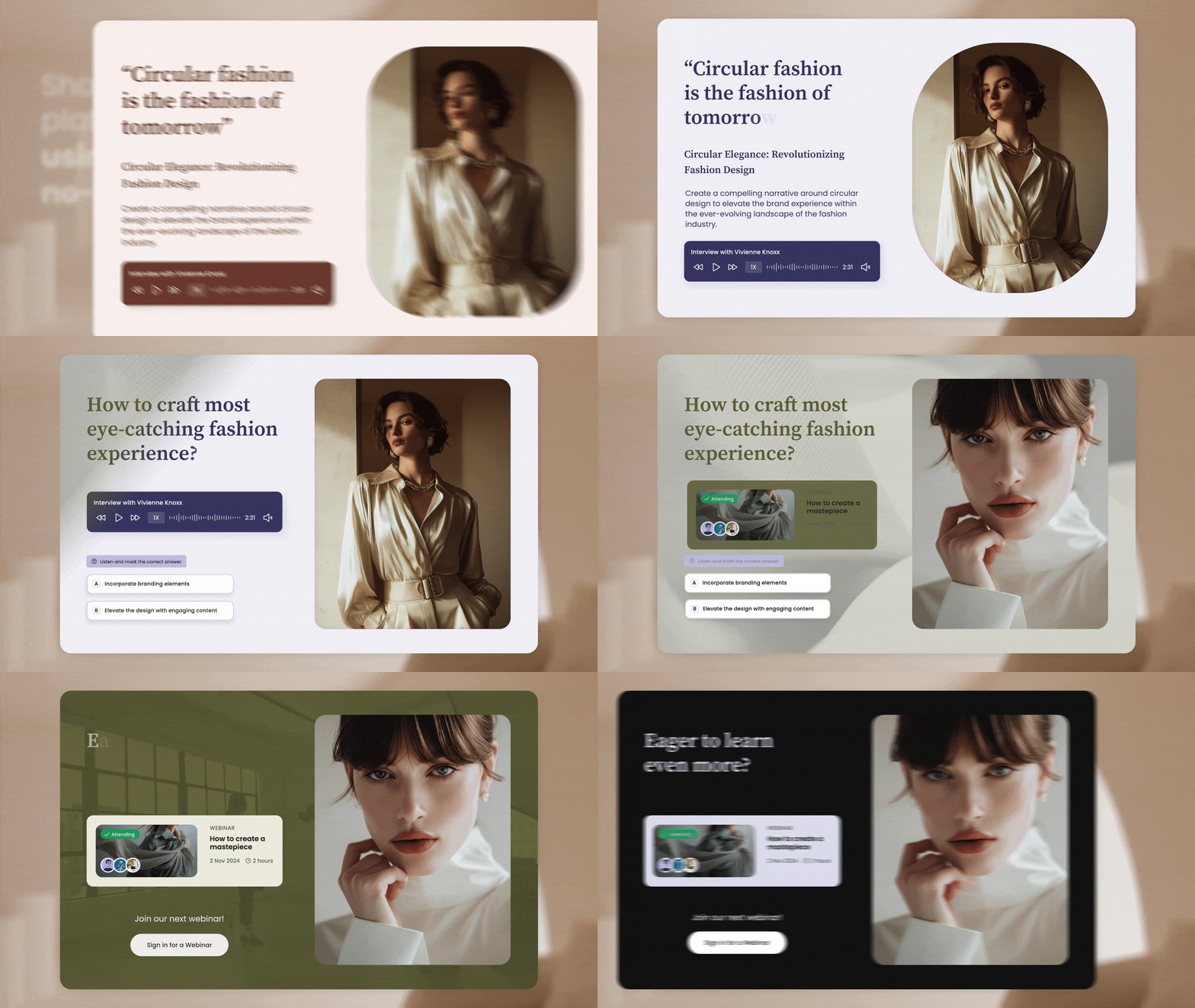
Branded templates provide the essential creative framework. By incorporating approved typography, colours, imagery, layouts, animations, and interactive components, they allow learning teams to produce new courses without repeatedly rebuilding the visual experience. Whether developing product knowledge modules, onboarding journeys, or customer service simulations, every learning experience can maintain a recognizable brand identity.
The combination of AI-assisted content creation and branded templates offers a powerful balance between speed, consistency, and creative control.
However, automation should never replace the expertise of the academy. AI can propose structures, summarize approved information, suggest activities, and generate initial scripts, but it cannot independently guarantee factual accuracy, authentic brand storytelling, or the appropriate interpretation of a Maison’s heritage and craftsmanship.
Human expertise remains essential. Learning designers, product specialists, and brand teams must validate information, refine narratives, evaluate learning effectiveness, and approve content before publication.
For luxury brands, this distinction is particularly important. A technically correct lesson is not necessarily a compelling brand experience. The difference lies in the quality of storytelling, the relevance of practical activities, and the emotional connection created with the learner.
The future of learning content production is not AI replacing creative teams. It is AI empowering them to spend less time on repetitive production tasks and more time creating distinctive, meaningful learning experiences.
Key Takeaways
Accelerate learning content production: AI-assisted authoring helps academy teams create initial course structures, scripts, activities, and assessments more efficiently.
Start with approved brand knowledge: Product documentation, training briefs, brand guidelines, and validated resources should guide AI-generated content to improve relevance and reliability.
Transform briefs into learning experiences: AI can help convert existing information into structured lessons, microlearning modules, interactive scenarios, video scripts, and knowledge checks.
Maintain brand consistency through templates: Approved typography, colours, imagery, layouts, animations, and interactive components ensure that new content reflects established brand standards.
Reduce repetitive design work: Reusable branded templates allow learning teams to focus on educational value and storytelling rather than rebuilding course layouts for every project.
Empower academy teams with no-code tools: Integrated authoring environments enable learning designers to create, customize, review, and publish content without relying on developers.
Preserve authentic brand storytelling: AI can support content development, but human creativity remains essential for communicating heritage, craftsmanship, product excellence, and brand values.
Keep subject matter experts involved: Product specialists, retail trainers, and brand representatives should validate technical accuracy and ensure that learning content reflects real customer-facing situations.
Establish clear approval workflows: Drafting, review, feedback, version control, and final publication should remain under the responsibility of authorized academy teams.
Scale learning without sacrificing quality: AI-assisted production and reusable templates make it easier to support frequent product launches, multiple markets, and international retail networks while maintaining consistent standards.
The Essential Message
AI should accelerate content creation, not define your brand. By combining AI-assisted authoring with approved branded templates and human creative direction, academy teams can produce learning experiences faster while preserving the authenticity, quality, and storytelling that make every Maison unique.
Explain the distinction between automated formatting and creative judgement, using the AI authoring tool and branded slide gallery.
Bring Products, Craftsmanship, and Service to Life
Transforming Product Knowledge into Immersive, Interactive, and Meaningful Brand Experiences
In luxury and premium retail, product knowledge goes far beyond understanding technical specifications, materials, or features. Every product represents a combination of creativity, craftsmanship, innovation, heritage, and brand identity. The challenge for Learning & Development teams is to transform this wealth of information into engaging experiences that help employees understand not only what makes a product exceptional, but also why it matters to customers.
The most effective retail learning experiences bring products, craftsmanship, and service to life through storytelling, visual exploration, and active participation.
Video-based learning plays a particularly important role. Expert demonstrations, interviews with artisans, behind-the-scenes manufacturing footage, and collection stories allow employees to discover the people, techniques, and creative intentions behind a product. Instead of simply reading about craftsmanship, learners can observe it. Instead of memorizing a collection’s inspiration, they can experience the creative vision that shaped it.
Interactive technologies make these experiences even more engaging. Image and video hotspots allow learners to explore products in detail, discovering specific materials, design elements, technical innovations, or craftsmanship techniques directly within visual content. A sales associate might explore the movement of a luxury watch, examine the stitching of a leather handbag, or discover the ingredients and benefits of a skincare formula.
Embedding questions directly into videos encourages active participation rather than passive viewing. Learners can be invited to identify product characteristics, interpret customer needs, make recommendations, or respond to realistic selling situations. These interactions help reinforce knowledge while developing the confidence required to communicate effectively with customers.
But exceptional product training must go one step further: connecting product facts with customer benefits and emotional meaning.
A handcrafted leather detail is not simply a manufacturing characteristic; it may represent durability, exceptional attention to detail, and generations of expertise. A sophisticated watch movement is not merely a technical achievement; it can embody precision, innovation, and the Maison’s watchmaking heritage. A skincare ingredient is not just part of a formulation; it should be understood through its relevant benefits, supported claims, and the customer’s individual needs.
By translating technical knowledge into meaningful stories and customer benefits, brands empower their teams to move beyond product descriptions and create richer, more personalized conversations.
Ultimately, the objective is not simply to help employees remember information. It is to help them understand, appreciate, and communicate what makes each product—and the brand behind it—truly distinctive.
Key Takeaways
Transform product knowledge into brand storytelling: Connect technical information with heritage, creativity, craftsmanship, innovation, and the values that define the Maison.
Bring expertise directly to learners: Use interviews with artisans, product specialists, designers, and brand experts to communicate authentic knowledge and unique perspectives.
Make craftsmanship visible: Behind-the-scenes videos, manufacturing demonstrations, and detailed product footage help employees understand the expertise and attention to detail behind exceptional products.
Create interactive product discovery: Image hotspots allow learners to explore materials, components, design details, and product features through intuitive visual interactions.
Turn videos into active learning experiences: Interactive video hotspots, embedded questions, and video quizzes encourage learners to observe, reflect, and participate rather than simply watch.
Connect product features to customer benefits: Help employees translate technical specifications into practical advantages, emotional value, and meaningful customer experiences.
Develop confident product storytelling: Train associates to explain not only what a product offers, but also what makes it distinctive and why it may matter to a particular customer.
Adapt learning to different retail sectors: Use craftsmanship demonstrations for watchmaking, material exploration for fashion and leather goods, ingredient education for beauty, and technical storytelling for luxury automotive.
Reinforce knowledge through practical activities: Combine interactive product exploration with quizzes, customer scenarios, and role-playing exercises to strengthen understanding and application.
Create stronger emotional connections: Immersive learning experiences help employees develop a deeper appreciation of the products they represent and communicate that enthusiasm more authentically.
The Essential Message
Exceptional product training doesn’t simply explain what a product is. It reveals the craftsmanship, creativity, and meaning behind it—empowering employees to transform product knowledge into compelling stories and memorable customer experiences.
Personalise the Journey While Keeping Shared Standards
Delivering Relevant Learning Experiences Without Compromising Brand Consistency
In luxury and premium retail, every employee represents the same brand, but not every employee has the same responsibilities, experience, or learning needs. A newly recruited beauty advisor, an experienced boutique manager, and a regional retail trainer all contribute to the customer experience in different ways. Their learning journeys should reflect these differences while remaining aligned with the Maison’s identity, values, and service standards.
The challenge for Learning & Development teams is to balance personalisation with consistency: delivering the right learning experience to each employee while ensuring that everyone shares the same understanding of the brand.
A personalised learning journey begins with relevance. Rather than assigning identical courses to every employee, learning pathways can be organised around roles, retail responsibilities, store environments, geographic markets, and levels of experience.
A new sales associate might begin with brand heritage, product fundamentals, and customer service principles. An experienced advisor could focus on advanced storytelling, clienteling, and collection expertise. Boutique managers may require additional learning on leadership, coaching, performance management, and team development.
Geographic differences also matter. While the brand’s core identity should remain consistent worldwide, customer expectations, cultural preferences, local regulations, and product assortments can vary significantly between markets.
Personalisation allows brands to acknowledge these differences without fragmenting the learning experience or weakening their global standards.
Learning technologies can take this approach further by using progress indicators, assessment results, and demonstrated competencies to identify where additional support may be valuable.
For example, an associate who successfully completes a product knowledge assessment could progress to more advanced customer scenarios. Another learner who struggles to explain a particular product benefit might receive a short reinforcement activity, an interactive video, or a practical exercise focused on that specific topic.
AI-assisted recommendations can help academy teams identify relevant learning resources and suggest appropriate next steps. Rather than repeatedly assigning entire courses, learning platforms can direct employees towards focused content that addresses specific knowledge gaps.
This creates opportunities for adaptive microlearning: short, targeted learning experiences designed to reinforce knowledge exactly where additional support is needed.
However, personalisation should never mean allowing technology to independently redefine what employees are taught.
For luxury brands, maintaining control over learning content, terminology, product claims, and service standards is essential. AI-assisted learning recommendations and adaptive pathways should therefore operate within clearly established rules defined by the academy.
Approved content libraries, role-based permissions, validated knowledge sources, and structured learning pathways ensure that personalisation remains aligned with the brand’s educational strategy.
The same principle applies to AI-powered learning assistants. These tools can help employees discover information, clarify concepts, and access relevant resources, but their responses should remain grounded in approved brand knowledge rather than uncontrolled external information.
The objective is not to create a different brand experience for every employee. It is to create the most relevant learning journey for each individual while preserving one consistent brand identity.
When personalisation and shared standards work together, learning becomes more efficient, meaningful, and actionable. Employees receive the support they need to develop their skills, while brands maintain confidence that their teams are communicating consistent information and delivering the expected level of customer experience.
Ultimately, successful personalisation is about helping every employee reach the same standard of excellence through a learning journey adapted to their individual needs.
Key Takeaways
Balance personalisation with brand consistency: Adapt learning experiences to individual needs while maintaining shared brand values, product knowledge, and customer service standards.
Create role-based learning pathways: Deliver relevant training for sales associates, beauty advisors, boutique managers, retail trainers, and other customer-facing roles.
Adapt learning to experience levels: Provide foundational onboarding for new employees and more advanced learning opportunities for experienced professionals.
Consider local market requirements: Tailor learning content to regional product assortments, cultural expectations, languages, and local regulations without compromising global brand identity.
Use learning progress to guide development: Track course completion, assessment results, and demonstrated competencies to identify individual strengths and areas requiring additional support.
Introduce adaptive learning recommendations: Suggest relevant activities, resources, and follow-up modules based on learner performance and identified knowledge gaps.
Reinforce knowledge through microlearning: Offer short, focused learning experiences that help employees strengthen specific skills without repeating entire training programmes.
Connect assessments with practical improvement: Use quiz results, interactive activities, video assessments, and manager observations to guide targeted development.
Empower learners with AI-assisted support: Help employees discover relevant information and access learning resources through intelligent assistants grounded in approved brand knowledge.
Maintain academy control over learning pathways: Ensure that adaptive recommendations operate within predefined learning objectives, approved content libraries, and academy-established rules.
Protect the accuracy of brand knowledge: Restrict AI-assisted learning support to validated information, particularly when dealing with product specifications, craftsmanship, regulatory requirements, and customer-facing claims.
Preserve global learning standards: Establish common competencies, mandatory training requirements, and assessment criteria across international retail networks.
Support continuous professional development: Allow learning journeys to evolve as employees gain experience, take on new responsibilities, and develop additional expertise.
Make learning more efficient and relevant: Reduce unnecessary repetition by directing employees towards the knowledge and skills that will have the greatest impact on their performance.
The Essential Message
Personalised learning does not mean compromising brand consistency. It means giving every employee the most relevant path towards the same standard of excellence. By combining role-based journeys, adaptive reinforcement, AI-assisted recommendations, and academy-controlled content, luxury brands can deliver individualised learning experiences while protecting the identity, knowledge, and service standards that define their Maison.
Cette section complète la précédente en introduisant la notion d’adaptive learning, tout en insistant sur un élément particulièrement important pour les Maisons de luxe : le contrôle de leurs connaissances, de leurs contenus et des recommandations générées par l’IA.
Connect personalised learning with the retail-focused approach described on The Learning Lab’s retail training page.
Carry the Brand into the Retail Day with Mobile Learning
Making Brand Knowledge Accessible, Engaging, and Relevant Throughout the Retail Experience
In luxury and premium retail, learning cannot be limited to formal training sessions, scheduled workshops, or lengthy online courses. Retail environments are dynamic, collections evolve continuously, and customer expectations require employees to maintain an exceptional level of product knowledge and service expertise.
Learning must become a natural part of the retail day, accessible whenever employees need to discover, refresh, or reinforce their knowledge.
Mobile learning creates opportunities to bring brand knowledge closer to everyday retail activities. Through smartphones and tablets, associates can access relevant content, explore new collections, revisit product stories, and strengthen their understanding of key selling points without depending exclusively on traditional training sessions.
For international retail networks, this flexibility is particularly valuable. Product launches, seasonal campaigns, and new service initiatives often require thousands of employees across multiple markets to receive consistent information within a short period.
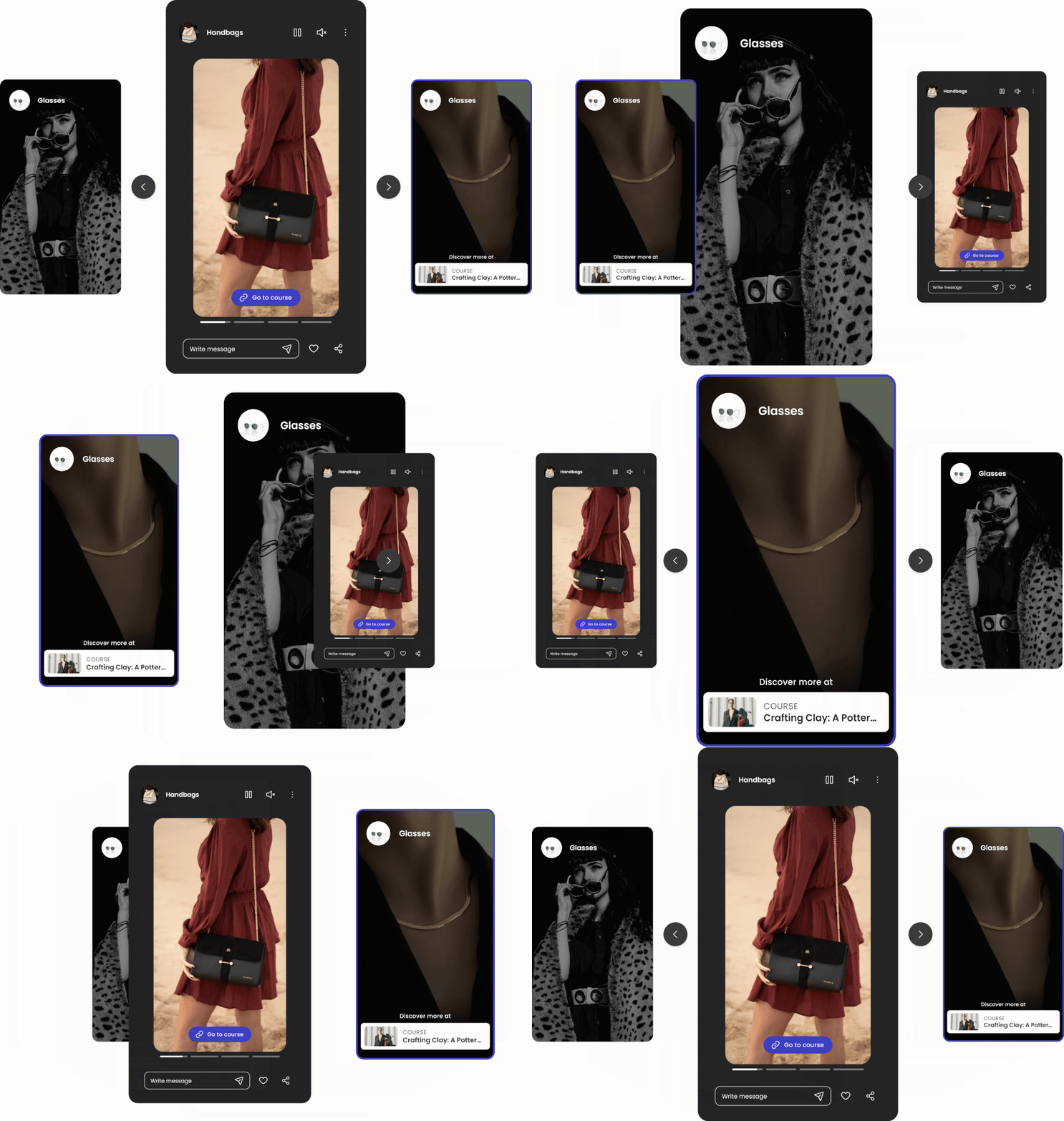
Mobile-first learning formats, such as InstaLearn, make it possible to deliver focused, visually engaging learning experiences designed for the rhythm of retail.
Rather than asking employees to complete lengthy modules for every product update, brands can create short learning moments built around a specific objective: discovering a new collection, understanding an innovative material, exploring a craftsmanship detail, or learning how to communicate a product’s benefits to customers.
These experiences can combine short videos, high-quality imagery, interactive product exploration, and quick knowledge checks. A watchmaking Maison might introduce a new timepiece through a short video highlighting its movement and craftsmanship. A beauty brand could present a new skincare product through an ingredient demonstration followed by a few interactive questions. A fashion Maison might use a visual storytelling sequence to explain the creative inspiration behind its latest collection.
The objective is to make essential knowledge easy to access, understand, and remember.
However, mobile learning should never mean compromising the quality of the brand experience.
The same attention to visual identity, typography, imagery, tone of voice, and storytelling that defines the Maison’s broader learning environment must extend to smaller screens. Mobile interfaces should be intuitive, elegant, and consistent with the brand’s design language.
A fully branded mobile experience reinforces the feeling that employees are accessing their own Maison’s academy rather than a generic training application.
Equally important is understanding that short learning formats are not intended to replace deeper educational experiences.
Microlearning is most effective when it becomes part of a connected learning ecosystem.
A short product introduction can lead to a more comprehensive course exploring craftsmanship and technical specifications. An interactive knowledge check can identify areas requiring reinforcement. A product storytelling video can prepare an associate for a practical demonstration, while a recorded assessment can provide managers with an opportunity to offer personalized coaching.
For example, an associate might discover a new handbag collection through a two-minute InstaLearn experience, explore its materials through an interactive product module, and later record a short presentation explaining the collection’s distinctive features and customer benefits.
Each learning moment contributes to a broader development journey, connecting immediate product knowledge with practical skills and long-term professional growth.
Mobile learning also supports continuous reinforcement. Employees can revisit essential information before a product launch, refresh their knowledge during appropriate moments in the working day, or prepare for customer conversations with greater confidence.
The key is to respect the realities of retail operations by offering learning experiences that are concise, relevant, and accessible without disrupting customer service.
The future of retail learning is not simply about making courses available on mobile devices. It is about integrating meaningful, branded learning moments into the everyday professional experience of retail teams.
When mobile learning, InstaLearn, interactive content, and practical coaching work together, brands can create a continuous connection between knowledge, confidence, and customer experience.
Key Takeaways
Integrate learning into the retail day: Make relevant brand and product knowledge accessible through mobile devices, allowing employees to learn and refresh their knowledge around operational responsibilities.
Introduce InstaLearn for focused learning moments: Deliver short, visually engaging experiences dedicated to specific products, collections, campaigns, or service objectives.
Accelerate product launch communication: Help international retail teams discover new collections, understand key product features, and prepare for customer conversations.
Use short videos to communicate essential knowledge: Combine product demonstrations, craftsmanship stories, expert insights, and visual storytelling in concise mobile-friendly formats.
Make mobile learning interactive: Incorporate quick quizzes, image hotspots, video questions, and knowledge checks to encourage active participation and reinforce understanding.
Maintain a consistent brand identity: Ensure that mobile interfaces, typography, colours, imagery, animations, and communication styles reflect the Maison’s visual and editorial standards.
Design specifically for smaller screens: Prioritize intuitive navigation, readable content, vertical video where appropriate, and interactions optimized for smartphones and tablets.
Connect microlearning with deeper educational content: Use short learning experiences as entry points to comprehensive courses, product knowledge libraries, and structured learning pathways.
Reinforce knowledge through repeated exposure: Allow employees to revisit important information through focused refreshers, especially around product launches and seasonal collections.
Link mobile learning with practical activities: Extend product discovery into storytelling exercises, interactive scenarios, role-playing activities, and video assessments.
Encourage manager coaching and feedback: Connect short learning experiences with practical demonstrations that managers can review to support individual development.
Support international retail networks: Deliver consistent brand messages and product information across multiple stores, markets, and languages.
Respect the realities of retail operations: Provide concise learning opportunities that fit naturally around customer-facing responsibilities without compromising service quality.
Create a continuous learning ecosystem: Combine mobile microlearning, structured courses, practical assessments, and personalized coaching into a coherent employee development experience.
The Essential Message
Mobile learning should bring the brand closer to employees, not simply make traditional courses smaller. By combining InstaLearn, short videos, interactive activities, and deeper learning journeys, luxury brands can transform everyday moments into opportunities to strengthen product knowledge, reinforce brand identity, and build more confident retail teams.
Cette section positionne InstaLearn comme un format complémentaire aux parcours de formation, et non comme un remplacement des cours approfondis. C’est une distinction importante pour valoriser l’ensemble de l’écosystème pédagogique de The Learning Lab.
Use The Learning Lab’s mobile and InstaLearn approach to illustrate how learning fits around frontline work.
Conclusion: Learning That Lives Your Brand
From Brand Identity to Learning Experiences That Shape Exceptional Customer Interactions
In luxury and premium retail, a brand is much more than its visual identity, products, or heritage. It is an experience expressed through every interaction, every detail, and every person representing the Maison.
If brands invest so much in creating exceptional customer experiences, their learning environments should reflect the same level of creativity, quality, and attention to detail.
A truly branded learning experience begins with a digital environment that feels like a natural extension of the Maison. From the visual identity of the learning platform to its storytelling, content, and interactive activities, every element should reinforce what makes the brand unique.
AI-assisted authoring and approved branded templates make it possible to create these experiences more efficiently while preserving the creative direction and expertise of academy teams. Immersive storytelling, interactive videos, and product exploration bring heritage, craftsmanship, and innovation to life, helping employees develop a deeper understanding of the products they represent.
But learning must go beyond knowledge acquisition.
The real value of learning emerges when brand identity becomes observable behaviour.
Through branching scenarios, realistic customer simulations, video assessments, and manager coaching, employees can practise translating brand values into authentic customer interactions. Personalised learning journeys ensure that each associate receives relevant training according to their role, experience, and development needs, while maintaining consistent brand standards across international retail networks.
Mobile learning and InstaLearn extend this experience into everyday retail operations, making essential product knowledge, collection updates, and focused reinforcement accessible when employees need them.
Together, these capabilities create a continuous connection between brand identity, learning, employee confidence, and customer experience.
The Learning Lab: Where Brand Identity Meets Retail Learning
The Learning Lab was designed around a simple conviction: learning should adapt to the brand, not the other way around.
As a fully branded, retail-first LMS, The Learning Lab enables luxury and premium brands to create distinctive learning environments that reflect their identity while supporting the practical realities of retail operations.
By combining white-label customization, AI-assisted authoring, interactive storytelling, video-based learning, branching scenarios, personalised learning journeys, and mobile-first formats such as InstaLearn, the platform connects creative learning experiences with the development of real customer-facing skills.
At the centre of this ecosystem remain the academy teams.
They define the brand’s educational vision, establish learning standards, validate content, and guide how employees develop their knowledge and behaviours. Technology provides the flexibility, creativity, and scalability to bring that vision to life across boutiques, markets, and international retail networks.
The objective is not simply to deliver more training. It is to create learning experiences that help every employee understand, embody, and express the brand with confidence.
Because ultimately, customers do not experience a brand through its training platform.
They experience it through the people who represent it.
And those experiences begin with learning.
The Essential Message
Your brand is not only what you create, communicate, or sell. It is what your people understand, believe, and bring to life every day.
The Learning Lab connects brand identity with meaningful learning, practical skills, and everyday retail experiences—helping luxury and premium brands transform their teams into their most powerful brand ambassadors.
The Learning Lab
Boutique LMS. Crafted for Retail. Powered by Design.
Cette conclusion rassemble les arguments de l’article autour d’une idée centrale : The Learning Lab ne se limite pas à transmettre des connaissances ; la plateforme aide les Maisons à transformer leur identité en comportements concrets et en expériences client cohérentes.
Elle conserve ainsi une dimension éditoriale tout en positionnant naturellement The Learning Lab comme la solution qui relie la créativité des académies aux réalités opérationnelles du retail.