

The Rise of Social Learning in Beauty Retail
How Social Learning Is Transforming Beauty Advisors into Brand Ambassadors
Beauty retail is changing faster than ever, with new product launches every few weeks, persistently high staff turnover, and customers arriving armed with expectations shaped by social media and influencer culture.
In this high-pressure environment, traditional e-learning with its long, passive modules and one-size-fits-all approach is failing to keep beauty advisors engaged, motivated, or properly equipped with up-to-date knowledge.
This is where social learning is making a profound difference. By shifting from static training to dynamic, peer-driven experiences, social learning is transforming beauty advisors into true brand ambassadors: confident, knowledgeable, and genuinely passionate about the products they recommend.
The results speak for themselves significantly higher engagement rates, dramatically improved knowledge retention, stronger selling skills, and ultimately, a measurable lift in both customer experience and sales performance.
1. Why Beauty Retail Training Is Particularly Challenging
Beauty retail training is uniquely demanding compared to other sectors. With extremely high product turnover, frequent new launches, complex ingredient knowledge, and specific application rituals, beauty advisors must constantly update their expertise.
At the same time, the industry suffers from high staff turnover, requiring continuous onboarding and retraining. Advisors are expected to master both deep technical knowledge (product science, formulations, ingredients) and sophisticated soft skills such as consultation, storytelling, and clienteling.
Maintaining a consistent brand experience across multiple stores and countries adds yet another layer of complexity. Finally, traditional training methods often long and passive are too slow and fail to engage younger Gen Z advisors who expect dynamic, modern, and mobile-first learning experiences.
Key Challenges (Summary):
- Extremely high product turnover and complexity (ingredients, rituals, frequent new launches)
- High staff turnover requiring constant retraining and onboarding
- Need to master both technical product knowledge and emotional/soft skills (consultation, storytelling, clienteling)
- Difficulty maintaining brand consistency across stores and international markets
- Traditional e-learning methods that are too slow and not engaging for Gen Z advisors
2. What Is Social Learning in Beauty Retail?
Social learning is an approach where knowledge is acquired and shared through observation, imitation, discussion, and collaboration with peers, rather than solely through formal, top-down courses.
In beauty retail, it transforms learning from a solitary activity into a dynamic, community-driven experience that mirrors how beauty advisors naturally exchange knowledge on the sales floor.
In practice, social learning in beauty retail looks like:
- Beauty advisors sharing clever application techniques and real client stories
- Giving and receiving peer feedback on consultations or makeup looks
- Creating and sharing user-generated content (short videos, tips, and best practices)
- Community discussions around challenging client situations or new product launches
Key Points (Summary):
- Learning through observation, imitation, discussion, and peer collaboration (beyond formal training)
- Beauty advisors sharing application techniques and real client stories
- Peer feedback on consultations and makeup looks
- User-generated content (short videos, tips, and best practices)
- Community discussions on difficult client situations and product challenges
3. Why Social Learning Works So Well in Beauty Retail
Social learning is particularly effective in beauty retail because it aligns perfectly with how people naturally learn in the workplace.
According to the widely recognized 70/20/10 model, approximately 70% of learning occurs through social and informal interactions rather than formal training.
By leveraging this reality, social learning dramatically increases engagement with studies showing +40% to +55% higher participation rates when social features are introduced. It also significantly improves knowledge retention, as peer explanations and real-life examples are remembered 2 to 3 times better than traditional content.
Additionally, it accelerates onboarding for new advisors and helps reduce performance gaps between stores. Most importantly, it strengthens team cohesion and builds a powerful sense of community and brand culture.
Key Points (Summary):
- Aligns with the 70/20/10 model (70% of learning is social and informal)
- Dramatically increases engagement (+40% to +55% with social features)
- Improves knowledge retention (peer explanations remembered 2–3x better)
- Accelerates onboarding and reduces performance gaps between stores
- Builds stronger community, team spirit, and brand culture
4. The Business Impact of Social Learning in Beauty
When properly implemented, social learning delivers measurable business results in beauty retail.
It drives significantly higher engagement and course completion rates, leading to better skill application directly on the sales floor.
This translates into improved sales performance and a superior customer experience, as advisors feel more confident and knowledgeable. Brands also benefit from stronger consistency in customer experience and brand storytelling across all stores and markets. Over time, social learning reduces overall training costs by decreasing reliance on expensive classroom sessions and external trainers.
A notable example is L’Oréal Travel Retail, which reported a +20% sales lift after implementing social learning features, demonstrating the direct impact on revenue when beauty advisors learn from and with each other.
Key Business Impacts (Summary):
- Higher engagement and completion rates
- Better skill application on the sales floor
- Improved sales performance and enhanced customer experience
- Stronger brand consistency across stores and international markets
- Reduced training costs over time (less classroom training needed)
- Proven revenue impact (e.g. +20% sales lift – L’Oréal Travel Retail case)
5. How Technology Enables Modern Social Learning
Modern technology has transformed social learning from a nice-to-have concept into a powerful, scalable reality.
Instead of static, one-way Learning Management Systems, today’s platforms have evolved into living learning ecosystems where knowledge flows continuously between peers, trainers, and the brand.
In beauty retail, this is made possible through several key enabling features:
- Community feeds and peer discussions that allow advisors to share experiences in real time
- User-generated content, where beauty advisors can easily post short videos, application tips, and best practices
- Video-based assessments and peer feedback for more authentic skill evaluation
- Gamification and recognition systems (challenges, badges, leaderboards) that drive participation
- Mobile-first design that feels as natural as scrolling on Instagram or TikTok
- AI-assisted translation that enables seamless collaboration across global teams and different languages
These technologies create a dynamic learning environment that mirrors the fast-paced, social nature of beauty retail itself.
Key Enabling Features (Summary):
- Shift from static LMS to dynamic, living learning platforms
- Community feeds and real-time peer discussions
- User-generated content (videos, tips, and best practices)
- Video-based assessments and peer feedback
- Gamification, challenges, and recognition
- Mobile-first design (social media-like experience)
- AI-assisted translation for international teams
6. How Leading Beauty Brands Are Adopting Instalearn
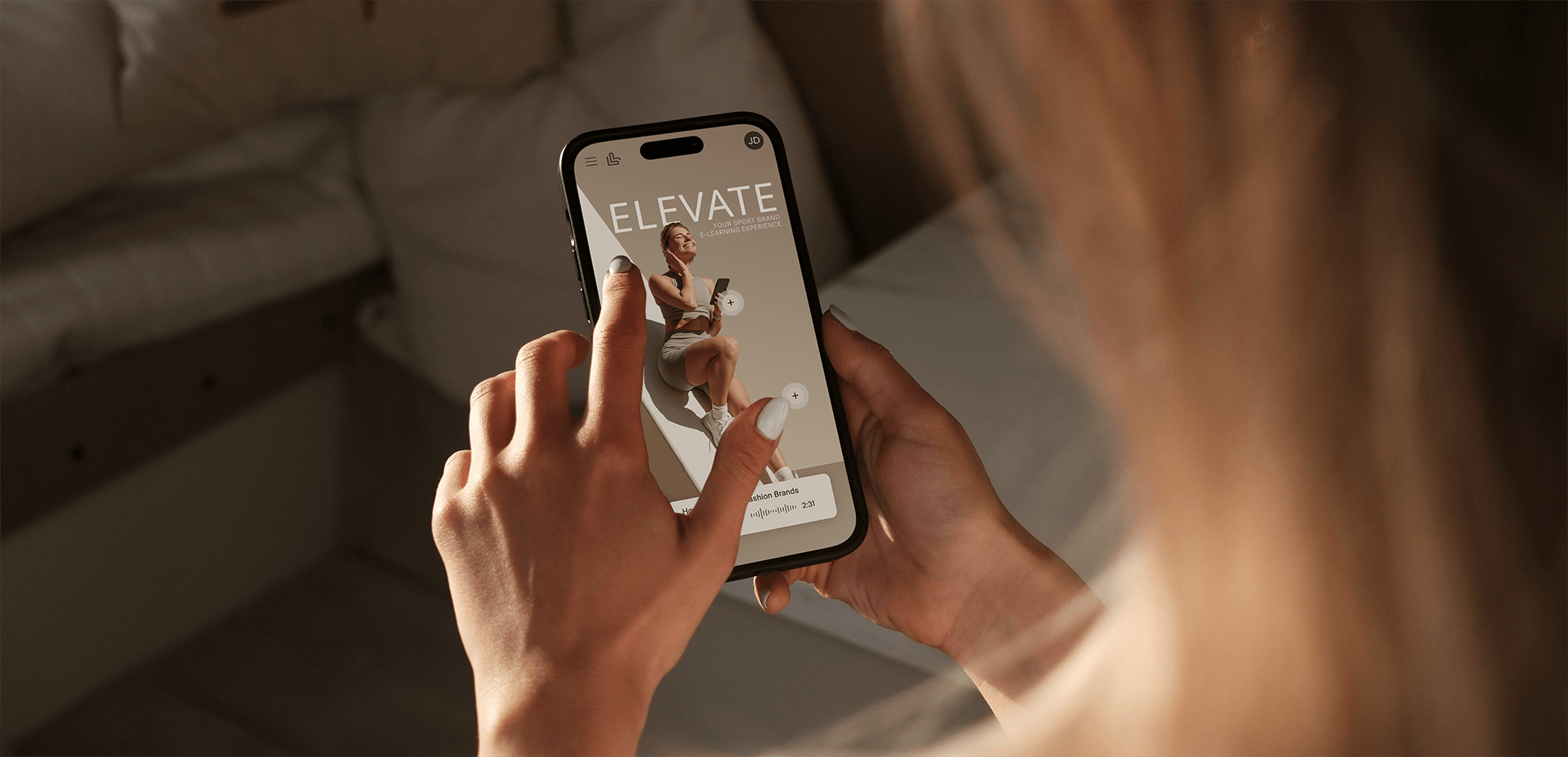
Forward-thinking beauty brands are rapidly moving away from traditional training methods and embracing InstaLearn short, visually engaging, mobile-first content that mirrors the Instagram and TikTok experience their advisors and customers already love.
This format has become a game-changer for keeping teams motivated and up-to-date in a fast-paced environment.
Leading brands are successfully integrating InstaLearn in the following ways:
- Creating bite-sized video modules (30–90 seconds) for new product launches, application techniques, and selling rituals
- Encouraging advisors to produce and share their own user-generated InstaLearn content, turning top performers into internal influencers
- Running regular InstaLearn Challenges (e.g., “Best Client Consultation Video” or “New Product Storytelling”)
- Using InstaLearn as pre-work or follow-up to in-store training sessions
- Combining InstaLearn with peer feedback and community recognition to boost engagement
Key Points (Summary):
- Adoption of short, visually rich InstaLearn content (30–90 seconds)
- Encouraging user-generated content from beauty advisors
- Running regular gamified InstaLearn challenges
- Using InstaLearn as pre-work and reinforcement for in-store training
- Measurable improvements in engagement and speed of new product rollout
7. How The Learning Lab Supports Social Learning in Beauty Retail
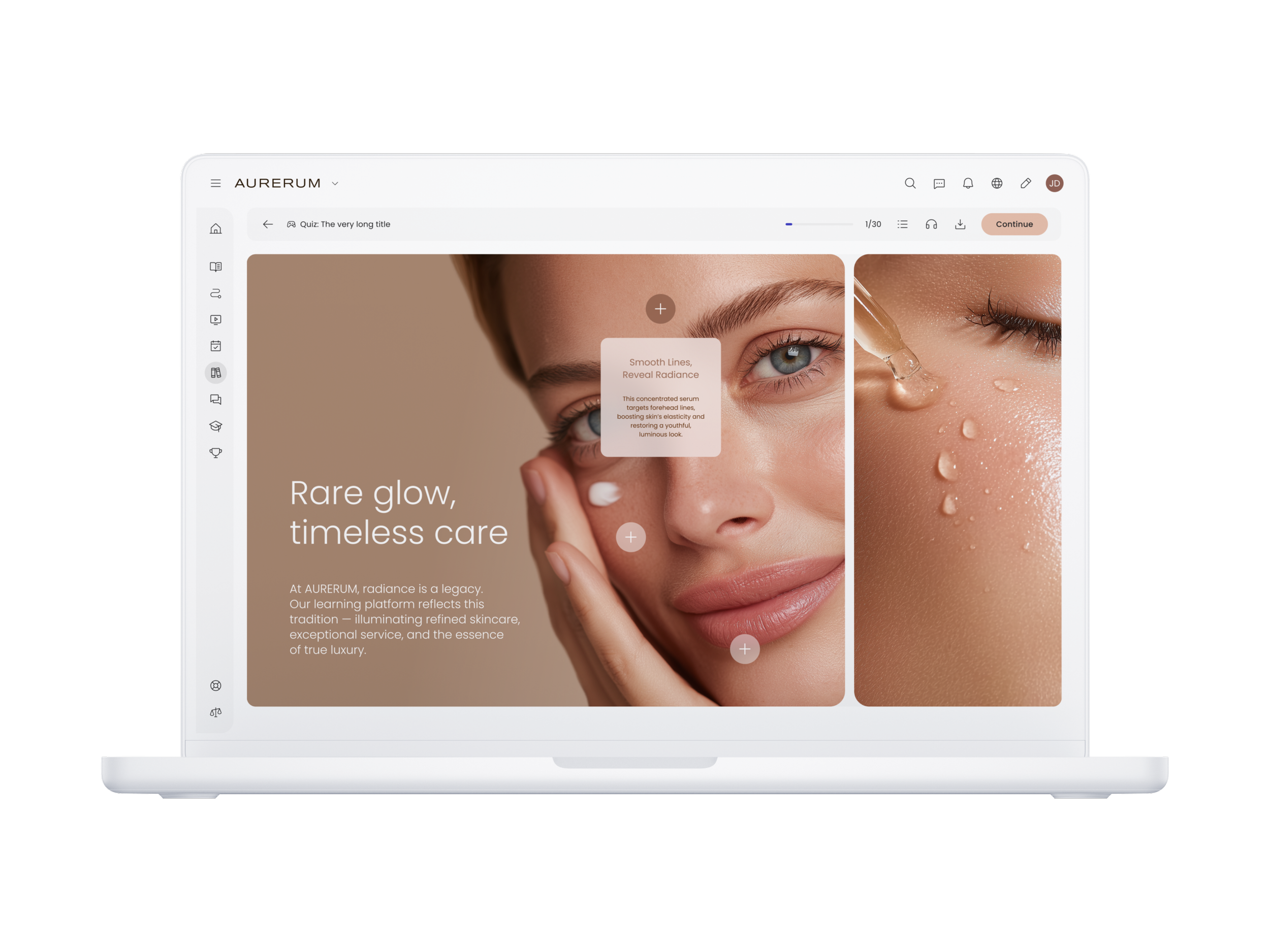
The Learning Lab was built from the ground up as a Boutique LMS specifically for luxury and beauty retail brands.
Unlike traditional platforms, it seamlessly blends structured learning with powerful social and collaborative features, creating a truly dynamic learning environment.
Our platform empowers beauty teams with:
- Strong community features, peer sharing, and easy user-generated content creation
- A beautiful mobile-first experience designed to feel as natural as using Instagram or TikTok for today’s beauty advisors
- The ability to combine formal training modules with social and collaborative learning
- Video Chat directly integrated around courses for real-time peer support and feedback
- Live discussions and group interactions that foster knowledge sharing and team connection
This combination allows beauty brands to move beyond passive learning and build a genuine learning culture where advisors learn from each other, stay highly engaged, and continuously develop their skills as true brand ambassadors.
Key Features (Summary):
- Built specifically for retail and beauty brands
- Advanced community features and peer-to-peer sharing
- Rich user-generated content capabilities
- Intuitive mobile-first design
- Seamless mix of structured + social/collaborative learning
- Video Chat integrated around courses
- Live discussions and group interactions
Conclusion: The Future of Beauty Retail Training is Social
Social learning is no longer a trend it has become a strategic necessity in beauty retail.
In an industry defined by rapid innovation, high turnover, and the need for authentic customer connections, brands that embrace peer-to-peer learning gain a real competitive advantage through more engaged teams, better knowledge retention, and stronger sales performance.
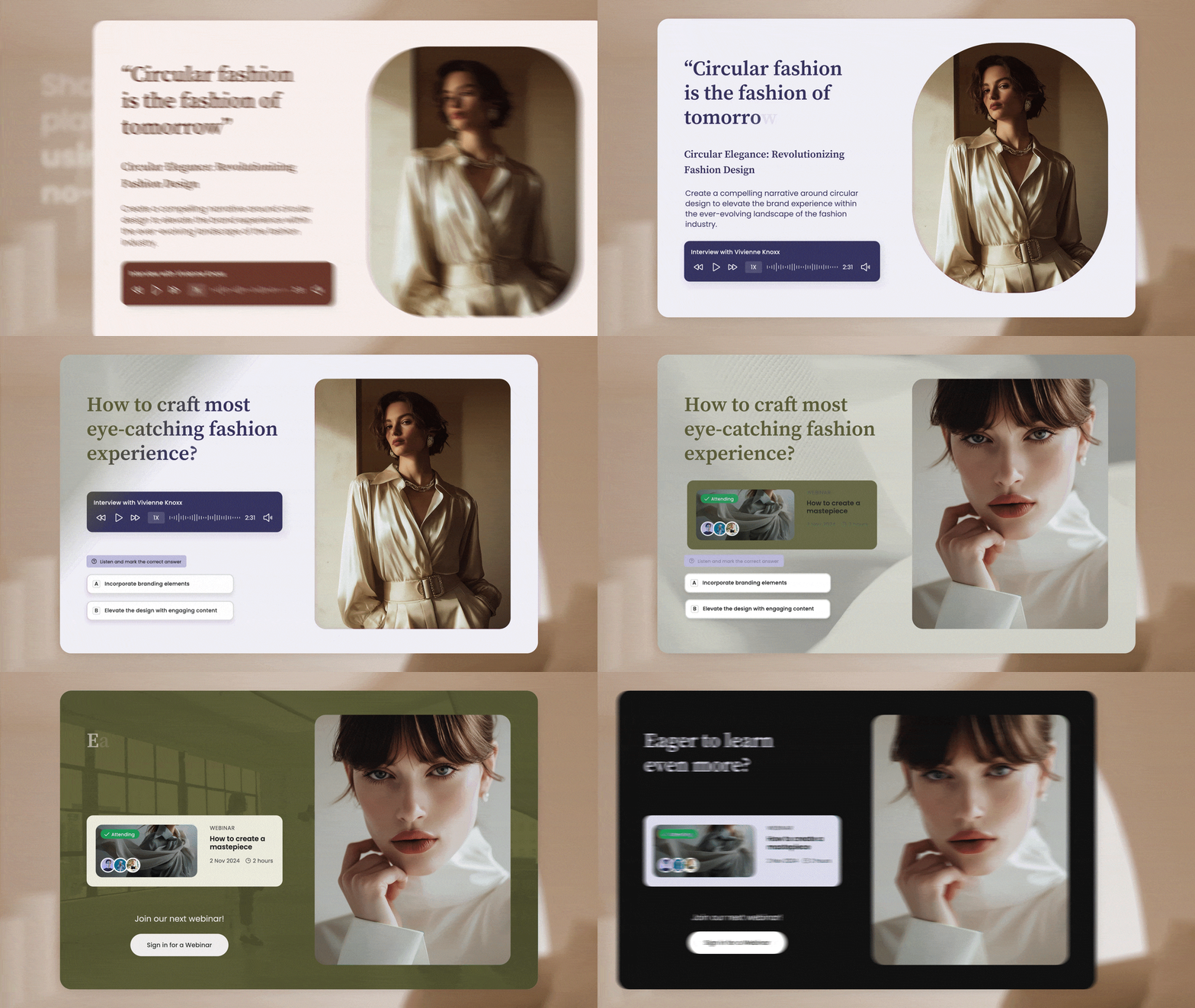
The Learning Lab is specifically designed to make this shift seamless. Built as a true Boutique LMS for luxury and beauty retail, it goes far beyond traditional e-learning by deeply integrating social learning at its core. With InstaLearn, user-generated content, video chat, live discussions, challenges, community feeds, and a mobile-first experience that feels natural to Gen Z advisors, The Learning Lab transforms training from a mandatory task into a living, collaborative, and highly engaging part of daily store life.
Brands that choose The Learning Lab don’t just train their teams — they build vibrant learning communities where beauty advisors continuously learn from each other, stay passionate about the brand, and deliver exceptional client experiences.
The future of beauty retail belongs to the brands that turn their teams into true brand ambassadors. The Learning Lab is ready to help you get there.