

8 Activity-Based Learning Ideas for Fashion Training
Activity-Based Learning Strategies to Boost Fashion Retail Performance
In fashion retail, training cannot rely only on theory. Sales associates learn best through experience by observing, practicing, experimenting, and interacting with real situations they encounter in store.
Activity-based learning transforms traditional training into engaging experiences that help teams internalize product knowledge, develop confidence, and improve client interactions. Instead of simply memorizing information about collections, materials, and brand heritage, advisors actively participate in exercises that mirror the reality of the shop floor.
By incorporating activity-based learning into fashion training strategies, brands can create a more dynamic environment where learning becomes practical, memorable, and directly connected to performance.
Here are eight effective activity-based learning ideas that can significantly enhance fashion training.

01. Flash Cards: A Simple Yet Powerful Tool for Fashion Training
Flash cards are an effective and engaging learning format that helps fashion retail teams quickly absorb and retain key information about products, collections, and brand knowledge.
Designed for short, focused learning moments, flash cards allow advisors to review essential details such as materials, product features, styling tips, and selling points in a clear and visual way.
This format is particularly well suited for mobile learning, enabling frontline teams to refresh their knowledge quickly before client interactions and stay confident on the shop floor.
Deliver short, focused learning moments for busy retail teams
Reinforce product knowledge and collection highlights
Support quick knowledge refresh before client consultations
Use visual and concise formats for better retention
Adapt perfectly to mobile-first learning environments
Encourage continuous learning in daily retail routines
02. InstaLearning Modules: Fast, Engaging Learning for Fashion Retail Teams
InstaLearning modules are designed to deliver concise, visually engaging training that fits the fast pace of fashion retail.
Inspired by the intuitive, mobile-first experience of social media formats, these short learning capsules allow advisors to absorb key insights about collections, trends, styling techniques, and brand stories in just a few minutes.
By combining dynamic visuals, quick interactions, and focused messaging, InstaLearning makes training more engaging and easier to integrate into daily retail routines ensuring teams stay informed, confident, and ready to inspire clients on the shop floor.
In Summary:
Deliver short, impactful learning modules in minutes
Use mobile-first, visually engaging formats
Reinforce collection highlights, trends, and styling tips
Encourage frequent learning moments during the workday
Improve knowledge retention through concise content
Keep frontline teams continuously updated and confident
03. Branching Scenarios: Simulating Real Client Interactions in Fashion Training
Branching scenarios bring fashion training to life by placing advisors in realistic client situations where they must make decisions and navigate different outcomes.
Through interactive storytelling, learners explore multiple paths based on their choices—such as recommending a product, handling client objections, or suggesting complementary pieces.
This experiential format mirrors the complexity of real retail interactions and helps advisors develop confidence, judgment, and communication skills. By practicing in a safe digital environment, teams can refine their consultation techniques before applying them on the shop floor.
In Summary:
Simulate real client consultations and retail scenarios
Allow learners to make decisions and explore different outcomes
Improve problem-solving and communication skills
Prepare advisors for objections and client needs
Reinforce consultation techniques and product recommendations
Create immersive, experience-based learning
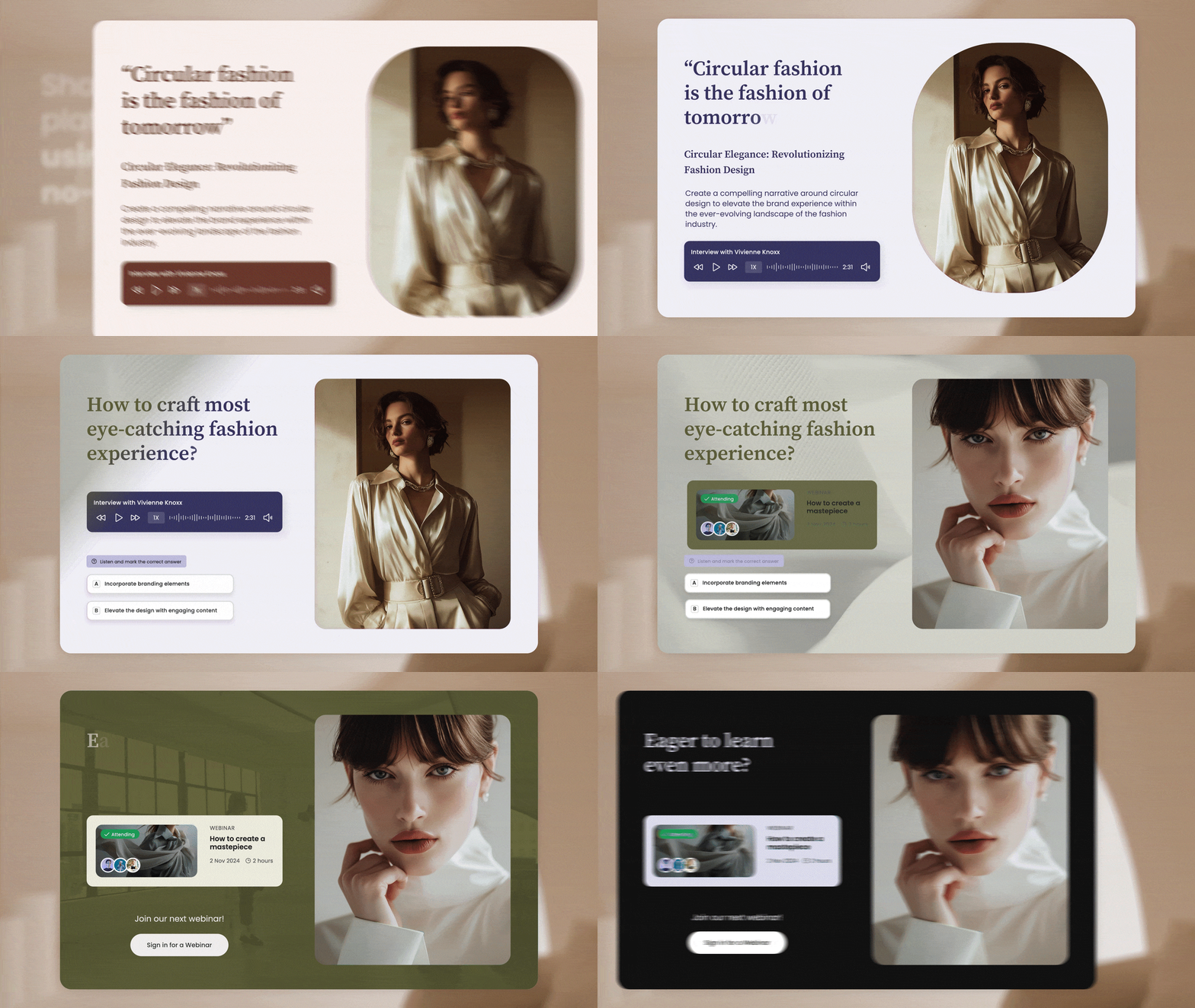
04. Video Quizzes: Engaging Knowledge Checks for Fashion Training
Video quizzes transform traditional assessments into engaging learning moments by combining dynamic visual content with interactive questions.
In fashion training, this format allows advisors to observe real-life product presentations, styling demonstrations, or client interactions before answering targeted questions that reinforce key concepts.
By integrating quizzes directly within videos, learners remain actively engaged while testing their understanding of collections, materials, and selling techniques. This approach strengthens knowledge retention and helps advisors confidently apply what they have learned on the shop floor.
In Summary:
Combine video content with interactive quizzes
Reinforce product knowledge and collection highlights
Improve engagement through dynamic visual learning
Test understanding of styling techniques and client interactions
Encourage active participation rather than passive viewing
Strengthen knowledge retention for frontline teams
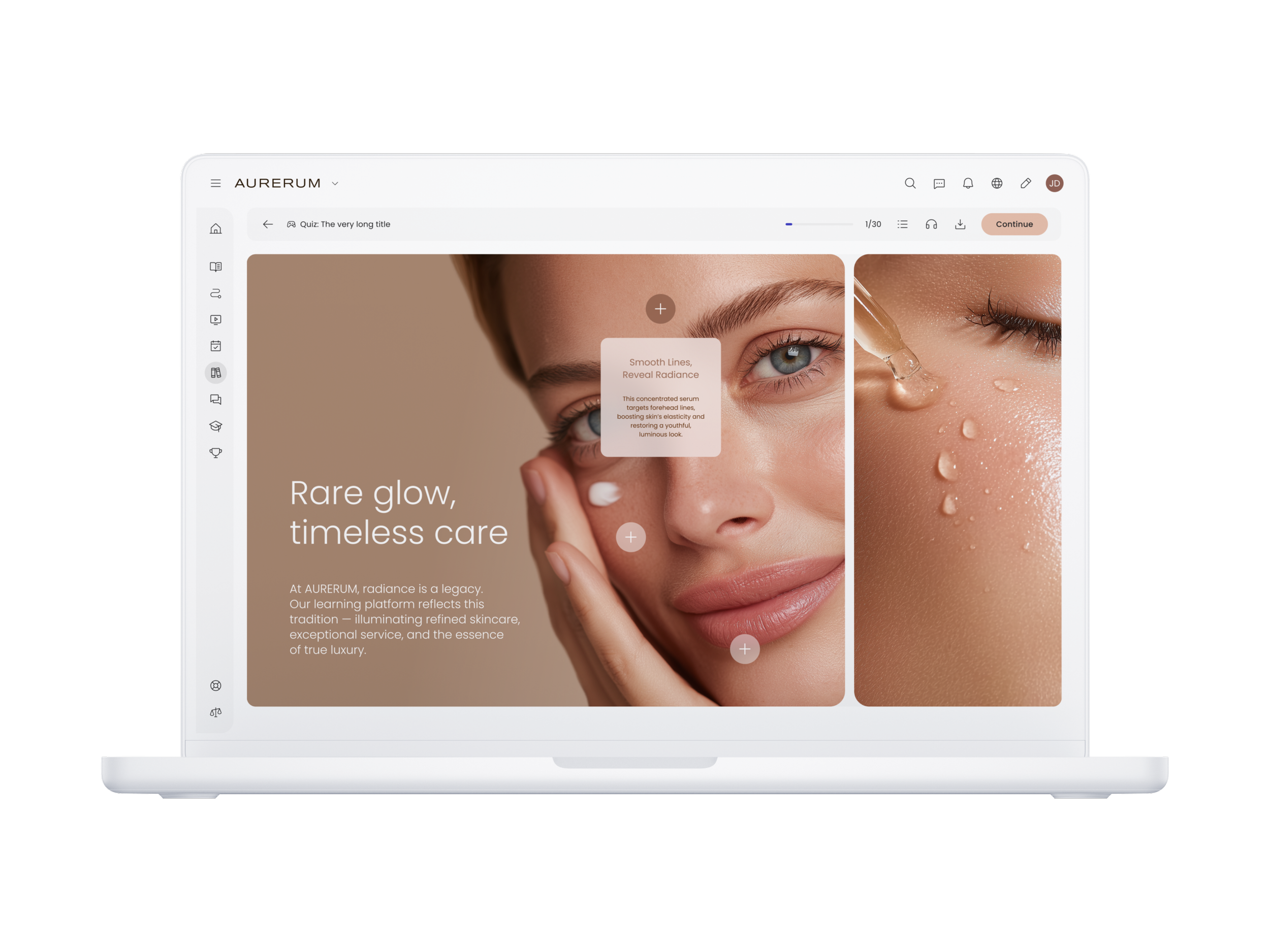
05. Image and Video Hotspots: Interactive Product Discovery for Fashion Training
Image and video hotspots turn visual content into interactive learning experiences by allowing advisors to explore products in detail through clickable elements.
In fashion training, hotspots can highlight specific features such as fabric composition, design details, craftsmanship techniques, or styling suggestions directly within an image or video.
This interactive format encourages learners to actively engage with the content, making product discovery more intuitive and memorable.
By combining visual exploration with contextual information, hotspots help advisors deepen their understanding of collections and confidently communicate product value to clients.
In Summary:
Add interactive hotspots to images and videos
Highlight product details, materials, and craftsmanship
Encourage active exploration of collections
Improve visual learning and knowledge retention
Support product storytelling and styling insights
Help advisors communicate product value with confidence
06. Photo and Video Assessments: Validating Real Retail Skills in Fashion Training
Photo and video assessments bring fashion training closer to real-world practice by allowing advisors to demonstrate their skills directly from the shop floor.
Instead of relying only on theoretical quizzes, learners can upload photos or videos showcasing product presentations, styling suggestions, visual merchandising setups, or client consultation simulations.
This format enables trainers and managers to evaluate how knowledge is applied in real situations, reinforcing practical learning and encouraging teams to actively engage with training.
By linking learning to real retail actions, photo and video assessments help ensure that training translates into confident performance in-store.
In Summary:
Allow advisors to submit photo or video evidence of their work
Validate product presentations and styling techniques
Evaluate visual merchandising and retail execution
Encourage practical application of training
Connect learning directly to real shop-floor activities
Strengthen skills development and coaching opportunities
07. Role-Play Simulations: Practicing Real Client Interactions in Fashion Training
Role-play simulations are a powerful training method that allows fashion advisors to practice real client interactions in a safe and structured environment.
By simulating common retail situations such as discovering client needs, presenting collections, handling objections, or suggesting complementary items learners develop the confidence and communication skills required on the shop floor.
These simulations encourage active participation and help teams refine their consultation techniques while reinforcing brand storytelling and service excellence.
In Summary:
Simulate real client consultations and retail situations
Practice needs discovery and product presentation
Improve communication and selling techniques
Prepare advisors for objections and client questions
Reinforce brand storytelling and service rituals
Build confidence before applying skills in-store
08. Challenges: Gamifying Fashion Training to Boost Engagement
Challenges introduce a dynamic and competitive element to fashion training, motivating advisors to actively participate and apply their knowledge.
By setting clear objectives such as completing modules, mastering product knowledge, or demonstrating styling expertise challenges encourage learners to engage with training in a more interactive and rewarding way.
Whether organised individually or in teams, these activities create a sense of achievement and momentum, helping retail teams stay motivated while reinforcing key brand and product concepts.
In Summary:
Introduce gamified learning experiences to increase engagement
Motivate teams through clear goals and friendly competition
Reinforce product knowledge and styling expertise
Encourage team participation and collaboration
Reward progress and achievement through badges or recognition
Turn training into a dynamic and motivating experience

Conclusion: Activity-Based Learning Strategies to Boost Fashion Retail Performance
Fashion retail thrives on creativity, emotion, and human connection—qualities that cannot be developed through passive learning alone.
Activity-based learning transforms training into an engaging and practical experience where advisors actively practice the skills they will use every day on the shop floor.
By integrating interactive formats such as role-play simulations, styling challenges, video quizzes, and experiential product discovery, brands can create learning journeys that mirror real retail situations.
When training becomes dynamic and experience-driven, advisors build deeper product understanding, stronger storytelling abilities, and greater confidence in client interactions.
Ultimately, activity-based learning helps fashion brands bridge the gap between knowledge and performance, empowering retail teams to deliver memorable client experiences and drive stronger in-store results.