

L&D Strategy for Cosmetics Training
Building an Effective L&D Strategy for Cosmetics Training
A high-impact L&D strategy for cosmetics training goes beyond product knowledge, it equips beauty advisors with the confidence, storytelling skills, and consultation expertise needed to deliver exceptional client experiences.
In a fast-evolving beauty market, training must be continuous, mobile-first, and closely aligned with product launches, brand values, and in-store realities.
By combining immersive learning formats, microlearning for quick refreshers, and data-driven insights into learner engagement and performance, brands can build scalable training ecosystems that accelerate advisor expertise, strengthen brand storytelling, and ultimately drive stronger client relationships and retail performance.
Align Training with Brand Identity and Client Experience
In cosmetics retail, product knowledge alone is not sufficient. Beauty advisors are ambassadors of the brand, and their role is to translate brand identity into meaningful client experiences.
Effective training must therefore go beyond technical information and immerse teams in the brand’s DNA—its heritage, values, rituals, and emotional universe.
When advisors understand the deeper meaning behind products and the philosophy of the brand, they are able to engage clients with authenticity, confidence, and storytelling that creates memorable interactions.
Connect training to the brand’s heritage and values
Combine product expertise with brand storytelling
Teach consultation rituals and service standards
Focus on the emotional experience of the client
Empower advisors to represent the brand authentically in-store

Design Training Around Real Retail Moments
Traditional corporate training often fails to reflect the dynamic realities of the shop floor.
In cosmetics retail, advisors interact with clients in fast-paced environments where product expertise, consultation skills, and emotional intelligence must come together instantly.
Effective training strategies therefore focus on real retail moments situations advisors encounter daily when engaging with clients. By designing learning experiences around authentic scenarios, brands ensure that training is practical, relevant, and immediately applicable in-store.
Focus training on real client consultations
Teach product discovery and storytelling conversations
Develop skills for cross-selling and service rituals
Prepare advisors for objection handling and client concerns
Align training with seasonal launches and retail campaigns
Mirror real-life situations advisors face every day
Adopt Mobile-First Learning for Frontline Teams
Beauty advisors spend the majority of their time on the shop floor, interacting with clients rather than sitting at a desk.
For training to truly support performance, it must be designed with mobility in mind. A mobile-first learning approach ensures that content is easily accessible on smartphones, quick to consume, and simple to revisit just before or between client interactions.
By leveraging microlearning formats, brands enable advisors to refresh product knowledge, consultation techniques, and brand stories in just a few minutes—turning learning into a practical tool for daily retail performance.
Ensure training is accessible on smartphones
Design content that is quick and easy to consume
Allow advisors to refresh knowledge before client interactions
Use microlearning formats for rapid knowledge updates
Support learning directly on the shop floor
Turn training into a practical performance tool
Combine Product Knowledge with Brand Storytelling
Cosmetics products often involve sophisticated formulations, active ingredients, and technical benefits that require clear explanation.
However, in luxury and beauty retail, knowledge alone does not create desire. An effective L&D strategy balances scientific understanding with emotional storytelling, allowing advisors to translate complex information into engaging client conversations.
By combining ingredient expertise, application techniques, and the brand’s philosophy, training empowers advisors to communicate not only what a product does—but why it matters to the client.
Teach scientific product knowledge and ingredient benefits
Integrate emotional storytelling into training
Demonstrate application techniques and usage rituals
Connect products to the brand’s philosophy and universe
Help advisors explain not just features, but meaning and value
Use Interactive and Experiential Learning Formats
Engagement and knowledge retention increase significantly when learning becomes interactive and experiential.
Rather than relying solely on static content, effective cosmetics training incorporates formats that encourage active participation and real-world application.
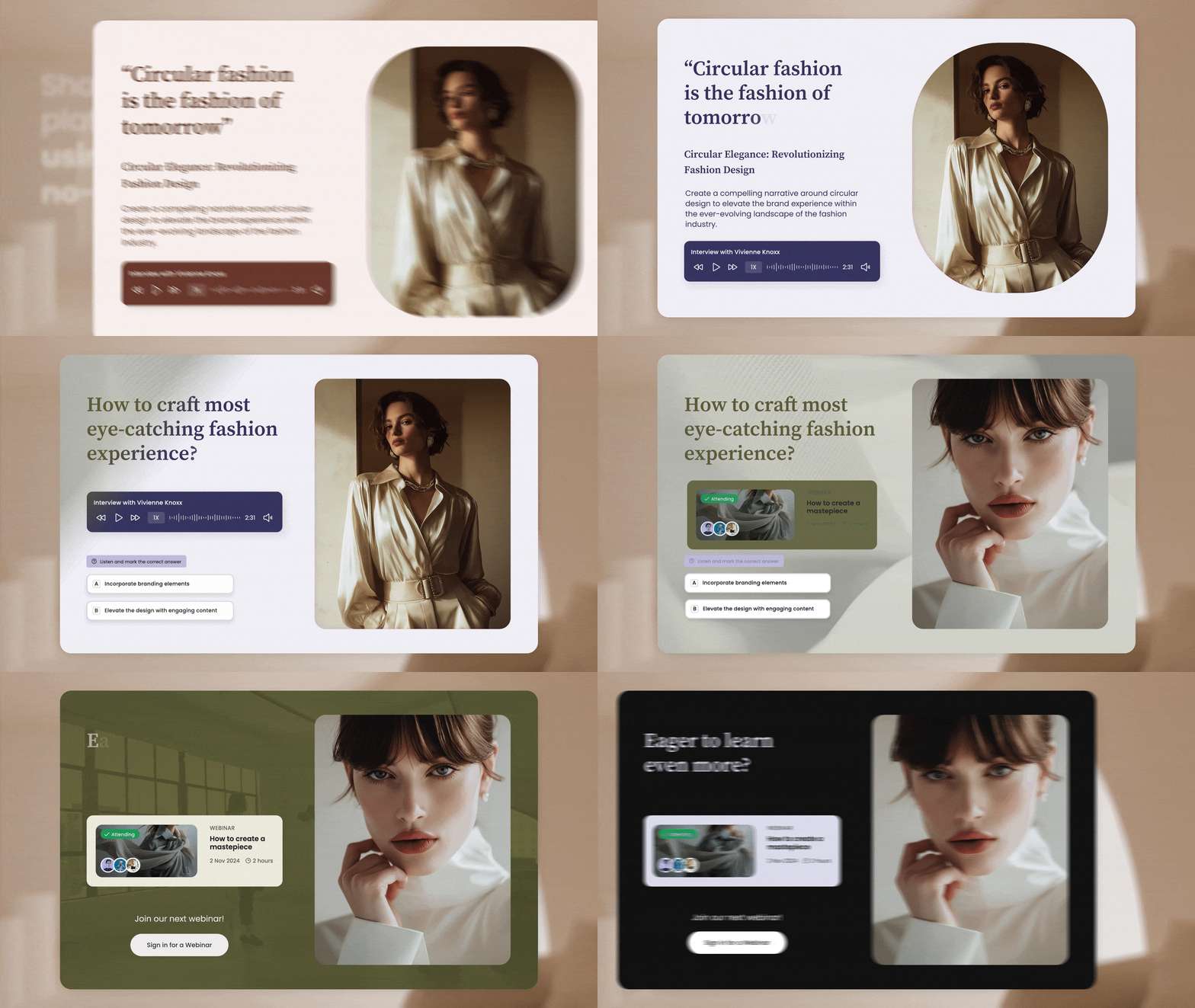
Interactive learning experiences such as video-based modules, branching consultation scenarios, quizzes, and in-store validation exercises allow advisors to practice decision-making and demonstrate their understanding.
This approach transforms training from passive consumption into a dynamic learning journey that mirrors the realities of the shop floor.
Use video-based learning to demonstrate products and rituals
Create branching consultation scenarios that simulate real client interactions
Reinforce knowledge through interactive quizzes and assessments
Enable photo or video uploads to validate in-store application
Encourage active participation and experiential learning
Connect training directly to real retail situations
Empower Managers as Learning Coaches
Store managers play a pivotal role in transforming training into real performance on the shop floor.
Beyond overseeing operations, they act as mentors who guide and support their teams’ development. To fulfill this role effectively, managers need access to real-time learning insights that allow them to track progress, identify knowledge gaps, and provide targeted coaching.
When equipped with the right data and tools, managers can reinforce training directly in-store, ensuring that learning translates into confident client interactions and stronger retail performance.
Provide managers with real-time learning dashboards
Enable tracking of team progress and engagement
Offer coaching insights to identify development needs
Encourage on-the-floor mentoring and reinforcement
Connect training with daily store performance
Connect Learning to Performance Metrics
Training initiatives must ultimately contribute to measurable business outcomes.
An effective L&D strategy goes beyond content delivery by linking learning activity to performance indicators that matter in retail.
By analysing engagement levels, knowledge retention, certification achievements, and the impact of training on store performance, brands gain valuable insights into how learning influences results.
These data-driven insights allow organizations to continuously refine their training strategy, ensuring that learning remains aligned with business objectives and frontline performance.
Track learning engagement and participation rates
Measure knowledge retention through assessments
Monitor certification and learning path completion
Evaluate the impact of training on retail performance
Use data to continuously optimize training strategies

Build a Scalable Learning Ecosystem
Global cosmetics brands operate across multiple markets, cultures, and retail environments, making scalability a critical component of any L&D strategy.
A strong learning ecosystem must support consistent brand education while allowing local teams the flexibility to adapt training to their market realities.
By combining multilingual content, role-based learning paths, and centralized governance with local adaptability, brands can maintain a unified message worldwide while empowering regional teams to deliver relevant and impactful training.
Provide multilingual training content for global teams
Design role-based learning paths tailored to different retail roles
Ensure centralized governance with local flexibility
Maintain consistent brand messaging across markets
Enable scalable training deployment worldwide
Conclusion: Designing an L&D Strategy that Elevates Cosmetics Training
Cosmetics training has evolved far beyond the simple transfer of product information.
Today, the objective is to empower beauty advisors to represent the brand with confidence, expertise, and authenticity while delivering exceptional client experiences.
By combining brand storytelling, mobile-first learning, interactive formats, and performance-driven analytics, companies can build L&D strategies that strengthen both advisor development and retail performance.
The brands that will lead the industry are those that transform training into a continuous and immersive learning journey one that reflects the creativity, emotion, and excellence of the beauty experience itself.
Move beyond information transfer to experience-driven learning
Empower advisors to embody brand identity and expertise
Combine storytelling, mobile learning, and interactive formats
Use data and analytics to drive continuous improvement
Build ongoing learning journeys aligned with retail performance
Mirror the beauty experience within the learning experience itself