

AI-Powered LMS Built for Retail Sales Performance
How an AI-Powered LMS Turns Retail Training into Sales Performance
Retail training fails when it stops at the certificate. An AI-powered LMS built for sales performance starts from the floor: product knowledge that becomes confidence, service rituals that stay consistent, launch modules that land with the drop.
AI speeds the academy authoring, translation, assistance — without taking the pen from the House. White-label so the first screen is the brand. Insta-Learning™ and video so the associate opens it between two clients. What you measure is not only completion.
It is client experience and sell-through.
Why Generic LMS Miss the Mark on Retail Performance
Retail performance depends on what teams can confidently do on the boutique floor.
When an LMS is built around headquarters’ compliance requirements, course completion can take priority over product storytelling, service rituals, and customer interactions. Content that is too long, arrives after a collection launch, or feels disconnected from the brand becomes difficult to apply.
Retail teams need learning aligned with the drop calendar, connecting product knowledge to service behaviours that support conversion. Seasonal launches, multiple languages, staff turnover, and mobile-only access make timely, relevant training essential.
HQ compliance vs. boutique rituals: Completing a course does not demonstrate the ability to deliver the brand’s service experience.
Too long, too late, off-brand: Training loses relevance when it exceeds the time available, misses the launch, or fails to reflect the Maison.
A missing performance connection: Product knowledge needs to translate into customer conversations, recommendations, and service behaviours that support conversion.
A blank page vs. a drop calendar: Teams need reusable formats and planned learning releases that keep pace with collections and campaigns.
Seasonal pressure: Training must be ready before products reach the boutique floor.
Languages and turnover: Localised content and clear onboarding journeys help new teams become confident quickly.
Mobile-only realities: Learning must be easy to access and use on a phone within the rhythm of boutique work.
Retail First + AI: From Learning Completion to Boutique Performance
Retail-first learning starts with the brand and connects every learning moment to the boutique floor.
From the first screen, the experience reflects the Maison’s identity, language, and standards. AI acts as a production partner, helping teams draft, adapt, and localise content while the House keeps the pen: directing the story, validating accuracy, and approving every release.
Video, Insta-Learning™, and nano formats bring focused guidance into the rhythm of retail work. Success is assessed through application—how confidently teams advise customers, how consistently they deliver the brand experience, and how learning contributes to sell-through.
The brand from the first screen: Carry the Maison’s visual identity, voice, and service standards throughout the learning journey.
AI as a production partner: Support content creation and adaptation while keeping editorial control with the House.
Formats for the floor: Use video, Insta-Learning™, and nano modules for product discovery, service demonstrations, and timely refreshers.
Confidence in action: Assess whether teams can explain products, make relevant recommendations, and personalise service.
A consistent customer experience: Observe how learning translates into brand behaviours and boutique rituals.
A connection to sell-through: Track learning alongside commercial results, accounting for stock, seasonality, and other factors that influence sales.
What “AI-Powered” Actually Means: AI Assists, the House Keeps the Voice
AI-powered learning uses AI to support content production, guide learners, and simplify administration.
In luxury and retail, its value comes from turning a clear brief into useful, brand-aligned learning while preserving the Maison’s character.
AI can accelerate drafting, adaptation, and translation; the House directs the creative work and approves what reaches its teams.
AI-Assisted Authoring
From brief to content: Generate draft text, images, and voice content around products, service rituals, and customer scenarios.
Vocabulary with context: Guide AI with approved luxury and retail terminology, brand references, and tone-of-voice examples.
Speed with character: Produce variations efficiently while retaining the storytelling and nuance that make the Maison distinctive.
AI for Learners and Admins
Support on the floor: An assistant or chatbot can help teams find answers within approved product and training resources.
Adaptive learning paths: Tailor guidance and learning recommendations to roles, progress, and identified knowledge gaps.
Translation at scale: Prepare multilingual content faster, with local review to preserve meaning and brand expression.
What AI Does Not Replace
Brand codes and story: The House defines its heritage, values, language, and distinctive rituals.
Art direction and judgement: Creative teams select, refine, and approve the final experience.
Ownership of the voice: AI assists; the House keeps the voice.
Built for the Sale, Not the Classroom
Retail learning needs to fit the pace of the boutique and prepare teams for their next customer interaction.
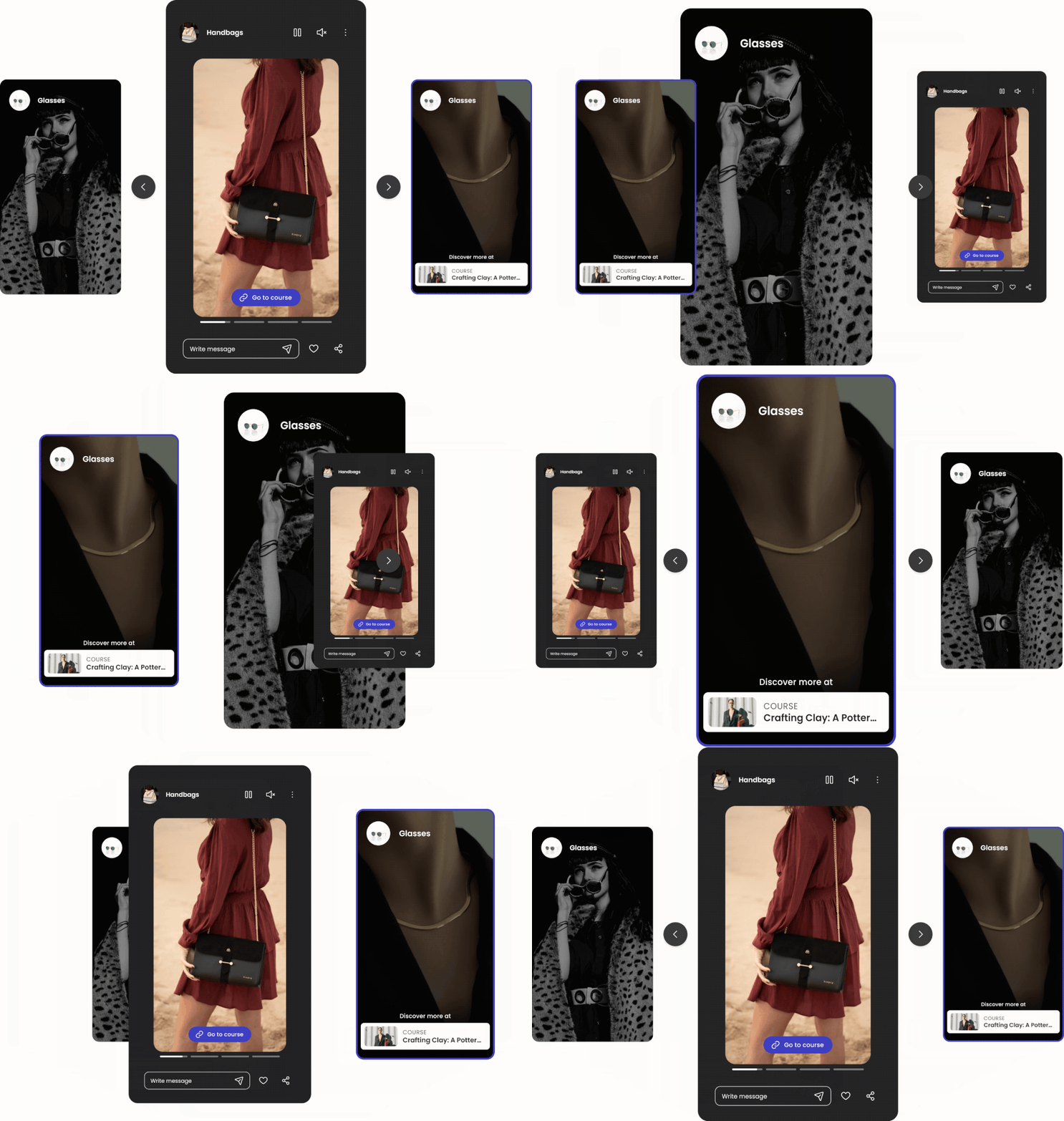
Mobile access and Insta-Learning™ bring focused product knowledge and service guidance into the working day.
Video becomes the lesson itself, combining demonstrations with quizzes, hotspots, and practical assessments. Learning journeys connect onboarding, collection launches, visual merchandising, and service, tailored by role, store, and market. A white-label, no-code environment brings these experiences together in the Maison’s identity, giving teams the tools to create and update training as retail priorities evolve.
Mobile + Insta-Learning™: Short, accessible learning moments that help teams prepare, refresh, and apply knowledge on the floor.
Video as the lesson: Use embedded quizzes to check understanding, hotspots to explore details, and video assessments to demonstrate skills.
Journeys with a retail purpose: Structure learning around onboarding, launches, visual merchandising, and service rituals.
Relevant to each team: Tailor content and learning paths by role, store, and market.
White-label brand experience: Reflect the Maison’s visual identity and voice throughout the platform and training materials.
No-code creation: Enable teams to build, adapt, and publish learning without writing code.
Who It’s For: From Brand Academies to Boutique Teams
Designed for fashion, luxury, watches, beauty, sportswear, automotive, and lifestyle brands, this learning approach connects brand education with everyday retail practice.
It supports academy and retail excellence teams creating programmes, brand educators sharing expertise, store managers coaching performance, and associates preparing for customer interactions.
For organisations operating across markets, global rollout brings a shared brand experience together with local learning needs. SSO and API integrations connect the LMS with existing systems, making learning part of the wider retail environment.
Specialist sectors: Fashion, luxury, watches, beauty, sportswear, automotive, and lifestyle.
Academy teams: Structure onboarding, development programmes, and learning journeys.
Retail excellence and brand education: Translate brand identity, product expertise, and service standards into practical training.
Store managers: Support coaching, identify learning needs, and follow team progress.
Retail associates: Access relevant guidance for product storytelling, customer service, and daily boutique activities.
Global organisations: Coordinate learning across roles, stores, languages, and markets.
Connected retail systems: Use SSO for streamlined access and APIs to integrate learning with the existing retail technology stack.
Comparison Snapshot: From Corporate Training to Brand-Driven Retail Learning
A retail-first approach shifts the focus from administering courses to preparing teams for customer interactions.
The brand shapes the learning environment, boutique needs guide the content, and AI-assisted templates help teams create materials faster. Short, mobile learning fits the working day, while an integrated platform brings creation, delivery, and assessment into one product.
Corporate vs. brand-driven: A standard learning environment versus an experience shaped by the Maison’s identity, voice, and visual codes.
Compliance vs. the floor: Completion-focused training versus practical preparation for product storytelling, service rituals, and customer conversations.
Blank page vs. AI + templates: Building each course from scratch versus using branded templates and AI assistance, with editorial control retained by the House.
Desktop school vs. Insta-Learning™: Longer, desk-based sessions versus focused mobile learning moments within the rhythm of retail work.
Stacked tools vs. one product: Separate creation, delivery, and assessment tools versus a connected platform that simplifies the learning workflow.

How Brands Run It: From Brand Identity to Every Collection Launch
The learning cycle follows the rhythm of the brand.
Teams first shape the environment around the Maison’s identity, then create content through their academy or with support from the Lab studio, using AI to assist production. Short video and nano modules reach boutique teams before each collection drops, preparing them for product storytelling and customer conversations.
Completion data shows training reach, while confidence, service observations, and commercial signals help assess its application. Each collection becomes an opportunity to refine the next learning release.
Brand the environment: Apply the Maison’s visual identity, voice, and brand codes across the LMS and training materials.
Create with AI and expertise: Let the academy or Lab studio lead content creation, with AI supporting drafts, variations, and localisation.
Prepare teams before the drop: Release focused nano and video modules ahead of launch, covering key products, stories, and service behaviours.
Track learning and commercial signals: Review completion alongside team confidence, customer experience, conversion, and sell-through, accounting for other factors affecting results.
Iterate every collection: Use team feedback and performance insights to update content, improve formats, and sharpen the next launch.
From Learning to Sales Performance: Turning Knowledge into Boutique Action
Learning supports sales performance when teams can apply it in customer interactions.
Product knowledge builds confidence in storytelling and recommendations, while clienteling training helps teams deliver consistent, personalised service. Training released before a collection launch prepares associates to support sell-through from day one.
Reporting by store, team, and market helps identify learning gaps and explore connections with commercial results. The cycle is continuous: create relevant content, deliver it on mobile, engage teams, and measure application. Gamification and social features have a role when they encourage useful participation, practice, and knowledge sharing.
Product → confidence: Help associates explain craftsmanship, communicate value, and recommend with assurance.
Clienteling → consistency: Strengthen personalised conversations, thoughtful follow-up, and shared service standards.
Launch timing → sell-through: Prepare teams before the drop with product stories and practical selling guidance.
Reporting by store, team, and market: Review learning progress alongside commercial signals to guide coaching and content updates.
Create → Deliver on mobile → Engage → Measure: Connect content production with participation, practical application, and continuous improvement.
Purposeful gamification and social learning: Use challenges, recognition, and peer exchange when they support engagement and learning.
The Learning Lab: Retail-First, AI-Powered Learning for Sales Performance
The Learning Lab brings retail-first design, white-label customisation, AI-powered authoring, and Insta-Learning™ together to make training part of everyday boutique life.
Academy teams shape the story, AI supports production, and associates receive relevant learning before the next launch or customer conversation. The House keeps its voice throughout.
Success means more than completing a course. It means teams who explain products confidently, deliver service consistently, and bring the Maison’s character into every interaction. By connecting learning with feedback and commercial signals, brands can refine their approach with every collection.