

LMS for Retail: Train Retail Staff Faster & Boost Sales
LMS for Retail: Faster Training, Stronger Sales Performance
An LMS for retail helps teams get up to speed faster and turn product knowledge into confident customer conversations.
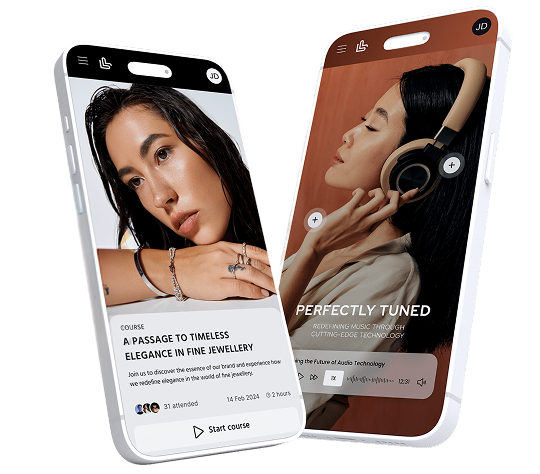
From onboarding new associates to preparing stores for collection launches, it delivers focused, mobile learning that fits the rhythm of the retail day.
Short videos, practical scenarios, and tailored learning journeys help staff strengthen product storytelling, recommendations, and service skills. Managers can track progress, identify gaps, and reinforce learning through coaching.
By connecting timely training with everyday selling behaviours, retailers can build more consistent customer experiences and support stronger sales performance across stores and markets.

Every Launch Needs a Prepared Team
A new collection arrives, new associates join, and store managers have limited time to prepare everyone before the first customer walks in.
Teams need to understand the products, tell their stories, and make relevant recommendations—all while managing shifts and daily boutique activity.
Timely, focused training helps associates build confidence before the launch and refresh their knowledge as questions arise. A retail LMS supports this preparation by delivering accessible learning, guiding onboarding, and helping managers identify where coaching is needed. Learning then continues on the floor through practice, feedback, and regular updates.
Prepare before the launch: Give teams product knowledge and selling guidance before the collection reaches customers.
Fit around retail work: Make training accessible within shifts and between customer interactions.
Build confident recommendations: Connect product features and stories with customer needs.
Support new associates: Provide a clear onboarding journey alongside launch-specific learning.
Equip managers to coach: Use learning progress and practical observations to target support.
Keep learning continuous: Reinforce training through refreshers, practice, and feedback.
Why Traditional Retail Training Falls Behind
Retail moves with collections, campaigns, and customer demand, but training does not always keep pace.
Long courses compete with time on the floor, while product information scattered across presentations, emails, and shared folders makes answers harder to find. Onboarding can vary from store to store, leaving associates with different levels of preparation.
When training arrives after a launch, teams must learn while already serving customers. Multiple languages, staff turnover, and limited desktop access add further friction. Completion reports show who finished a course, but practical assessments and manager observations are needed to understand who can apply the learning confidently.
Long courses: Lengthy sessions are difficult to fit around shifts and customer interactions.
Scattered information: Disconnected resources slow down access to relevant product knowledge.
Uneven onboarding: Different approaches across stores create gaps in knowledge and service delivery.
Late launch training: Associates face customer questions before they have been fully prepared.
Access and continuity challenges: Languages, turnover, and limited desktop availability make consistent delivery harder.
An incomplete view of readiness: Course completion alone does not show whether staff can recommend products or demonstrate service skills.
What Makes an LMS Retail-First?
A retail-first LMS is designed around the way store teams work: changing collections, busy shifts, and customer interactions that require confident answers.
Mobile access and focused learning formats make training easier to use within the retail day. A branded environment connects teams with the retailer’s identity, while journeys tailored by role, store, and market keep content relevant.
Product knowledge, service, clienteling, and visual merchandising come together in practical learning experiences. Simple creation tools and timely updates help academy teams prepare associates before launches and respond as priorities evolve.
Mobile and focused: Make essential learning accessible on a phone, with short modules and useful refreshers.
Brand-led experience: Reflect the retailer’s visual identity, language, values, and service standards.
Relevant learning journeys: Adapt training to each role, store, and market.
Practical retail content: Connect product expertise with recommendations, clienteling, service rituals, and visual merchandising.
Easy creation and updates: Help teams publish accurate, brand-aligned content in time for collections and campaigns.
Internal link: White-label LMS for multi-brand groups.

Train New Retail Staff Faster with Structured Onboarding
A clear onboarding journey helps new associates understand what to learn first and how to apply it.
Start with the essentials for their first customer interactions: the brand’s identity, key product stories, and core service rituals.
Introduce deeper knowledge progressively, combining focused lessons with demonstrations, practical exercises, and manager feedback.
A retail LMS can organise this sequence and track progress, while realistic tasks help managers assess readiness and identify where support is needed. This gives new staff a clear path towards confident, increasingly independent service.
Prioritise immediate needs: Focus first on welcoming customers, understanding their needs, and explaining key products.
Connect brand, product, and service: Show how the retailer’s values translate into everyday customer interactions.
Demonstrate before asking staff to perform: Use examples and videos to make expected behaviours clear.
Build skills through practice: Rehearse product storytelling, recommendations, and service rituals.
Provide targeted feedback: Help managers recognise progress and coach specific areas for improvement.
Assess practical readiness: Use realistic tasks alongside course completion to check what associates can do.
Turn Product Knowledge into Sales Conversations
Product knowledge becomes useful when associates can connect it with what matters to the customer.
Learning should help teams move from describing features to explaining relevant benefits, whether that means comfort, craftsmanship, functionality, or personal style. Through realistic scenarios and coached practice, associates can develop discovery questions, make thoughtful recommendations, and respond to concerns with clarity.
Clienteling and follow-up training extend that care beyond the initial conversation. Preparing teams before collections and campaigns launch gives them time to practise: knowledge supports confidence, and practice helps turn that confidence into effective, personalised service.
Translate features into benefits: Explain how a product’s qualities relate to the customer’s needs and preferences.
Ask meaningful discovery questions: Explore expectations, intended use, and priorities before recommending.
Recommend with relevance: Connect product knowledge with information shared by the customer.
Handle objections thoughtfully: Practise listening, clarifying concerns, and providing accurate answers.
Strengthen clienteling and follow-up: Build relationships through relevant recommendations and considerate communication.
Prepare before launch: Give teams time to learn new product stories and rehearse customer conversations.
Fit Learning into the Retail Day
Learning needs to fit around shifts, store activity, and customer interactions.
Mobile access and Insta-Learning™ give associates focused opportunities to refresh product knowledge or review a service technique during available moments. Video makes products, styling, and service behaviours easier to demonstrate, while quizzes, hotspots, and practical assessments encourage active participation.
Searchable resources help teams find approved information when questions arise. These short formats work best within a wider learning journey: deeper modules build understanding, practice develops skills, and manager coaching helps associates apply what they have learned on the floor.
Short, focused refreshers: Reinforce a product story, selling point, or service step between customer interactions.
Video demonstrations: Show product details, styling techniques, and service rituals in context.
Interactive learning: Use quizzes and hotspots to check understanding and explore key details.
Practical assessments: Ask associates to demonstrate a recommendation, product presentation, or service behaviour.
Answers when needed: Make approved product information and guidance easy to search on mobile.
A connected learning journey: Combine Insta-Learning™ with deeper learning, hands-on practice, and coaching.
Create and Update Training Faster with AI
Academy teams need to keep training aligned with new collections, campaigns, and changing product information.
AI can support this work by turning approved briefs and resources into draft lessons, activities, and knowledge checks. Branded templates provide a consistent starting point, helping teams reuse effective structures while adapting the story for each launch. AI-assisted translation can also prepare multilingual versions for local review.
The academy remains responsible for selecting sources, refining content, checking accuracy, and approving publication. This approach helps accelerate production while keeping the brand’s voice and standards under human direction.
Start with approved sources: Use validated product briefs, brand guidelines, and training resources to guide draft creation.
Reuse branded templates: Adapt established layouts and learning structures for new collections and campaigns.
Generate learning activities: Draft customer scenarios, practical exercises, and knowledge checks for academy review.
Support multilingual delivery: Prepare translated versions, with local teams checking terminology, meaning, and tone.
Update content efficiently: Revise affected lessons when product details or service guidance change.
Keep control with the brand: Retain human oversight of accuracy, storytelling, visual direction, and final approval.
Internal link: Creative AI-powered authoring tool.
Measure Readiness and Commercial Signals Together
Measuring retail learning means understanding whether teams can apply what they have learned.
Completion, knowledge checks, and time to readiness help track preparation, while confidence checks and manager observations reveal where associates need more practice. Reviewing these insights alongside service consistency, conversion, and sell-through can help identify patterns by store, team, and market.
Commercial results also reflect stock availability, footfall, promotions, and seasonality, so context matters. These insights help managers target coaching and academy teams refine content—for example, by clarifying a product story or adding practice around a common customer objection.
Track preparation: Monitor completion, knowledge, and the time associates need to demonstrate essential skills.
Check confidence and ability: Combine self-assessment with observed recommendations, product demonstrations, and service behaviours.
Review commercial signals: Examine service consistency, conversion, and sell-through where reliable data is available.
Analyse across the network: Explore results by store, team, and market to identify specific support needs.
Interpret results in context: Account for stock, footfall, promotions, and seasonal demand before drawing conclusions.
Turn insights into action: Use findings to guide coaching, strengthen exercises, and update learning materials.
Build a Repeatable Learning Cycle
A repeatable learning cycle helps retail teams prepare consistently for new starters, collection launches, and service priorities.
Begin with a clear business need, then define the behaviours associates must demonstrate on the floor. Build focused, branded learning and release it early enough for practice.
Store coaching reinforces those skills in daily customer interactions, while assessments and team feedback guide improvements. Repeating this process allows the academy to build on previous work and adapt each learning release to current needs.
Select a priority: Focus the rollout on onboarding, launch readiness, or a specific service goal.
Define the behaviours: Identify what associates need to explain, recommend, demonstrate, or deliver.
Create focused, branded content: Connect product stories and brand standards with realistic tasks and customer scenarios.
Deliver before application: Give teams time to learn, practise, and ask questions before the launch or activity.
Reinforce through coaching: Equip managers to observe skills, provide feedback, and support further practice.
Measure, listen, and refine: Review readiness and application, gather feedback, and improve the next learning cycle.
Internal link: LMS for retail academies and brand education teams.
Conclusion: Prepare Teams Faster, Support Stronger Sales
Stronger retail performance starts with teams who are prepared to serve customers confidently.
Structured onboarding builds essential skills, timely product education supports launch readiness, and mobile learning keeps guidance accessible throughout the retail day. AI-assisted creation helps academies produce and update content, while practical measurement shows where coaching and further learning are needed. Together, these elements connect training with everyday recommendations, service behaviours, and customer experiences.
The Learning Lab brings this approach to life through retail-first design, a white-label brand experience, creative authoring, and Insta-Learning™—helping academies prepare teams while keeping the brand’s identity at the heart of learning.
Retail-first: Build learning around onboarding, launches, and customer interactions.
White-label: Reflect the brand’s identity across the platform and training materials.
Creative authoring: Combine branded templates and AI assistance with academy oversight.
Insta-Learning™: Deliver focused mobile learning that fits the rhythm of retail work.