

AI in Retail Training
AI in Retail Training: Assistant to the House, Not Author of the House
AI is changing retail training the way a good atelier changes output: faster, cleaner, more consistent if the Maison keeps the pen.
The risk is not the tool. It is delegation. Hand the narrative to a generic model and the brand voice slips, the ritual flattens, the discount appears too soon.
The winning model is hybrid: human and AI in the same studio. AI drafts the module, the quiz, the translation, the image, the recap; the brand team keeps control of the story codes, silence, what must never be said. Used as an assistant, not a deputy, it raises productivity, cuts the small human errors that multiply across a hundred doors, and adapts the path to the advisor who is already strong on the icon and weak on the objection.
A creative authoring tool with an AI assistant, white-label and retail-first, turns that principle into daily work: speed for the range, craft for the House. The Learning Lab is built for that balance. The machine accelerates. The Maison decides.
Keep the brand voice: AI writes inside the codes of the House, not over them.
Keep the brand voice: AI writes inside the codes of the House, not over them.
A maison does not need a generic assistant that flattens every sentence into the same corporate tone. It needs a tool that already knows the register the words you use for a ritual, the words you never use with a guest, the pace of a consult, the difference between clinical and cold.
The model drafts inside those codes: your vocabulary, your silence, your standard. Editors stay in control. The House still sounds like itself.
Hybrid by design: human + AI — the team owns the narrative; the model never becomes the author.
AI can assemble a first draft, suggest a quiz, translate a card, or cut a ritual down to ninety seconds.
It cannot decide what the House believes. Practitioners and brand teams set the story, the standard and the tone; the model works underneath that line. Review stays human. Publication stays human. The platform accelerates the work. It does not replace the voice that guests and teams are meant to recognise.
Assistant, not delegate: do not hand over tone, ritual or “what not to say.”
Those three things are the House. An assistant can propose a line, shorten a card or list the steps of a welcome.
It must not invent the register, rewrite the ritual or decide which words are forbidden with a guest. That list lives with the brand and the floor. Use the model to move faster. Keep tone, ritual and the unsaid in human hands.
Productivity: modules, quizzes, summaries, variants and drops in days, not weeks.
A collection launch or a protocol change cannot wait for a six-week production cycle.
The team briefs the ritual once; the model helps turn it into a module, a short quiz, a summary for the floor, a language variant and a ninety-second drop. Editors cut, correct and publish. The calendar of the House — not the calendar of an agency sets the pace.
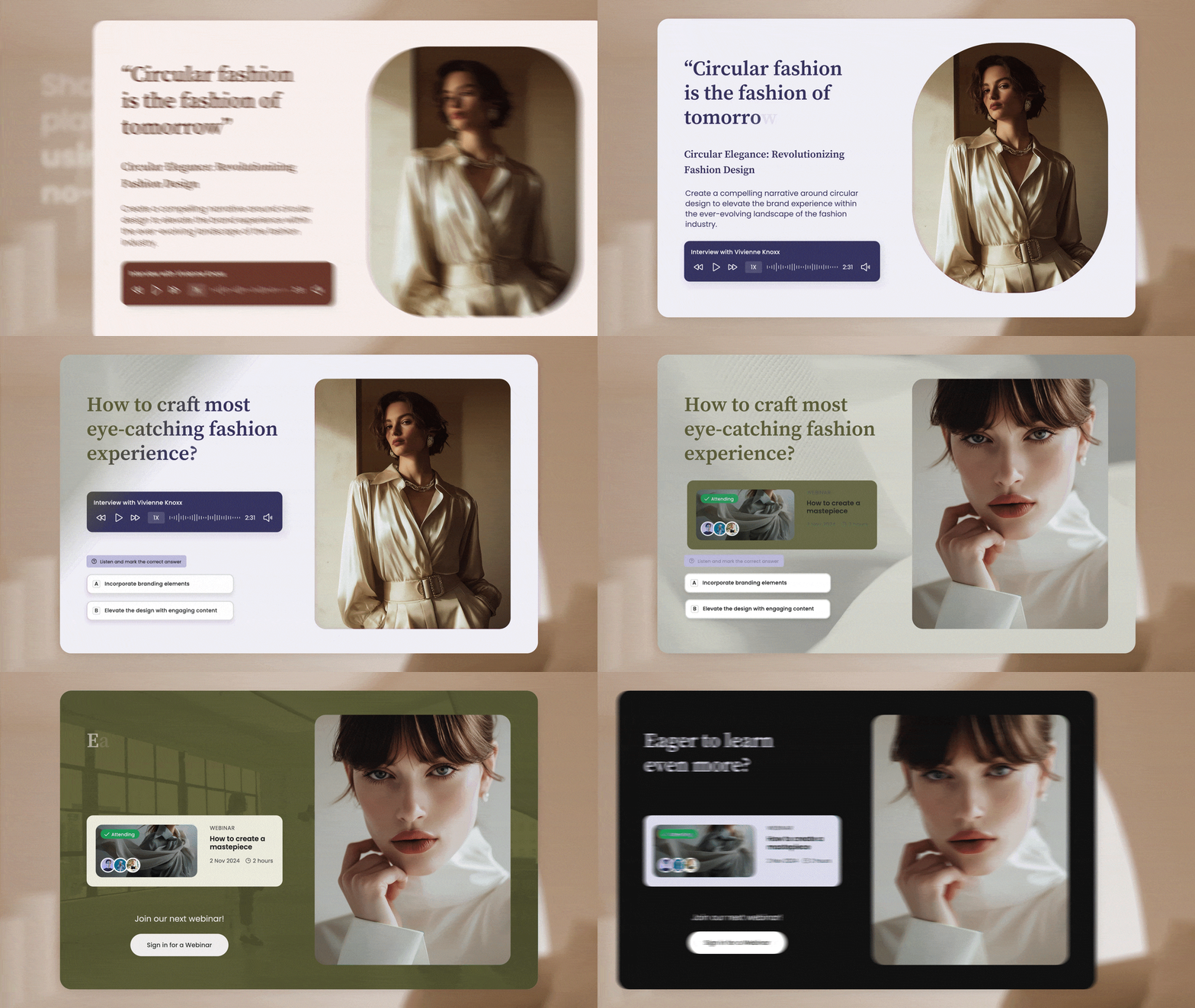
Fewer human mistakes: inconsistent lines, missed care notes, forty versions of day one.
When every market writes its own welcome, the guest hears a different House. When a contraindication sits in a side document, it is missed on the floor. When onboarding exists in forty files, nobody knows which day one is current. One source, one ritual, one care note — drafted with the model, locked by the team — cuts the drift. Less copy-paste. Fewer silent variants. The same standard in every room.
Adaptive learning: the path bends to role, door, language and what the advisor still fails.
A receptionist, a therapist and a longevity advisor do not need the same module.
A Zurich door and a Milan door do not need the same examples. The path follows the role, the boutique, the language of the floor and the questions the person still misses.
What is already known falls away. What fails comes back in a shorter card, on the same ritual, until the standard holds.
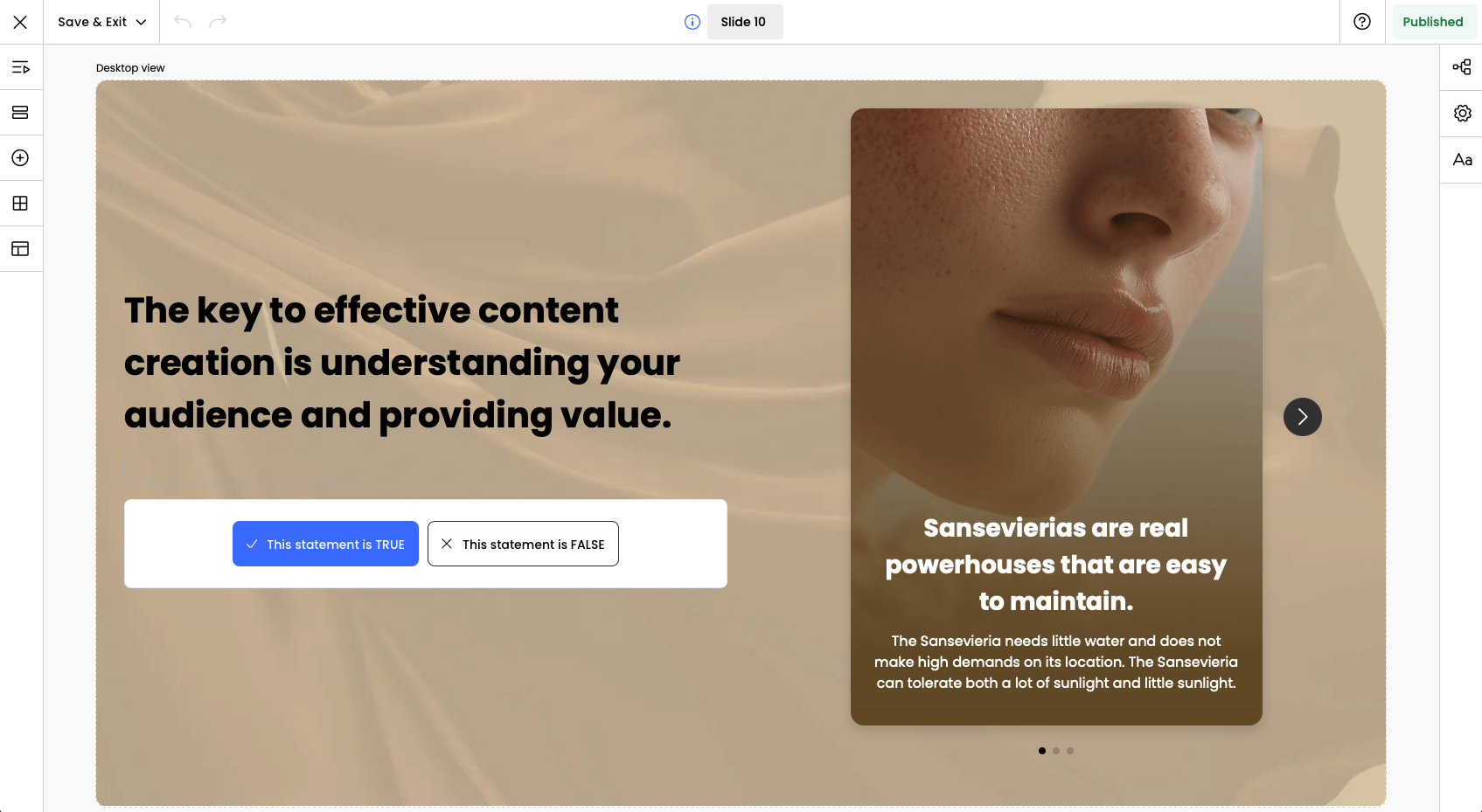
Creative authoring tool: a no-code, branded studio with AI for draft, structure, quiz and image.
The team works in the look of the House type, colour, rhythm without a developer.
The model proposes a draft, a structure, a quiz and an image; the author keeps or cuts. What leaves the studio already looks like the brand, already fits a phone between two guests, and still waits for a human to press publish.
Translation at scale + human proofreading: speed without a flattened Maison.
A launch cannot wait three weeks per language. The model produces the first pass across markets in hours.
Proofreading stays human and local so “vous” does not become the wrong register, a care note does not soften, and a signature line is not replaced by a polite international equivalent. Fast enough for the calendar. Still the House in every language.
Chatbot trained on the House: answers on the floor, in the brand’s voice.
Between two guests, the advisor does not open a binder.
They ask the bot contraindication, product pairing, how this door explains the ritual. The answers come from the House library, not from the open web: your protocols, your words, your “what not to say.”
It is support on the floor. It is not a second author, and it does not invent a tone the Maison would not sign.
Video and InstaLearn assisted, not generic: film, hotspots, branching and assessment stay on-brand.
The model can cut a clip, suggest a hotspot, draft a branch or propose a question.
It does not turn the ritual into stock footage and a template quiz. Framing, pace, the face of the House and the way a gesture is shown remain yours. Assistance shortens production.
The film, the card and the assessment still look like the Maison — not like every other LMS video on the market.

Analytics close the loop: who is ready, which boutique is slow, which module fails then AI helps recap only that.
Completion is not the point. You see who can run the ritual, which door lags, which card still loses people.
The model does not rebuild the whole academy. It drafts a short recap of the failure — one clip, one question, one note — so the team fixes that gap and puts it back on the floor. Measure, cut, return. Nothing extra.
Control is the product: automation without dilution. The House remains the House.
Speed, variants, translation, recaps and a bot on the floor only matter if the register does not slip.
The team keeps tone, ritual and “what not to say.” The model drafts inside those codes. Publish stays human. What scales is the work, not a generic voice wearing the logo. That is the standard: faster production, same Maison.
Conclusion: AI in Retail Training: Assistant to the House, Not Author of the House
AI in retail training is useful only if it stays an assistant to the House, not the author of the House.
It can draft a module, a quiz, a drop, a translation and a recap in days. It can answer on the floor in the brand’s voice and show which boutique is slow. It cannot own tone, ritual or “what not to say.”
The team keeps the narrative. The model works inside the codes — hybrid by design, never the signatory. Authoring stays no-code and branded. Translation is fast and then proofread. Video and InstaLearn stay on-brand. Analytics close the loop on the gap that actually fails.
Control is the product: automation without dilution. The House remains the House.