

The Boutique LMS for Wellness: Social Features
The Boutique LMS for Wellness: Social Features That Match How Practitioners Actually Learn
A therapist finishes a treatment, has eight minutes before the next guest, and cannot sit through a forty-minute module.
That is how learning actually happens in wellness, longevity and care: in pockets, on the floor, by watching someone do the gesture and then trying it. Protocols live in the hands, the voice and the way a practitioner explains a plan not in a PDF.
Most LMS platforms were built for offices. They deliver content. Practitioners need a house conversation: a ninety-second ritual on a phone, a voice note from a senior therapist, a clip of the consult sent for comment, a live board to redesign a guest journey, then practice on the table.
Care is taught shoulder-to-shoulder. A boutique LMS for wellness only works when it recreates that InstaLearn between appointments, audio and video around the course, messaging that protects the floor, Miro workshops, forums, UGC, and image and video assessment so the work is seen, not only scored.

Why a generic LMS fails in wellness and longevity
A corporate LMS can host modules, track completions and issue certificates.
That is not how care is taught. Wellness and longevity are crafts: pressure, pacing, presence, and the way a practitioner explains a plan to a guest.
A protocol PDF does not transmit any of that. Learning happens in eight-minute gaps between appointments, not in a training room.
The “feel” of the house sits with senior practitioners and leaves when they do. Across Zurich, Paris and Milan, the brand stays the same while execution drifts. Social features short visual cards, conversation around the course, shared video of the work, live workshops, forums are not extras. They are how you keep both the standard and the craft.
Résumé
- Craft vs content — a PDF does not teach the gesture or the explanation
- Time — learning happens between guests, not in classrooms
- Knowledge walks out — the house feel lives with people, not in the library
- Multi-site drift — same brand, different execution from clinic to spa
- Social features are the system — they hold standards and craft together
How practitioners actually learn
Practitioners do not start with a curriculum. They glance at a ritual between guests, ask a colleague how they do it, watch the gesture, then try it on the next appointment.
When a menu or a longevity pathway changes, they sit together and redraw the journey. The house conversation continues in corridors and group chats. Theory only sticks when it meets the table. The tricks that are not in the manual pass from one therapist to another.
A boutique LMS is useful only if each of those habits has a place: InstaLearn for the glance, audio and video discussion and messaging for the question, image and video assessment for “watch then try,” a live Miro workshop for the redesign, forums and notifications for the ongoing conversation, blended learning for theory plus floor practice, and UGC for what the manual never captured.
Résumé
- Glance between guests → InstaLearn
- “How do you do this?” → audio/video discussion + messaging
- Watch, then try → image and video assessment
- Redesign the journey together → live Miro workshop
- Keep the house talking → forums + notifications
- Theory + table → blended learning
- Tricks not in the manual → UGC
InstaLearn — learning in the gap between guests
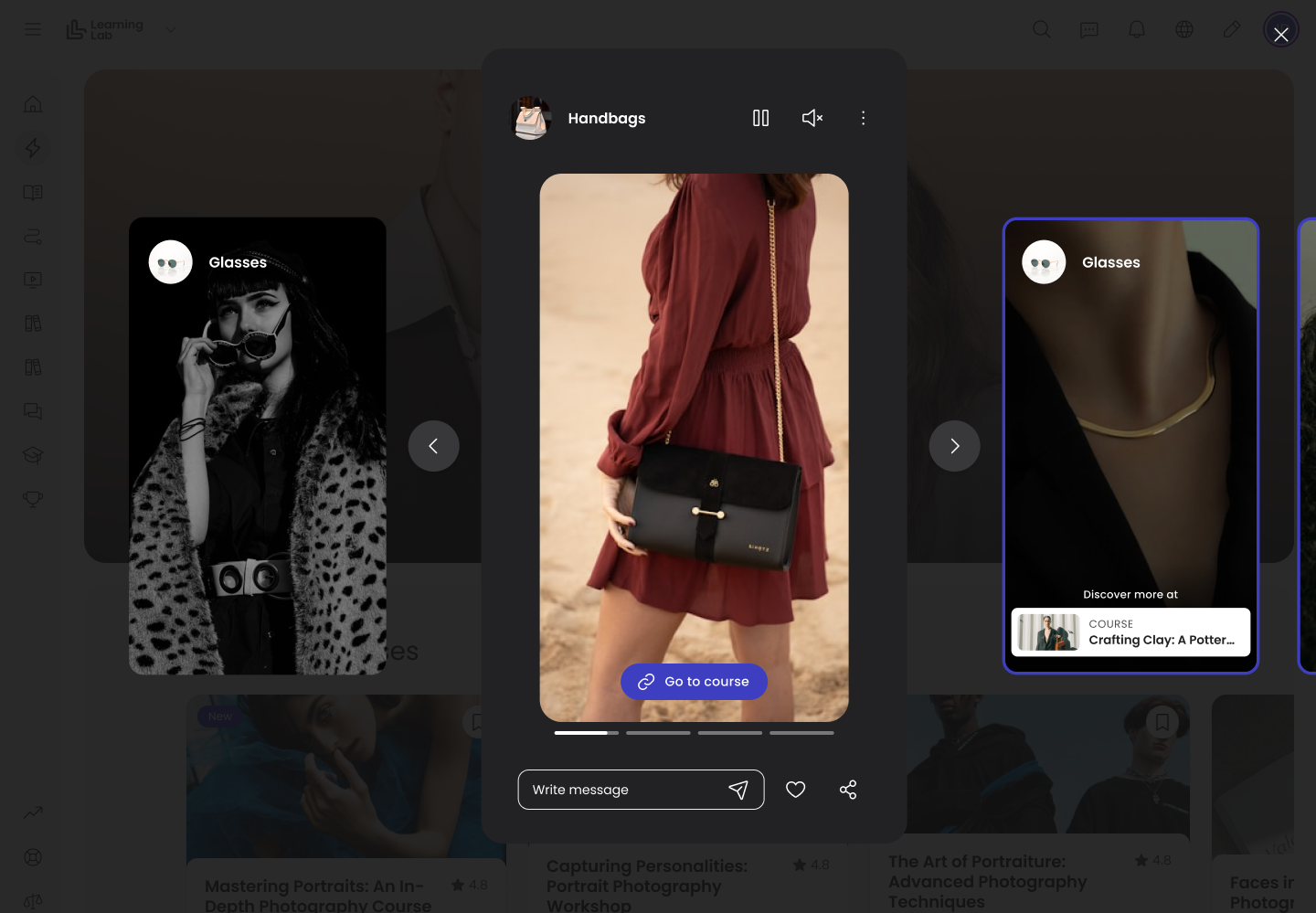
The appointment book does not leave a morning for training. It leaves eight minutes. InstaLearn puts 30–90 second cards image, carousel or vertical video on a social wall the practitioner already knows how to swipe.
Welcome ritual, contraindication check, serum layering, how to introduce a longevity panel without sounding clinical, aftercare in forty seconds. Mobile, visual, repeatable before a shift or between rooms. The result is not a finished course. It is a ritual that is actually opened.
Résumé
- Problem: no time for long modules
- Feature: 30–90 second cards on a social wall
- Example: welcome, contraindications, aftercare, longevity intro
- Result: the ritual is used between guests
Audio and video discussion around courses
A comment field under a SCORM file is not a conversation. Practitioners need to talk on the lesson. “This lymphatic sequence feels different on a post-op guest here is my adaptation.”
A senior therapist leaves a voice note on tone of voice in a diagnostic consult. The course stops being a frozen module and becomes a living protocol.
Résumé
- Problem: the lesson cannot answer the case in front of you
- Feature: audio and video discussion on the course
- Example: adaptation of a sequence; voice note on consult tone
- Result: protocol stays alive
Notifications and messaging
Most LMS notifications train people to ignore the app. In a spa or clinic they should work like the floor: quiet, specific, operational.
A new version of a signature treatment. “Room 3 needs the updated recovery script.” A private coaching thread after a video submission. A reminder before a live workshop. Notify on a change of practice, not on “you have not finished module 4.”
Résumé
- Problem: noise, or silence
- Feature: messaging as an operations tool
- Example: protocol update, room note, coaching thread
- Result: the right person hears the change, not a completion nag
Live discussion and Miro workshops
Some work needs a shared board, not another video. Guest journey, multi-disciplinary longevity pathway, new menu, incident review.
Twenty minutes of context in the course, forty-five minutes live on Miro, decisions saved back into the academy. Map first visit to a twelve-week programme. Align spa, F&B and medical on one guest story. Redesign a treatment-room handover. The workshop becomes part of the house standard, not a meeting that evaporates.
Résumé
- Problem: journeys and menus cannot be redesigned in a quiz
- Feature: live discussion + Miro, then saved to the academy
- Example: 12-week pathway, cross-team guest story, handover
- Result: the decision stays in the platform
Blended learning
Digital alone does not certify a pair of hands.
The path is InstaLearn and course, then a video submission, then a Miro or live clinic, then sign-off on the floor. Wellness certification should never be “clicked complete.”
Résumé
- Problem: a tick box is not competence
- Feature: digital baseline + observed practice + live session
- Example: card → clip → workshop → floor sign-off
- Result: the credential ends on the treatment table
Forums — the house conversation
Teams in Zurich, Paris and Milan rarely sit in the same room.
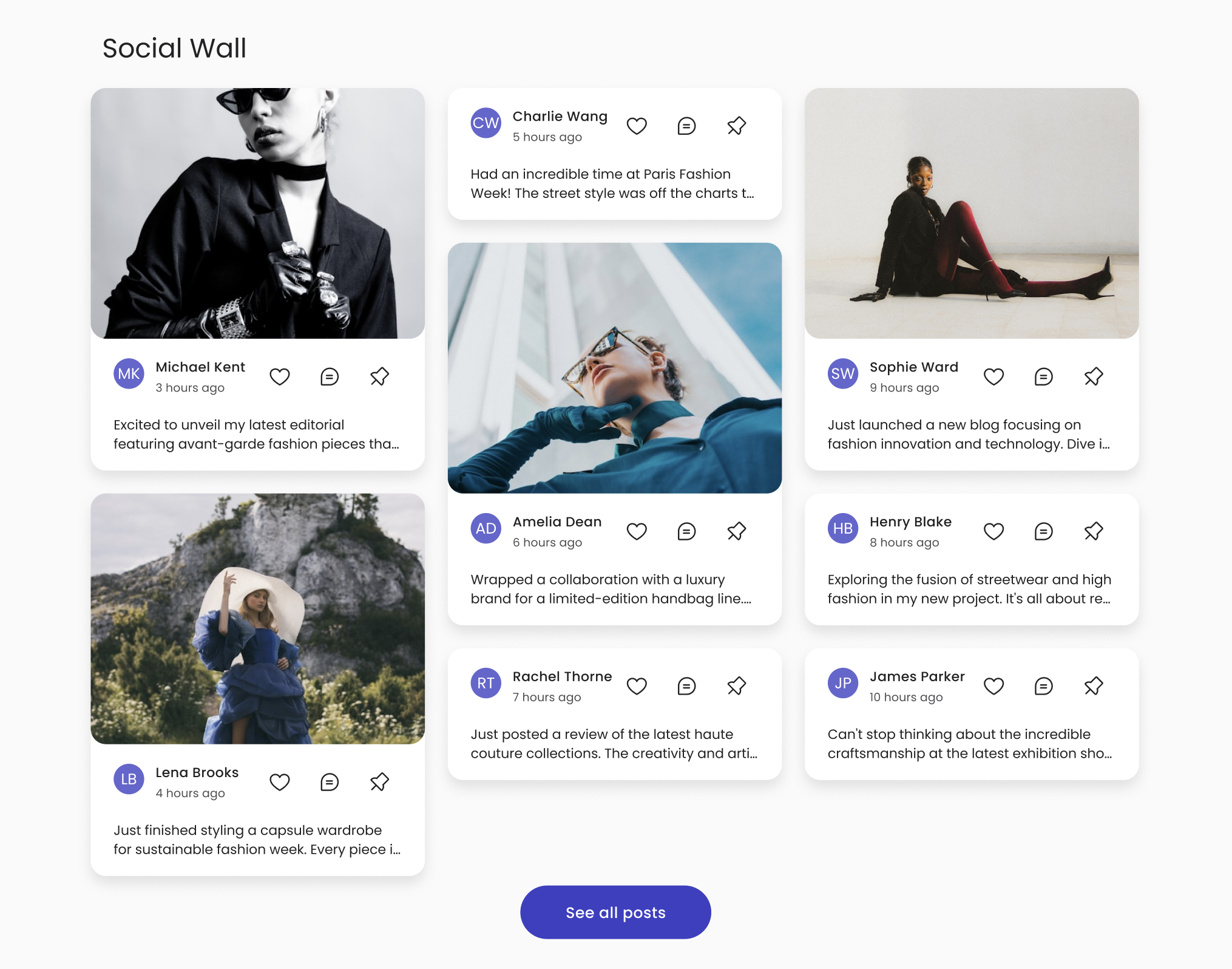
Forums keep the house conversation going: by treatment family, product line, medical protocol, guest type athlete, post-partum, longevity member, hotel guest. Pin a “house standard” post in each thread. Everything else is peer practice around it.
Résumé
- Problem: multi-site teams have no shared corridor
- Feature: forums by practice, not by HR catalogue
- Example: pinned house standard + peer cases
- Result: one conversation across properties
UGC — practitioners as faculty
The best therapists already shoot short clips the way they shoot stories.
UGC brings that inside the brand wall: cards and videos from the floor, reviewed before they become official, tagged peer practice or house standard. Recognition, retention, and capture of what was never written down.
Résumé
- Problem: tacit knowledge stays with one person
- Feature: practitioner-made cards and clips, with review
- Example: peer practice vs house standard
- Result: faculty on the floor, knowledge stays

Image and video assessment — share the work, not only the quiz
A quiz cannot see a consult. Assessment here splits in two.
First, share work and ideas: a treatment-setup moodboard, before/after of a room, sixty seconds on how you explain biological age to a guest.
Second, video sign-off: submit the gesture opening of the consultation, product application, mobility screen, recovery explanation. Assessor and peers comment on the timestamp. It is mystery shopping for craft: the team sees the work, not only a score.
Résumé
- Problem: scores hide the gesture
- Feature A: share setups, rooms, explanations
- Feature B: video sign-off with timestamp comments
- Result: quality you can watch, not only measure
What else belongs in the same story
These are not extra products. They are how the same social LMS behaves when a spa or clinic actually runs it.
A ritual can carry a micro-credential: Signature massage house standard, Longevity consult level 1. Competence is named at the level of the gesture, not a 40-module diploma.
When a visiting doctor or brand educator takes thirty minutes, that session is an expert room; the recording stays on the course, not in someone’s inbox. When a treatment changes, protocol versioning keeps the old clip marked archived and the new one becomes the standard no quiet drift between versions.
Around one member, therapist, nurse, coach and F&B can sit in the same huddle thread instead of four inboxes. The best ten videos of the year become the shadow library for onboarding, not a binder on a shelf. Managers look at who submitted practice, who received comments, who is silent coaching, not completion percentage. The same ritual ships in DE, FR, IT and EN as a market pack, local tone, one course. Safety and craft travel together: hygiene checklist and the feeling of the treatment in one InstaLearn card plus one video.
Résumé
- Micro-credentials — sign-off per ritual, not per catalogue
- Expert rooms — 30 minutes live, recording stays on the course
- Protocol versioning — archive the old clip, publish the new standard
- Multi-disciplinary huddle — one thread around one member
- Shadow library — year’s best videos become onboarding
- Manager view — practice and silence, not completion %
- Language packs — same ritual, local tone
- Safety + craft — checklist and feel in one card and one video
What “good” looks like
Good is not a longer catalogue. It is a four-site wellness group that drops the yearly seminar and runs a weekly InstaLearn card, a monthly Miro on one journey or protocol, and video sign-off on the gesture that matters that month.
New therapists reach the floor faster and still sound like the house. Zurich, Paris and the two hotel spas execute the same ritual. When a senior therapist leaves, the consult and the recovery script are still on the wall. Training fits the appointment book. A director can watch the opening of a longevity consult instead of reading a quiz score. The team talks like a practice — cases, adaptations, standards — not like people closing tickets.
Résumé
- Faster onboarding without losing the house touch
- Less drift between properties
- Knowledge stays when a senior therapist leaves
- Training that fits the appointment book
- Quality you can watch, not only a score
- A practice conversation, not ticket completion
The Boutique LMS for Wellness: Social Features That Match How Practitioners Actually Learn
Wellness and longevity are not taught in classrooms. They are taught between guests: a glance at a ritual, a question to a colleague, a gesture watched and then tried. A generic LMS fights that. It stores content, counts completions and leaves the craft in the corridor.
A boutique LMS does the opposite. It gives those habits a place InstaLearn in the gap between rooms, conversation on the course, messaging that protects the floor, a Miro board when the journey must be redrawn, forums that hold the house memory, UGC from the people who already teach, and video assessment so quality can be seen, not only scored.
Social features are not decoration. They are how a four-site group keeps one standard without losing the feel of the house.
You do not start by rebuilding the academy. You start with one ritual. Send it to us. We will return it as an InstaLearn card and a video-assessment flow — the same way your practitioners already learn.