

Blended Learning for Eyewear Teams Across Fashion and Sport
How online modules, mobile refreshers, in store coaching, and live product handling can work together across very different eyewear environments
Eyewear is one of the few retail categories where technical precision and personal style have to meet in the same conversation.
A client may want a stronger fashion identity, better visual comfort, sport performance, lighter materials, or simply a frame that feels right on the face, and the advisor has to move between those needs without sounding scripted.
That is why blended learning makes so much sense for eyewear. A purely digital model can deliver product structure and speed, but it cannot fully replace live coaching, physical product handling, and the subtle judgement needed during a premium consultation.
The reverse is also true. A training model based only on shadowing and store practice can feel rich in the moment, but it often struggles to keep content current across launches, regions, partner networks, and fast moving categories such as sport eyewear or travel retail sunwear.
The Learning Lab feature set is designed for exactly this kind of problem because it combines white label branding, learning paths, branching, mobile app access, push notifications, video based learning, social learning, video coaching, in person events, hybrid adaptive learning, and deep reporting in one retail focused environment.
For eyewear brands, blended learning becomes the link between one brand message and many selling realities. It helps fashion boutiques protect elegance, sport retailers build technical confidence, and travel retail teams handle high traffic consultations without losing consistency in product story or service tone.
One learning model for three eyewear worlds
Fashion eyewear training through visual online modules and styling rehearsal
Sport eyewear training through mobile refreshers and product use moments
Travel retail training through fast coaching and shop floor practice
Brand consistency across channels through roles, branching, and reporting
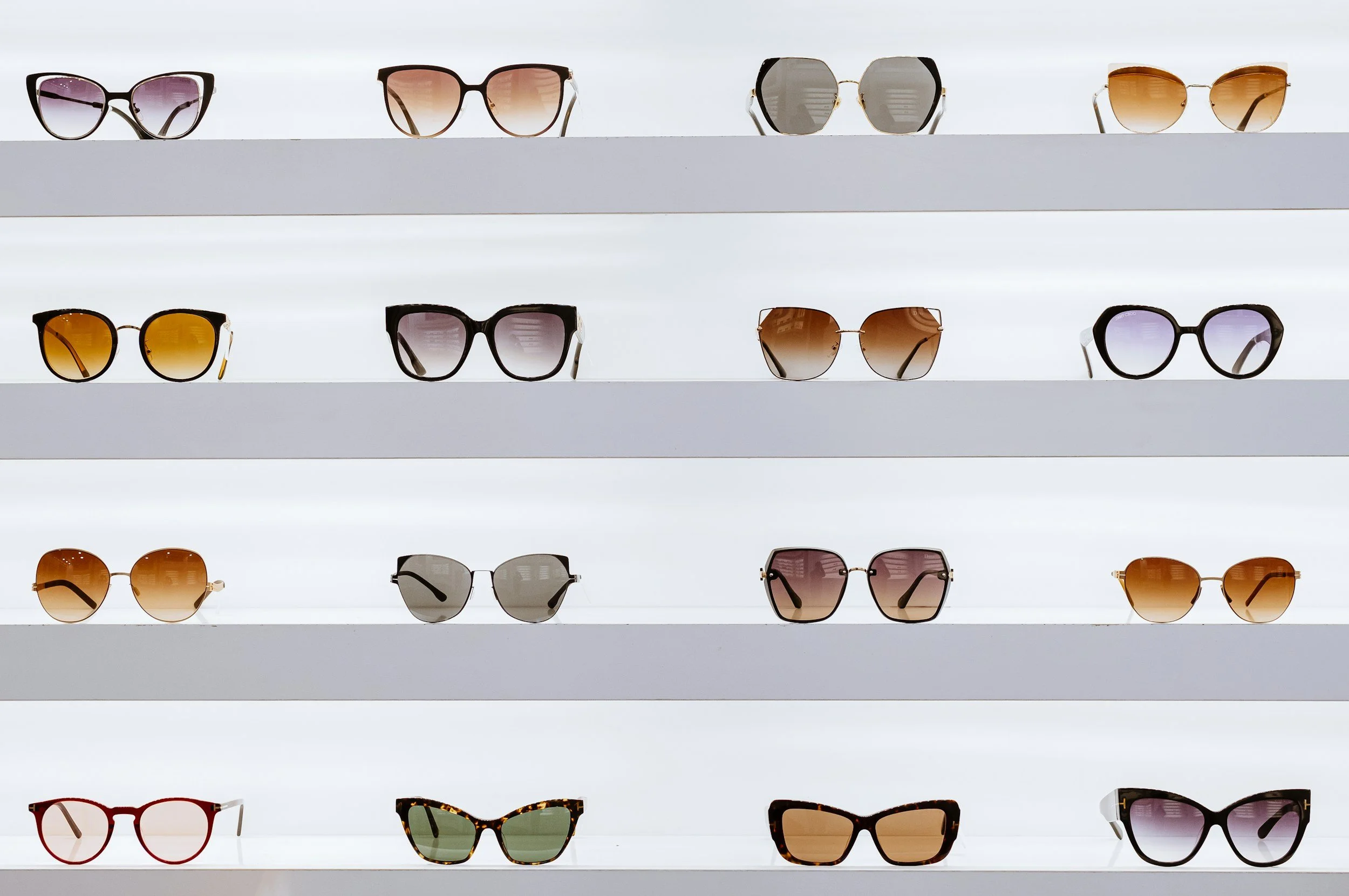
1. One learning model for three eyewear worlds
Blended learning works because it keeps one brand framework while adapting the delivery to the reality of each channel.
Fashion, sport, and travel retail all sell eyewear, but they do not sell it in the same way. Fashion boutiques often lead with identity and styling, sport retailers must explain performance and protection, and travel retail teams work in a faster environment shaped by impulse, regional buying patterns, and short customer attention spans.
A generic LMS usually treats those differences as minor variations inside one course library. A retail first platform does something smarter by letting the brand keep a shared foundation while adapting learning spaces, pathways, and access rules to each context.
The Learning Lab features show how this can work. Branching creates distinct platform spaces for separate audiences, roles and permissions control who sees what, learning paths structure progression by role or channel, and landing pages give each group a more relevant point of entry.
In practice, that means one eyewear brand can build a common foundation on materials, care rituals, consultation language, and brand codes, then extend that base differently for a fashion boutique team, a sport specialist team, and a travel retail partner network.
This matters because blended learning is not just a mix of formats. It is a design choice about where knowledge should begin, where practice should happen, and how each audience should move from information into retail confidence.
Branching allows separate learning environments for different channels.
Learning paths make progression clearer for each audience.
Roles and permissions protect the right level of access and editing control.
Landing pages help each group enter the platform through a context that feels relevant.
The real strength of blended learning is not that it mixes formats. It is that it mixes them with purpose, so every channel receives the same brand truth in the form that suits its daily reality.
2. Fashion eyewear training through visual online modules and styling rehearsal
In fashion led eyewear, digital learning should teach visual judgement before the in store conversation begins.
Fashion eyewear is rarely sold on technical benefit alone. The consultation usually involves face shape, proportion, color, mood, outfit logic, and the feeling a frame gives the person wearing it, which means staff need visual confidence as much as product knowledge.
This is where online learning becomes especially powerful. The Learning Lab supports video based learning, audio and video content, interactive assessments, flash cards, hotspots, page builder, and creative authoring, which gives brands the tools to teach styling in a format that looks and feels closer to editorial content than to a manual.
A strong fashion eyewear module might begin with a short brand film on a new collection, continue with visual comparisons between shapes and face profiles, then move into hotspot based interactions where the learner identifies bridge detail, temple design, color balance, or how a frame changes expression.
That digital layer should then lead into store practice. After completing the online lesson, the advisor can work with real frames in store, rehearse pairings on different client profiles, and record a short styling pitch for manager feedback through video tests or video coaching features.
This is a better use of in person time. Instead of using the floor to explain the basics, the manager can focus on the hard part, which is how to make a recommendation feel elegant, personal, and natural.
A clear example would be a luxury sunwear capsule launch. Online, the learner studies silhouette, campaign mood, and styling cues. In store, the learner is asked to style three client personas and explain why one frame feels more credible than another for each profile.
Use video and rich visuals to teach styling language and collection identity.
Use hotspots and quizzes to sharpen attention to shape, color, and detail.
Move the learner into store handling and spoken recommendations after the digital lesson.
Use video coaching to refine tone, confidence, and recommendation quality.
For fashion eyewear, blended learning works because style is first observed, then interpreted, then expressed. Digital modules teach the eye, while store practice trains the voice and the judgement behind the recommendation.
3. Sport eyewear training through mobile refreshers and product use moments
In sport eyewear, the best blended model starts with technical clarity on mobile and then turns that clarity into practical product confidence.
Sport eyewear asks different questions from fashion. Customers want to know about protection, glare reduction, impact resistance, fit stability, comfort over time, and whether the product suits running, cycling, skiing, water use, or general outdoor activity.
That makes mobile learning especially useful because the content needs to be fast, specific, and easy to revisit. The Learning Lab includes a mobile app, offline access, push notifications, InstaLearning, learner calendar, and notifications that can deliver small focused updates before shifts or before a selling peak.
A brand can use that structure to create a series of very short sport modules. One teaches polarized lens logic, another focuses on lightweight frames, another compares fit needs by activity, and another explains how to translate technical language into a customer friendly recommendation.
Then comes the physical phase. Once the learner has completed the mobile lesson, the store or field trainer can run a live handling session with actual frames, asking staff to compare grip, weight, lens feel, wraparound effect, and likely use cases.
This is important because sport eyewear still depends heavily on physical retail. One market report notes that offline channels account for 57 percent of sports eyewear sales and remain important because customers want to test fit, comfort, lens clarity, and frame stability with help from knowledgeable staff.
That gives you a very clear blended learning example. Online, a cycling eyewear lesson introduces lens tint logic, fit security, and protection language. In store, the advisor handles three models, matches them to three usage scenarios, and explains the choice aloud to a manager.
The social learning layer can deepen this even more. Staff can upload short product observations, ask practical questions in chat, and share which explanation helped a hesitant customer understand the difference between lifestyle sunwear and performance eyewear.
Use mobile refreshers for technical topics that need frequent repetition.
Keep sport modules short and tied to real use situations.
Follow digital learning with live product handling and comparison.
Use social learning to circulate useful selling language from the field.
Sport eyewear training becomes stronger when the staff member can move from a short mobile lesson straight into the hand feel and practical logic of the product. That is where blended learning turns technical knowledge into something usable on the sales floor.

4. Travel retail training through fast coaching and shop floor practice
Travel retail eyewear needs learning that respects speed, traffic, and the reality of impulse driven conversations.
Travel retail is a special case because the environment changes the sale. Customers are moving quickly, attention spans are shorter, product discovery is compressed, and purchase motives differ by region, occasion, and whether the buyer planned the purchase or decided in the moment.
A travel retail training model cannot rely only on long classroom sessions. Luxottica Travel Retail said its LuxAcademy approach mixed classroom and shop floor training, and that key topics included brand knowledge, buying levers by region, differences between pre planned and impulse purchases, and the most frequent customer questions.
That logic fits perfectly with a modern blended LMS. The Learning Lab supports video based learning, mobile access, in person events, webinars, push notifications, group reporting, and video coaching, which means brands can prepare travel retail teams digitally and then reinforce performance during live floor activity.
A very practical example would be an airport sunglasses assortment. Before a shift period begins, staff receive a short mobile briefing with a launch video, two product highlights, a quick quiz on likely traveler needs, and a prompt on how to present premium eyewear fast without sounding rushed.
Later, in store or on the shop floor, a manager runs a fifteen minute coaching moment. The team practises two scenarios, one with an impulse buyer who wants a fast style choice and one with a traveler who asks about function, comfort, and authenticity.
This is exactly where blended learning protects consistency. The digital module keeps the core brand story aligned across markets, while the live practice adjusts for regional traffic patterns, customer profiles, and the speed of the channel.
Notifications also matter more than they may seem. Travel retail teams need timely reminders because product focus can change quickly with peak traffic periods, seasonal travel, or a new assortment push, and the platform can support that rhythm through mobile push and in app updates.
Use digital briefings to prepare staff for fast channel specific selling moments.
Coach live on the floor around impulse and pre planned purchase scenarios.
Use quizzes and short videos to reinforce the most frequent questions.
Use notifications to keep teams aligned during fast changing traffic periods.
Travel retail training succeeds when learning respects compression. The team does not need more information in theory. It needs the right guidance in the right sequence, then a live coaching loop that turns that guidance into speed and confidence.

5. Brand consistency across channels through roles, branching, and reporting
A blended strategy only scales when HQ can protect the message while still allowing each channel to work in its own way.
The final challenge for eyewear brands is not creating one good training experience. It is sustaining many of them at once without losing coherence. Fashion boutiques, sport specialists, and travel retail partners may need different examples and different pacing, but they should still express the same brand values, consultation standards, and care rituals.
This is where platform structure matters as much as content quality. The Learning Lab includes branching, roles and permissions, proofreader roles, automatic translation, project management, reporting and analytics, richer reporting, unified notifications, and API and SSO support.
Those features make blended learning governable. HQ can build a core path on brand codes, materials, care, and service, then allow channel specific extensions for fashion styling, sport performance, or travel retail conversion moments without giving up overall control.
Reporting closes the loop. HQ can track completion, quiz results, learning path progress, file interaction, notification open rates, group metadata, and manager views, which helps identify whether a channel is ready, where a launch is stalling, and which teams may need extra coaching.
The white label environment matters here too. Penceo argues that a platform should feel like the brand from the first interaction, and that idea becomes even more valuable when many channels use the same system because it keeps the emotional identity consistent even when the training path changes.
A useful eyewear example would be a global summer launch. HQ creates one shared module on the brand story and hero products. Fashion teams then receive styling content, sport teams receive performance lens refreshers, and travel retail receives speed focused consultation prompts, all inside one governed environment with separate reports by channel.
This is what blended learning looks like when it matures. It is not simply digital plus live. It is branded, segmented, measurable, and flexible enough to match real selling conditions without fragmenting the brand voice.
Use one shared foundation for brand codes and service standards.
Extend the core path differently for fashion, sport, and travel retail.
Use reporting to compare readiness and engagement across channels.
Keep the platform visually branded so every learner still feels inside one brand world.
Consistency is not sameness. In eyewear, real consistency means that every channel speaks with the same confidence and credibility even when the consultation style, pace, and product focus are different.
Blended learning is such a strong fit for eyewear because the category asks people to think and perform at the same time. Staff need structured product knowledge, but they also need real practice with frames, live coaching on tone and recommendation style, and channel specific rehearsal that reflects how fashion, sport, and travel retail actually work.
The Learning Lab stands out because its feature set already supports that full system. White label branding, branching, learning paths, mobile app access, notifications, video learning, social learning, blended learning, coaching tools, and rich reporting make it possible to build one brand environment that still adapts intelligently to very different retail realities.
That is why Learning Lab feels like the perfect pick for the LMS environment in eyewear. It gives brands the precision to teach technical details, the flexibility to support different channels, and the retail structure needed to keep training useful, elegant, and consistent across boutiques and partners.
