

What Boutique Teams Actually Need to Learn
What Boutique Teams Actually Need to Learn: Product, Styling, Ceremony, Objections, and the Skills That Close the Sale
A boutique advisor does not lose a sale because they forgot a SKU code.
They lose it in the conversation: the wrong word on a fabric, a look that does not sit on the client, a ceremony that feels rushed, a price objection with no answer, or a close that never comes. Product knowledge, styling, brand ceremony, objection handling, and sales technique are not separate courses.
They are five skills that have to work in the same few minutes on the shop floor. Training that only ships another product deck leaves teams informed and still unprepared. What boutique teams actually need is practice in those five moments short, visual, and close enough to real clients to change what happens between hello and the ticket.
The Gap: They Know the Product. They Freeze in the Conversation.
Most boutique advisors can name the SKU, the fabric, and the campaign. That is not where the sale breaks.
It breaks when a client asks for a different silhouette, winces at the price, or says “I’ll think about it.” Headquarters has trained the catalogue.
The floor still lacks the next sentence. The gap is not information. It is the ability to style on a real body, hold the ceremony, handle an objection, and close without sounding like a script. Until training targets that moment, teams stay knowledgeable — and hesitant.
What this gap looks like in the boutique
- Strong product recall, weak live recommendation
- Freeze on fit, face shape, size, or how to wear it
- No confident answer on price or “I already have something similar”
- “I’ll think about it” ends the conversation instead of opening a next step
- Training that stops at the deck never reaches the ticket
Product: What They Need in 90 Seconds, Not 40 Slides
Boutique teams do not need another catalogue. They need to explain, in a few sentences, what the piece is made of, how it fits, how to care for it, and why it replaces or completes last season.
Materials, construction, and the “why now” are selling arguments but only if they are short enough to use between two clients.
A 40-slide deck dies on the shop floor. A 90-second clip on one fabric, one fit, one care rule becomes something they can actually say.
What product training must cover
- Materials and construction in plain client language
- Fit and how it sits on the body, not only on a lookbook
- Care rules they must never get wrong
- Why this piece versus last season or the next price point
- One idea per clip, ready in 90 seconds — not a full collection bible
Styling: Teach It on a Body, Not on a Flat Lay
In a boutique, styling is not a moodboard. It is the ability to build a look on the person in front of you: silhouette, proportion, size up or down, and the accessory that makes the piece feel complete.
Advisors who only know the product still struggle to say why this cut works on that client. Training has to be visual on a real body, in movement so teams learn to see the line, adjust the size, and pair without guessing. If they cannot style it, they can only show it.
What styling training must cover
- How to build a complete look, not a single SKU
- When to size up or down, and how to explain it
- Pairing accessories, shoes, and layers with intention
- Talking silhouette, proportion, and occasion in client language
- Visual examples on a body — never only flat imagery or lookbooks

Ceremony: Luxury Is the Ritual, Not the Bullet List
Clients do not remember a feature list. They remember how the piece was brought out, how it was handled, the words used, and whether the advisor rushed or held the moment.
Ceremony is the brand made visible: unboxing, placement on the table, the pause before the price, the way a garment is put on.
Training that skips this leaves teams technically informed and emotionally flat. The ritual has to be shown, rehearsed, and corrected — because in luxury, the sale often starts before the objection.
What ceremony training must cover
- How the product is presented and handled (unboxing, hanging, placing)
- Language and tone that match the house — not generic retail script
- Pace: when to slow down, when to stay silent
- The small gestures that signal care and craft
- Practice on camera, so the ritual becomes consistent across boutiques
Objections: Practice the Sentence They Always Hear
The catalogue does not prepare an advisor for “it’s expensive,” “I already have something similar,” “I’ll wait for the sale,” or “I need to ask my partner.”
Those lines arrive every day, and a freeze costs the ticket. Objection handling is not a slogan. It is a choice: which question to ask next, which piece to bring, when to hold the price.
Branching scenarios let teams practice those paths safely, see the consequence of the wrong answer, and walk back onto the floor with a next sentence ready.
What objection training must cover
- Price, without collapsing into discount
- “I already have something similar”
- Size, fit, and “it doesn’t look like the photo”
- Waiting for the sale or a new collection
- Partner / second opinion — and how to keep the appointment
- Branching practice so the answer is chosen, not recited
Sales Techniques: The Moves That Turn a Conversation Into a Ticket
Product and styling get the client interested. Technique closes.
Boutique teams need a short set of moves they can use without sounding like a call center: discovery questions that reveal occasion and budget, a trial close to test commitment, the pause after the price, the second piece or aftercare that raises the ticket, and a follow-up that does not die in the WhatsApp draft.
These are habits. They are learned by doing watching an expert, choosing the next step, recording a short pitch — not by reading a sales handbook.
What sales-technique training must cover
- Discovery questions that go beyond “what are you looking for?”
- Trial close: testing if the client is ready without pushing
- The silent pause after price or recommendation
- Second piece, aftercare, or appointment to grow the ticket
- Follow-up that is personal, timely, and on-brand
- Practice (video or branching) so the technique survives the real floor
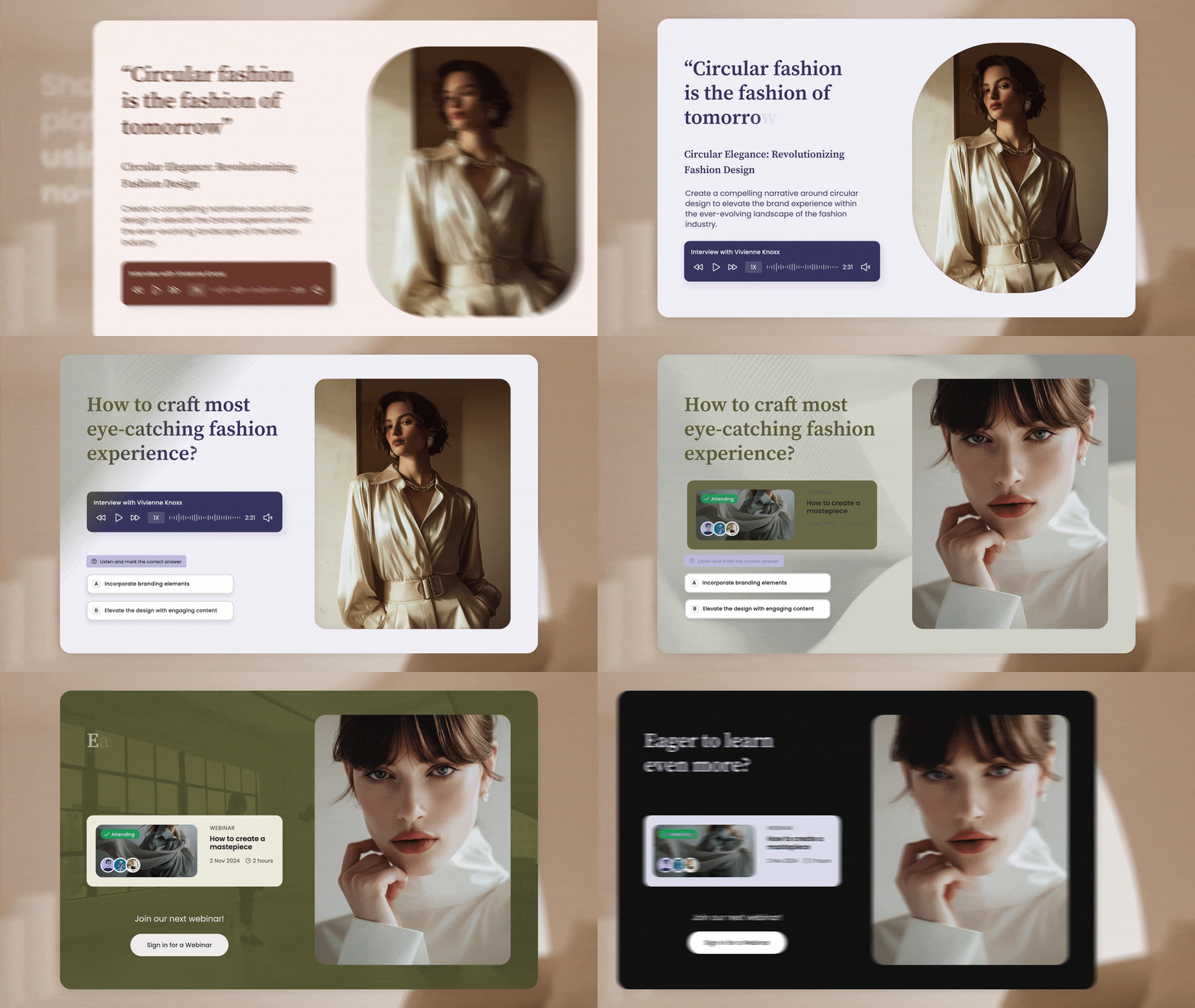
How to Train It: One Format per Skill, Not One Endless Module
The five boutique skills do not belong in the same 40-minute course.
Product is detail: hotspots on a jacket, a leather, a stitch. Styling and ceremony must be seen short video on a body, on a table, at the right pace. Objections need a choice: branching scenarios where the next sentence matters.
The full conversation needs an assessment: the advisor records a short consultation and gets feedback. Match the format to the skill and training finally looks like the job. Mix them in one dump of slides and nothing transfers to the floor.
Which format for which skill
- Product → video hotspots (materials, fit, care, one detail at a time)
- Styling → short video on a real body (look, size, silhouette, pairing)
- Ceremony → video of the ritual (handling, language, pace)
- Objections → branching scenarios (price, similar piece, sale, partner)
- Full sale → video assessments (discovery to close, reviewed by a manager)
- Keep each piece short enough to use between two clients
Close: Train the Conversation, Not the Catalogue
A collection bible does not create a better advisor.
Performance in the boutique is a stack: product they can say in 90 seconds, styling they can see on a body, ceremony they can hold, objections they have already practiced, and a close they are not afraid of.
When those five skills are trained as one conversation — not as five disconnected decks — teams stop reciting and start selling. The catalogue will change next season. The conversation is what you can actually build.
What to take away
- Boutique results come from a stack of skills, not more SKUs
- If training does not change the live conversation, it is not doing its job
- Short, visual, practiced formats beat long product modules
- Train what happens between hello and the ticket — every season, not once a year
How The Learning Lab Turns Luxury Fashion Training Into Something Advisors Actually Use
Luxury fashion brands do not need another generic LMS.
They need a place where product, styling, ceremony, objections, and closing can be trained the way they are lived in the boutique: visual, short, branded, and close to the client conversation.
The Learning Lab is built for that. Interactive video, hotspots, branching scenarios, video assessments, and InstaLearning sit in a white-label environment that looks like the house not like a corporate portal.
Teams learn between two clients, practice the ritual on camera, and walk onto the floor with the next sentence ready. Training stops being a catalogue to survive and becomes a system that supports the sale.
What The Learning Lab enables for fashion & luxury
- Fully branded experience aligned with the house, not a default template
- Hotspots for materials, fit, and product detail
- Video for styling and ceremony, on a body and at the right pace
- Branching scenarios for price, “I already have something,” and the sale
- Video assessments so managers coach the real conversation
- InstaLearning clips of 30–90 seconds between clients
- Mobile-first access for boutique networks and wholesale partners
- One system for the full skill stack — from product to close

If It Doesn’t Change the Conversation, It Isn’t Boutique Training
Every module, film, and workshop should be judged on one test: does the advisor behave differently between “hello” and the ticket? If product, styling, ceremony, objections, and closing stay in the academy and never reach the floor, the training has failed no matter how beautiful the slides. Boutique training exists to change that stretch of time. Everything else is decoration.
The only measure that matters
- Training is successful when the live conversation changes
- Knowing the SKU is not the same as selling the piece
- Product, styling, ceremony, objections, and close must show up in the same few minutes
- If nothing changes between hello and the ticket, it is not boutique training