

Retail Training: 6 formats that work on the floor
Retail Training 6 formats that work on the floor: InstaLearning, video quizzes, hotspots, assessments, expert films, branching scenarios
Retail training that actually sticks on the floor is short, visual, and easy to complete between customers.
InstaLearning delivers swipeable, bite-size lessons associates can finish in a minute or two. Video quizzes pair a quick clip with an immediate check so knowledge is applied, not just watched.
Hotspots turn product shots, planograms, and fixtures into tap-to-learn moments. Assessments confirm they are floor-ready before a new range, promo, or season goes live.
Expert films bring brand, category, and selling know-how from people who know the product. Branching scenarios let teams practise real conversations objections, upsells, returns and see the impact of each choice.
Together, these six formats make training something staff can do on the shop floor, not something they have to leave the floor to complete.
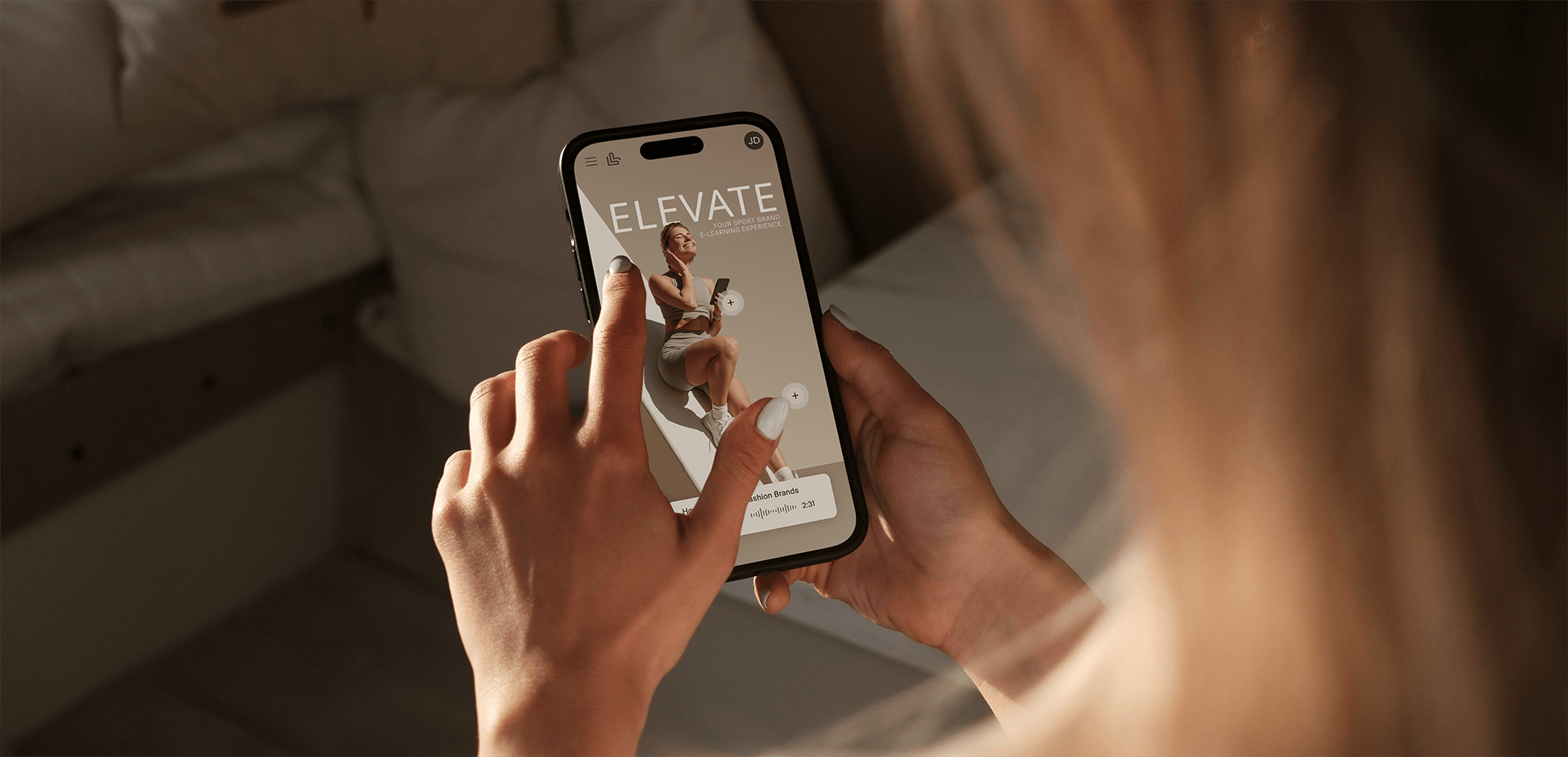
1. InstaLearning: mobile retail training that fits the shop floor
InstaLearning is a mobile-friendly training solution built for retail teams who cannot leave the floor.
Associates complete short, visual lessons on their phone between customers, during a quiet moment, or before a shift without a classroom or a desktop.
Content is designed for small screens and real store conditions: bite-size modules, fast load times, and formats people actually finish.
From product knowledge and new ranges to service standards and seasonal campaigns, InstaLearning puts training where the work happens, so teams stay floor-ready without slowing the store down.
Summary
- Built for phones, not classrooms — training that works on the shop floor
- Short, visual lessons associates can complete in a few minutes
- Six formats that stick: InstaLearning stories, video quizzes, hotspots, assessments, expert films, and branching scenarios
- Faster onboarding and campaign rollout across stores
- Consistent product, brand, and service knowledge at every location
- Easy to update when ranges, prices, or promotions change
- Better completion rates because it fits around real retail shifts
2. Video quizzes: watch, check, and remember — training that sticks on the floor
Video quizzes turn short product or service clips into active learning, not background noise.
Associates watch a brief film a new range, a selling technique, a safety step, a brand story then answer a few questions while the content is still fresh.
That mix of seeing and doing is what makes it work in retail: video shows the product, the display, or the customer moment as it really looks, and the quiz confirms they understood the key points before they walk back onto the floor. It is built for phones, so it fits a quiet minute between customers rather than a long classroom session.
Managers get a clear signal of who is ready and where knowledge is still thin. Teams get immediate feedback, not a lecture days later.
The result is faster rollout of new collections, more consistent selling messages across stores, and training people actually complete because it is short, visual, and useful in the next conversation with a customer.
Summary
- Active, not passive — a short video plus questions beats watching a clip and hoping it lands
- Higher retention — checking knowledge right after the film helps people remember features, benefits, and steps
- Floor-ready in minutes — mobile, bite-size, and easy to finish between customers
- See it as it is — products, planograms, demos, and customer situations shown in real context, not only described in text
- Immediate feedback — associates know what they got right, and why, before they use it with a shopper
- Gaps become visible — scores show who needs a recap and which stores or topics are still weak
- Consistent selling — the same product story and service standard in every location
- Faster campaign rollout — new ranges, promos, and brand films can go live with a built-in knowledge check
- Less manager repetition — floor leaders spend less time re-explaining the same product points
- Ready to sell, not just informed — people step onto the floor able to answer questions, recommend, and close with confidence
3. Video hotspots: tap the product, learn the detail, sell with confidence
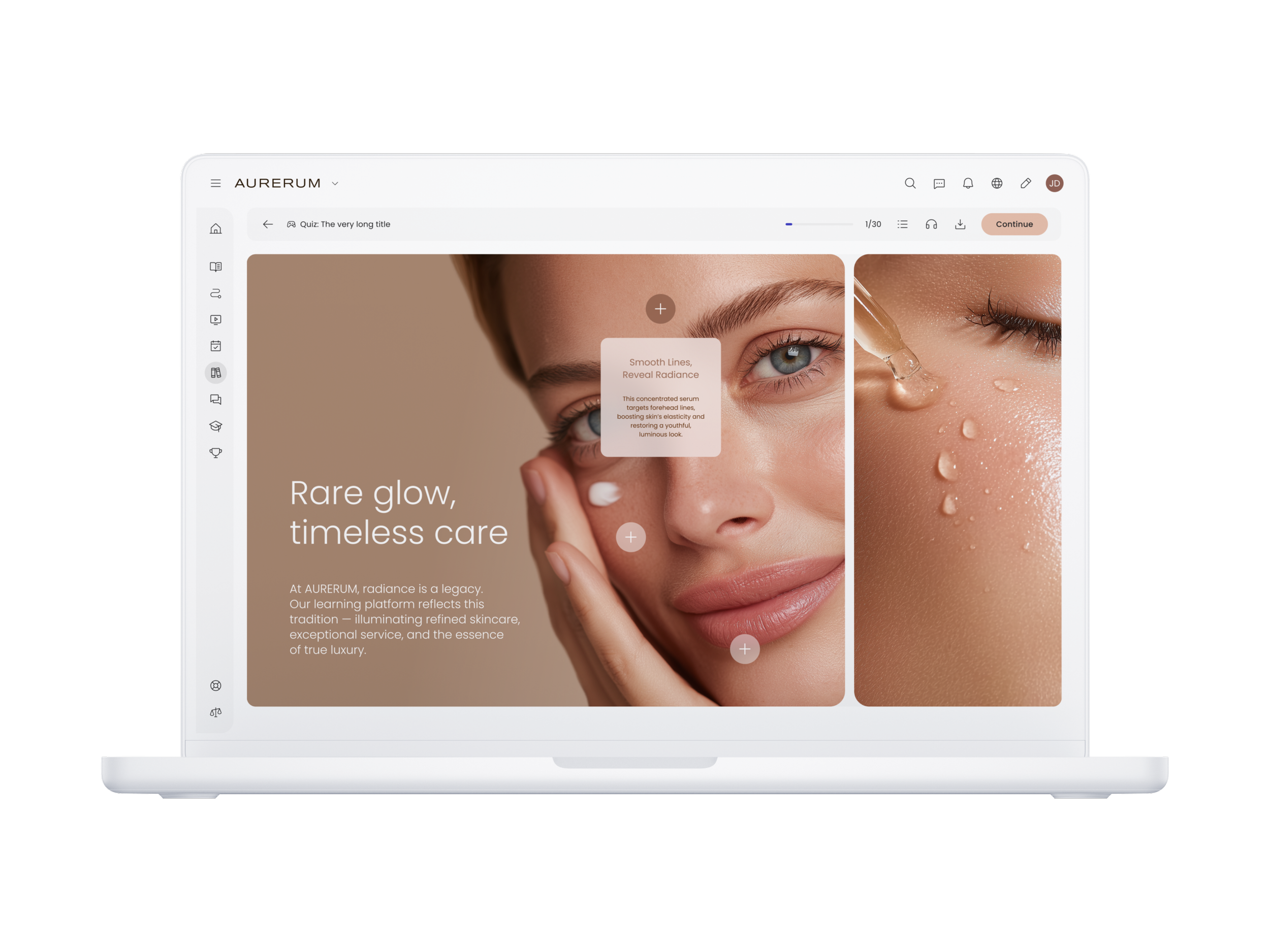
Video hotspots turn a product film, pack shot, or store scene into something associates can explore with their finger.
Instead of watching a clip from start to finish, they tap the parts that matter a fabric, a button, an ingredient, a fixture, a safety point, a look on a mannequin and get the right information at the moment they need it. That is how people actually learn on the shop floor: by looking at the real item and asking “what is this?”.
Hotspots make that instinct useful. A short video or still shows the product in context; each hotspot opens a tip, a feature, a how-to, or a selling argument. It is built for mobile, so training feels like using the phone they already have, not sitting through a course. Visual merchandising, new ranges, equipment, and complex products become clear without a long spec sheet.
Teams remember more because they discovered the detail themselves, and they walk back to the customer able to point, explain, and recommend with confidence.
Summary
- Learn by exploring — tap a product, display, or scene instead of reading a long list of specs
- Built for the way retail works — associates look at the item, then learn the detail attached to it
- Mobile-first — designed for thumbs on a phone, between customers, on the floor
- Perfect for complex products — features, materials, ingredients, fit, care, and tech points revealed one hotspot at a time
- Stronger visual memory — people remember what they saw and touched on screen, not only what they were told
- Faster product knowledge — new collections, gadgets, beauty lines, and food ranges become clear without a classroom
- Visual merchandising that sticks — planograms, tables, windows, and looks of the week can be tapped zone by zone
- Safety and operations — hotspot the risk, the button, the step, or the machine part that must not be missed
- Less overload — only the detail they tap is shown, so training stays short and relevant
- Better selling conversations — staff can point to the same details with a customer that they just explored in the video
- Easy to update — when a range, pack, or display changes, the film and hotspots can be refreshed without rebuilding a full course
- Clear proof of learning — you can see which hotspots were opened and which details still need a recap
4. Video assessments: prove they are floor-ready before they meet the customer
Video assessments measure what associates can actually do with what they have just learned — not only whether they clicked through a module.
A short film puts them in a real store moment: a product question, a complaint, a till process, a safety step, a new collection, a brand standard. They watch, decide, and answer.
That is a fairer test for retail than a long written exam. It matches the job: visual, fast, and close to the customer. Because it runs on a phone, people can complete it on the floor or before a shift, and managers get a clear pass-or-not-yet signal instead of a gut feel.
Weak spots show up by topic, store, or person, so coaching is targeted. Strong results give confidence to put someone on a new department, a campaign, or a compliance-critical task.
For the business, video assessments create a consistent standard across locations, a record of competence, and fewer surprises once the associate is face to face with a shopper.
Summary
- Assesses real retail, not theory — people respond to a filmed product, process, or customer moment, the way the job actually looks
- Floor-ready gate — confirm knowledge before a new range, department, till, or campaign goes live
- Fairer for store teams — visual and short, so it works better than long text tests for mixed languages and busy shifts
- Mobile and fast — complete on a phone, on the floor or before the shift, without pulling people into a classroom
- Immediate, useful results — associates know if they are ready; managers know who still needs support
- Consistent standard across stores — the same assessment, the same bar, every location
- Gaps become actionable — see which topics, products, or stores are weak and coach there
- Protects the customer experience — fewer wrong answers, missed steps, and off-brand conversations
- Supports compliance and risk — age-restricted sales, safety, cash, data, and brand rules can be checked with a clear record
- Saves manager time — less informal “show me you know this” testing on the shop floor
- Builds associate confidence — passing a video assessment is proof they can handle the next customer, not only that they watched a film
- Gives the business evidence — completion, scores, and readiness data for onboarding, campaigns, and audits
5. Expert films: let the people who know the product train the people who sell it
Expert films bring the buyer, brand specialist, trainer, or top seller onto the shop floor on a phone, in a few minutes.
Associates do not only read a spec. They hear why the product exists, who it is for, how it should be shown, and what to say when a customer hesitates.
That human voice is what generic e-learning cannot copy: authority, enthusiasm, and the small details that only someone close to the range would know. A short film can launch a collection, explain a fabric, demonstrate a device, or set the service standard for the season.
Because it is mobile, the same expert reaches every store at the same time, with the same story. Teams feel closer to the brand, sell with more conviction, and spend less time waiting for a visit, a briefing, or a cascade that never quite arrives intact.
Summary
- Credibility on the floor — training comes from buyers, brand experts, and people who know the product, not only from slides
- The “why” behind the range — associates hear who it is for, how it was built, and why it deserves a recommendation
- Selling language that sounds real — phrases, proof points, and objections answered the way an expert would say them
- Same story in every store — one film, one message, no dilution through long cascades
- Fast campaign and collection launch — expertise reaches the network in minutes, not after the next store visit
- Mobile and easy to finish — short films designed for a phone between customers
- Inspiration as well as information — passion for the product transfers, which changes how people sell
- Less briefing fatigue — managers are not repeating the same product story ten times a week
- Stronger brand connection — staff see and hear the people behind the range
- Reusable expertise — the film stays available for new joiners, late shifts, and stores that missed the live call
6. Community discussions: turn training into a conversation the whole network can use
Community discussions sit next to expert films and short modules so learning does not stop when the video ends.
Associates can ask a question, share what worked with a customer, or flag what is still unclear — from their phone, from the floor. That is how retail knowledge actually spreads: peer to peer, store to store, shift to shift.
A top seller in one location can post the line that closed the sale; a new joiner can ask how to explain a fabric or a return; a manager can see the same confusion appearing in ten stores and fix the content. Discussions make training two-way.
People do not only consume a film. They react, compare, and help each other apply it. The result is faster answers than waiting for HQ, stronger engagement, and a living layer of practical tips that no static course can keep up with on its own.
Summary
- Learning continues after the film — questions, tips, and real customer examples sit next to the content
- Peer knowledge, not only top-down — the best answers often come from people who sold it yesterday
- Faster than a cascade — an associate can ask on the phone and get a useful reply without waiting for the next briefing
- Store-to-store sharing — what works in one location becomes visible to the whole network
- New joiners get unstuck — they can ask “how do you actually say this?” and hear it from colleagues
- Managers see the real blockers — repeated questions show what the training missed or what the range is not explaining
- Higher engagement — people complete more when they can comment, not only watch
- Practical, floor-level advice — fit, objections, replenishment, displays, and customer lines that spec sheets never cover
- Builds a team across sites — isolated stores and late shifts still belong to the same conversation
- Keeps content alive — discussions capture changes, local issues, and new proof points between official updates
- Pairs naturally with expert films — the expert sets the standard; the community helps everyone apply it with the next customer

7. Branching scenarios: practise the customer conversation before it happens on the floor
Branching scenarios put associates in a live-feeling customer moment and let them choose what to say next.
A shopper asks about fit, price, a return, a promotion, or a product they do not understand. Each choice opens a different path: the sale moves forward, the customer hesitates, a complaint escalates, or a better alternative is offered.
That is the closest training gets to a real shift without putting a new joiner in front of a difficult conversation unprepared. Because it is built for mobile, people can run a scenario in a few minutes on their phone, see the consequence of their decision, and try again.
It is not a quiz with one right answer on a spec sheet. It is judgement, tone, and selling skill the part of retail that product knowledge alone never covers.
Teams arrive on the floor having already practised objections, upsells, service recovery, and brand-right behaviour. Managers get fewer surprises. Customers get a more confident, more consistent experience.
Summary
- Practise the conversation, not only the product — associates choose what to say and see what happens next
- Safe place to get it wrong — mistakes happen in the scenario, not in front of a real customer
- Real retail paths — greetings, needs discovery, objections, upsells, alternatives, returns, and complaints
- Judgement, not only facts — trains tone, timing, and service quality as well as knowledge
- Immediate consequences — each choice leads to a better sale, a lost customer, or a recovery moment
- Mobile and short — a full customer story can be completed on a phone between tasks
- Stronger for new joiners — they rehearse difficult moments before their first busy Saturday
- Consistent service standard — the same brand-right paths in every store, not only in the best-managed ones
- Better selling skills — people learn when to recommend, when to listen, and when to offer a different product
- Service recovery that holds — complaints and awkward moments are practised, so the floor response is calmer
- Visible coaching needs — the paths people take show who struggles with objections, returns, or upsells
- Complements the other formats — expert films and quizzes build knowledge; branching scenarios prove they can use it with a customer
Adopt The Learning Lab LMS: retail-first training that turns brand knowledge into floor performance
Adopting The Learning Lab LMS means giving retail teams a learning system built for the shop floor, not for a corporate classroom.
Generic platforms deliver courses. This one delivers a fully branded experience mobile, visual, and close to the customer so associates can learn between clients and use it in the next conversation. Product knowledge, service standards, visual merchandising, and campaign stories all live in one place, in the look and tone of the brand.
Training is short enough to finish on a phone, rich enough to feel premium, and structured enough to prove people are floor-ready.
InstaLearn, video quizzes, hotspots, assessments, expert films, community discussions, and branching scenarios work together: people watch, tap, practise, and get checked, instead of clicking through slides they will forget.
For fashion, luxury, beauty, sport, and lifestyle networks, the benefit is practical. New joiners ramp faster. Every boutique tells the same story. Managers see who is ready. Teams sell with more confidence. The customer meets a person who knows the product — and sounds like the brand.
Why adopt it
- Retail-first, not a generic LMS — designed for boutiques, high turnover, fast collections, and customer-facing teams, not office e-learning
- A branded experience, not a grey portal — white-label, on-brand, and premium enough for fashion, luxury, beauty, and lifestyle
- Training that fits the floor — mobile-first, with iOS and Android, so people learn in a few minutes between customers
- One system for the whole journey — onboarding, product knowledge, service, campaigns, compliance, and continuous refreshers in the same place
- Built to drive sales, not only completion — associates leave a module able to explain, recommend, and convert
What teams get
- InstaLearn — swipeable, social-style cards for 30-second to 3-minute updates that actually get finished
- Video quizzes and interactive video — watch the product or ritual, then prove the key points stuck
- Video hotspots — tap the garment, the pack, the display, or the device and learn the detail that sells
- Video assessments — a clear floor-ready gate before a new range, department, or campaign
- Expert films — buyers, trainers, and brand specialists speak directly to every store at once
- Community discussions — peer tips, questions, and real customer lines that keep learning alive after the film
- Branching scenarios — practise objections, upsells, and service recovery before they happen with a shopper
What the business gets
- Faster onboarding — new hires reach the floor with the right product story and service standard (typically 30–40% faster)
- Consistent knowledge worldwide — the same brand DNA in every boutique, with AI translation for local markets
- Higher engagement and retention — short, visual, activity-based learning people complete and remember (often +20–30% engagement; up to +60% retention when practice sits with theory)
- Stronger selling — better product conversations and observed lifts in team sales performance (around +15–20%)
- Speed when the range changes — no-code, creative authoring so campaigns, drops, and rituals go live without waiting on an agency cycle
- Visibility for managers — analytics that show who is ready, which stores are behind, and where coaching will pay off
- Less cascade loss — HQ, brand, and experts reach the front line directly, instead of a briefing that fades store by store
- Scales with the network — global content, local language, one branded platform, from flagship to the smallest door
The outcome
Adoption is not “we now have an LMS”. It is a retail academy in the pocket of every associate: on-brand, on the floor, and tied to how people sell.