

8 Top Gamification Features for Effective Fashion Retail Training
Elevating Fashion Training with Gamification: Driving Engagement and Expertise
Gamification has become a key driver of engagement in fashion retail training, transforming learning into an interactive and motivating experience.
By integrating features such as points, leaderboards, challenges, and certifications, brands can encourage healthy competition and continuous progress among teams.
More advanced approaches like scenario-based missions, interactive video, and microlearning challenges allow learners to actively practice styling, storytelling, and sales techniques in realistic contexts.
Combined with social features and peer recognition, gamification not only boosts participation but also reinforces knowledge retention and on-the-floor performance, turning training into a dynamic, ongoing journey rather than a one-time event.

Benefits of Gamification for Fashion Retail Training: Driving Engagement and Performance
In fashion retail, where energy, creativity, and client interaction are at the heart of performance, gamification transforms training into an engaging and motivating experience.
By integrating game mechanics into learning such as rewards, challenges, and interactive scenarios—brands can capture attention, reinforce knowledge, and encourage continuous improvement.
Gamification not only makes training more enjoyable, but also helps teams develop confidence, sharpen sales skills, and stay aligned with brand standards, all while fitting naturally into the fast-paced rhythm of the shop floor.
Key Benefits of Gamification for Fashion Retail Training
Increased engagement
Interactive and rewarding formats keep learners motivated and involved
Better knowledge retention
Learning through action and repetition improves memory and understanding
Stronger sales performance
Practice through challenges and scenarios enhances real-life selling skills
Continuous learning culture
Gamification encourages regular participation and habit-building
Healthy competition & recognition
Leaderboards and rewards drive motivation and team spirit
Improved confidence on the shop floor
Repeated practice in a safe environment builds decision-making skills
Impact: Gamification turns fashion training into a dynamic, experience-driven journey—where teams don’t just learn, but actively perform and grow.
1. Points, Achievements & Certifications: Rewarding Progress and Performance
In fashion retail training, motivation is key to driving engagement and consistency.
By integrating points, achievements, and certifications, brands can create a rewarding learning environment where every action counts.
As learners complete courses, quizzes, or activities, they earn points and unlock milestones that reflect their progress. This visual recognition not only reinforces motivation but also builds a sense of accomplishment, encouraging teams to continue learning and improving.
Key Elements
Points system
Reward learners for completing modules, quizzes, and daily learning activities
Achievements & milestones
Unlock levels and badges that mark progress and expertise
Certifications
Validate knowledge and skills with official recognition
Visual progress tracking
Make performance visible and motivating for learners
Impact: By rewarding progression, training becomes more engaging, measurable, and aligned with performance—turning learning into a motivating journey rather than a task.
2. Leaderboards & Competition: Driving Motivation Through Visibility and Challenge
In fashion retail, where performance and energy are essential, leaderboards introduce a powerful dynamic of visibility and healthy competition.
By ranking learners based on activity, performance, and engagement, brands can create a stimulating environment that encourages teams to stay active and continuously improve.
Whether at the level of individual advisors, stores, or regions, competition becomes a lever to boost motivation, reinforce commitment, and celebrate top performers.
Key Elements
Performance-based rankings
Track and rank learners based on activity, results, and engagement
Store & team competitions
Create challenges between locations or groups to drive collective performance
Real-time visibility
Make progress and rankings visible to encourage continuous participation
Recognition of top performers
Highlight achievements and reward excellence
Impact: Leaderboards turn learning into a dynamic challenge—making progress visible, motivating teams, and fostering a culture of performance and engagement.
3. Challenges, Missions & Learning Paths: Structuring Learning as a Journey
In fashion retail training, engagement grows when learning is structured as a clear and motivating journey.
By combining learning paths, challenges, and missions, brands can guide teams through progressive steps that mirror real development on the shop floor.
Each stage becomes a milestone, encouraging learners to move forward while staying aligned with business priorities whether it’s mastering a new collection, improving sales techniques, or preparing for a product launch.
Key Elements
Structured learning paths
Organize content into clear, progressive journeys
Challenges & missions
Create targeted activities to reinforce specific skills or knowledge
Campaign-based learning
Launch training initiatives linked to product releases or brand moments
Progression logic
Unlock content step by step, encouraging continuous engagement
Impact: Inspired by game mechanics like quests and progression loops, this approach transforms training into an evolving journey—keeping teams motivated, focused, and aligned with retail objectives.

4. Progression & Milestones: Making Learning Visible and Motivating
In fashion retail training, visibility of progress is a powerful motivator.
By integrating progression tracking and milestones, learners can clearly see how far they’ve come and what remains to be achieved.
Step by step, they advance through content, unlocking levels and completing modules in a structured way. This transparency not only reinforces engagement but also creates a sense of achievement, encouraging teams to stay committed and continue progressing.
Key Elements
Visual progress tracking
Display completion status, levels, and progression in real time
Step-by-step advancement
Guide learners through content in a logical and structured sequence
Milestone recognition
Mark key achievements to reinforce motivation
Progress indicators (bars, levels, stages)
Provide clear and intuitive feedback on advancement
Impact: By making progress visible, training becomes more engaging and goal-oriented—driving continuous participation and a stronger sense of accomplishment.
5. Interactive & Activity-Based Learning: Gamification by Design
In fashion retail training, true engagement comes when learners are actively involved, not just rewarded.
Interactive and activity-based learning transforms content into experiences—where teams watch, decide, and practice in real time.
Through formats like interactive video, scenario-based learning, and microlearning challenges, learners are placed in realistic situations that mirror the shop floor.
Instead of passively consuming information, they engage, make decisions, and learn by doing making training both memorable and directly applicable.
Key Elements
Interactive video
Integrate quizzes, hotspots, and actions directly within video content
Scenario-based learning
Simulate real client interactions and decision-making situations
Microlearning challenges (InstaLearning)
Deliver short, engaging learning bursts that fit into daily routines
Learning through action
Encourage participation, experimentation, and immediate feedback
Impact: Beyond points and badges, learning itself becomes the game—creating immersive experiences that drive deeper engagement, stronger retention, and real performance on the shop floor.
6. Social Gamification: Community & UGC Driving Engagement
In fashion retail training, learning becomes far more powerful when it is shared.
Social gamification leverages community dynamics and user-generated content (UGC) to create a collaborative, engaging environment where teams learn from each other.
By encouraging peer-to-peer exchanges, sharing best practices, and participating in community challenges, brands turn training into a collective experience one that reflects real-life situations on the shop floor and fosters a strong sense of belonging.
Key Elements
Peer-to-peer learning
Enable teams to share insights, tips, and real experiences
User-generated content (UGC)
Encourage employees to contribute photos, videos, and best practices
Community challenges
Create group missions that drive participation and collaboration
Social interaction & sharing
Foster engagement through comments, feedback, and recognition
Impact: Social interaction brings training to life—creating game-like dynamics that boost engagement, accelerate knowledge sharing, and strengthen team performance.
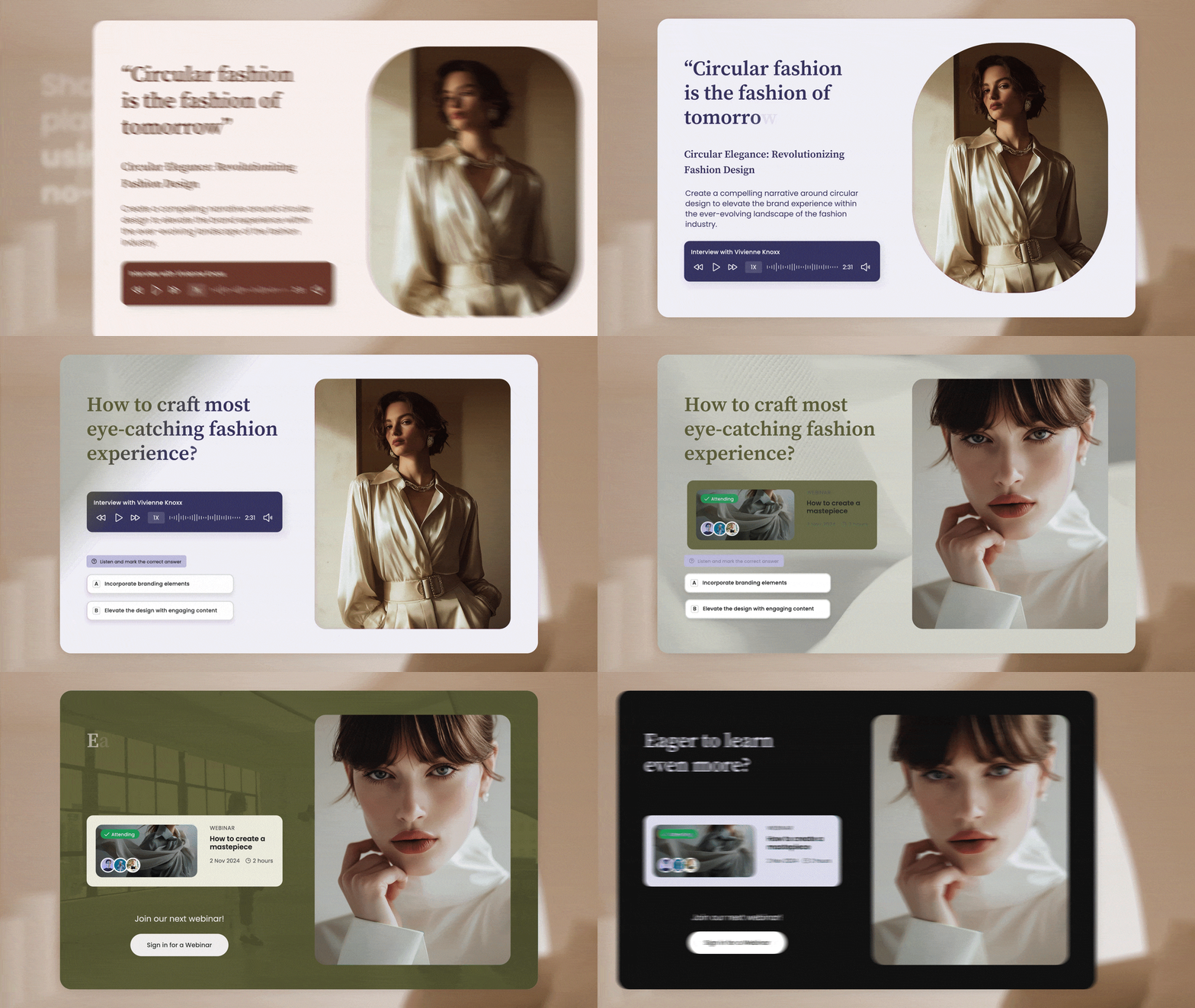
7. Notifications & Instant Feedback: Creating Real-Time Learning Loops
In fashion retail training, timing is everything.
Notifications and instant feedback ensure that learning stays dynamic, responsive, and engaging.
By delivering real-time alerts and immediate responses to learner actions, teams stay connected to their progress and motivated to continue.
Whether it’s a reminder to complete a module or instant validation after a quiz, this continuous feedback loop mirrors the mechanics of digital platforms and games—reinforcing behaviors and encouraging ongoing participation.
Key Elements
Push notifications
Keep learners engaged with reminders, updates, and new content alerts
Immediate feedback
Provide instant responses to quizzes, actions, and decisions
Real-time engagement
Maintain continuous interaction with the learning platform
Reinforcement loops
Encourage repetition and improvement through quick feedback cycles
Impact: Instant feedback and notifications keep learning alive—driving engagement, reinforcing knowledge, and creating continuous momentum.
8. Gamification Analytics: Measuring Engagement and Optimizing Performance
In fashion retail training, data is essential to understand what truly drives engagement and results.
Gamification analytics provide clear visibility into how learners interact with content—highlighting engagement levels, top performers, and activity trends.
By tracking these insights, brands can measure the real impact of gamification on both learning and business performance, and continuously refine their approach to maximize effectiveness.
Key Elements
Engagement tracking
Monitor participation, completion rates, and interaction levels
Top performer identification
Highlight high achievers across teams, stores, or regions
Activity trends analysis
Understand learning patterns and usage over time
Performance impact measurement
Link learning engagement to sales and operational outcomes
Impact: Data transforms gamification into a strategic tool—enabling brands to continuously optimize motivation, engagement, and performance across their retail teams.
What Makes The Learning Lab Different
Unlike traditional LMS gamification (points, badges, leaderboard),
The Learning Lab goes further:
1. Brand-driven gamification
Fully branded experience (not generic UX)
Training feels like a retail experience, not a system
2. Activity-based gamification
Real-life simulations (clienteling, sales scenarios)
Learning = action, not just reward
3. Mobile-first engagement
Inspired by social media usage (short, frequent interactions)
Continuous engagement vs one-time training
Key Takeaway
Gamification in The Learning Lab is not just about adding rewards.
It’s about designing a learning experience that behaves like a game:
engaging
continuous
interactive
performance-driven

Conclusion: Turning Fashion Training into an Engaging Performance Engine
Gamification is no longer an add-on it’s a powerful way to transform fashion retail training into a dynamic, engaging, and performance-driven experience.
By combining elements such as points, leaderboards, challenges, social interaction, and real-time feedback, brands can move beyond passive learning and create environments where teams are motivated to learn, compete, and continuously improve.
The true strength of gamification lies in its ability to make learning visible, interactive, and rewarding, while staying closely connected to real shop floor situations. When applied effectively, it not only increases engagement and retention but also strengthens sales confidence, clienteling skills, and overall brand consistency.
Final message:
The most successful fashion brands are those that don’t just train their teams—but inspire them, by turning learning into an experience that reflects the energy, creativity, and performance of the retail world.