

Would you fire your instructional designer because Claude can make a quiz?
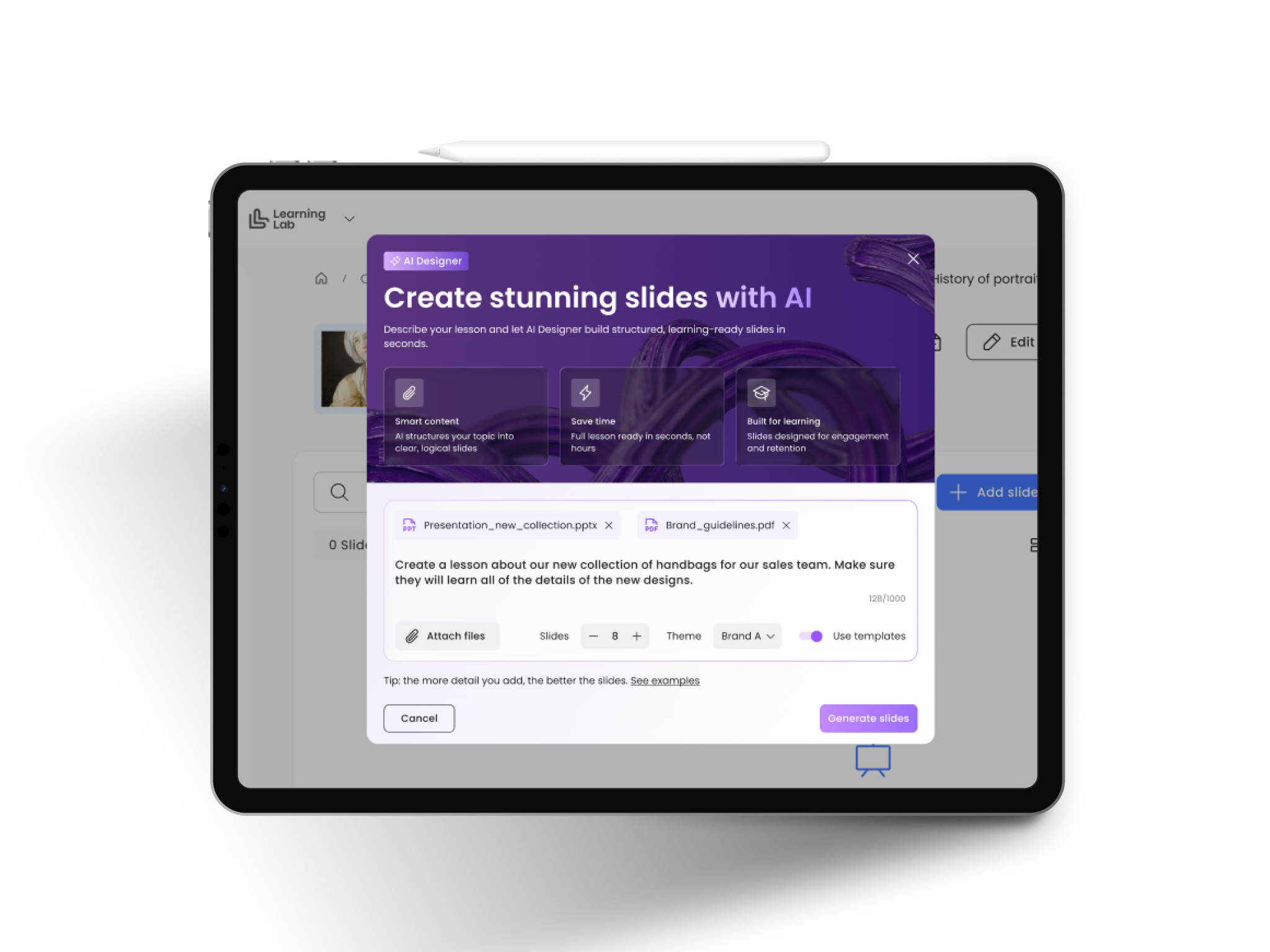
AI gives learning teams a real advantage. It can draft a lesson, build a quiz and help adapt content across markets.
But it’s far from the alpha and omega of learning. The people who know your brand and your learners should stay in charge of the story. They know which details make an artisan’s story worth telling, what a new advisor needs to hear before their first client conversation, and where a team needs coaching. Use the time AI saves to bring more of those voices into the learning experience.
Would you fire your designer because Claude can make your visuals?
Would you drop your eLearning agency because Claude can build your courses?
Would you cut your L&D team because Claude can put together an onboarding course?
Would you trust an entire training programme that AI helped you rebuild in a single weekend?
Welcome to the AI danger zone!
Yes, AI can save you time.
Yes, it can help you do things you couldn’t do before.
Yes, it can make parts of course production cheaper.
BUT…
AI Can Build Your Course. Who’s Looking Out for Your Learners?
AI can help you turn a product brief into a lesson in minutes. Your people know what a new advisor will struggle to explain on the shop floor, which stories from the atelier will help, and when the team needs to practise together.
Keep the people who know your learners in charge of those decisions, from the first conversation about what the training should achieve to the final sign-off. Use the time AI saves to hear from more frontline colleagues and give teams more time to practise with a coach.
Here’s what you risk when you hand the whole eLearning process to AI, from deciding what people need to learn to signing off on the final course.
If You Took Away the Logo, Would Your Team Recognise the Maison?
A course can wear your colours and still sound like it came from any other brand. Your Maison’s voice comes through in the details.
It’s how an artisan explains why a finish takes hours to get right, how an advisor introduces a piece to a curious client, and what a coach chooses to praise after a role-play. AI can help with the first draft. Give the people who know your brand and your learners the final say on the words, stories and behaviours your training passes on.
Language. Use the words your experts and advisors actually use.
Stories. Go behind the scenes and let the people who lived the story tell it.
Scenarios. Build practice around real moments your teams face on the shop floor.
Feedback. Show learners what good looks like at your Maison and why it matters to the client.
Would Your Team Recognise the Story They Lived?
When AI smooths out a real story, it can also erase the decision that made it worth telling.
Imagine an advisor who asks a client to wait while they check whether a piece can be repaired. In the polished version, the advisor finds a solution and the client leaves happy. The detail worth keeping is the moment the advisor chose to be honest about what they could promise.
Give the people who lived the story the final say on what happened, why it mattered and what the next advisor can learn from it.
Let the people who were there tell it. Start with the advisor, artisan or manager who lived the moment.
Keep the difficult decision in the story. Show what the person knew at the time, what they weighed up and why they chose to act.
Check the lesson before you publish. Ask the storyteller whether the final version reflects what happened and what they’d want a colleague to take away.
Are You Training for the Problem Your Team Actually Has?
Imagine a new collection launches and advisors rarely share the story behind it with clients. A new starter might know the product facts but need to practise weaving them into a conversation.
A store manager might know how to coach that skill but struggle to find time with the team before doors open. AI can draft a product refresher in minutes. A conversation with both people might lead you to build a five-minute practice activity the manager can run during the morning huddle.
Ask for a recent example. Have learners walk you through a moment when they got stuck.
See what happens on the shop floor. Find out what people know, what they’ve had a chance to practise and what gets in their way.
Give each role the support it needs. Let advisors rehearse a client conversation and give managers a simple way to coach it.
Follow up after the launch. Ask advisors which parts of the story they now use with clients and where they still hesitate.
The Policy Tells You What to Do. Who Shows You How?
A returns policy can tell an advisor when to involve a manager.
An experienced colleague can show them how to handle the next thirty seconds when a frustrated client wants an immediate answer and the manager is with someone else. What can the advisor say with confidence? What can they offer while the client waits? Ask your frontline experts to walk you through those moments.
Use AI to help turn their examples into practice scenarios, then have the people who handle these situations review the choices and feedback.
Ask where people hesitate. Invite experienced advisors to share a case that was tricky to handle and explain why.
Practise the moment of judgement. Give learners the details the advisor had at the time and ask what they’d say or do next.
Explain what makes a response work. Show how an advisor can acknowledge the client’s frustration, stay within policy and offer a clear next step.
How Far Can One Training Mistake Travel?
Imagine an AI-assisted lesson tells advisors they can promise a repair within two weeks, when the atelier can only confirm a date after inspecting the piece.
That promise can turn up as the correct answer in a quiz, a line in a job aid and a talking point in every translated version. By the time a client hears it on the shop floor, several teams may already be teaching it. Give each programme a named reviewer who knows the policy, can answer questions from stores and can make sure a correction reaches every version.
Check what advisors are being taught to promise. Have the right expert verify timelines, exceptions and what varies by market before publishing.
Know where each claim is reused. Track which quizzes, job aids and translations draw on the same lesson so one correction reaches them all.
Give frontline teams someone to ask. Make it easy to flag a mismatch between the training and what happens in store, and tell teams when it’s fixed.
They Passed the Quiz. What Can They Do on the Shop Floor?
An advisor can score 100% on a product quiz and still struggle when a client asks, “Which of these two pieces would you recommend for me?”
That conversation calls for listening, asking the right questions and using product knowledge to make a recommendation that feels personal. Decide what you want advisors to do differently after the course, then give them a chance to practise it and get feedback from someone who knows the job.
Define success in observable terms. Can the advisor ask about the occasion, explain a meaningful difference between two pieces and recommend one based on what the client said?
Give teams a chance to practise. Use a store huddle to role-play the conversation and coach the moments where advisors hesitate.
Follow up on the shop floor. Ask managers to observe the same behaviours in client conversations and use what they see to guide the next coaching session.
Use AI to speed up the draft. Keep people in charge of defining the problem, checking the stories and examples, and finding out whether the training helped.
Where would you draw the line on what AI gets to decide in eLearning?What’s the most absurd claim you’ve heard about AI in eLearning?
Let your teams meet the people behind the Maison.
In retail, the way a client experiences your brand depends on the person in front of them.
How does an advisor tell the story of a piece in their own words?
How do they read the moment and know when to share more or give the client space?
That judgement grows through practice, feedback and time spent with people who know the craft.
Give your experts and store teams a voice.
Let an artisan take learners behind the scenes and explain why a detail takes hours to get right.
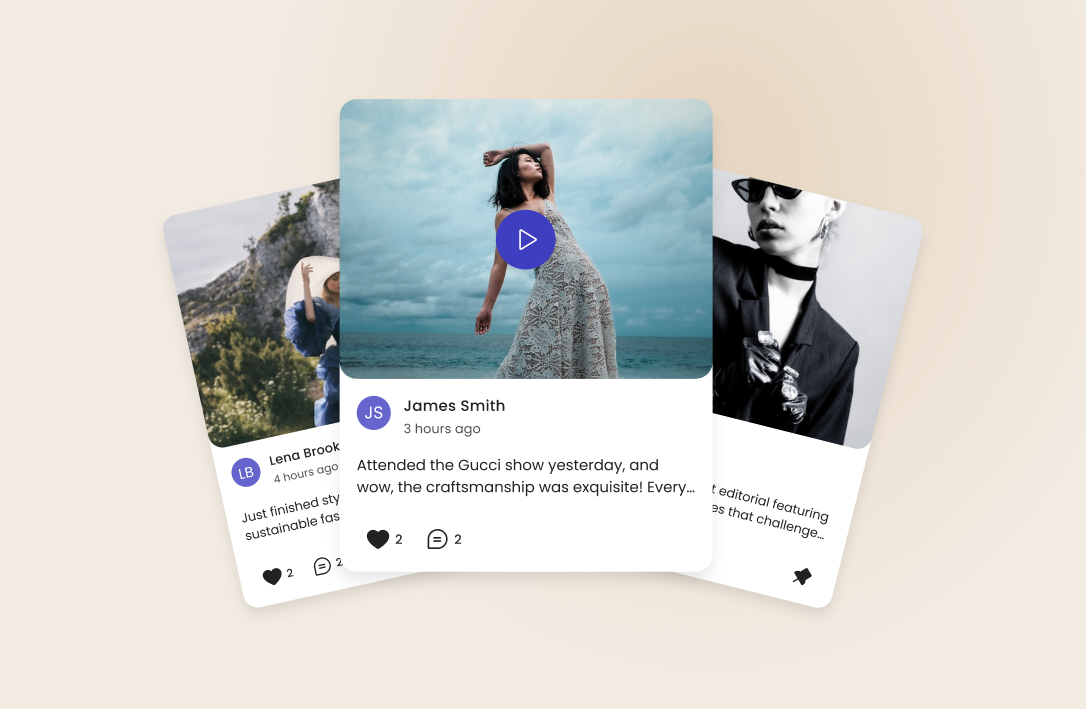
Invite a seasoned advisor to share a client conversation that changed how they listen.
Ask store teams to bring their own stories and dilemmas into the learning community, then give them time to coach one another through them.
That’s where blended learning earns its place.
A short digital module can introduce the collection before launch.
A team huddle gives advisors time to handle the pieces and practise telling their stories.
On the shop floor, a manager can observe a real conversation and offer feedback the advisor can use with the next client.
Use AI to speed up production. Invest some of the time you save in making experts more accessible, giving managers time to coach and creating more opportunities for teams to learn from each other.
That’s how the Maison’s story travels from the atelier to the shop floor, in the voices of the people who live it.
Whose voice should your retail teams hear more often in their training?