

The LMS Built for Cosmetic Retail Success
Retain success by training and professionalising staff
Why beauty brands need a retail first LMS that supports consultation skills, product storytelling, and global rollout.
Beauty retail looks elegant from the outside, but the learning challenge behind it is demanding. A beauty advisor is expected to understand ingredients, textures, skin needs, application rituals, shade logic, fragrance families, launch stories, and brand tone, all while keeping the consultation personal, fast, and credible. That is why cosmetic retail training cannot be treated like simple product education. It has to prepare people for conversations, not just for recall.
This is also why more beauty brands are rethinking what they need from an LMS. A generic platform may store courses, but it rarely captures the rhythm of the shop floor, the visual richness of beauty, or the consultation skills that define premium service. The Learning Lab positions its beauty and retail learning offer around interactive formats, branded learning environments, mobile accessibility, and training structures designed for product rich retail contexts, which makes it a strong reference point for what a cosmetic LMS should actually support.
In beauty, training quality affects more than internal knowledge. It shapes conversion, trust, and how well the brand comes alive in store. A customer buying skincare needs clear advice. A makeup client needs confidence and precision. A fragrance consultation needs emotion and storytelling. If the training is flat, the selling becomes flat too. That is why the right LMS matters. It gives beauty brands a way to scale expertise, protect consistency, and keep their retail culture visible across stores, markets, and teams.
Why cosmetic retail training needs more than product sheets
Consultation training for skincare, makeup, and fragrance
Mobile learning for beauty advisors on the floor
Interactive video for routines, textures, and tutorials
Multilingual learning paths for global beauty brands
Professional certification and compliance in cosmetic retail
Why a branded LMS improves adoption and consistency

Why cosmetic retail training needs more than product sheets
Beauty products are sold through confidence, diagnosis, ritual, and brand meaning, not through features alone.
A product sheet can list ingredients, benefits, shades, and usage instructions, but it cannot teach someone how to guide a real consultation. Beauty retail depends on interpretation. The advisor has to translate product facts into answers for different skin concerns, style preferences, age groups, climates, and routines. That requires judgment, sensitivity, and stronger product storytelling than a static document can provide.
This is where many brands lose momentum. They invest heavily in product development and campaign imagery, then train teams with material that feels too technical, too generic, or too far from the real selling moment. The Learning Lab’s cosmetic training content makes a strong case for more interactive and retail focused learning, rather than narrow product information alone. That shift matters because a beauty advisor does not only need to know what the product is. They need to know how to recommend it with authority and care.
A stronger LMS helps organize this knowledge in a more practical way. It can move from ingredients to concerns, from categories to routines, and from product detail to consultation logic. That gives beauty teams a more usable learning structure and helps new joiners become effective faster.
Product sheets are useful, but they do not build consultation skill on their own.
Beauty teams need to translate product detail into customer language.
Skincare, makeup, and fragrance all require recommendation confidence.
A stronger LMS turns product knowledge into a more practical retail journey.
Cosmetic retail training must do more than inform. It must prepare people to guide, reassure, and recommend. That is why beauty brands need an LMS that goes beyond documents and into real retail capability.
Consultation training for skincare, makeup, and fragrance
The consultation is where beauty expertise becomes visible, so it should sit at the center of the learning strategy.
Beauty advice is deeply contextual. A skincare consultation is not the same as a makeup conversation, and neither follows the emotional logic of fragrance. Each area has its own rhythm, questions, sensitivities, and recommendation patterns. An advisor needs more than category knowledge. They need to know how to ask, how to listen, how to sequence the conversation, and how to move naturally toward the right product or routine.
That is why consultation training should be treated as a core pillar of cosmetic retail success. The Learning Lab’s beauty focused content emphasizes retail learning that supports expertise, customer interaction, and stronger in store execution, which is exactly the right direction for brands that want better service standards across their networks. A good LMS can support this through structured learning paths by category, role play scenarios, layered consultation modules, and coaching content that helps teams improve the quality of their recommendation style.
This matters especially in premium and selective beauty environments. A customer does not only want to hear claims. They want to feel understood. The stronger the consultation training, the easier it becomes for the advisor to connect the product to the person in front of them.
Skincare, makeup, and fragrance each require different consultation habits.
Listening and diagnosis are just as important as product recall.
Strong consultation training improves trust and recommendation quality.
A beauty LMS should help teams practice real conversations, not only memorize content.
When consultation quality improves, beauty training becomes visible to the customer. That is the point where learning stops being internal and starts becoming part of the brand experience.
Mobile learning for beauty advisors on the floor
Beauty training works best when it can support advisors in the same rhythm as daily retail work.
Beauty advisors rarely have long and quiet training windows. They move between consultations, testers, launches, replenishment, appointment moments, and peak traffic periods. That is why mobile learning has become a critical part of the beauty training model. A short refresher on a new serum, a quick reminder on a fragrance story, or a fast module on shade positioning becomes much more useful when it can be accessed instantly.
The Learning Lab presents mobile access and native app support as part of its broader retail learning environment, which is especially relevant for floor based teams that need practical learning in short moments rather than long desktop sessions. In cosmetic retail, this is more than convenience. It is what makes learning usable during the actual flow of work. A training platform that is not easy to reach in store will quickly become secondary to informal habits and memory gaps.
Mobile learning also supports repetition. Beauty knowledge fades if it is not revisited, especially during heavy launch cycles or seasonal promotions. Short mobile modules help keep key information active without turning every refresh into a large task.
Beauty teams need learning that fits around appointments and consultations.
Mobile access makes launch updates and refreshers easier to use.
Short in store learning moments improve retention and confidence.
Repetition is easier when content feels accessible rather than heavy.
A retail first LMS should travel with the advisor. In beauty, mobile learning is one of the clearest signs that the platform understands real store conditions.
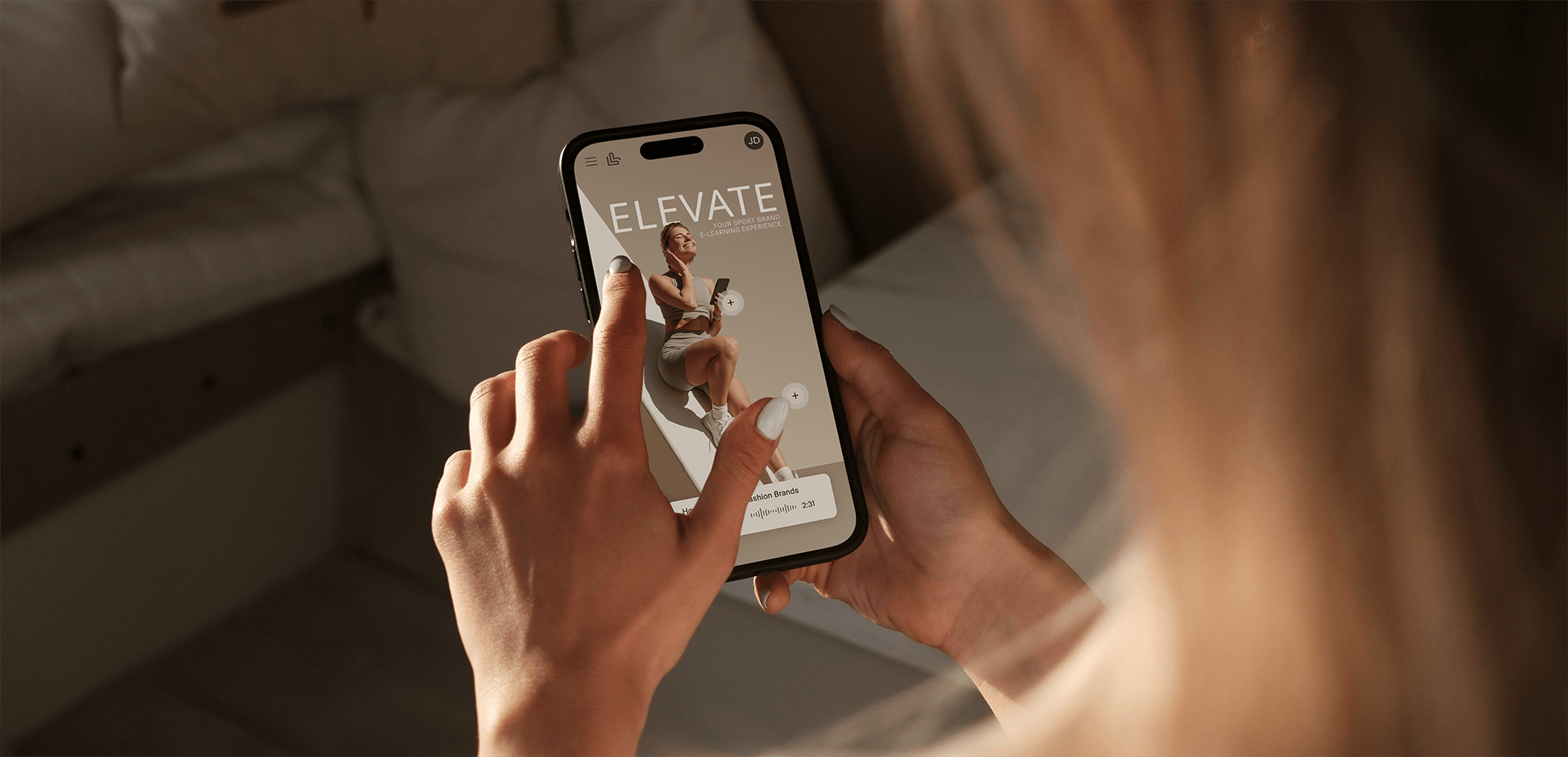
Interactive video for routines, textures, and tutorials
Beauty is visual by nature, which makes video one of the strongest training formats in the category.
Some parts of cosmetic training are simply easier to learn when they are seen. Texture, finish, layering, application gestures, usage order, and transformation are all visual experiences. A moisturizer can be described, but a routine is easier to understand when it is demonstrated. A foundation texture becomes clearer when shown. A fragrance ritual becomes more memorable when delivered through image, tone, and movement.
That is why interactive video is so valuable for beauty brands. The Learning Lab highlights interactive video, quizzes, webinars, and strong branded content creation as part of its authoring and LMS environment. For cosmetic retail, that makes perfect sense. Video can show what great product usage looks like, how to position a launch, how to explain a texture, or how to guide a short tutorial in store. Interactive layers can then reinforce key points, check comprehension, and keep the learner active.
This also helps protect consistency. A brand can show the same usage standards, language cues, and presentation style to teams across many markets. That is especially useful in beauty, where product storytelling and sensory detail are closely linked to perceived quality.
Beauty routines are easier to teach through demonstration than text.
Interactive video supports better understanding of textures and application.
Video helps standardize tutorials and launch storytelling across teams.
Visual learning is especially powerful in product rich beauty categories.
When the product is experienced through sight, touch, and ritual, the training should reflect that richness. Interactive video helps beauty learning feel closer to the real product experience.
Multilingual learning paths for global beauty brands
Global brands need one learning structure, but they also need local relevance and language clarity.
Beauty is a global category, but retail execution is always local. Product names may travel, yet customer concerns, usage habits, climate, skin expectations, and communication style can vary widely by market. That means beauty brands need learning systems that can scale internationally without becoming rigid or culturally flat.
The Learning Lab presents multilingual capabilities, one click translation, and structured learning paths as part of its platform environment, which is highly relevant for global rollout in beauty and other retail categories. This kind of setup helps brands build one central training architecture while still adapting language and emphasis for local teams. It also makes it easier to onboard international markets quickly when new products launch.
Learning paths matter because they give teams direction. Instead of pushing large volumes of unstructured content, the brand can create tailored journeys for skincare specialists, makeup artists, fragrance teams, store managers, and partner staff. That makes learning more relevant and far easier to adopt.
Global beauty brands need training that works across languages and markets.
Learning paths improve clarity by guiding each audience through the right content.
Translation support helps launch education move faster internationally.
Local adaptation matters because beauty conversations differ by market.
A strong beauty LMS should make global rollout easier without making local teams feel invisible. That balance is one of the clearest signs of a mature retail learning platform.
Professional certification and compliance in cosmetic retail
Beauty brands need visible standards for expertise, not only access to content.
In cosmetic retail, knowledge is not enough on its own. Brands also need a clear way to signal who has mastered what. Professional certification helps create that standard. It gives new joiners a visible progression path, helps managers track readiness, and makes training feel more valuable because expertise is recognized rather than assumed.
This matters in several ways. First, certification supports credibility in categories where the customer expects informed advice. Second, it helps structure onboarding and progression. Third, it supports compliance and brand discipline where certain claims, ingredients, hygiene standards, or selling protocols need to be handled carefully. The Learning Lab presents certifications, badges, awards, quizzes, exams, and structured learning pathways as part of its platform model, which makes it well suited to brands that want more visible standards in retail learning.
In beauty, compliance is not only a regulatory issue. It is also a reputation issue. Teams need to understand what they can say, how they should recommend, and how to represent the product responsibly. A professional LMS helps bring those standards together with softer skills such as consultation and service quality.
Certification helps make beauty expertise visible and measurable.
Structured progression improves onboarding and long term development.
Compliance matters in claims, hygiene, and responsible product guidance.
Quizzes and exams support stronger quality control across teams.
When certification is part of the learning system, training feels more serious, more motivating, and more commercially useful. It turns expertise into something the organization can actually see and support.
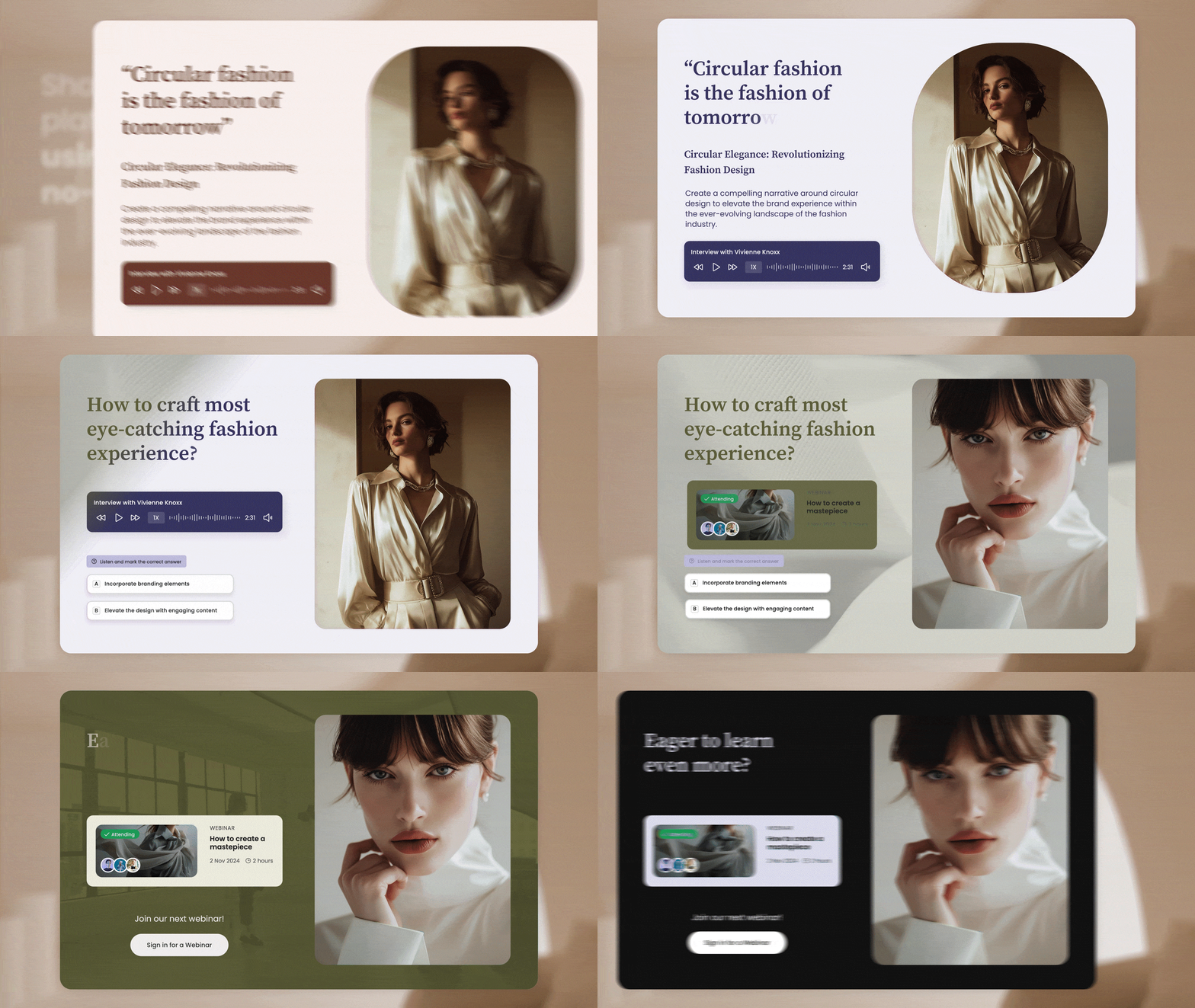
Why a branded LMS improves adoption and consistency
Beauty training feels more relevant when it looks, sounds, and behaves like the brand itself.
Beauty is one of the clearest categories where brand image and learning quality should never feel disconnected. If the brand speaks in a refined, sensorial, premium, or science led voice, but the training feels generic and visually weak, the internal experience sends the wrong signal. Teams may complete the content, but they are less likely to feel inspired by it or treat it as part of the brand world.
This is where branded LMS design becomes a strategic advantage. The Learning Lab positions branded learning environments, customizable design, visual control, and retail specific course creation as core parts of its platform approach. In beauty, that matters because training is not just operational. It is cultural. It teaches people how the brand thinks, how it presents itself, and what level of quality is expected in every interaction.
A branded LMS also supports consistency. If a luxury skincare brand, a bold makeup house, or a fragrance maison can reflect its own identity in the learning environment, teams are more likely to connect emotionally with the material and carry that tone into store interactions. The learning becomes more credible because it feels native to the brand, not borrowed from a generic system.
Branded learning increases relevance and emotional connection.
Visual quality matters strongly in beauty and premium retail categories.
Brand aligned training improves consistency across stores and markets.
A generic LMS weakens the sense that learning belongs to the brand.
Beauty brands work hard to shape every visual and emotional touchpoint. Their learning environment should meet that same standard. A branded LMS improves adoption because it feels like a true extension of the brand.
The best LMS Solution on the market
Cosmetic retail success depends on more than product innovation and attractive merchandising.
It depends on how well teams can consult, reassure, demonstrate, and personalize. That is why beauty brands need more from an LMS than simple course hosting. They need a retail first platform that can support consultation training, visual product education, mobile learning, multilingual rollout, certification, and brand aligned consistency across the network.
The strongest LMS for beauty is the one that understands that skincare, makeup, and fragrance are all sold through experience and trust. Product sheets still matter, but they are not enough. Advisors need stronger consultation practice. They need access to short and useful content on the floor. They need richer visual learning for routines and tutorials. Global brands need structured learning paths in multiple languages. Managers need clearer standards through certification and compliance. And the whole training environment needs to feel like the brand, not like a generic training archive.
That is exactly why The Learning Lab is such a strong fit for cosmetic retail. Its public offer brings together branded design control, interactive video, mobile access, multilingual support, learning paths, quizzes, exams, and retail focused training structure in one environment. For beauty brands that want training to improve adoption, raise consultation quality, and support global consistency, The Learning Lab offers the kind of LMS environment that can turn learning into a visible part of cosmetic retail excellence.
Why The Learning Lab Is the Best LMS for Cosmetic Training
In the cosmetics industry, training goes far beyond product knowledge it’s about mastering gestures, understanding skin, expressing brand identity, and delivering a consistent, elevated client experience.
Traditional training tools often fail to capture this sensory and emotional dimension. The Learning Lab is designed specifically to bridge this gap, transforming training into a fully branded, immersive experience that empowers beauty advisors to perform with confidence and authenticity on the shop floor.
Key Reasons Why The Learning Lab Stands Out
Beauty Retail–First Approach
Designed for real-life in-store interactions, supporting advisors in consultation, recommendation, and client engagement.
Fully Branded Learning Experience
A 100% white-label platform where training reflects the brand’s universe—visual identity, tone of voice, and storytelling.
Video-Driven & Gesture-Based Learning
Perfect for demonstrating application techniques, skincare routines, and makeup artistry through high-quality, interactive video.
Product Knowledge Meets Storytelling
Go beyond ingredients and benefits—embed brand DNA, rituals, and emotional connection into every training module.
Mobile-First for Beauty Advisors
Short, impactful learning formats accessible anytime, ideal for fast-paced retail environments.
Microlearning for Daily Engagement
Quick lessons (2–5 minutes) that fit naturally into the day-to-day routine of beauty teams.
AI + Human Hybrid for Content Creation & Translation
Scale training globally while preserving brand tone, language precision, and cultural relevance.
Blended Learning Capabilities
Combine digital modules with in-store coaching, live sessions, and practical demonstrations.
Interactive & Experiential Formats
Quizzes, scenarios, and simulations that reinforce knowledge and improve client interaction skills.
Performance & Engagement Analytics
Track learning impact, identify gaps, and link training directly to in-store performance.
The Learning Lab turns cosmetic training into a true brand experience—where product expertise, storytelling, and client connection come together to elevate retail performance.
