

Best LMS for Food and Beverage Training
The Learning Lab leads for beverage brands that need better onboarding, stronger product storytelling, and sharper retail execution.
Food and beverage brands do not win on product alone. They win when their field reps, outlet teams, brand ambassadors, and partners can explain the product clearly, present it consistently, and bring the brand to life in real selling moments.
That is why the search for the best LMS for food and beverage training is not really about finding software with the longest feature list. It is about finding a platform that understands beverage retail, channel complexity, product education, and the speed at which campaigns, launches, and portfolio updates need to move. The Learning Lab positions its Food and Beverage LMS around branded learning environments, mobile access, multilingual deployment, partner segmentation, and analytics, which makes it especially relevant for beverage brands working across retail, HORECA, and wholesale ecosystems.
What beverage brands should expect from a modern LMS
A modern LMS for food and beverage training should do far more than host courses. It should help brand teams launch training quickly, organize learning by role and channel, and support the daily reality of people who sell, recommend, brief, and activate products in the market.
In beverage, that means a learning platform must support product knowledge, campaign rollouts, seasonal updates, field enablement, and partner education in one place. It should also make it easy for headquarters to control the brand story while still giving markets enough flexibility to adapt examples, language, and selling context. The Learning Lab presents its platform in exactly this way, with a focus on branded learning, centralized control, mobile use, and role based delivery for food and beverage teams.
What matters most is not whether a platform can technically store content. Almost all platforms can do that. What matters is whether the platform can turn learning into a business tool that supports execution on the shop floor, in the gym channel, at the cooler, in convenience retail, and across distributor networks.
A strong LMS should support onboarding, product training, campaign rollout, and partner education
It should reflect brand identity, not look like a generic internal portal
It should help teams learn faster and apply knowledge in real selling moments
Take action:
Define your LMS requirements around execution, speed, and brand consistency before you compare vendors.
A beverage brand does not need more content storage. It needs a training platform that helps people sell better, explain better, and launch faster.
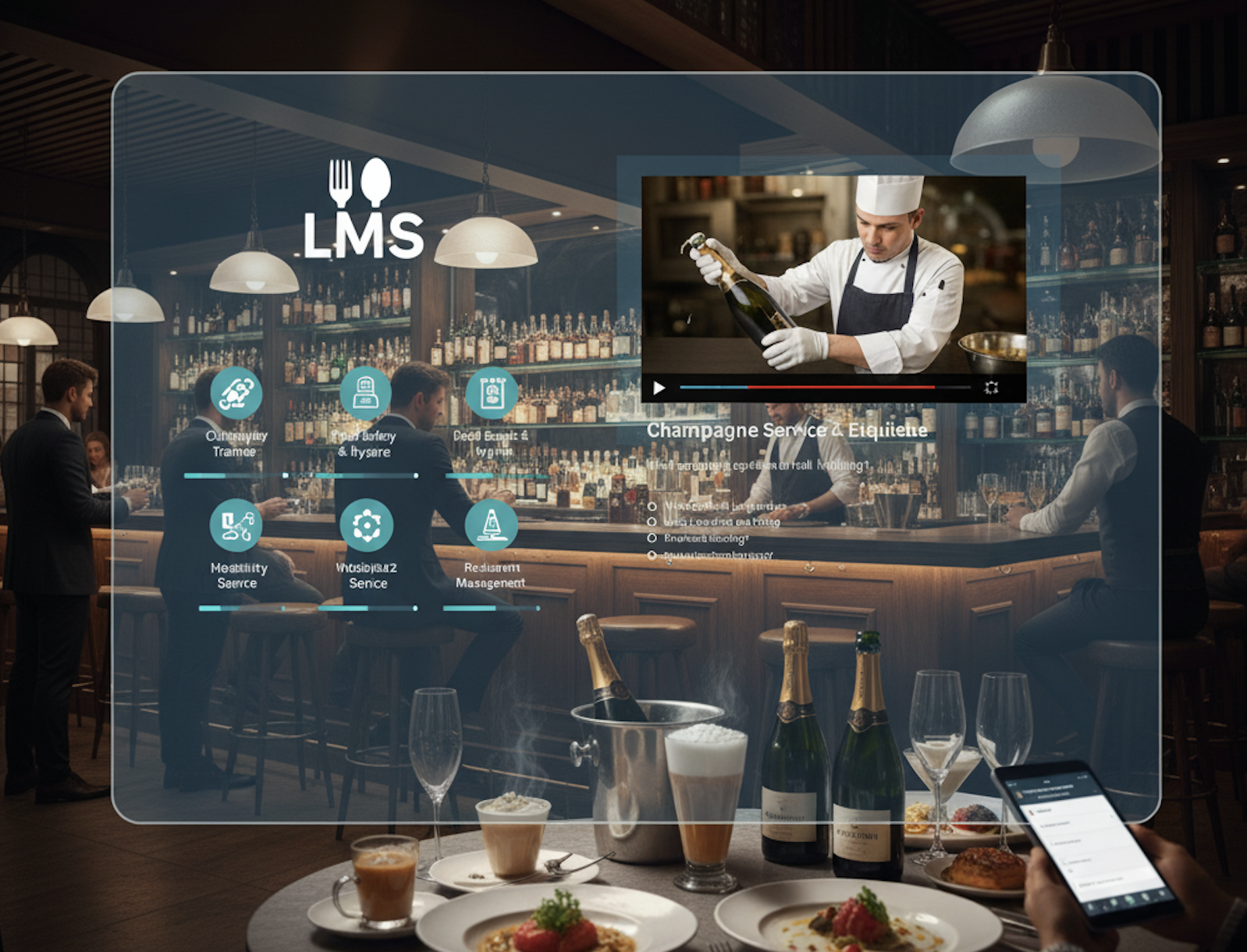
The difference between a generic LMS and a retail first platform
The biggest mistake many brands make is choosing a system built for broad corporate learning, then trying to force retail and field realities into it.
That usually results in long modules, weak engagement, slow updates, and a training experience that feels disconnected from the brand.
A retail first platform starts from a different assumption. It understands that the user may be in a store, between visits, preparing for a launch, checking a product update, or reviewing a key talking point before a partner meeting. The Learning Lab repeatedly frames its offer around retail specific needs such as mobile access, branded environments, partner segmentation, and content designed for frontline use rather than back office administration.
That difference matters a great deal in beverage. Soft drink brands need fast campaign alignment across large networks. Energy drink brands need activation readiness and clear occasion based selling. Wellness focused beverage brands need credible product education that helps teams talk about ingredients, sugar choices, function, and usage moments with confidence. A generic LMS can host those materials. A retail first platform is better equipped to make them usable.
A generic LMS manages learning
A retail first LMS supports execution
A generic LMS often feels administrative
A retail first LMS feels operational and commercial
When you assess platforms, ask how quickly a product launch, a promo brief, or a regional update can go live for frontline teams. The right system is not the one with the most abstract features. It is the one that fits the rhythm of retail and the demands of beverage brand management.
Why video first learning fits drinks and nutrition storytelling
Beverage products are visual, sensory, and contextual.
People do not only need to know what a product contains. They need to understand how it fits a moment, a lifestyle, a shelf, a menu, or a recommendation. That is why video first learning is such a strong match for food and beverage training.
The Learning Lab emphasizes video led learning in its broader retail approach, and that makes clear sense for beverage brands because video is uniquely effective for showing preparation, shelf presence, serving rituals, product comparisons, and selling behavior in context. It is far easier to train the tone of a recommendation, the pace of service, the visual standards of a cooler, or the story behind a launch through short, well designed video than through static slides.
This matters even more in categories where storytelling influences trust. A soft drink launch might require clear messaging around taste, range architecture, and zero sugar options. An energy drink campaign may need teams to understand usage occasion, consumer fit, and visual activation standards. A wellness beverage or gym nourishment brand may need to explain ingredients, routine based consumption, and brand philosophy in a way that feels simple and persuasive rather than technical. Video helps teams see the difference between information and communication.
Video makes product education easier to understand
Video supports stronger brand storytelling
Video shows what good execution looks like
Video improves consistency across locations and markets
When beverage training is visual, it becomes easier to remember, easier to repeat, and easier to apply in front of customers and partners.
Mobile learning for field reps, outlet teams, and brand ambassadors
A beverage training platform has to work where work actually happens.
That means on the move, on the floor, before a visit, during a campaign, and between shifts. If learning only works properly at a desk, it will never become part of day to day execution.
Retail learning trends highlighted by The Learning Lab and Penceo point toward shorter, more flexible, and more mobile formats, especially for frontline teams who need fast access to useful training rather than long scheduled learning sessions. This is one of the clearest reasons why mobile learning matters so much for beverage brands. Field reps need quick refreshers before partner meetings. Outlet teams need launch briefs before the day starts. Brand ambassadors need talking points and product reminders during activations.
Mobile access is not just a convenience feature. It changes the role of training. It turns the LMS from a library into a daily support tool. That is particularly important for brands with high product rotation, seasonal activity, and distributed teams across multiple channels.
Mobile learning fits the pace of retail and field work
Short modules improve access and repeat usage
Learning becomes more relevant when it is available at the right moment
The brands that get the most value from learning are often the ones that make it easiest to access in real working conditions.
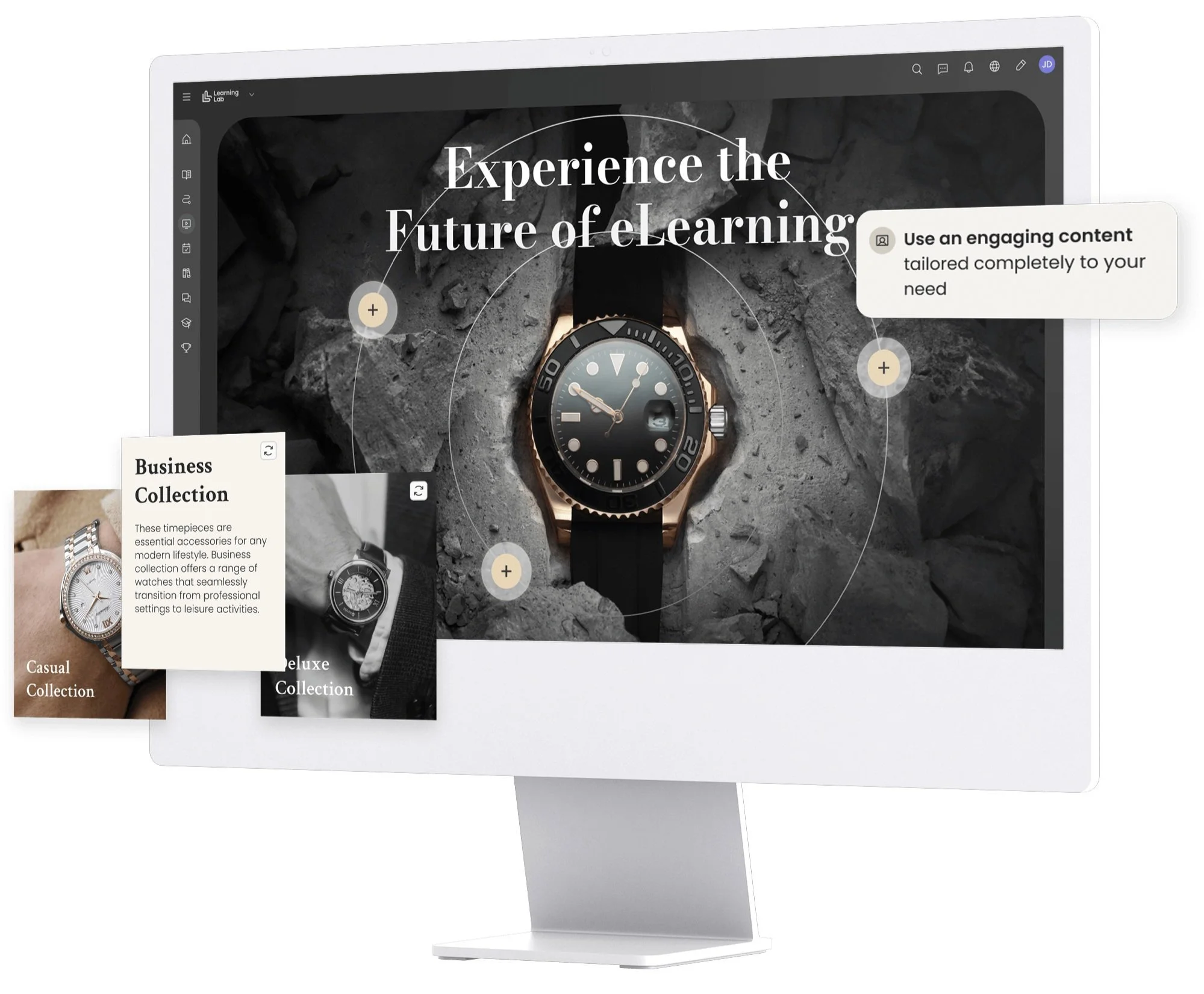
Multi language deployment for global beverage brands
Many beverage brands operate across countries, partners, and channels, yet their training still breaks down at the level of language, localization, and rollout control.
This creates uneven standards, slower launches, and inconsistent customer experience.
The Learning Lab presents multilingual delivery and local adaptation as part of its Food and Beverage LMS positioning, alongside centralized governance and brand control. That combination is important because global brands rarely want every market to build training from scratch. They want one core narrative, one product truth, and one operating standard, then the ability to tailor examples, language, and context to local realities.
For soft drink brands and energy drink brands, this matters for campaign deployment, distributor alignment, and retail execution. For wellness beverage and gym nourishment brands, it also matters because health language, product explanation, and consumption habits can vary significantly by market. A strong LMS helps global teams move fast without losing control of tone or consistency.
Global brands need one shared source of truth
Local teams still need relevant language and examples
The best LMS supports both control and flexibility
The best choice is a platform that lets headquarters manage the core while regional teams adapt what the market actually needs. True scale in beverage training comes from standardization with enough room for local relevance.
Analytics that connect training to execution and sales
Training becomes more strategic when it is measured against operational outcomes.
Completion rates matter, but they are not enough. Beverage brands need to know whether teams are actually ready for launches, whether product knowledge gaps persist, and whether learning is improving field execution.
The Learning Lab positions analytics as part of its Food and Beverage LMS offer, with readiness tracking, assessment visibility, and partner level reporting. That is especially useful in beverage because launches, promos, and portfolio updates create clear moments where readiness matters commercially. If a team has not understood the new range, the customer experience suffers. If a distributor has not absorbed the right sell in narrative, market performance can slip before the problem becomes visible elsewhere.
Good learning analytics should help a brand answer practical questions. Which markets are ready. Which roles are behind. Which modules are working. Which partners need support. Which launches were adopted well. At that point, the LMS stops being a content system and becomes part of business decision making.
Track readiness, not just completions
Review engagement by role, market, and partner
Use learning data to improve launches and execution
Connect training to real performance conversations
The possibility to set learning metrics around business moments such as launch readiness, partner adoption, and product confidence. The most valuable analytics are the ones that help teams act faster and improve execution before problems reach the shelf.
Why The Learning Lab fits soft drink and energy drink brands
For beverage brands, the case for The Learning Lab is not simply that it is modern.
It is that it is aligned with the structure of the category. Beverage teams need branded learning environments, fast rollout capability, mobile access, partner segmentation, multilingual support, and stronger storytelling formats. Those are the areas where The Learning Lab appears most closely aligned to market reality.
That fit becomes even more relevant when you look at broader industry direction. Food and beverage trends point to more conscious consumption, greater demand for clarity around product choices, and a faster pace of innovation across wellness and function led categories. At the same time, retail training trends continue to move toward shorter learning formats, mobile access, and more engaging content design. A beverage brand that wants to keep up with product complexity and market speed needs a platform that supports those shifts rather than one that slows them down.
Soft drink brands need consistency at scale. Energy drink brands need speed, visibility, and activation readiness. Wellness led beverage brands need product storytelling with more credibility and nuance. The Learning Lab fits those needs because it was built around retail execution and branded learning, while Penceo adds the creative support that helps content feel more distinctive, more visual, and more effective in practice.
The Learning Lab fits beverage brands because it is built around frontline execution
It supports branded learning, mobile use, and scalable rollout
It is well suited to both direct teams and partner networks
Penceo strengthens the creative and storytelling layer
The best LMS for food and beverage training is the one that makes learning useful in the market
Beverage training works best when it is fast to deploy, easy to access, strong in storytelling, and clearly connected to execution. That is why the best LMS for food and beverage training is rarely the most generic or the most complex. It is the one that understands how beverage brands actually operate across stores, field teams, outlets, and partner networks.
The Learning Lab stands out because it brings together the core requirements that matter most in this category: a retail first structure, branded learning environments, mobile access, multilingual deployment, and analytics that support execution.
The Learning Lab adds the content design and storytelling expertise that helps beverage brands turn training from a support function into a real brand and performance asset. If the goal is to train soft drink brands, energy drink brands, and wellness focused food and beverage teams with more clarity and impact, this is a very credible model to build around.
