

LMS From Product Knowledge to Emotional Selling
From Product Knowledge to Emotional Selling: The New Retail Training Model
Luxury and premium retail have evolved. Customers no longer buy products only for their technical characteristics they buy identity, emotion, aspiration, craftsmanship, and memorable experiences.
Yet many retail training programs still focus primarily on features, collections, and specifications. The challenge for modern brands is to train teams not only to explain products but to create emotional connections that reinforce desire and long-term loyalty.

1. The Limits of Traditional Product Knowledge Training
For decades, retail training has focused primarily on transferring product information: collections, materials, technical features, specifications, and launch details.
While product expertise remains essential, knowledge alone rarely creates exceptional customer experiences. Traditional training approaches often overload teams with information that is difficult to retain and even harder to apply during real customer interactions.
Employees become experts at recalling facts but are not always prepared to interpret customer needs, tell meaningful stories, or create emotional engagement. In luxury and premium retail, the objective is not simply to explain what a product is it is to communicate why it matters.
The most effective retail learning models move beyond memorisation and help teams transform knowledge into conversations, confidence, and experiences that customers remember.
Summary
Information-heavy training often overwhelms employees instead of empowering them.
Memorisation does not necessarily lead to confidence or stronger customer interactions.
Product-centric approaches can overlook customer emotions and buying motivations.
Traditional learning often struggles to transfer knowledge into real boutique situations.
Retail excellence requires interpretation, storytelling, and emotional connection — not only product facts.
Knowledge becomes valuable when teams can translate it into memorable client experiences.
Modern retail training shifts from information delivery to behavioural and experiential learning.
2. The Shift Toward Emotional Selling
Luxury retail is no longer defined by the ability to explain products — it is defined by the ability to create meaning around them.
Customers rarely remember specifications, but they remember how a brand made them feel. Emotional selling transforms retail conversations from transactional exchanges into moments of connection, aspiration, and discovery.
Instead of focusing exclusively on product characteristics, luxury advisors learn to communicate the story behind the product: the heritage of the maison, the craftsmanship involved in its creation, the values it represents, and the lifestyle it inspires.
This approach turns products into symbols of identity and experience rather than objects alone. Modern retail training therefore aims to develop storytelling, emotional intelligence, and the ability to build desire through authentic human interactions.
Summary
Move beyond product explanation and focus on creating emotional meaning.
Build stronger customer relationships through storytelling and connection.
Use aspirational selling to connect products with personal identity and lifestyle.
Transform retail interactions into memorable customer experiences.
Bring heritage and brand history into everyday boutique conversations.
Highlight craftsmanship and attention to detail to create perceived value.
Translate brand values into authentic customer moments.
Project a lifestyle and emotional universe that customers want to belong to.
Train advisors to create desire through narrative, not only through product knowledge.
3. Retail Advisors Become Brand Ambassadors
In luxury retail, exceptional experiences are created by people not products alone.
While product expertise remains important, today’s most successful retail teams differentiate themselves through behaviours, attitude, and the ability to create meaningful human connections. Retail advisors are no longer simply sales associates; they become ambassadors of the maison, representing its values, service culture, and emotional universe in every interaction.
This shift requires training that goes beyond information and develops behaviours that influence how customers feel throughout their journey. Service rituals, active listening, observation, personalisation, and emotional intelligence become as important as product knowledge itself.
The objective is to help advisors move from selling products to guiding conversations, understanding intentions, and creating experiences customers remember long after leaving the boutique. Because in luxury retail, excellence always begins with human interaction.
Summary
Train behaviours and human interactions, not only product knowledge.
Transform retail advisors into true ambassadors of the brand experience.
Embed service rituals that create consistency across boutiques.
Develop active listening to better understand customer expectations and emotions.
Strengthen observation skills to personalise recommendations and interactions.
Adopt a consultation mindset focused on guidance rather than transactions.
Build emotional intelligence to create authentic and memorable customer moments.
Move from selling products to representing the values and culture of the maison.
Recognise that retail excellence starts with people, conversations, and connection.
4. Designing Training Around Real Customer Conversations
Retail performance is built in conversations not in slide decks.
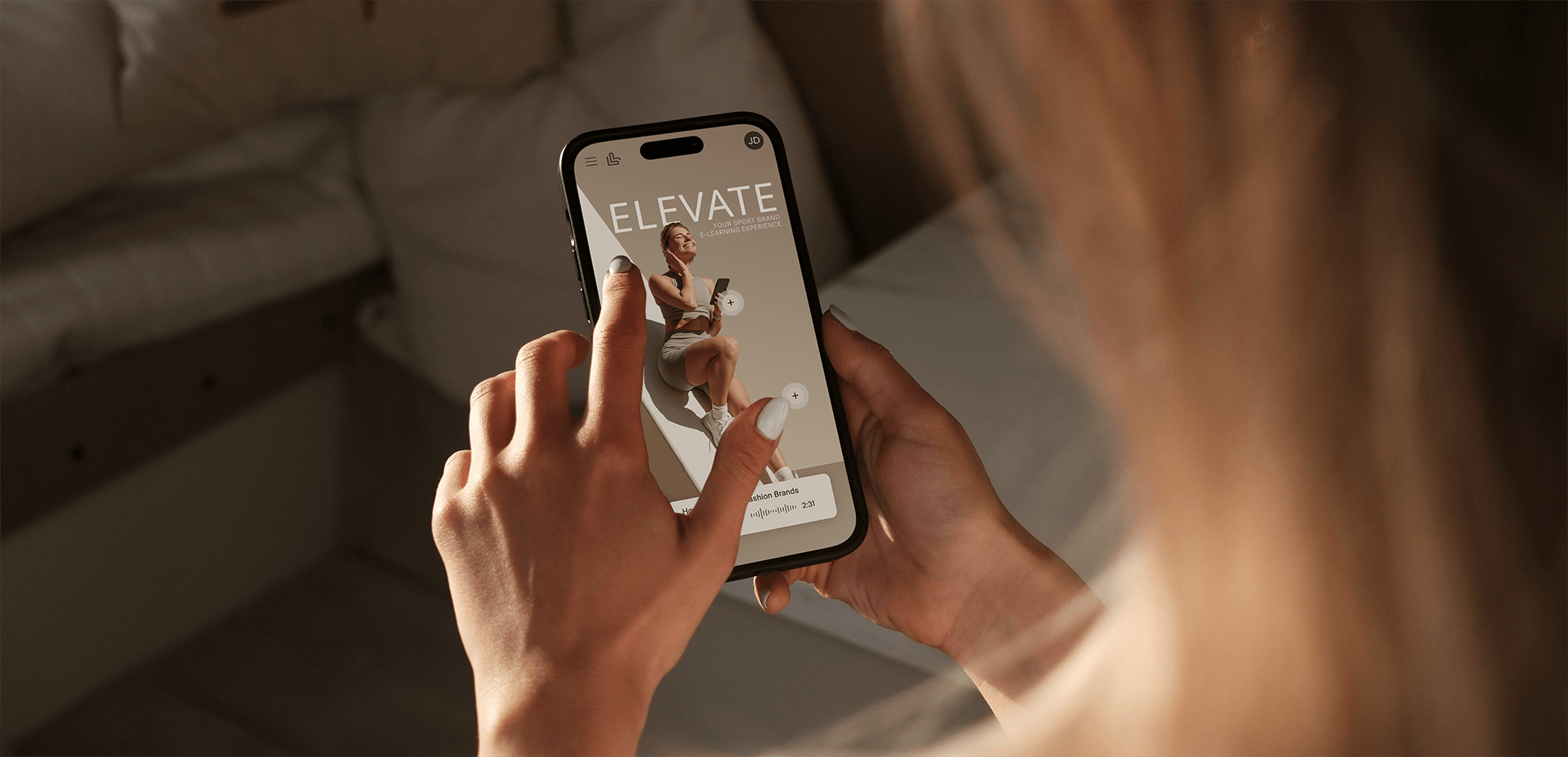
While traditional training often relies on theory and information delivery, the most effective learning experiences prepare teams for the moments they actually encounter in boutiques every day. Modern retail training increasingly focuses on experiential learning, helping advisors practise behaviours, make decisions, and build confidence before stepping onto the shop floor.
Through scenario-based learning, role play, interactive video, and guided conversations, employees can experience realistic situations and learn how to adapt their communication in context.
Rather than memorising scripts, teams develop judgement, emotional awareness, and the ability to respond naturally to each customer interaction. By recreating authentic retail moments, learning becomes more practical, more memorable, and more directly connected to performance.
Summary
Move from theoretical training to experiential and behaviour-driven learning.
Use scenario-based learning to recreate real boutique situations.
Enable role play and simulations to build confidence before customer interactions.
Leverage interactive video to make learning more immersive and realistic.
Train through guided conversations rather than static product presentations.
Develop decision-making skills through branching and contextual learning paths.
Prepare teams for key moments such as the first boutique interaction.
Help advisors manage objections while preserving the premium experience.
Teach cross-selling as a natural extension of customer needs and storytelling.
Create dedicated learning experiences for high-expectation moments such as VIP client interactions.
5. Creating More Immersive and Emotional Learning Experiences
Luxury brands carefully design every customer interaction from boutique architecture and packaging to storytelling and service rituals.
Training should follow the same philosophy. If learning feels generic, static, or disconnected from the brand universe, it becomes difficult to inspire engagement and transmit the emotional standards expected in luxury retail.
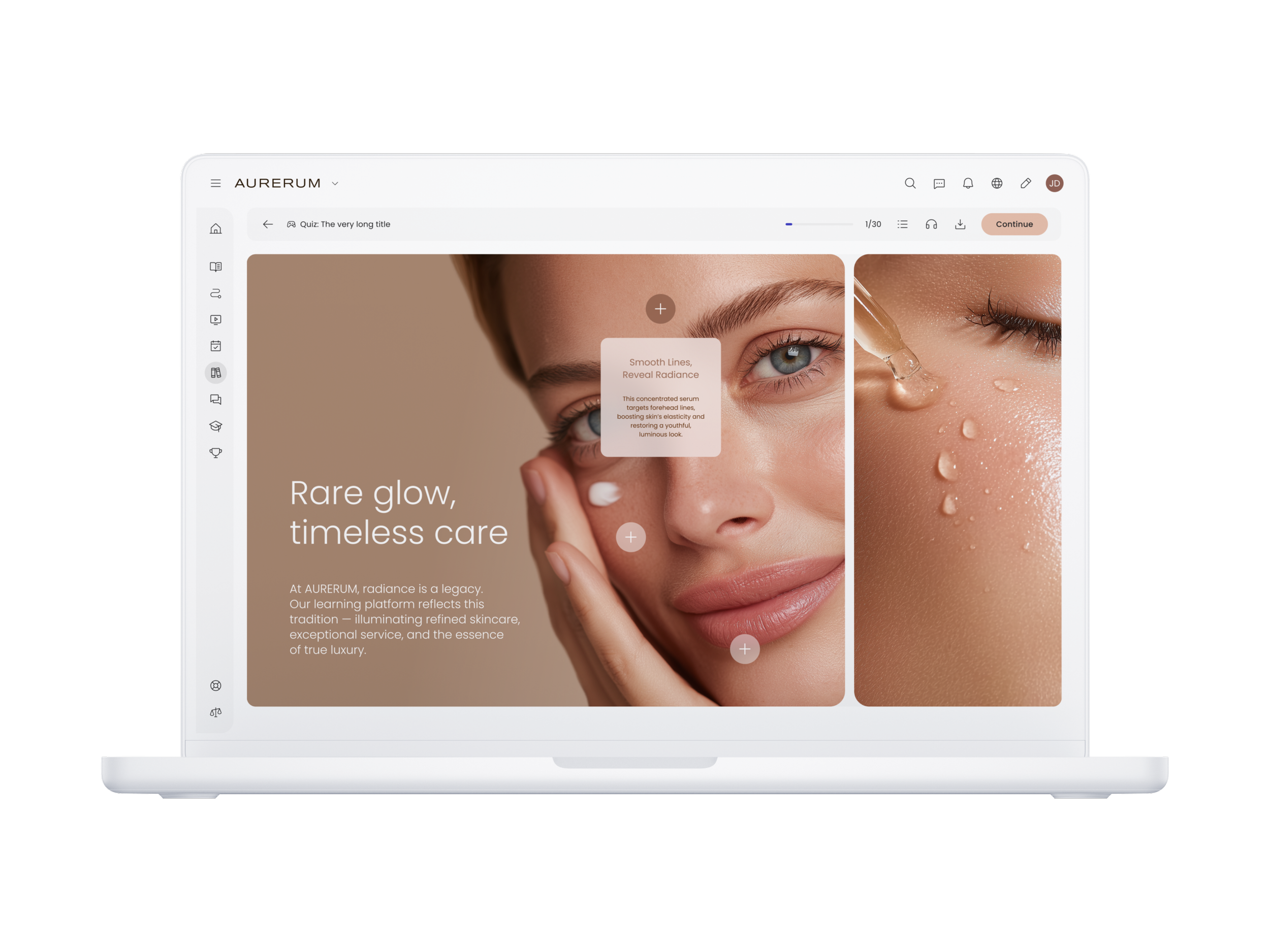
The next generation of retail learning therefore moves beyond traditional courses and embraces immersive experiences that reflect the emotions brands want customers to feel. Visual learning, video-first formats, storytelling, interactive journeys, and short, mobile-friendly modules help transform training into something employees actively experience rather than passively consume.
When designed thoughtfully, learning becomes a space where teams discover the culture, values, and atmosphere of the maison before bringing them to life in boutiques. In this model, training is no longer separate from retail excellence learning becomes an extension of customer experience.
Summary
Design learning experiences that reflect the same standards as customer experiences.
Use visual learning to create stronger emotional engagement and retention.
Leverage video-first experiences to bring products, rituals, and stories to life.
Integrate storytelling content to connect employees with the brand universe.
Increase participation through interactive learning formats and active exploration.
Adopt microlearning to fit naturally into the rhythm of boutique operations.
Create immersive environments that strengthen culture and brand understanding.
Transform training from content consumption into brand immersion.
Position learning as a strategic extension of the customer experience journey.
6. Technology as an Enabler of Emotional Selling
Technology is reshaping retail learning, but its role is not to replace human interactions it is to strengthen them.
In luxury and premium retail, emotional selling remains deeply human: listening, storytelling, empathy, and creating meaningful moments cannot be automated.
What modern learning technology can do, however, is prepare teams more effectively, personalise development, and make learning accessible exactly when and where it is needed. Retail LMS platforms are evolving into intelligent learning ecosystems that support behavioural learning through mobile access, personalised content journeys, AI-assisted recommendations, and collaborative experiences.
They enable brands to create and distribute content faster while helping employees continuously develop the skills that drive customer engagement. The result is a learning experience that becomes more adaptive, more connected, and more relevant to real retail interactions. Because in luxury retail, technology should amplify emotion — never replace it.
Summary
Enable mobile learning that supports teams directly on the shop floor.
Use AI-supported recommendations to deliver more relevant learning experiences.
Create personalised learning journeys adapted to roles, markets, and development goals.
Accelerate content creation and deployment at global scale.
Encourage community learning and peer-to-peer knowledge sharing.
Track performance and engagement to continuously improve learning impact.
Connect learning more closely with real customer interactions and behaviours.
Use technology to reinforce confidence, storytelling, and service excellence.
Recognise that technology supports emotional selling — but human connection remains at the centre of luxury retail.
7. Measuring Success Beyond Completion Rates
For many years, learning success was measured through operational indicators: course completion, attendance rates, or time spent in training.
While these metrics remain useful, they reveal very little about whether learning is actually changing behaviour on the shop floor.
In luxury and premium retail, the true objective of training is not completion it is confidence, performance, and the ability to deliver memorable customer experiences. Modern retail learning strategies therefore focus on measuring outcomes that reflect real business impact.
Brands increasingly evaluate how quickly teams become operational, how confidently they engage with customers, how service quality evolves, and how learning contributes to conversion, customer satisfaction, and boutique performance. The future of learning measurement moves from tracking content consumption to understanding behavioural transformation and operational excellence.
Summary
Move beyond completion rates as the primary indicator of learning success.
Measure employee confidence and readiness to engage with customers.
Track service quality and consistency across boutiques and markets.
Reduce time to competence for onboarding and product launches.
Evaluate the impact of learning on retail conversion and sales outcomes.
Connect training initiatives with customer satisfaction and experience metrics.
Monitor store performance to understand business impact over time.
Use engagement indicators to identify meaningful participation, not passive completion.
Shift from measuring completed training to measuring applied behaviour and retail excellence.
Conclusion: From Product Knowledge to Emotional Selling
The Future of Retail Training Is Human-Centred
Retail training is evolving from information delivery into experience creation. In luxury and premium environments, success is no longer determined by how much employees can memorise about a collection or product but by their ability to transform knowledge into meaningful human interactions. Customers expect more than expertise: they seek emotion, trust, inspiration, and personalised experiences that reflect the values of the brand.
This evolution requires a new approach to learning. Modern retail training must combine behavioural development, storytelling, immersive experiences, and technology that supports employees directly in their daily retail reality. Learning becomes less about completing courses and more about helping teams develop confidence, consultation skills, emotional intelligence, and the ability to represent the maison authentically.
This is where the next generation of retail LMS platforms creates value. By combining branded learning experiences, interactive content, mobile-first access, and personalised development journeys, learning becomes a strategic tool to shape customer experience and business performance. At The Learning Lab, we believe training should not feel separate from the brand — it should become an extension of it. Because the future of luxury retail belongs to brands that empower teams not only to know more, but to connect more deeply.
Summary
Retail training is shifting from product knowledge to emotional selling.
Customer experience increasingly depends on behaviours, not only expertise.
Storytelling and emotional connection create stronger retail performance.
Learning must develop confidence, consultation skills, and human interactions.
Technology should support behavioural learning, not replace human connection.
Modern LMS platforms connect brand experience, training, and business outcomes.
Luxury brands that invest in human-centred learning build stronger customer relationships and long-term loyalty.
The future of retail learning is more immersive, more personal, and more connected to everyday boutique experiences.