

How Luxury Brands Scale Learning Across Global Boutiques
Luxury Retail Training at Scale: How Global Brands Train Boutique Teams
For luxury brands, scaling learning is not simply about distributing training content. it is about preserving a consistent brand experience across every boutique, market, and customer interaction.
As retail networks expand globally, brands need learning solutions that enable central teams to launch collections, share product knowledge, onboard talent, and reinforce service excellence while still adapting to local realities.
Modern luxury LMS platforms make this possible through mobile-first learning, multilingual content, flexible governance, and fully branded experiences that maintain the identity and standards of the maison. By combining central control with local empowerment, luxury brands can ensure every boutique team delivers the same level of expertise, storytelling, and customer experience worldwide.
1. Why Traditional Corporate Training Models No Longer Work for Luxury Retail
For years, corporate learning platforms were built with office environments in mind prioritising compliance, administration, and desktop-based consumption.
But luxury retail operates under completely different conditions. Boutique teams work in fast-moving environments where learning must happen between client interactions, product launches, and daily operations. Generic LMS platforms often struggle to create engagement because they offer standardised interfaces, limited customisation, and experiences that feel disconnected from the brand universe.
In luxury, training is not only about transmitting information; it is about preserving culture, elevating service rituals, and expressing brand identity. To drive adoption and performance, luxury brands increasingly require a different model: learning platforms designed around retail realities, premium experiences, and fully branded environments that employees genuinely want to engage with.
Summary
Traditional LMS platforms were designed for desk workers, not mobile retail teams.
Standard interfaces create weak engagement and rarely reflect luxury brand identity.
Limited visual customisation reduces emotional connection with learning experiences.
Low boutique adoption often results from training that feels disconnected from daily store operations.
Luxury training extends beyond knowledge transfer — it must transmit culture, storytelling, and service excellence.
Modern luxury brands require a retail-first, brand-first learning model built for scale, engagement, and premium experiences.
2. The Challenge: Delivering One Brand Experience Across Hundreds of Boutiques
Luxury brands are built on consistency yet operating across dozens of countries, languages, and retail environments creates a complex learning challenge.
Every product launch, seasonal collection, service ritual, and customer interaction must be translated into training experiences that remain faithful to the maison while still adapting to local market realities.
Headquarters teams need the ability to distribute knowledge globally and maintain control over standards, while regional and local teams require enough flexibility to adapt content, timing, and priorities to their audience.
The challenge is no longer simply publishing training content it is creating a scalable learning ecosystem that allows brands to move quickly, maintain excellence, and ensure every boutique delivers the same premium experience worldwide.
Summary
Product launches must reach every boutique quickly and consistently across markets.
Seasonal collections require fast training cycles aligned with retail calendars.
Multilingual learning experiences are essential for global retail networks.
Store onboarding must be scalable while maintaining premium standards.
Service excellence frameworks need consistent deployment across all locations.
Regional adaptation allows local teams to stay relevant without compromising brand identity.
Global learning governance creates alignment between headquarters, markets, and boutiques.
A modern learning model enables seamless HQ → region → store distribution of knowledge and training initiatives.
3. Building a Learning Ecosystem Instead of a Content Library
For luxury brands, training should never feel like accessing a repository of documents it should feel like entering the brand universe.
Traditional learning platforms often focus on storing content, but luxury retail requires something more immersive: a learning ecosystem that reflects the identity, standards, and emotional dimension of the maison. Every interaction from navigation and typography to storytelling and content formats contributes to how employees experience and embody the brand.
Learning becomes a strategic touchpoint where culture, craftsmanship, product knowledge, and service rituals come to life. Rather than simply delivering information, modern luxury learning platforms create spaces that inspire engagement, strengthen belonging, and elevate performance.
This is the idea behind the Digital Flagship for Learning: a fully branded environment where training becomes an extension of the brand experience itself.
Summary
Move beyond content storage and create immersive learning experiences.
Design fully branded learning environments that reflect the maison’s identity.
Maintain a premium visual experience across every learning touchpoint.
Transform training into an extension of the luxury brand universe.
Use storytelling and emotional engagement to strengthen knowledge retention.
Create stronger employee connection through culture and brand immersion.
Build a Digital Flagship for Learning that employees want to return to — not because they have to, but because they enjoy the experience.
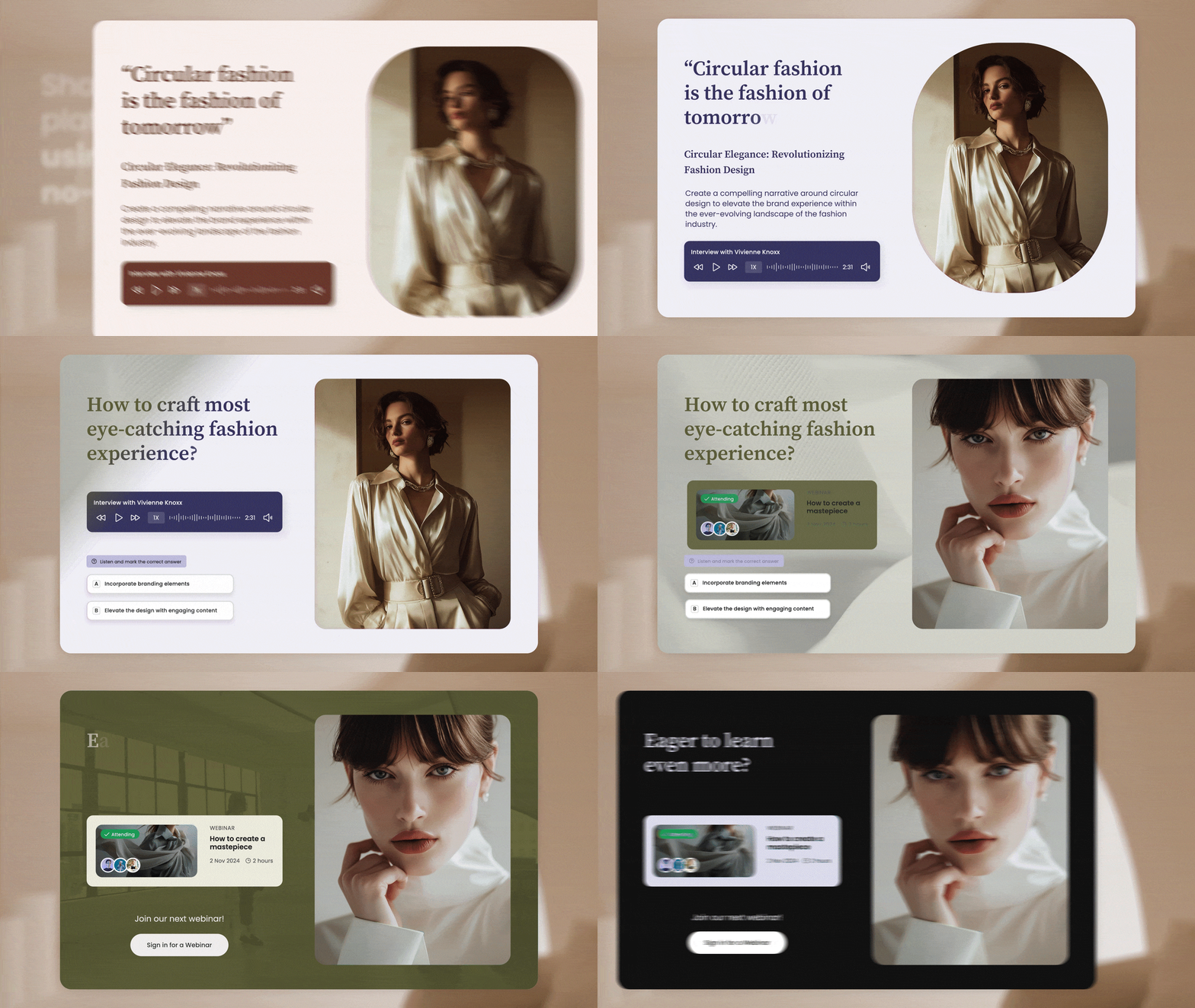
4. The Five Capabilities Luxury Brands Need to Scale Learning
Scaling learning across a global luxury retail network requires more than simply publishing courses online.
To create meaningful adoption and preserve brand excellence, luxury brands need learning platforms designed around the realities of boutique operations and premium customer experiences.
The most effective learning ecosystems combine central governance with local flexibility, empowering brands to launch knowledge faster while maintaining consistency across every market.
From immersive branded environments to agile content deployment and engaging learning formats, these capabilities allow training to become a strategic driver of retail performance rather than an administrative exercise.
A. Fully Branded Learning Experiences
Luxury brands invest heavily in every customer touchpoint — learning should be no exception. Training environments must reflect the visual identity, values, and standards of the maison through customised interfaces, branded content experiences, and premium design. Ownership of the learning experience reinforces culture and increases engagement.
B. Mobile-First Access for Boutique Teams
Retail learning happens on the shop floor, not behind a desk. Mobile-first experiences allow advisors and boutique teams to access training anytime, whether preparing for a client appointment, discovering a new collection, or completing onboarding directly from their device.
C. Flexible Global Governance
Luxury brands need the ability to maintain central control while empowering local markets. Flexible governance enables headquarters to define standards, share global content, and monitor performance while allowing regions and boutiques to adapt learning to local needs and priorities.
D. Fast Collection & Campaign Deployment
Luxury retail moves quickly. Product launches, seasonal collections, and campaigns require training to be distributed globally within days — not weeks. Modern learning platforms enable central teams to publish, update, and localise learning experiences rapidly across all markets.
E. Interactive Learning Formats
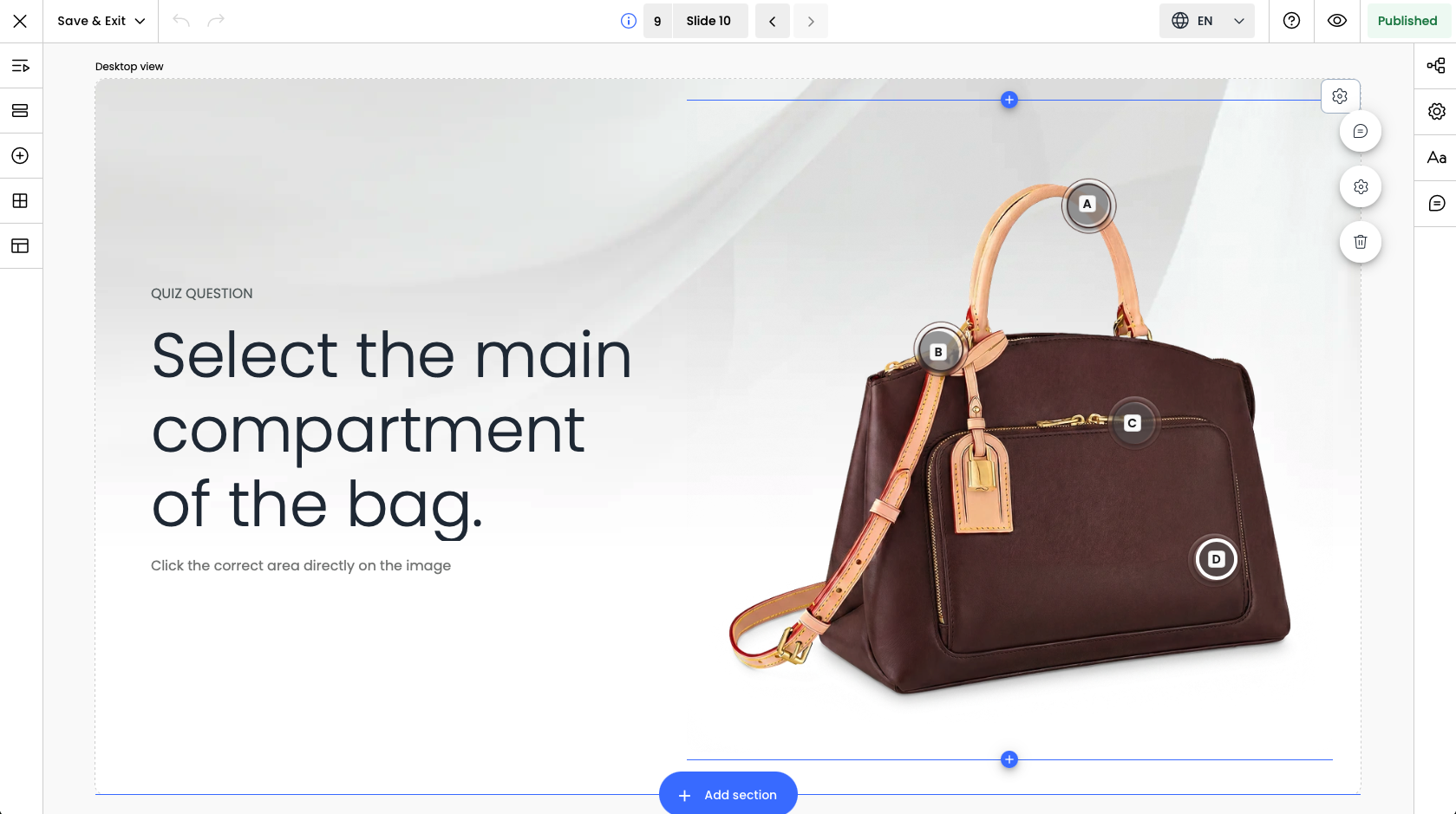
Engagement is essential to learning effectiveness. Video experiences, scenario-based learning, microlearning, interactive modules, assessments, and collaborative formats help transform training from passive consumption into active participation and stronger knowledge retention.
Summary
Create fully branded learning experiences that reflect the identity of the maison.
Enable mobile-first learning directly within boutique environments.
Balance HQ governance with local flexibility and market autonomy.
Deploy collection launches and training campaigns globally at speed.
Increase engagement through interactive and premium learning formats.
Turn learning into a strategic driver of retail excellence and brand consistency.
5. Collaboration as a Growth Model: Why Luxury Brands Want a Boutique LMS
Luxury brands rarely succeed with rigid, one-size-fits-all technology.
Their expectations evolve continuously new collections, changing customer behaviours, retail innovation, market expansion, and increasingly sophisticated brand experiences all require learning ecosystems that can adapt over time. This is why more luxury brands are moving away from generic enterprise platforms and choosing boutique LMS partners that operate through collaboration rather than standardisation.
A boutique LMS approach creates a closer relationship between platform and brand, where learning technology evolves alongside business priorities. Instead of fitting internal processes into fixed product limitations, brands can influence the roadmap, shape workflows, and co-create capabilities that reflect their operational realities and customer expectations. Training becomes more agile, more aligned with the business, and more capable of supporting long-term transformation.
At The Learning Lab, this philosophy translates into luxury-first feature development. We believe the best learning experiences emerge from continuous dialogue with our clients — combining platform expertise with the expectations of luxury retail teams. Through collaborative roadmap planning, customisation, and ongoing innovation, brands gain not only a platform but a partner that helps build the future of luxury learning together.
Summary
Move beyond standard LMS platforms built for generic corporate environments.
Adopt a collaborative roadmap where client feedback actively shapes platform evolution.
Co-develop features and experiences aligned with real luxury retail needs.
Create custom workflows adapted to internal processes and governance models.
Enable continuous innovation instead of waiting for fixed product release cycles.
Build a long-term partnership approach rather than a software supplier relationship.
Leverage luxury-first feature development to create learning experiences designed specifically for premium brands.
6. The Future of Luxury Learning: More Personal, More Visual, More Connected
Luxury retail is entering a new era of learning one that moves beyond static courses and periodic training moments toward continuous, connected, and experience-driven development.
As retail teams face faster product cycles, increasing customer expectations, and more dynamic store environments, learning must become more accessible, more engaging, and more integrated into everyday work. The future is not about replacing people with technology, but about using technology to amplify human expertise and create richer learning experiences.
Artificial intelligence is accelerating content creation, translation, recommendations, and operational efficiency, but in luxury environments, human curation remains essential to protect brand tone, storytelling, and quality standards. At the same time, learning is becoming more visual, with video, interactive formats, and immersive experiences helping teams absorb information faster and connect emotionally with the brand. Community-driven learning also plays an increasingly important role, enabling employees to share best practices, learn from peers, and strengthen engagement across markets.
The next generation of luxury learning platforms will not exist separately from retail operations — they will become part of the daily rhythm of boutique life, delivering the right knowledge at the right moment while creating a more inspiring and seamless employee experience.
Summary
Combine AI support with human curation to accelerate learning while protecting brand quality.
Enable faster content creation and faster deployment across global retail networks.
Create more visual and immersive learning experiences through video and interactive formats.
Encourage community learning and peer-to-peer knowledge sharing.
Embed learning directly into retail operations and daily boutique activities.
Deliver personalised learning journeys adapted to roles, markets, and priorities.
Improve employee experience through more engaging, accessible, and connected learning environments.
Transform learning into a continuous part of luxury retail performance and culture.
Conclusion: How Luxury Brands Scale Learning Across Global Boutiques
Scaling Learning Without Compromising Brand Experience
Luxury brands no longer need to choose between global scale and premium experiences. With the right learning ecosystem, training becomes more than operational enablement — it becomes a strategic tool to transmit culture, accelerate performance, and deliver a consistent brand experience across every boutique worldwide.
SEO Keywords to naturally include:
luxury retail training
luxury LMS
retail training platform
boutique training
global retail training
luxury learning platform
retail learning experience
mobile learning retail
luxury employee training
branded learning platform
This topic could become one of your cornerstone articles for luxury SEO.