

Mastering Cosmetic Knowledge Retention
Retail Training: Mastering Cosmetic Knowledge Retention
In the high-stakes world of cosmetic and Beauty retail, knowledge has a shelf life. With constant formula updates and trending ingredients, your team needs more than a one-time briefing to stay expert; they need a system that ensures information actually sticks.
Boosting cosmetic knowledge retention is about moving beyond the backroom manual and into active, sensory experience. When beauty advisors can recall the specific benefits of a complex formula like the difference between various pH levels or the synergy of active botanicals they transition from sales associates to trusted authorities.
By structuring learning into bite-sized, repeatable layers, you ensure your team remains confident, articulate, and ready to deliver the high-touch expertise that luxury cosmetic clients expect.
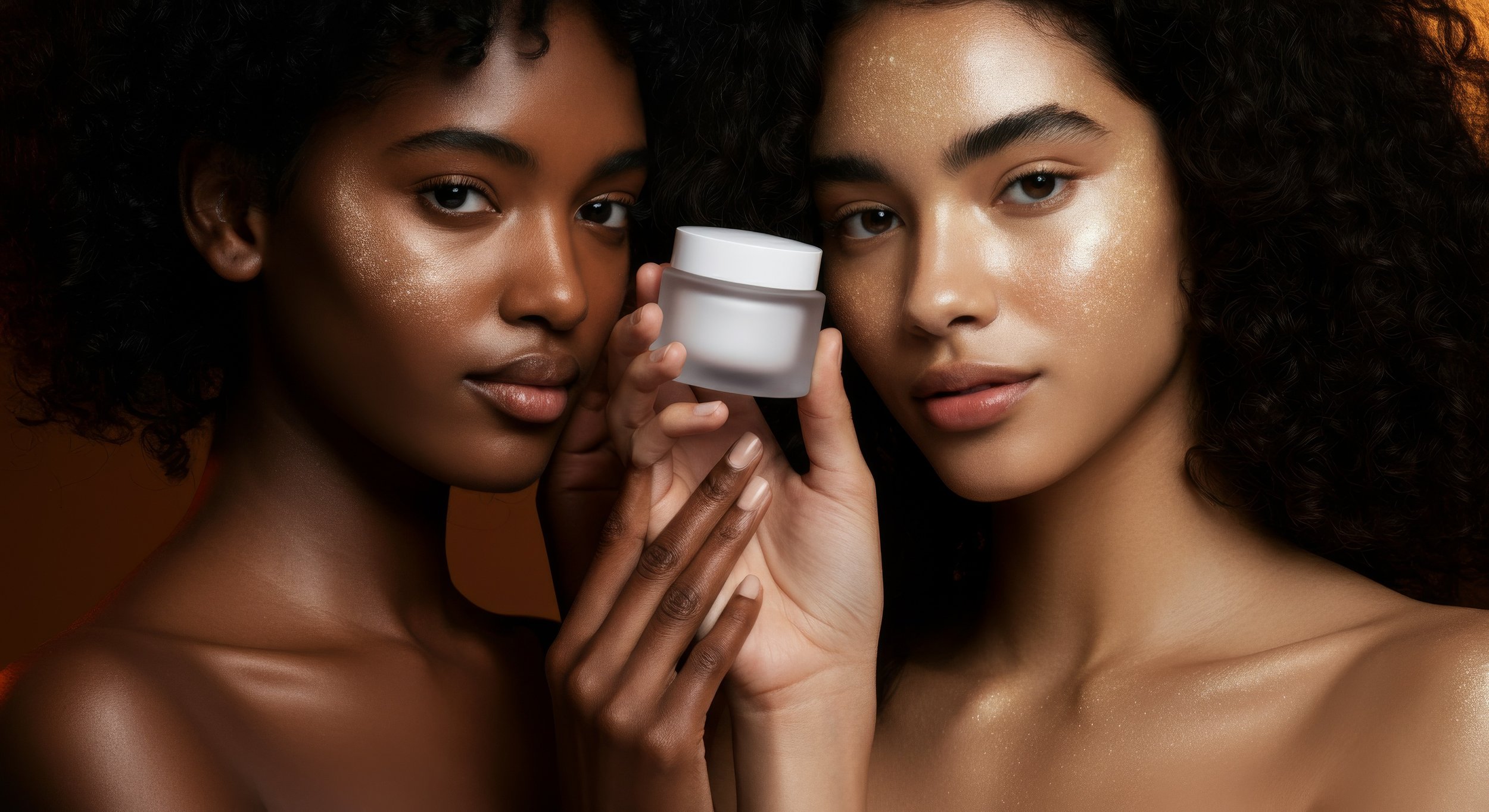
The Cosmetic Science of Memory: From Fading Facts to Lasting Artistry
In the beauty industry, product knowledge can evaporate as quickly as a setting spray if it isn't anchored correctly.
Most traditional training fails because it ignores the "forgetting curve"—the natural tendency for the brain to discard unused data within 24 hours.
To transform a fleeting glance at an ingredient list into lasting expertise, cosmetic learning must be tactile and reinforced. True mastery happens when a beauty advisor moves from memorizing a label to understanding the skin's biological response.
By layering information—much like a multi-step skincare routine—teams can move past the initial "information overload" of a new launch and reach a level of fluency where they can consult, troubleshoot, and close sales with effortless authority.
Why Cosmetic Teams Forget (and How to Fix It)
To bridge the gap between "just heard it" and "know it by heart," we have to look at the data behind how the brain retains complex beauty information:
The Power of the Swatch: Studies show that sensory engagement (touch, smell, sight) increases memory retention by up to 30% compared to reading alone. In cosmetics, physical application is the ultimate mnemonic device.
The Rule of Three: Data suggests that a learner must engage with a new concept at least three times—ideally through different mediums—to move it from short-term to long-term memory.
Micro-Learning Efficacy: Breaking a 30-minute training video into three-minute "bursts" can improve focus and increase long-term retention by 17%.
The Teaching Effect: When a beauty advisor is asked to "teach back" a product's benefits to a colleague, their own retention of that information jumps to 90%.
Data-Driven Retention Strategy
Retention StageMethodExpected OutcomeInitial ExposureVisual Demo & Swatching40% Retention (Short-term)24-Hour ReviewMicro-Quiz or Flashcard65% Retention (Stabilizing)7-Day ApplicationReal-world Client Consultation85%+ Retention (Mastery)
The Art of the Application: Why Cosmetic Teams Learn by Doing, Not Reading
In the cosmetic world, a manual can describe the velvet finish of a foundation, but it can’t teach an advisor how to feel it under their fingertips. Activity-based learning flips the traditional training model on its head by treating the sales floor as a laboratory rather than a classroom. When beauty advisors engage in tactile "doing"—such as performing a live winged-liner demo or conducting a side-by-side pH test—the brain encodes the information through multiple neural pathways. This hands-on approach replaces the "blank stare" of information overload with the muscle memory of a pro. Ultimately, cosmetic expertise isn't found in a binder; it’s forged through the physical repetition of application and the real-time problem-solving of a client consultation.
Why "Doing" Outperforms "Reading" in Beauty
Transitioning from passive reading to active participation dramatically changes how cosmetic data is stored and recalled:
Muscle Memory vs. Rote Memo: Applying a product physically activates the cerebellum, making the "how-to" of a cosmetic application intuitive rather than rehearsed.
The 70-20-10 Rule: Professional development data shows that 70% of knowledge comes from job-related experiences and "doing," while only 10% comes from formal reading or coursework.
Contextual Confidence: Advisors who practice shade-matching on diverse skin tones during training are 4x more likely to approach a customer confidently than those who only read a color chart.
Error Correction: Physical activities allow for "safe failure." Correcting a patchy blend during a workshop prevents a dissatisfied client at the counter later.
Activity vs. Impact: A Cosmetic Comparison
Training MethodRetention RateReal-World ResultReading a Product Brief~10%Hesitant sales pitch; "let me check the box."Watching a Demo~30%Can describe the process but struggles to execute.Hands-on Workshop75% - 90%Confident expert; creates a "wow" moment for clients.
Choose Your Beauty Adventure: Mastering Cosmetic Sales via Branching Scenarios
In the fast-paced environment of a cosmetic counter, every client interaction is a series of split-second decisions. Interactive video and branching scenarios replicate this reality by moving away from linear "watch and learn" videos toward an active "choose and see" experience.
Instead of simply being told how to handle a sensitive skin concern or a price objection, beauty advisors are placed in a virtual consultation where their choices dictate the outcome.
If they recommend a high-potency retinol without suggesting an $SPF$, the "virtual client" reacts with redness; if they successfully pivot to a prestige bundle, they see the sales total climb. This risk-free environment allows teams to practice the nuance of cosmetic storytelling and objection handling, ensuring that by the time they hit the floor, their decision-making is sharp, empathetic, and revenue-driven.
The Data Behind Decisive Learning
Interactive learning isn't just more engaging—it’s scientifically more effective for high-pressure retail environments:
Risk-Free Failure: Scenario-based training allows advisors to make mistakes in a safe environment, which has been shown to reduce "on-the-floor" anxiety by 40%.
Active Engagement vs. Passive Scrolling: Interactive videos require a response every 30–60 seconds, leading to a 50% increase in learner engagement compared to traditional video modules.
Behavioral Change: Data indicates that branching scenarios lead to a 20% higher rate of knowledge applicationon the job because the brain treats the simulation as a "real" memory.
Personalized Pace: Branching allows high-performers to "test out" of basics quickly, while those who need more help can explore different paths, resulting in a 30% faster time-to-competency.
Linear vs. Branching: The Cosmetic Impact
FeatureStandard Cosmetic Training VideoInteractive Branching ScenarioLearner RolePassive ObserverActive Decision-MakerMemory TypeAuditory/VisualProcedural/ExperientialResult of MistakeNone (the video continues)Immediate feedback (the "client" reacts)End GoalInformation ConsumptionBehavioral Mastery
The "Reel" Deal: Mastering Cosmetic Expertise via Short-Form Video
In an era of rapid-fire trends and viral "get ready with me" content, cosmetic training must evolve to match the digital habits of the modern beauty advisor.
InstaLearning the use of bite-sized, video-first formats leverages the same psychological hooks that make social media addictive, but redirects that energy toward professional mastery.
By delivering complex cosmetic concepts, such as the chemistry of a "clean beauty" preservative or the technique for a seamless cream-to-powder blend, in 60-second bursts, you eliminate cognitive overload.
This format treats training not as a daunting lecture, but as a "scrollable" series of tips that fit perfectly into the gaps of a retail shift, ensuring that product knowledge stays top-of-mind and ready for the next client.
Why Short-Form Video Wins the Counter
Short-form video aligns with how the human brain processes visual information, especially in the aesthetic-heavy world of cosmetics:
The 90-Second Sweet Spot: Attention spans in digital environments drop significantly after 2 minutes. Training videos under 90 seconds see a 50% higher completion rate among retail staff.
Visual Encoding: The brain processes images and video 60,000 times faster than text. In cosmetics, seeing a serum's viscosity on camera is more memorable than reading the word "fluid."
Just-in-Time Access: Short formats allow for "on-demand" learning. An advisor can watch a 30-second "Hero Ingredient" clip right before a scheduled consultation, increasing their immediate confidence.
Mobile-First Engagement: Since 80% of retail workers don't have a dedicated desk, mobile-optimized "InstaLearning" meets them where they are, leading to 3x more frequent voluntary engagement with training materials.
Training Format Comparison: Cosmetics Edition
FormatContent ExampleRetention ImpactAccessibilityPDF ManualFull Ingredient ListLow (Easily forgotten)Poor (Requires desk/print)Long Video20min Brand HistoryMedium (Loss of focus)Fair (Requires break-time)InstaLearning60s "How to Shade Match"High (Focused mastery)Excellent (In-aisle access)

The Creator’s Edge: Mastering Cosmetic Artistry Through UGC "Create a Look" Challenges
In the beauty world, the most powerful way to understand a palette isn't by looking at it. it’s by using it.
User-Generated Content (UGC) challenges transform retail teams from passive consumers of training into active creators of beauty content.
By tasking advisors to "Create a Look" using specific cosmetic products, you tap into the psychological "Generation Effect," where people remember information they created much better than information they read. These challenges force staff to experiment with textures, test pigment payoff, and troubleshoot color theory in real-time.
When a beauty advisor films a "30-second smokey eye" or a "glass skin routine," they aren't just making a video; they are building a deep, personal mastery of the inventory that translates into authentic, high-energy sales at the counter.
The Science of Creative Retention
Shifting from "watching a pro" to "being the pro" creates a massive leap in technical skill and product fluency:
The Generation Effect: Research shows that individuals are up to 40% more likely to recall information they produced themselves versus information they merely consumed.
Authenticity in Sales: Modern shoppers trust peer-style content. Staff who create their own "looks" develop a repertoire of authentic talking points—like how a foundation wears over six hours—that a corporate script can't provide.
Peer-to-Peer Inspiration: When teams share their UGC looks, it creates a "social learning" loop. Seeing a colleague’s technique for a graphic liner increases the entire team’s collective skill set, with social learning accounting for 20% of workplace knowledge.
Gamification & Dopamine: Creative challenges trigger a reward response. Teams who participate in UGC training report a 25% increase in job satisfaction compared to those doing traditional module-based learning.
Participation vs. Proficiency: The Cosmetic Impact
Training LevelActivityMastery LevelSales ImpactConsumerWatches a brand-led makeup tutorial.TheoreticalCan repeat the steps.PractitionerSwatches colors on their own arm.TacticalCan describe the texture.CreatorFilms a "Create a Look" Challenge.MasteryAuthentically "owns" the look; drives high-value basket sizes.
The Heart of the Brand: Mastering Cosmetic Heritage Through Emotional Storytelling
In a saturated market, a lipstick isn’t just a wax-and-pigment stick—it’s a piece of history, a founder’s vision, or a revolutionary breakthrough in skin health.
Expert stories and brand heritage training move beyond the "what" of a product to the emotional "why." Humans are biologically hardwired to remember stories 22 times more effectively than facts alone.
By weaving a cosmetic product’s origin perhaps the years spent perfecting a specific rose extract or the founder’s personal struggle with eczema into the training, you anchor technical data in emotion.
When a beauty advisor shares a brand’s heritage, they aren't just reciting a brochure; they are transferring a feeling. This emotional resonance creates a "stickiness" in the advisor's memory and a deep sense of pride that transforms a routine sale into a compelling brand narrative.
The Anatomy of Emotional Retention
Using narrative to teach cosmetic concepts leverages "episodic memory," which is far more durable than the "semantic memory" used for lists:
The Narrative Advantage: When we hear a story, our brains release oxytocin, the "bonding chemical." In retail, this creates a psychological connection between the advisor, the product heritage, and the client.
Contextual Meaning: Data suggests that facts are remembered 20% better when they are part of a larger narrative. Knowing why a founder insisted on a specific sustainable packaging makes the "eco-friendly" bullet point impossible to forget.
Emotional Salience: Information tied to an emotion (pride, excitement, or empathy) bypasses the brain’s "filter" and goes straight to long-term storage.
Brand Advocacy: Staff who can articulate a brand's heritage show a 15% higher retention rate (staying with the company longer) because they feel part of a legacy, not just a storefront.
Facts vs. Stories: The Cosmetic Memory Test
The Raw Fact (Hard to Remember)The Heritage Story (Easy to Remember)Emotional Result"Contains 5% Hyaluronic Acid.""The founder spent 10 years finding a molecule that mimics the skin's natural dew."Trust & Authority"This red shade has blue undertones.""This was the exact shade created for a 1950s film star to look radiant under studio lights."Glamour & Desire"The packaging is recyclable glass.""Every bottle is designed to be a 'keepsake' that honors the brand's zero-waste promise."Shared Values

The Human Touch: Accelerating Cosmetic Mastery Through Direct Coaching
In the delicate art of cosmetic retail, the most sophisticated digital module cannot replace the nuance of a real-time adjustment.
Coaching and direct feedback act as the high-performance "activators" in a training routine, turning theoretical knowledge into polished, professional behavior.
Whether it’s a subtle correction to a makeup brush technique or a suggestion on how to bridge from a cleanser to a serum, human guidance provides the "mirrored" perspective an advisor needs to grow. This immediate feedback loop prevents bad habits from setting and builds the specific social intelligence required to read a client’s non-verbal cues.
In an industry built on personal connection, coaching ensures that every team member has the confidence to transition from "knowing the product" to "mastering the consultation."
The Impact of Real-Time Guidance
Data consistently shows that while self-study builds the foundation, live coaching is what drives high-performance results in beauty:
The 24-Hour Correction Window: Feedback is most effective when delivered within minutes of the behavior. Correcting a shade-match error in real-time increases the likelihood of the correct technique being retained by up to 80%.
Closing the "Skill-Will" Gap: Coaching doesn't just address what to do, but how to do it with flair. Personalized feedback is linked to a 25% increase in sales productivity compared to automated training alone.
Psychological Safety: Teams with a strong coaching culture report higher levels of confidence. When advisors feel supported by a mentor, they are 3x more likely to attempt complex upselling or advanced artistry techniques.
The ROI of Mentorship: Organizations that prioritize direct feedback see a 14.9% higher turnover of stockbecause staff feel empowered to move through inventory with expert authority.
Training vs. Coaching: The Cosmetic Shift
AspectStandard Cosmetic TrainingDirect Coaching & FeedbackFocusTransferring InformationRefining Behavior & SkillDirectionOne-way (Top-down)Two-way (Collaborative)TimingScheduled/StaticReal-time/DynamicSales ResultBasic CompetencyLuxury Excellence & High Conversion
Conclusion: The Formula for Flawless Retention
Mastering cosmetic knowledge retention is not about the volume of information delivered, but the method by which it is anchored.
In an industry defined by sensory experience and emotional connection, retail training must transcend the digital screen.
By integrating structured learning paths with tactile, activity-based challenges and the power of heritage storytelling, you move beyond simple memorization into the realm of behavioral mastery. When advisors are given the tools to "learn by doing" supported by the immediate precision of direct coaching—they develop the professional confidence to drive sales through genuine expertise.
Ultimately, a team that retains knowledge with clarity and passion is a team that transforms every client interaction into a high-performance brand experience.
The Mastery Blueprint: Key Takeaways
To ensure your cosmetic training translates into long-term floor performance, remember these data-backed pillars:
Layered Learning: Approach training like a skincare routine—layering "micro-learning" bursts to prevent cognitive overload.
Sensory Anchoring: Physical swatching and "Create a Look" challenges increase memory retention by up to 30-40%.
The Narrative Bridge: Facts tell, but stories sell. Heritage-based learning makes technical data 22 times more memorable.
The Feedback Loop: Real-time coaching accelerates competency, turning "new hires" into "beauty experts" up to 30% faster.