

10 Top Fashion Learning Trend in 2026
Fashion Learning in 2026: The Trends, Technologies, and Strategies Driving the Next Generation of Retail Excellence
The fashion industry is undergoing a profound transformation, driven by evolving consumer expectations, omnichannel retail, artificial intelligence, and the growing need for continuous employee development.
As brands strive to deliver exceptional customer experiences while maintaining strong product expertise and brand consistency, learning has become a strategic business function rather than a support activity.
In 2026, leading fashion and luxury brands are moving beyond traditional eLearning to embrace more engaging, personalised, and performance-oriented learning ecosystems. From AI-powered coaching and video-first learning experiences to social collaboration and mobile-first training, a new generation of learning strategies is emerging to better support retail teams in an increasingly dynamic environment.
In this article, we explore the six most important learning trends shaping the future of fashion retail and helping brands improve engagement, knowledge retention, and business performance.

1. InstaLearn: Bringing Social Media Learning to Fashion Retail
One of the most significant trends shaping fashion learning in 2026 is the rise of “InstaLearn” a new generation of learning experiences inspired by the design and engagement mechanisms of social media platforms.
Fashion retail associates spend hours every day consuming short-form content on Instagram, TikTok, and YouTube Shorts, making traditional long-form eLearning increasingly difficult to compete with. Leading fashion and luxury brands are therefore embracing bite-sized, visually rich, mobile-first learning formats that feel familiar, intuitive, and engaging.
InstaLearn transforms product knowledge, styling tips, clienteling techniques, brand storytelling, and campaign launches into a continuous stream of short learning moments that employees can consume in just a few minutes. By leveraging vertical videos, swipeable learning cards, interactive quizzes, and social interactions, brands can significantly increase learner engagement while fitting training naturally into the daily rhythm of retail operations. Rather than asking employees to leave the sales floor for lengthy training sessions, learning becomes a seamless part of their everyday digital experience.
Why InstaLearn Matters
Increased engagement through familiar social media-inspired experiences.
Higher completion rates compared to traditional eLearning modules.
Mobile-first design perfectly adapted to retail employees.
Faster dissemination of product launches and seasonal campaigns.
Better knowledge retention through short and focused learning moments.
Continuous learning culture instead of occasional training events.
Stronger alignment between brand communication and learning experiences.
Improved adoption among younger generations of retail associates.
Easier content creation through video, images, and micro-content formats.
Supports learning anywhere, anytime, directly on the sales floor.
2. AI-Powered Learning Assistants with Branded Experiences for Fashion Retail
Artificial Intelligence is rapidly transforming the way retail employees access knowledge and develop their skills.
In 2026, forward-thinking fashion and luxury brands are moving beyond generic chatbots and introducing AI-powered learning assistants that are fully integrated into their branded learning ecosystems. These intelligent assistants provide instant access to product information, styling advice, brand heritage, selling techniques, operational procedures, and training content, all while reflecting the unique identity, tone of voice, and visual universe of the brand.
Unlike traditional learning platforms where employees must search through courses, documents, and videos, AI assistants act as personalized learning companions available 24/7. Whether a sales associate needs information about a new collection, guidance on handling a customer objection, or a quick refresher before a client appointment, the AI can provide contextual answers in seconds. By embedding the assistant within a branded learning experience, fashion houses ensure that every interaction reinforces their culture, storytelling, and values rather than feeling like a generic technology tool.
The next generation of AI assistants is also becoming increasingly proactive. Instead of simply answering questions, they can recommend learning content, identify knowledge gaps, suggest personalized development paths, and deliver timely coaching based on an employee’s role, location, performance, or current product launches. The result is a more engaging, personalized, and scalable approach to learning that supports both employee development and retail performance.
Why AI-Powered Learning Assistants Matter
Instant access to product knowledge, brand information, and learning content.
Personalized learning recommendations based on role and individual needs.
Consistent answers across all stores and regions.
Reduced time spent searching for information.
Stronger employee confidence on the sales floor.
Enhanced onboarding and faster time-to-competence for new hires.
Ability to support multiple languages and international teams.
Branded conversational experiences aligned with the brand’s visual identity and tone of voice.
Continuous learning and coaching available anytime, anywhere.
Scalable knowledge transfer without increasing training resources.
Improved customer experience through better-informed retail associates.
Stronger connection between learning, performance, and business outcomes.
3. Video-First Learning Experiences for Fashion Retail
As fashion brands continue to embrace visual storytelling across marketing, social media, and e-commerce, learning is following the same path.
In 2026, video has become the preferred format for retail training, replacing large portions of traditional text-heavy eLearning. From product launches and styling demonstrations to customer service techniques and brand storytelling, video enables fashion retailers to communicate knowledge in a way that is faster, more engaging, and far more aligned with how employees naturally consume content.
Fashion is an inherently visual industry. Explaining the craftsmanship of a handbag, the details of a new collection, the fit of a garment, or the art of styling is significantly more effective through video than through slides or documents. Video allows employees to see products in motion, observe expert selling behaviors, and experience the brand’s universe in a rich and immersive format.
The evolution of learning video goes beyond passive viewing. Modern fashion learning platforms now integrate interactive video experiences, allowing learners to answer questions directly within videos, access additional content, receive coaching feedback, participate in assessments, and engage in discussions around specific moments in the content. Combined with short-form mobile-friendly formats, video-first learning is becoming one of the most powerful tools for driving knowledge retention and learner engagement in retail environments.
As younger generations enter the workforce, their expectations are increasingly shaped by platforms such as TikTok, Instagram Reels, and YouTube Shorts. Fashion brands that adopt video-first learning strategies are therefore not only improving learning effectiveness but also aligning training experiences with the digital habits of modern retail teams.
Why Video-First Learning Matters
Delivers highly engaging and visually immersive learning experiences.
Perfectly suited for product knowledge, styling, and brand storytelling.
Increases learner attention and content consumption.
Improves knowledge retention compared to text-based formats.
Enables employees to learn quickly during short moments throughout the day.
Supports mobile-first learning on the sales floor.
Facilitates rapid communication of new collections and campaigns.
Allows demonstration of best practices through real-life scenarios.
Enhances onboarding with authentic brand and product experiences.
Creates opportunities for interactive assessments and coaching.
Encourages user-generated content and peer learning.
Aligns learning with the video-centric habits of today’s workforce.
4. Mobile-First Learning and Branded Authoring Tools for Fashion Retail
In 2026, fashion brands are no longer designing learning experiences for desktops and then adapting them to mobile devices. Instead, the most innovative organizations are adopting a mobile-first approach from the very beginning.
With retail associates spending most of their time on the sales floor rather than behind a desk, learning must be accessible, intuitive, and optimized for smartphones and tablets. Mobile-first learning allows employees to access training, product updates, certifications, videos, and coaching resources whenever they need them, directly within their daily workflow.
However, accessibility alone is no longer enough. Fashion and luxury brands increasingly expect their learning platforms to reflect the same level of design excellence as their stores, websites, campaigns, and customer experiences. This is where advanced authoring tools with extensive branding capabilities are becoming a major differentiator.
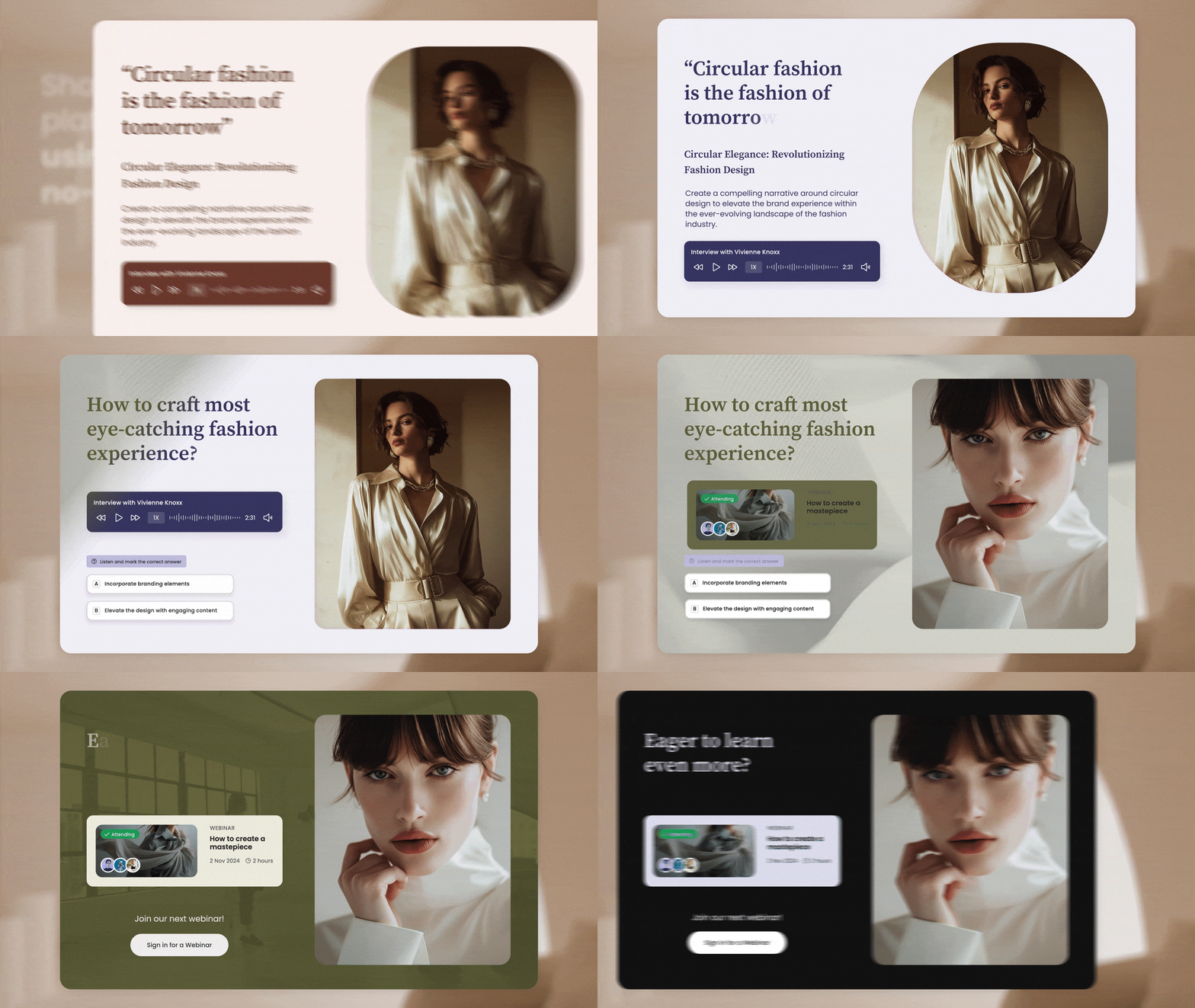
Modern fashion learning platforms now empower training teams to create highly customized learning experiences without requiring technical expertise. Through branded templates, custom fonts, color palettes, animations, layouts, navigation styles, and multimedia components, brands can ensure that every learning experience feels like a natural extension of their identity. Rather than delivering generic training content, organizations can create immersive learning journeys that strengthen brand culture and increase learner engagement.
The combination of mobile-first delivery and flexible authoring tools enables learning teams to respond quickly to new product launches, seasonal campaigns, market trends, and business priorities while maintaining complete creative control over the learner experience.
Why Mobile-First Learning and Branded Authoring Matter
Provides seamless access to learning anytime, anywhere.
Perfectly adapted to the realities of retail and sales floor environments.
Supports smartphones, tablets, and mobile workforces.
Increases learner engagement through intuitive mobile experiences.
Accelerates the distribution of product and campaign updates.
Enables rapid content creation without technical expertise.
Maintains full alignment with brand identity and visual guidelines.
Creates premium learning experiences that reflect the brand’s positioning.
Supports multimedia-rich content including video, audio, animations, and interactive activities.
Reduces dependence on external agencies for content production.
Empowers local and global teams to create content efficiently.
Strengthens brand culture by embedding visual identity throughout the learning journey.
Improves learner adoption by making training feel modern, relevant, and familiar.
5. Social & Peer-to-Peer Learning for Fashion Retail
Learning in fashion retail has traditionally been delivered from the top down, with knowledge flowing from headquarters to regional teams and then to store employees.
In 2026, this model is evolving toward a more collaborative approach where learning is increasingly driven by communities, peer interactions, and knowledge sharing across the organization. Social and peer-to-peer learning are becoming essential components of modern fashion learning ecosystems, enabling brands to leverage the collective expertise of their retail workforce.
Retail associates, store managers, visual merchandisers, and brand ambassadors possess valuable real-world knowledge that often remains untapped within traditional training programs. Social learning creates opportunities for employees to share best practices, styling advice, clienteling techniques, success stories, and local market insights with colleagues across stores and regions. This not only accelerates knowledge transfer but also strengthens engagement and creates a stronger sense of belonging within the organization.
Modern learning platforms now integrate discussion forums, learning communities, social feeds, peer feedback, collaborative challenges, video sharing, and expert groups directly into the learning experience. Instead of learning in isolation, employees become active contributors to a dynamic learning culture where knowledge is continuously exchanged and enriched.
For fashion and luxury brands, social learning is particularly valuable because many retail skills are highly experiential and best learned through observation, discussion, and shared experiences. Whether it is how to present a new collection, engage high-value clients, or create memorable in-store experiences, peer-to-peer learning helps transform individual expertise into organizational knowledge.
Why Social & Peer-to-Peer Learning Matters
Encourages continuous knowledge sharing across stores and regions.
Accelerates the dissemination of best practices and successful selling techniques.
Increases learner engagement through active participation.
Creates stronger learning communities and employee connections.
Supports collaboration between retail teams, managers, and headquarters.
Enables employees to learn from real-world experiences and practical examples.
Facilitates the sharing of styling expertise, clienteling tips, and product knowledge.
Strengthens company culture and employee belonging.
Encourages user-generated content and employee contributions.
Improves knowledge retention through discussion and collaboration.
Helps identify internal experts and brand ambassadors.
Supports faster adaptation to new products, campaigns, and market changes.
Creates a more dynamic and learner-driven training environment.
6. Branching Scenarios and Scenario-Based Learning for Fashion Retail
As customer expectations continue to rise, fashion brands are looking for more effective ways to prepare retail teams for real-life situations on the sales floor.
In 2026, scenario-based learning and branching simulations are emerging as one of the most impactful learning trends in fashion retail. Rather than simply reading information or completing quizzes, employees are placed in realistic situations where they must make decisions, solve problems, and experience the consequences of their choices in a safe learning environment.
Powered by modern authoring tools, branching scenarios allow learning designers to recreate authentic retail interactions such as welcoming customers, handling objections, recommending products, upselling complementary items, managing difficult conversations, or delivering premium clienteling experiences. Every decision taken by the learner influences the path of the scenario, creating highly engaging and personalized learning experiences.
This approach is particularly relevant for fashion and luxury brands, where success often depends on interpersonal skills, emotional intelligence, storytelling, and customer engagement rather than simply product knowledge. By practicing real-world situations before encountering them on the sales floor, employees can build confidence, improve decision-making, and develop stronger customer service skills.
Today’s advanced authoring tools make it possible to create sophisticated branching experiences using video, images, dialogue simulations, assessments, scoring systems, and personalized feedback. Combined with AI and analytics, scenario-based learning is becoming a powerful way to bridge the gap between knowledge acquisition and actual performance in stores.
Why Branching Scenarios Matter
Creates highly immersive and engaging learning experiences.
Allows employees to practice real-life retail situations in a risk-free environment.
Improves decision-making and customer interaction skills.
Builds confidence before facing real customers.
Supports clienteling, selling, styling, and service excellence training.
Reinforces brand values and desired customer experience standards.
Increases knowledge retention through active participation.
Provides immediate feedback based on learner choices.
Helps identify skill gaps and coaching opportunities.
Simulates complex customer journeys and sales conversations.
Measures practical application of knowledge rather than simple recall.
Bridges the gap between training and on-the-job performance.
Enables learning teams to create realistic simulations without complex development resources.

7. Adaptive Learning Paths for Fashion Retail
One-size-fits-all training is rapidly becoming a thing of the past. In 2026, leading fashion and luxury brands are embracing adaptive learning paths that personalize the learning journey according to each employee’s role, experience level, knowledge gaps, performance, and career aspirations.
Rather than requiring every learner to follow the same training program, adaptive learning delivers the right content to the right person at the right time.
Fashion retail teams are incredibly diverse. A new sales associate, a store manager, a visual merchandiser, and a client advisor do not require the same skills or knowledge. Adaptive learning paths use assessments, learning analytics, AI recommendations, and competency frameworks to automatically guide employees toward the most relevant content, reducing unnecessary training and maximizing learning efficiency.
For example, an experienced client advisor may be able to skip introductory product modules and focus on advanced clienteling techniques, while a new hire may receive additional support around brand history, product categories, customer service fundamentals, and sales processes. As employees progress, the learning path continuously evolves based on their achievements, certifications, interests, and business needs.
For fashion brands operating across multiple regions and markets, adaptive learning also helps address local requirements while maintaining global consistency. Employees receive a personalized experience without losing alignment with brand standards, values, and strategic priorities.
The result is a more relevant, engaging, and efficient learning experience that accelerates skill development, increases motivation, and supports long-term employee growth.
Why Adaptive Learning Paths Matter
Delivers personalized learning experiences for every employee.
Adapts content based on role, seniority, performance, and knowledge level.
Reduces training fatigue by eliminating irrelevant content.
Accelerates onboarding and time-to-competence.
Improves learner engagement through greater relevance.
Identifies and addresses individual knowledge gaps.
Supports continuous professional development and career growth.
Provides tailored learning recommendations powered by AI and analytics.
Aligns learning with business objectives and competency frameworks.
Enables global consistency while supporting local needs.
Improves learning efficiency and knowledge retention.
Creates a more learner-centric and motivating training experience.
Helps fashion brands develop talent more effectively at scale.
8. Learning Analytics & Performance Intelligence for Fashion Retail
As learning becomes increasingly strategic within fashion and luxury organizations, brands are shifting their focus from measuring training activity to measuring business impact.
In 2026, Learning Analytics and Performance Intelligence are becoming essential tools for understanding how learning influences employee performance, customer experience, operational excellence, and commercial results.
Traditional learning metrics such as course completions and quiz scores are no longer sufficient. Fashion brands now expect deeper insights into how learning initiatives contribute to key retail outcomes, including product knowledge, sales performance, conversion rates, average transaction value, clienteling effectiveness, customer satisfaction, and employee retention. Learning leaders are increasingly being asked not only what employees have learned, but how that learning translates into measurable business value.
Modern learning platforms leverage advanced analytics, AI, and real-time dashboards to provide a more complete picture of learner behavior and performance. Organizations can identify skill gaps, monitor engagement trends, evaluate the effectiveness of training programs, and understand which content drives the greatest impact. By combining learning data with retail performance indicators, brands can make more informed decisions and continuously optimize their training strategies.
The next evolution of learning analytics goes even further through Performance Intelligence. Rather than simply reporting what happened, intelligent systems can diagnose why performance issues occur, predict future learning needs, recommend targeted interventions, and help managers provide more effective coaching. This creates a powerful connection between learning, talent development, and business performance.
For fashion and luxury brands operating in highly competitive markets, data-driven learning is becoming a critical advantage. The ability to understand, measure, and continuously improve workforce readiness can directly influence customer experience, brand consistency, and commercial success.
Why Learning Analytics & Performance Intelligence Matter
Moves learning measurement beyond completions and quiz scores.
Connects training initiatives to real business outcomes.
Identifies skill gaps and development opportunities.
Measures the effectiveness of learning programs and content.
Provides actionable insights for managers and learning teams.
Supports data-driven decision-making and continuous improvement.
Helps optimize onboarding, product training, and sales enablement.
Enables personalized coaching and targeted learning interventions.
Predicts future learning needs using AI-powered intelligence.
Improves workforce readiness and operational performance.
Strengthens alignment between learning objectives and business goals.
Demonstrates the return on investment of learning initiatives.
Helps fashion brands build a culture of continuous performance improvement.
9. Fully Branded Learning Experiences for Fashion Retail
In the fashion and luxury industry, brand experience is everything. Every touchpoint from store design and packaging to digital platforms and customer service is carefully crafted to reflect the brand’s identity, values, and positioning.
In 2026, learning is no longer an exception. Leading fashion brands are increasingly demanding fully branded learning experiences that extend their visual universe and culture directly into the training environment.
For many years, learning platforms were designed primarily around functionality, often resulting in generic user experiences that felt disconnected from the brand. Today, fashion organizations recognize that employees are among the brand’s most important ambassadors, and the way they learn should reflect the same level of creativity, elegance, and attention to detail that customers experience every day.
A fully branded learning platform goes far beyond simply adding a logo and brand colors. Modern learning ecosystems can now incorporate custom fonts, animations, imagery, navigation styles, video backgrounds, dashboards, layouts, icons, learning journeys, and storytelling elements that mirror the brand’s identity. The result is a seamless and immersive experience where learning feels like a natural extension of the brand rather than an external corporate tool.
This approach has a direct impact on engagement and adoption. Employees are more likely to interact with learning environments that feel familiar, inspiring, and aligned with the culture they represent. Branded learning also reinforces company values, strengthens emotional connection to the organization, and helps create a stronger sense of pride and belonging among retail teams.
For luxury and premium brands in particular, design consistency is essential. Just as customer-facing experiences are carefully curated, internal learning experiences are becoming strategic tools for transmitting brand culture, craftsmanship, heritage, and service excellence at scale.
Why Fully Branded Learning Experiences Matter
Extends the brand experience into employee learning and development.
Creates a stronger emotional connection between employees and the brand.
Increases learner engagement and platform adoption.
Reinforces brand culture, values, and storytelling.
Provides a more premium and immersive learning experience.
Aligns internal experiences with customer-facing brand standards.
Enhances employee pride, loyalty, and sense of belonging.
Improves consistency across global retail teams and markets.
Supports the communication of heritage, craftsmanship, and brand identity.
Differentiates the learning experience from generic corporate platforms.
Strengthens employer branding and talent development initiatives.
Creates a seamless experience across learning, communication, and engagement platforms.
Transforms learning into a strategic extension of the brand ecosystem.
10. Industry-Dedicated Learning Platforms for Fashion Retail
For many years, fashion brands have relied on generic corporate learning platforms designed to serve every industry, from manufacturing and healthcare to finance and technology.
While these solutions provide broad functionality, they often fail to address the unique realities of fashion and luxury retail. In 2026, a growing number of brands are moving away from one-size-fits-all systems and adopting industry-dedicated learning platforms specifically designed for the needs of fashion retail.
Fashion is a highly specialized industry where product launches, seasonal collections, brand storytelling, clienteling, visual merchandising, retail excellence, and customer experience play a central role in business success. Training requirements evolve rapidly, and learning solutions must be capable of supporting global retail networks while remaining agile enough to respond to changing collections, campaigns, and market trends.
Industry-dedicated platforms are built around the specific workflows, challenges, and objectives of fashion organizations. Rather than forcing brands to adapt to generic tools, these solutions provide features and experiences that naturally support retail operations. This includes mobile-first learning, product launch management, video-based training, certification programs, community learning, AI-powered assistance, multilingual capabilities, onboarding journeys, retail performance tracking, and highly branded user experiences.
Because they are designed specifically for fashion and luxury environments, these platforms also better support the transmission of brand culture, craftsmanship, product expertise, and customer service standards. They enable learning teams to focus less on configuring technology and more on creating impactful learning experiences that drive business performance.
As learning increasingly becomes a strategic component of retail excellence, fashion brands are recognizing that specialized platforms can deliver greater agility, stronger adoption, faster deployment, and a closer alignment with their business objectives than traditional enterprise LMS solutions.
Why Industry-Dedicated Learning Platforms Matter
Designed specifically for the realities of fashion and luxury retail.
Supports seasonal collections, product launches, and campaign training.
Delivers learning experiences aligned with retail workflows.
Provides stronger support for brand storytelling and heritage transmission.
Offers mobile-first experiences adapted to retail employees.
Accelerates onboarding and product knowledge development.
Enables highly branded and immersive learning environments.
Supports multilingual and global retail organizations.
Integrates video, social learning, AI, and retail-specific features.
Improves learner adoption through greater relevance and usability.
Reduces implementation complexity compared to generic enterprise solutions.
Aligns learning strategies more closely with retail performance objectives.
Helps fashion brands build a learning ecosystem tailored to their unique culture and business needs.
Conclusion: Why The Learning Lab Is Built for the Future of Fashion Learning
The fashion industry is entering a new era of learning one that is more visual, personalised, social, intelligent, and deeply connected to business performance.
As retail teams face increasing pressure to deliver exceptional customer experiences, master constantly evolving product knowledge, and embody brand values across every interaction, traditional learning platforms are struggling to keep pace.
The ten trends explored in this report reveal a clear direction for the future of fashion learning: InstaLearn experiences, AI-powered assistants, video-first learning, mobile-first delivery, social collaboration, branching scenarios, adaptive learning paths, learning analytics, fully branded experiences, and industry-dedicated solutions. Together, these innovations are redefining how fashion brands engage, develop, and empower their people.
The challenge for learning leaders is no longer identifying the right trends—it is finding a platform capable of bringing them together into one cohesive and scalable ecosystem.
This is precisely why The Learning Lab was created.
Unlike generic LMS platforms designed to serve every industry, The Learning Lab was built specifically for fashion, luxury, premium retail, and customer-facing organizations. Every feature has been designed around the realities of retail operations and the expectations of modern learners.
The Learning Lab combines:
InstaLearn experiences inspired by social media platforms.
AI-powered learning assistants embedded within branded environments.
Video-first learning with interactive video capabilities.
Mobile-first experiences designed for life on the sales floor.
Advanced social and peer-to-peer learning features.
Powerful no-code authoring tools with extensive customization options.
Branching scenarios and immersive learning simulations.
Adaptive learning paths powered by learner behavior and performance.
Advanced analytics and performance intelligence dashboards.
Fully branded learning environments that reflect each brand’s unique identity.
Retail and fashion-specific functionality designed for global organizations.
What truly differentiates The Learning Lab is its unique combination of technology, design, and retail expertise.
While many LMS providers focus primarily on administration and compliance, The Learning Lab focuses on engagement, adoption, learner experience, and business impact. We believe learning platforms should be as inspiring as the brands they represent. They should reflect the same attention to detail, creativity, storytelling, and premium experience that fashion brands invest in every customer interaction.
For fashion and luxury brands, learning is not simply about delivering content. It is about transmitting culture, building expertise, strengthening brand ambassadors, and creating memorable customer experiences at scale.
The Learning Lab helps brands achieve exactly that.
As the industry continues to evolve, the organizations that invest in modern, engaging, and retail-focused learning ecosystems will be best positioned to attract talent, accelerate onboarding, improve performance, increase engagement, and deliver exceptional customer experiences.
The future of fashion learning is already here.
And The Learning Lab was built for it.