

Preparing Luxury Retail Teams for a New Collection: A Practical Training Checklist
A new collection brings a fresh creative vision into the boutique. For retail teams, the challenge is to translate that vision into client conversations that feel informed, personal and true to the Maison.
Advisors need to understand the inspiration behind the collection, recognise its distinctive materials and craftsmanship, and explain what makes each piece relevant to the person in front of them. Knowing the product facts is the starting point; launch readiness means being able to use that knowledge with confidence and judgement.
Preparing teams for this moment requires a coordinated approach. Retail education leaders must bring together approved product information, engaging learning content, opportunities to practise and clear checks of advisor readiness. Across boutiques, markets and languages, the aim is to preserve a consistent brand narrative while giving advisors room to respond thoughtfully to individual clients. A retail LMS such as The Learning Lab can support this preparation through branded learning journeys, mobile content, interactive activities and assessment, helping teams move from an initial collection briefing to practical application on the sales floor.
This checklist provides a framework for planning that journey. It covers what advisors should be able to explain and demonstrate, how to organise learning before launch, where managers should provide coaching, and what to review once the collection reaches stores. The goal is to help every advisor present the collection accurately, tell its story naturally and make recommendations that reflect both the brand’s identity and the client’s needs.

Start with the Client Conversation: Turn Collection Knowledge into Relevant Recommendations
A client pauses beside a piece from the new collection and asks, “Would this work for me?” The advisor recognises the design, knows its materials and remembers the campaign imagery, but hesitates when connecting those details to the client’s preferences.
This illustrative moment reveals an essential part of launch preparation: helping advisors use their knowledge in a conversation. Training should give them opportunities to ask thoughtful questions, explain relevant craftsmanship and design choices, demonstrate the piece, and offer a considered recommendation.
Before building the learning journey, retail education teams should therefore ask: What should advisors be able to explain, demonstrate and recommend by launch day? The answer provides a clear starting point for both training activities and readiness checks.
Understand the client: Ask about preferences, intended use and the occasion.
Explain the collection: Communicate its creative vision and distinctive details accurately.
Demonstrate the product: Show relevant features, styling possibilities and care requirements.
Recommend with judgement: Connect the piece to the client’s needs and explain the reasoning.
Practise before launch: Use realistic conversations to identify where advisors need coaching.
Define Launch Readiness: Make Advisor Confidence Observable
Launch readiness becomes easier to assess when training objectives describe what advisors should be able to do in the boutique.
Completing a collection module provides evidence of participation; a product demonstration or practice conversation shows how an advisor applies what they have learned. Before launch, education teams and boutique managers should agree on a small set of observable behaviours, from explaining the creative direction naturally to answering product questions accurately.
These expectations give advisors a clear goal and help managers identify where coaching is needed. They should also recognise sound judgement: knowing when to consult approved information is part of delivering a trustworthy luxury experience.
Explain the creative direction: Tell the collection’s story in their own words while preserving the approved brand narrative.
Describe products accurately: Explain materials, craftsmanship and distinguishing details without unsupported claims.
Personalise recommendations: Connect selected pieces to the client’s preferences, lifestyle and occasion.
Demonstrate with confidence: Present relevant features, handling and care guidance, and respond to common questions.
Check when uncertain: Find approved information or seek support instead of improvising an answer.
A Sample Readiness Rubric for Boutique Managers
Use a short role-play and product demonstration to assess each behaviour. Adapt these expectations to the collection, advisor role and local market.
1. Collection storytelling
Needs coaching: Gives an unclear or inaccurate explanation.
Ready with support: Explains the main ideas with occasional prompts.
Ready to apply independently: Gives a clear, accurate explanation in their own words.
2. Product knowledge
Needs coaching: Misses essential details or makes unsupported claims.
Ready with support: Describes key facts but needs help with some details.
Ready to apply independently: Explains approved materials, craftsmanship and features accurately.
3. Client recommendations
Needs coaching: Suggests a piece without exploring the client’s needs.
Ready with support: Makes a relevant connection after prompting.
Ready to apply independently: Asks useful questions and explains a considered recommendation.
4. Product demonstration
Needs coaching: Misses important handling or presentation steps.
Ready with support: Demonstrates correctly with occasional guidance.
Ready to apply independently: Demonstrates confidently and answers common questions accurately.
5. Handling uncertainty
Needs coaching: Guesses or presents uncertain information as fact.
Ready with support: Recognises uncertainty but needs help finding an answer.
Ready to apply independently: Acknowledges uncertainty and consults an approved source appropriately.
Build an Approved Product Knowledge Foundation
Accurate collection training starts with reliable source material. Before creating lessons, training teams should gather and validate the information advisors will need to present products, answer questions and guide recommendations.
This includes the collection’s creative narrative alongside precise specifications, approved visuals and practical guidance. Each source should have a named owner, an approval status and a review date, so teams know which information is ready to use and who is responsible when details change.
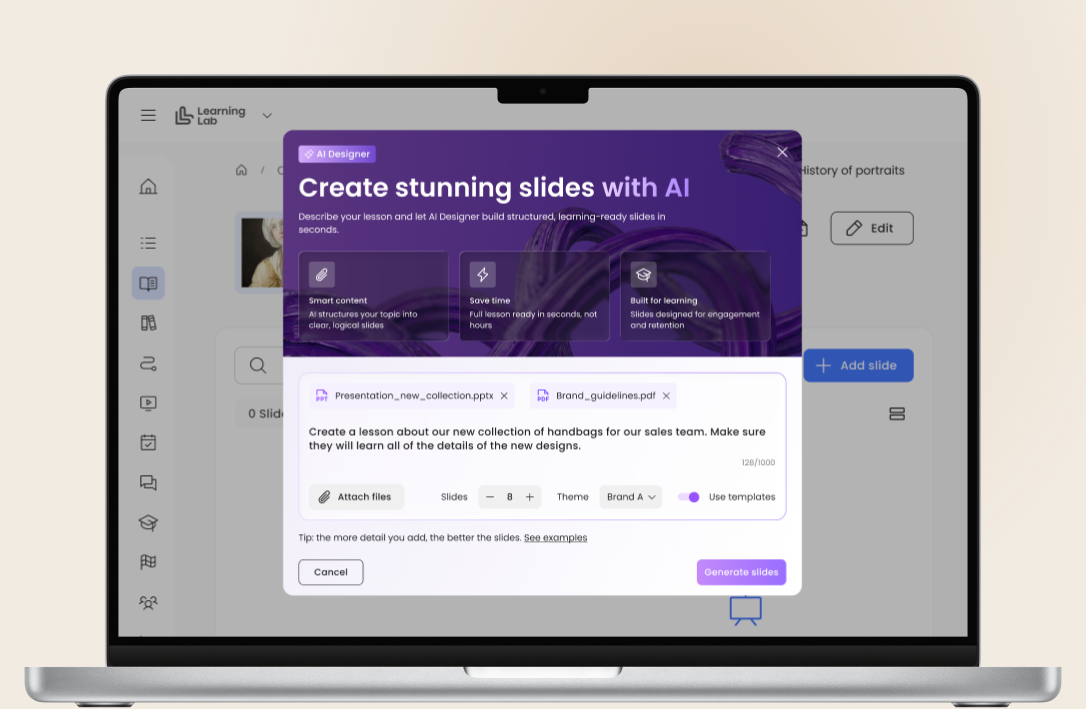
AI can help turn approved material into lesson drafts, summaries and practice questions, but product experts must check the output before publication. Particular attention should go to materials, craftsmanship, care instructions and availability, where an inaccurate statement could mislead an advisor or client.
Collection narrative: Gather the approved creative direction, inspirations and key messages, distinguishing documented brand stories from interpretation.
Product specifications: Confirm names, references, materials, dimensions, finishes and distinguishing features. Identify details that vary between models.
Approved imagery: Select current product photographs, detail shots and campaign assets, checking usage rights and the accuracy of captions.
Care guidance: Use validated instructions for handling, cleaning, storage and aftercare. Avoid filling gaps with general advice.
Availability: Clarify launch dates, market-specific assortments and where advisors should check current stock. Keep changing stock information separate from enduring product lessons.
Frequently asked questions: Collect likely client questions and approved answers, including a clear route for questions that require specialist support.
Approval and updates: Assign product experts to factual validation, brand teams to narrative and imagery approval, and training teams to publishing and version control. Name an owner for communicating changes.
AI-assisted drafting: Use approved sources to generate initial learning content. Require human review of every factual claim and withhold any answer that the source material does not support.
Bring the Collection to Life Through Branded Learning
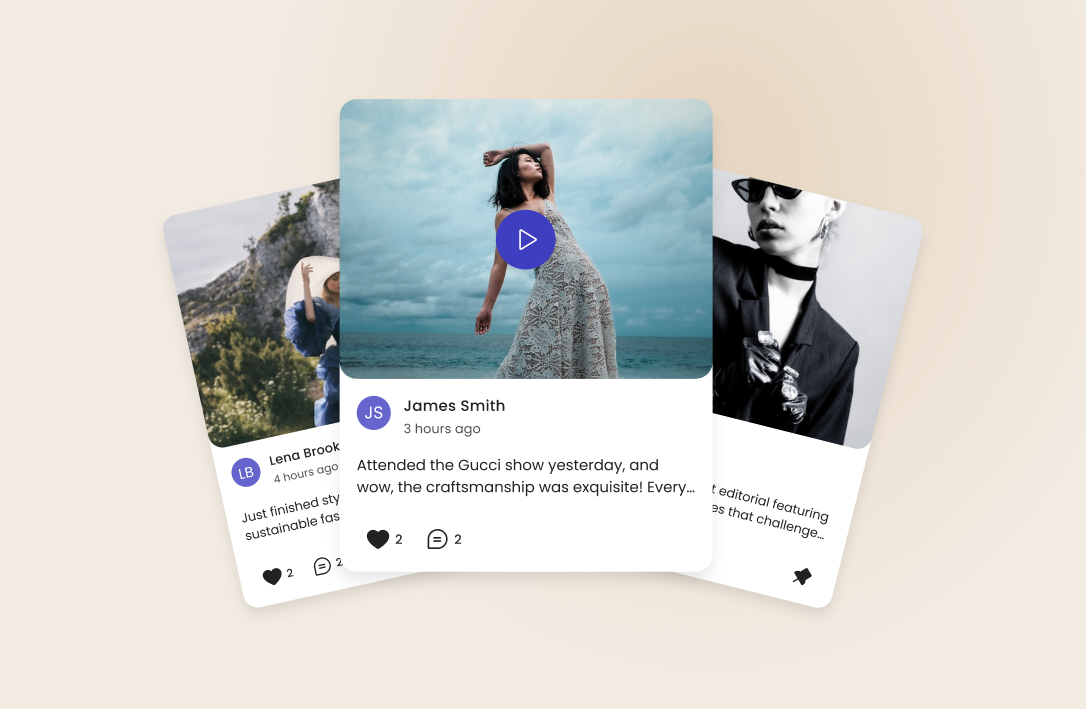
The learning experience should help advisors understand both the collection’s identity and how to communicate it to clients.
Visual storytelling can introduce its creative world, while short videos reveal movement, texture and craftsmanship that still images may not fully convey. Focused activities then give advisors opportunities to interpret those details and use them in a recommendation.
The Learning Lab’s branded learning environments and multimedia authoring tools support this approach, allowing training teams to combine collection imagery, video and interactive activities within an experience that reflects the Maison. Each element should serve a clear learning purpose: helping advisors notice, explain or demonstrate something relevant.
Creative inspiration: Open with approved campaign imagery and a short introduction to the collection’s influences. Ask advisors to identify the ideas they should carry into a client conversation.
Hero product: Introduce a representative piece through clear visuals and a concise product story. Highlight its defining features and ask advisors to explain them in their own words.
Craftsmanship detail: Use close-up imagery or a short expert video to examine a material, finish or technique. Connect the detail to an accurate explanation of what makes the piece distinctive.
Client scenario: Present a realistic client preference or occasion. Ask advisors to recommend a piece and explain their reasoning, using approved product information.
Knowledge check: Finish with focused questions covering essential facts, common misunderstandings and when to consult an approved source. Provide feedback that explains each answer.
A consistent brand experience: Use The Learning Lab’s branding and multimedia tools to connect the sequence visually, while keeping navigation clear and each activity focused on advisor readiness.
Coordinate the Launch Across Markets, Roles and Boutiques
A collection launch needs a shared learning plan with enough flexibility for different teams and markets.
New advisors may need additional grounding in brand codes and product categories, while experienced teams can focus on what has changed and how the collection relates to previous releases. Boutique managers need guidance on coaching, observing performance and following up on knowledge gaps.
Build these needs into the rollout alongside time for translation review, local terminology checks and market-specific assortment updates. Schedule learning within working hours, with access to suitable devices and support, so preparation becomes a planned part of boutique operations. The timeline below is illustrative and should be adjusted to the collection’s complexity and launch schedule.
Three to four weeks before launch — prepare and validate: Confirm source material, learning objectives, responsibilities and market requirements. Review translations with local experts, paying particular attention to product names, craftsmanship terminology and care instructions.
Two weeks before launch — introduce the collection: Release the core learning journey. Give new advisors supporting brand and product knowledge, and offer experienced teams a clear view of new designs, materials and collection stories.
One week before launch — practise client conversations: Organise product demonstrations, recommendation scenarios and short coaching sessions. Ensure activities reflect the pieces each market will carry.
Before launch day — check readiness: Ask managers to assess key behaviours, address factual errors and arrange additional practice where needed. Confirm that advisors know where to find current product and availability information.
During launch week — support application: Protect scheduled learning and coaching time around boutique coverage. Gather questions from client conversations and direct unresolved issues to the appropriate product or training expert.
One to two weeks after launch — reinforce and refine: Use manager observations and knowledge checks to identify gaps. Publish targeted refreshers, clarify recurring questions and communicate approved updates across affected markets.
Throughout the rollout — maintain local relevance: Keep a consistent collection narrative while validating local language, assortment and launch timing. Brief managers on changes so they can support their teams with current information.
Turn Collection Knowledge into Confident Client Conversations
Practice gives advisors the opportunity to turn approved product knowledge into explanations and recommendations that feel natural.
Before launch, create short activities that reflect situations they will encounter in the boutique: presenting a new piece, responding to a client’s preferences or explaining a distinctive craftsmanship detail. A recorded presentation allows advisors to review their own delivery, while video assessment and coaching help managers give specific feedback on what was said and demonstrated.
Keep the assessment focused on factual accuracy, relevance, clarity and brand expression, allowing room for individual style. After feedback, give advisors another opportunity to practise and show how they have applied the guidance.
Record a short product presentation: Ask advisors to introduce a hero piece in 60–90 seconds, explaining its defining details and what makes them meaningful to a client. Encourage them to review the recording before submitting it.
Respond to a client recommendation scenario: Provide a client profile, preference or occasion. Ask advisors to recommend a suitable piece, explain their reasoning and identify any questions they would ask before making a final suggestion.
Run a boutique role-play: Pair advisors to practise a conversation using the product where available. Include realistic follow-up questions and moments where checking approved information is the appropriate response.
Assess factual accuracy: Check that product details, craftsmanship explanations and care guidance match approved sources. Address unsupported claims before the advisor practises again.
Assess relevance: Look for questions and recommendations that respond to the client’s stated needs, rather than a rehearsed presentation delivered without adaptation.
Assess clarity: Check whether the advisor explains ideas in accessible language, demonstrates the product effectively and avoids unnecessary technical detail.
Assess brand expression: Consider whether the language, tone and presentation reflect the Maison while remaining personal and conversational.
Make feedback actionable: Refer to a specific moment in the recording or role-play, explain its effect and agree on one or two improvements. Use a second attempt to check progress.
Give Managers a Clear Way to Check Launch Readiness
Boutique managers need a practical way to judge whether advisors can apply their learning before the collection reaches clients.
Learning records show who has completed assigned activities and where knowledge checks reveal gaps; observation shows how an advisor explains a piece, responds to a client’s preferences and handles uncertainty. Bring these sources together through a short product demonstration or practice conversation.
Use the same core checklist across the team, record specific examples and agree on any coaching required. Completing the learning journey should prompt a readiness check, with the final judgement based on demonstrated knowledge and behaviour.
Can the advisor explain the collection accurately? Listen for a clear account of the creative direction, supported by correct product details and approved brand messages.
Can they make a relevant recommendation? Check whether they explore the client’s needs and explain why a particular piece could suit their preferences or occasion.
Can they demonstrate the product appropriately? Observe handling, presentation and explanations of relevant features and care requirements.
Do they know where to find approved information? Ask how they would resolve an unfamiliar question. Look for confident use of reliable sources and a willingness to acknowledge uncertainty.
What coaching is still needed? Identify the specific behaviour to improve, agree on a practice activity and set a date to review progress.
Do the learning records and observations tell a consistent story? Follow up where completed activities or strong quiz results are not yet reflected in practice. Use both forms of evidence to decide what support the advisor needs.
8. Reinforce learning after launch
Explain how teams can use questions from the sales floor to identify gaps, clarify lessons and prioritise refresher activities.
Suggest a short post-launch review involving education, product and boutique teams, with named owners for content updates.
Measure Training from Participation to Practical Application
Evaluating collection-launch training means looking beyond completion rates to understand what advisors learned and how they use it.
Separate participation, knowledge, demonstrated behaviour and commercial outcomes so each measure answers a clear question. Establish a baseline before training, then review progress at agreed intervals using comparable knowledge checks, manager observations and relevant business data. This helps education teams identify where learning has translated into practice and where further support is needed.
Commercial results provide useful context, but changes in sales also reflect store traffic, stock availability, pricing and campaigns. Treat those results as part of the evidence, with any claim about training’s contribution matched to the strength of the evaluation.
Participation — did the learning reach the intended teams? Track assigned learners, completion and timing across boutiques, roles and markets. Investigate access or scheduling barriers where participation is low.
Knowledge — what can advisors explain accurately? Compare pre-training and post-training checks covering essential product facts, collection stories and common client questions.
Demonstrated behaviour — can advisors apply their knowledge? Use a consistent observation guide to assess product presentations, recommendations and responses to uncertainty. Record specific examples and coaching needs.
Commercial outcomes — what changed in the business? Review relevant indicators, such as conversion or collection sales, alongside traffic, stock, pricing and campaign activity. Avoid assuming that an improvement or decline was caused by training.
Establish a baseline: Define the measures, assessment criteria and starting point before the learning begins. Keep comparisons consistent enough to make changes meaningful.
Review at agreed intervals: Check readiness before launch, observe application during the first weeks and review again after reinforcement. Adjust the schedule to the collection and business context.
Use findings to improve the programme: Address recurring misunderstandings, refine practice activities and prioritise coaching. Report what the evidence shows, what remains uncertain and what should happen next.
Bring Every Element Together for Launch Day
A successful collection launch depends on how well teams turn the Maison’s creative vision into accurate, thoughtful client conversations. Approved product information provides the foundation; engaging learning, realistic practice and manager coaching help advisors apply it. Clear responsibilities and readiness checks keep preparation coordinated across boutiques and markets, while post-launch reviews reveal where further support is needed.
Use the checklist below as a working document throughout the launch. Assign a named owner to each action, adapt deadlines to your schedule and record evidence of readiness. Revisit outstanding items with managers so that every advisor receives the guidance they need before presenting the collection independently.
Your Collection-Launch Training Checklist
The deadlines below are illustrative. Adjust them to your collection, markets and operational requirements.
1. Define intended advisor behaviours
Owner: Retail education lead.
Deadline: Four weeks before launch.
Evidence of readiness: Agreed objectives and assessment criteria.
Follow-up required: Clarify expectations by role.
2. Approve product facts and the collection narrative
Owner: Product and brand leads.
Deadline: Three weeks before launch.
Evidence of readiness: Validated source material with named update owners.
Follow-up required: Resolve missing or conflicting information.
3. Prepare learning content and practice activities
Owner: Training team.
Deadline: Two weeks before launch.
Evidence of readiness: Reviewed lessons, scenarios and knowledge checks.
Follow-up required: Correct errors and test learner access.
4. Validate translations and local assortments
Owner: Local market leads.
Deadline: Two weeks before launch.
Evidence of readiness: Local approval of terminology, content and product availability.
Follow-up required: Update affected market versions.
5. Schedule learning and coaching time
Owner: Boutique managers.
Deadline: Before learning begins.
Evidence of readiness: Allocated working time, suitable devices and confirmed access.
Follow-up required: Support absent staff and resolve access issues.
6. Complete learning and practise client conversations
Owner: Advisors, supported by managers.
Deadline: One week before launch.
Evidence of readiness: Learning records, product presentations and scenario responses.
Follow-up required: Provide targeted practice.
7. Assess launch readiness
Owner: Boutique managers.
Deadline: Before launch day.
Evidence of readiness: Recorded observations against agreed criteria.
Follow-up required: Coach and reassess identified gaps.
8. Confirm access to current approved information
Owner: Training and product teams.
Deadline: Before launch day.
Evidence of readiness: Advisors can locate reliable answers and updates.
Follow-up required: Resolve access or version issues.
9. Reinforce learning after launch
Owner: Managers and training team.
Deadline: One to two weeks after launch.
Evidence of readiness: Reviewed client questions and follow-up observations.
Follow-up required: Publish refreshers and approved clarifications.
10. Review results and improve the next launch
Owner: Education and retail operations leads.
Deadline: At the agreed review date.
Evidence of readiness: Comparison of participation, knowledge, behaviour and business context.
Follow-up required: Assign improvements, owners and deadlines.
Explore how The Learning Lab can help you organise your next collection launch around branded learning, advisor practice and clear readiness checks.