

14 Activity-Based Learning Ideas for Retail Training
Learning by Doing: Why Activity-Based Learning Transforms Retail Performance
Activity-based learning puts retail teams in action, not just in front of content.
By practicing real scenarios client conversations, product storytelling, service rituals, and selling techniques advisors build confidence, reflexes, and decision-making skills that translate directly to the shop floor.
Learning becomes practical, memorable, and immediately applicable, accelerating time to performance and driving more consistent, high-quality client experiences.
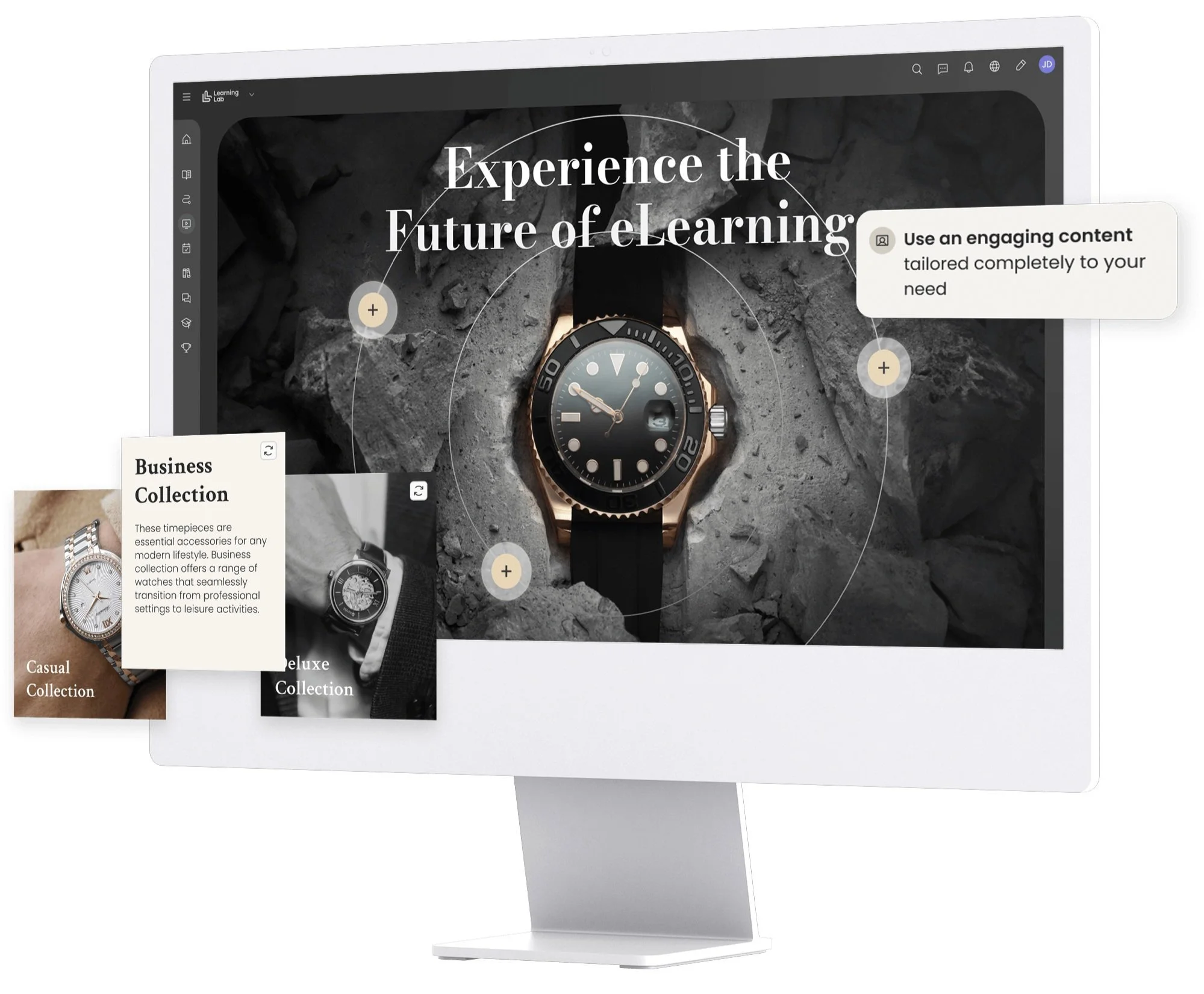
Flash Cards: Strengthening Product Knowledge Through Repetition and Recall
Flash cards are a simple yet powerful way to reinforce essential product facts, service rituals, and key selling arguments.
By presenting information in short, repeatable prompts, they help retail teams build fast recall and confidence, making it easier to access the right words and insights in real client interactions.
Integrated into daily learning routines, flash cards transform knowledge into instinct enabling advisors to communicate more fluently, elevate storytelling, and deliver a more consistent and credible client experience.
InstaLearning Modules: Embedding Learning Seamlessly into the Retail Day
InstaLearning modules deliver short, focused learning experiences designed to fit naturally into the rhythm of retail.
In just a few minutes, advisors can discover a product, revisit a key selling point, or reinforce a service ritual without disrupting their day.
This format makes learning continuous, accessible, and immediately applicable, helping teams stay informed, confident, and ready to elevate every client interaction.
Branching Scenarios: Building Confidence Through Real-World Decision Making
Branching scenarios place learners in realistic client situations where they must make choices and experience the consequences of their decisions.
By simulating real conversations, objections, and service moments, advisors develop judgment, adaptability, and confidence in a safe environment.
This active approach transforms learning into practice, helping retail teams refine their instincts and deliver more consistent, high-quality client experiences on the shop floor.
Video Quizzes: Reinforcing Understanding in the Flow of Learning
Video quizzes integrate questions directly into video content, transforming passive viewing into active learning.
By prompting learners to reflect, answer, and engage in real time, they reinforce key messages while ensuring understanding before moving forward.
This approach keeps retail teams attentive, strengthens retention, and helps translate product knowledge and service standards into confident, accurate client interactions.
Interactive Videos: Turning Observation into Action
Interactive videos transform passive watching into an active learning experience by inviting learners to make choices, respond to situations, or engage directly with the content.
Whether exploring a product, navigating a client interaction, or identifying key service gestures, advisors become participants rather than observers.
This immersive approach strengthens engagement, deepens understanding, and helps retail teams develop the reflexes and confidence needed to perform effectively on the shop floor.
Hotspots: Exploring Products and Service Details Through Visual Interaction
Hotspots allow learners to interact directly with images or videos by tapping key areas to reveal additional information, insights, or guidance.
This visual exploration helps retail teams understand product details, merchandising standards, and service gestures in context.
By making learning intuitive and discovery-driven, hotspots strengthen observation skills, deepen product knowledge, and help advisors translate visual cues into more precise and confident client interactions.
Photo and Video Assessments: Connecting Learning to Real Shop Floor Practice
Photo and video assessments invite learners to capture and submit real-life evidence of how they apply training on the shop floor.
Whether demonstrating a product presentation, a service gesture, or a merchandising setup, this approach transforms learning into visible action.
It enables managers to provide targeted feedback, reinforces accountability, and ensures that knowledge is not only understood but consistently translated into high-quality client experiences.
Live Chat and Discussions: Learning Through Exchange and Collective Intelligence
Live chat and discussion spaces create opportunities for retail teams to exchange experiences, ask questions, and learn from one another in real time.
By fostering peer-to-peer dialogue and enabling coaching moments, they help share best practices, clarify knowledge, and strengthen team alignment.
This collaborative approach makes learning more dynamic, reinforces engagement, and builds a culture where knowledge continuously evolves through collective experience.
Bucket Lists: Turning Learning into a Journey of Real-World Missions
Bucket lists encourage learners to complete a series of meaningful missions and experiences over time, connecting learning directly to real shop floor actions.
Whether discovering a new product, mastering a service ritual, or completing key milestones, each step reinforces progress and builds confidence. This structured yet experiential approach keeps teams engaged, creates a sense of achievement, and ensures learning translates into consistent, measurable performance.
Carousels: Delivering Learning Through Visual, Story-Driven Sequences
Carousels present content in swipeable, visual sequences that make learning intuitive and engaging.
Ideal for product storytelling, comparisons, or highlighting key features, they allow retail teams to explore information step by step at their own pace.
This format supports clarity, reinforces understanding, and helps advisors absorb and recall essential knowledge more naturally in client interactions.
Role-Play Simulations: Practicing Client Conversations with Confidence
Role-play simulations allow learners to practice client conversations in a safe, guided digital environment before applying them on the shop floor.
By rehearsing key moments such as welcoming clients, presenting products, or handling objections, advisors develop confidence, refine their communication, and strengthen their ability to adapt.
This experiential approach transforms learning into preparation, ensuring teams are ready to deliver consistent, high-quality client experiences.
Micro-Challenges: Turning Learning into Immediate Shop Floor Action
Micro-challenges prompt learners to complete short, action-oriented tasks that can be applied immediately in-store.
Whether practicing a product story, refining a service gesture, or observing a merchandising detail, these quick missions connect learning directly to daily routines.
This approach reinforces consistency, keeps teams engaged, and helps transform small actions into lasting performance improvements.
Reflection Prompts: Turning Experience into Lasting Learning
Reflection prompts encourage learners to pause and think about how new knowledge connects to their own daily experiences on the shop floor.
By reflecting on client interactions, challenges, and successes, advisors deepen their understanding and develop greater self-awareness.
This intentional moment of reflection helps transform learning into meaningful insight, strengthening confidence, judgment, and long-term performance.
Manager-Led Check-Ins: Reinforcing Learning Through Coaching and Feedback
Manager-led check-ins connect digital learning with real coaching moments, ensuring that knowledge is applied and reinforced on the shop floor.
Through observation, discussion, and feedback, managers help advisors refine their skills, build confidence, and align with brand standards.
This human connection transforms learning into ongoing development, strengthening performance and creating a culture of continuous growth.
Here are 8 clear, retail-focused reasons why Activity-Based Learning transforms performance
Bridges the gap between training and the shop floor
Learning is directly connected to real retail situations, not abstract knowledge.
Builds confidence through practice
Advisors rehearse conversations, gestures, and rituals before facing real clients.
Accelerates time to performance
New hires and existing teams reach autonomy faster by learning through action.
Improves knowledge retention
Doing, testing, and applying makes learning stick far more than passive consumption.
Develops decision-making skills
Scenarios and activities train advisors to adapt, react, and make the right choices in real time.
Creates consistency across stores and regions
Shared activities ensure service standards and brand behaviors are lived, not just explained.
Engages and motivates teams
Interactive learning feels relevant, dynamic, and rewarding — not like “training for training’s sake.”
Drives measurable business impact
Better conversations, stronger storytelling, and more confident teams lead to higher conversion, satisfaction, and loyalty.
Conclusion: Turning Learning into Action, Performance, and Client Experience
Activity-based learning transforms retail training from passive content into lived experience.
By engaging teams through practice, interaction, reflection, and real-world application, learning becomes more relevant, memorable, and impactful. It empowers advisors not only to understand, but to act building confidence, strengthening product storytelling, and elevating every client interaction.
In retail, performance is shaped in moments: a conversation, a gesture, a recommendation. Activity-based learning prepares teams for those moments. It bridges the gap between knowledge and execution, ensuring that learning is not just completed, but embodied.
The question is no longer how much your teams learn — but how effectively they can apply it where it matters most: on the shop floor.