

How to Boosting Retail Knowledge Retention
Designing for Memory: The Role of Emotion and Social Connection in Retail Learning
To significantly improve knowledge retention in retail environments, training must move beyond check-the-box compliance and become a lived experience.
What people remember is shaped by emotion, not repetition. A truly retail-first learning approach therefore relies on emotional design — focusing on how learners experience training, how it makes them feel, and how those moments translate into lasting memory, rather than simply transferring information.
Replacing passive reading with action-driven learning allows brands to recreate the realities of the sales floor. Advisors learn best as social learners, through interaction, storytelling, and shared experiences that reflect real customer situations.
This is where InstaLearning plays a key role: short, mobile-first video formats designed for the rhythm of retail. Delivered in concise, visual bursts, they fit naturally into busy schedules and help key messages, product facts, and brand stories truly stick.

How People Really Learn: From Forgetting to Lasting Knowledge
The human brain is not designed to store information indefinitely it is designed to prioritise, filter, and forget.
Learning only becomes durable when information is repeated, practised, and emotionally experienced.
Research in cognitive science shows that passive consumption (reading, listening) leads to rapid memory decay, while active, experiential learning dramatically improves retention. When learners interact, manipulate content, make decisions, and feel something during the learning process, knowledge moves from short-term exposure to long-term memory.
Key Learning Principles
The brain is designed to forget
Studies show that up to 70% of new information is forgotten within 24 hours if not reinforced (Ebbinghaus Forgetting Curve).
Repetition builds memory
Spaced repetition can improve long-term retention by +40–60% compared to one-time exposure.
Activity-based learning improves memorisation
Learners retain:
~10% of what they read
~20% of what they hear
~75% of what they practise or actively do (National Training Laboratories benchmark).
People learn through experience and manipulation
Simulations, branching scenarios, role-play, and hands-on tasks activate multiple cognitive pathways, leading to 2× faster skill acquisition compared to passive formats.
Emotion is a key driver of retention
Emotional engagement activates the amygdala, strengthening memory encoding. Emotionally designed learning experiences can increase recall by up to +50% compared to neutral content.
Activity-Based Learning: Why Retail Teams Learn by Doing, Not Reading
Retail teams retain knowledge and change behaviors most effectively when learning is active, contextual, and practice-driven.
Studies consistently show that learners remember up to 75% of what they actively do, compared to 10–20% of what they read or hear.
In a retail environment where confidence, storytelling, and real-time decision-making directly impact sales and client experience activity-based learning (role plays, simulations, scenarios, challenges) mirrors the reality of the shop floor.
By engaging the body, emotions, and judgment, this approach accelerates skill acquisition, improves transfer to daily behaviors, and leads to measurable performance gains in conversion, basket size, and customer satisfaction.
Summary:
Retail teams learn and retain more effectively by doing rather than reading
Active learning drives up to 75% retention, versus 10–20% for passive formats
Activity-based learning mirrors real shop-floor situations
Methods include role plays, simulations, scenarios, and challenges
Engages emotion, judgment, and confidence, not just knowledge
Accelerates behavior change and skill transfer
Leads to measurable impact on conversion, basket size, and client experience
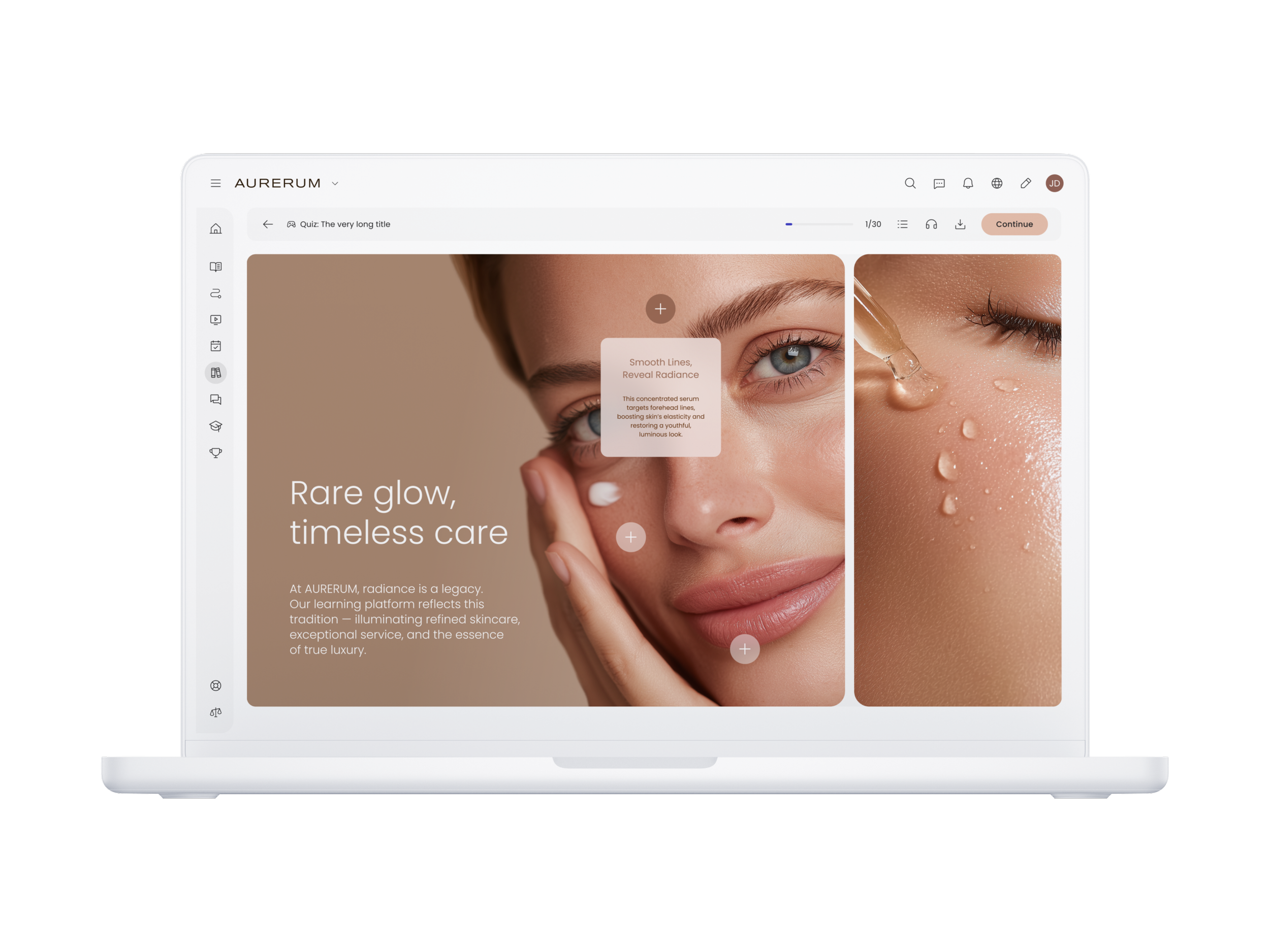
Interactive Video & Branching Scenarios: Learning Through Decision-Making
Interactive video quizzes and branching scenarios significantly improve learning retention by placing learners in realistic client situations where they must actively make decisions.
Research shows that scenario-based learning can increase knowledge retention by up to 2–3× compared to passive formats, while decision-driven interactions improve transfer to the job by 30–40%.
By simulating real client conversations objections, product storytelling, cross-selling, service recovery learners experience consequences, reflect on outcomes, and build confidence in a safe environment.
This “learning by deciding” approach mirrors the cognitive processes used on the shop floor, making knowledge more memorable and behaviors more durable.
Key Benefits
Learners remember more when they make decisions, not when they consume content
Interactive scenarios boost retention by 2–3× vs. linear eLearning
Branching paths replicate real client interactions and consequences
Improves confidence, judgment, and emotional readiness
Increases on-the-job behavior transfer by 30–40%
Ideal for training on client experience, sales conversations, and service excellence
Provides safe practice without real-world risk
InstaLearning & Short Formats: Driving Retention Through Video-First Learning
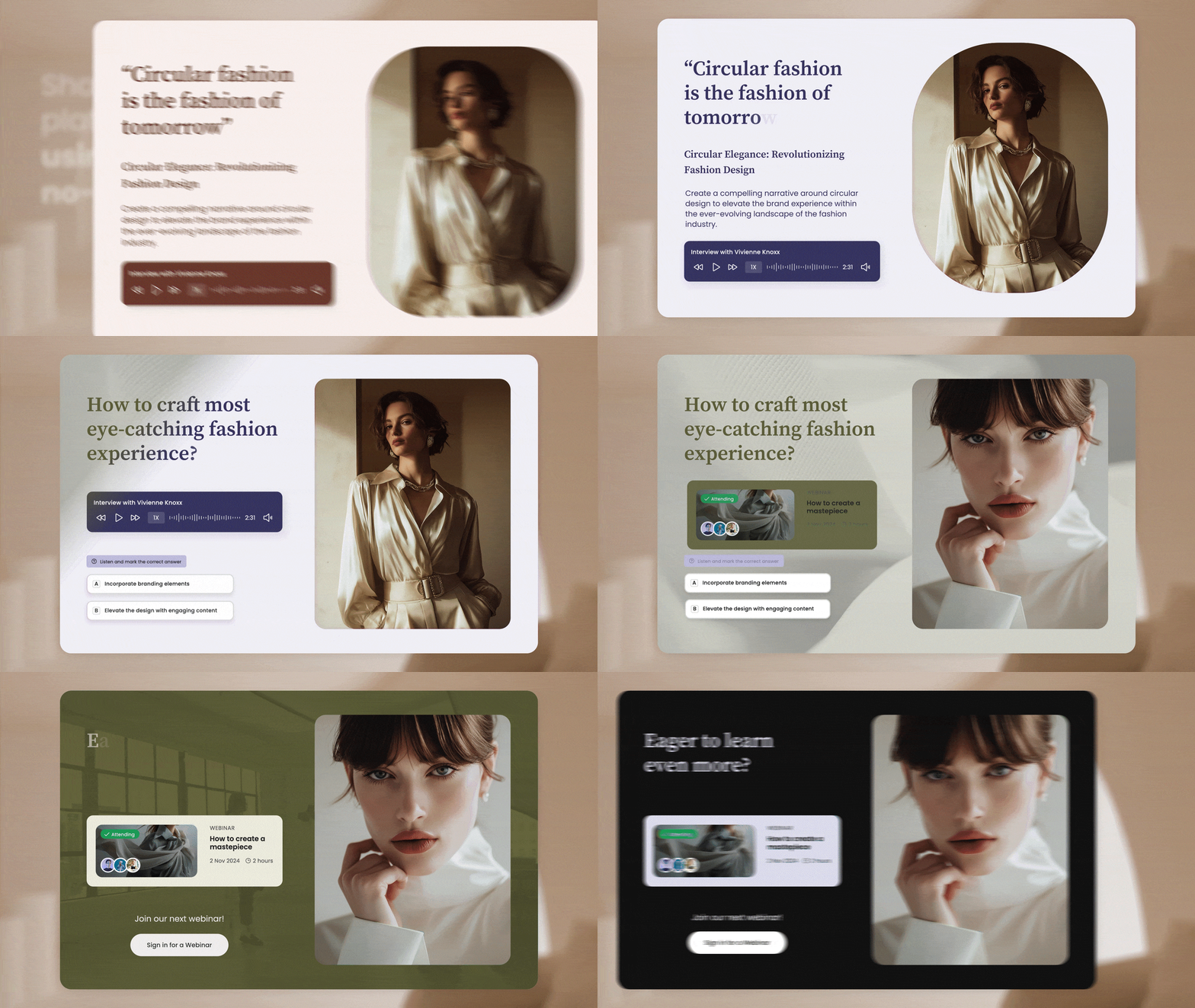
InstaLearning and short-format, video-first content significantly improve knowledge retention by aligning learning with how retail teams already consume information.
Studies show that microlearning can increase retention by 20–30%, while video-based content is processed 60,000× faster than text and leads to higher completion rates, often exceeding 80% on mobile.
By delivering product knowledge and brand storytelling through nano and microlearning modules—short, visual, and easy to access brands enable learning moments that fit naturally into daily routines.
This approach supports on-the-go consumption, reinforces key messages, and ensures knowledge is remembered and applied when it matters most: in front of the client.
Key Benefits
Video-first learning aligns with social media consumption habits
Microlearning improves retention by 20–30%
Visual content is processed far faster than text
Short formats drive higher completion rates (often 80%+)
Ideal for product facts, launches, and brand storytelling
Enables on-the-go learning for retail teams
Reinforces key messages through repeatable, bite-sized content
UGC “Create a Look” Challenges: Learning by Creating, Not Consuming
User Generated Content (UGC) challenges such as Create a Look exercises using video assessment and live recording tools—significantly increase learning retention by turning learners into active creators.
Studies show that learners remember up to 90% of what they actively create or teach, compared to far lower rates for passive consumption.
By asking staff to record themselves styling a look, presenting a product, or delivering a client pitch, learning becomes anchored in real work experience.
This experiential approach strengthens memory, builds confidence, and accelerates skill transfer by linking knowledge directly to action in a familiar, authentic context.
Key Benefits:
Transforms learners from passive listeners into active creators
Active creation can drive up to 90% retention
Video-based UGC anchors learning in real work situations
Builds confidence, storytelling, and presentation skills
Encourages peer learning and best-practice sharing
Improves behavior transfer and on-the-job performance
Creates a scalable library of authentic, brand-relevant content
Expert Stories & Brand Heritage: Memorisation Through Emotion
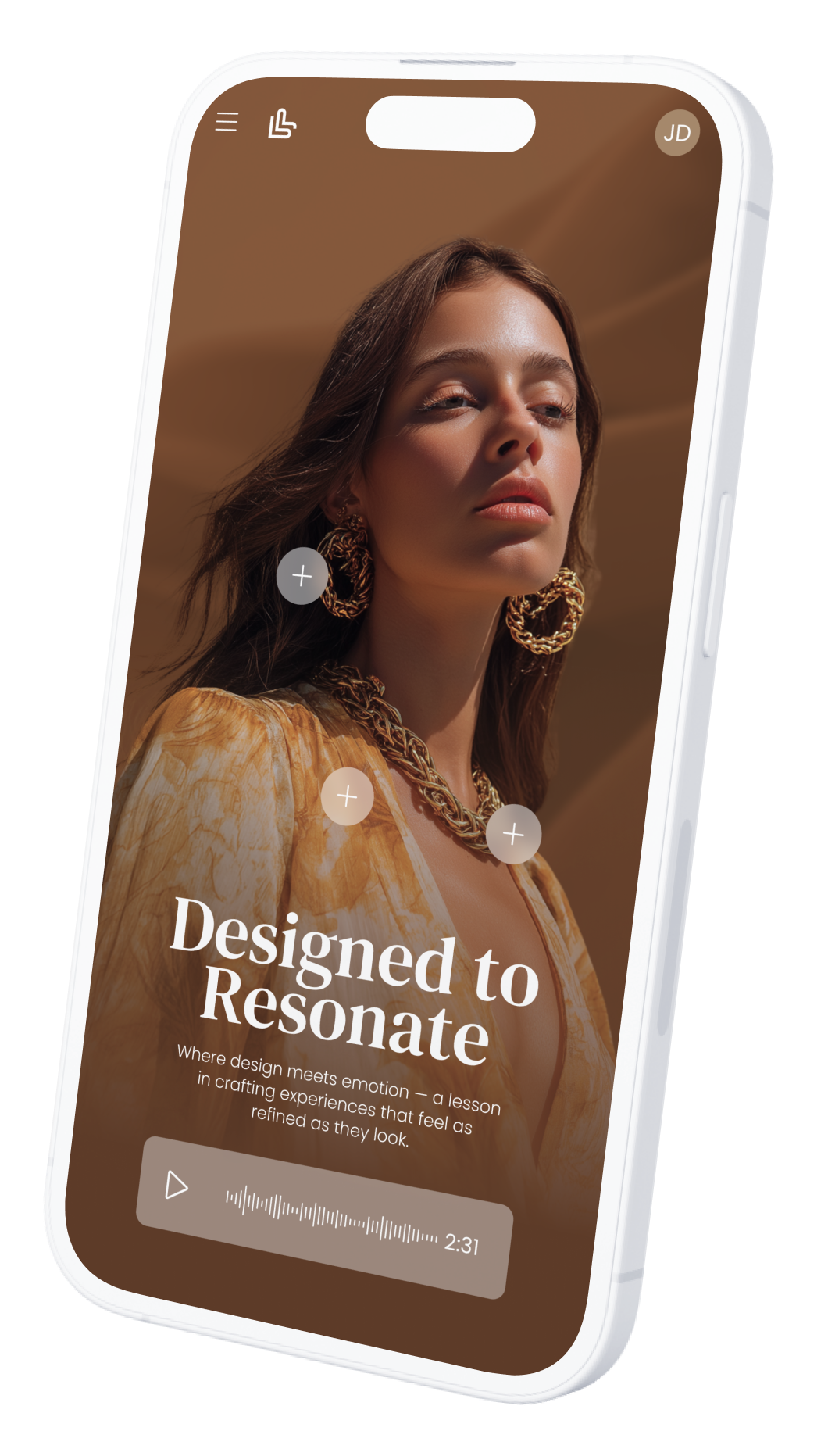
Expert-led storytelling and brand heritage narratives dramatically improve memorisation by engaging emotion, identity, and meaning.
Neuroscience research shows that emotionally charged stories are remembered up to 22× more than facts presented in isolation.
By leveraging high-quality video storytelling to share expert voices, craftsmanship, and brand DNA, learning moves beyond specifications into emotional connection.
When learners understand the why behind the product the history, intention, and savoir-faire—knowledge becomes personal, memorable, and naturally transferable to client conversations.
Key Benefits
Emotional storytelling increases memory retention by up to 22×
Expert stories bring brand DNA and heritage to life
Video narratives create strong emotional and cognitive anchors
Enhances product storytelling and client confidence
Moves learning beyond specs to meaning and purpose
Supports consistent brand expression across markets
Strengthens pride, belonging, and long-term recall
Coaching & Direct Feedback: Learning Accelerated by Human Guidance
Coaching and direct, human feedback significantly accelerate learning by transforming assessment into meaningful development.
Research shows that learners who receive personalised feedback improve performance by up to 39%, while coaching-driven learning increases skill adoption and confidence far more effectively than automated scores alone.
By using audio feedback and smart notification systems, managers and experts can provide timely, nuanced guidance on soft skills, service behaviours, and client interactions.
This feedback culture creates continuous learning loops, reinforces best practices, and builds trust—turning learning into an ongoing conversation rather than a one-off evaluation.
Key Benefits
Personalised feedback can improve performance by up to 39%
Human coaching adds context, empathy, and nuance
Audio feedback feels more natural and impactful than text alone
Supports development of soft skills and service excellence
Encourages a continuous feedback culture
Builds trust, engagement, and learner confidence
Moves learning from assessment to real behavior change
Conclusion: When Learning Is Felt, It Is Remembered
Designing learning for memory in retail is not about delivering more content—it is about creating experiences that resonate emotionally and socially.
When learning engages emotion, encourages action, and fosters human connection, it moves from information to transformation. Interactive scenarios, storytelling, peer creation, and coaching do more than transmit knowledge; they build confidence, belonging, and meaning.
Built as a retail-first LMS, The Learning Lab offers all the capabilities needed to design, deliver, and manage these memorable learning experiences from interactive video and branching scenarios to nano-learning, UGC challenges, and human coaching workflows.
In a world where performance happens in human interaction, a platform designed for retail reality ensures learning is not only remembered, but lived—driving lasting impact for people, brands, and business.