

How Soft Drink Brands Turn Brand DNA into Training Experiences
Beverages brands needs to train their Store Staff.
Soft drink brands can turn brand DNA into training experiences when the LMS does more than host content and actually becomes a branded, adaptable, and operational space for retail execution. The strongest approach is to connect white label design, mobile adaptability, no code authoring, branching control, notifications, micro content, and data dashboards into one learning system that reflects how the brand should look, sound, and perform in market.
What brand DNA means in mainstream beverage categories, everything! How to transmit it to workforce
How a mobile first LMS support delivery and engagement
Training the tone, rituals, and shelf presence of the brand with white label and creative support and no code platform freedom
Standardizing execution across modern trade and convenience through email notification and chat easy communications
Launching reformulations and zero sugar variants with clarity, launch and content pills in the library, organization and content development in authoring tool
Turning promotions into branded learning moments, instalearning and fast paced comunications
Linking brand consistency to customer trust and repeat purchase, data analysis, training in webinar and physical, with hybrid video examples

Brand DNA needs a platform that can truly look like the brand.
What brand DNA means in mainstream beverage categories, everything!
In mainstream beverage categories, brand DNA is not just a logo, a color palette, or a campaign line. It is the full identity of the brand expressed through visuals, tone, product logic, learning paths, retail behavior, and the way teams are expected to represent the brand in the field. If training is delivered through a generic environment, the workforce learns information but does not fully absorb the identity behind it.
This is why transmitting brand DNA starts with a white label, no code LMS. The Learning Lab describes its platform as a fully customizable, no code, white label solution with brand integration, page builder control, landing pages for different groups, and personalized learning paths. That matters because the LMS itself becomes the first internal experience of the brand, giving teams a learning environment that mirrors the same standards, style, and visual world they are expected to bring to market.
A soft drink brand can use this type of platform freedom to shape the homepage, content hierarchy, visual style, navigation, and landing experience around its own identity. Instead of adapting the brand to the tool, the tool adapts to the brand, which is exactly how brand DNA becomes visible and memorable for the workforce.
Useful points to emphasize in this chapter.
Brand integration allows a fully customizable white label learning environment.
Page Builder gives full creative control over layouts, branding elements, and interactive components.
Landing pages for different groups help tailor the brand entry point for each audience.
Personalized learning paths help turn brand values into structured learning experiences.
How a mobile first LMS support delivery and engagement
Adaptability is what makes the LMS usable in the real world.
A mobile first LMS supports delivery and engagement because beverage teams do not learn in one place or in one rhythm. The Learning Lab includes a mobile app, mobile preview, mobile push notifications, offline learning, AI Reader support for accessible audio consumption, and store manager data visibility from iOS and Android devices. That set of features makes the platform adaptable to the pace of retail, field visits, store operations, and fast product updates.
For soft drink brands, adaptability matters because training often happens between visits, before a promotion goes live, during a launch week, or on the shop floor itself. A mobile first LMS makes content easier to access, easier to revisit, and easier to act on because it brings learning closer to the moment where execution actually happens.
Engagement also improves when the format fits the device. The Learning Lab supports audio and video based content, interactive assessments, video based learning, flash cards, hotspots, quizzes, and video tests, all of which help create shorter and more practical learning moments for frontline teams. In 2026, this kind of adaptability is not a nice extra. It is part of what makes a beverage brand LMS commercially useful.
What to emphasize on:
Mobile app access supports learning anywhere and includes offline use.
Mobile push notifications place learning prompts directly into daily workflow.
Store manager data gives mobile visibility into team progress and engagement.
Interactive video, quizzes, and hotspots increase engagement on smaller screens.
AI Reader improves accessibility and makes content easier to consume on the move.
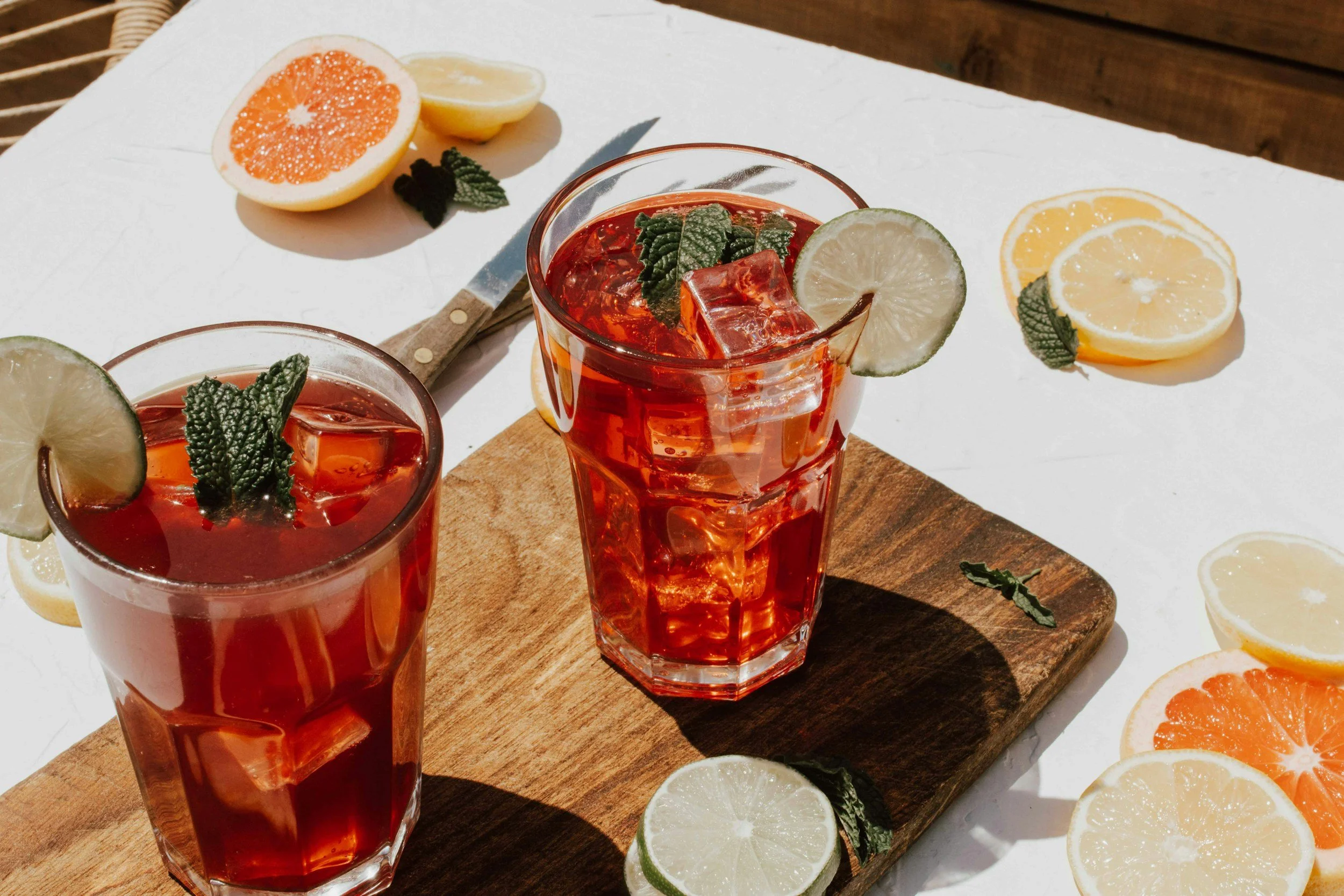
Training the tone, rituals, and shelf presence of the brand with white label and creative support and no code platform freedom
The customer journey and the selling ceremony need to be authored, not just uploaded.
Tone, rituals, and shelf presence are the parts of brand DNA that teams must perform, not just remember. That is why this chapter is really about the internal authoring tool and the freedom to design learning around the customer journey and the selling ceremony. The Learning Lab includes a powerful authoring tool, custom course structure, learning paths, audio and video based content, interactive assessments, carousel, slide building, SCORM support, and no code content creation.
For a soft drink brand, this means training can be built around the full selling sequence. A module can show how a display should appear, how a product should be introduced, how a team member should speak about a core range versus a zero sugar line, and how the brand should feel from first glance to final recommendation. Because the platform is no code, the brand team can create and update this content without being trapped in slow development cycles.
This is where creative support becomes practical. The platform supports animation, video, assessments, hotspots, flash cards, and decision points, which means training can reflect the rhythm and detail of real customer interactions instead of relying on flat documentation. In a category driven by visibility and routine, the ability to author the selling ceremony is one of the clearest ways to protect brand consistency.
Useful points to emphasize in this chapter.
Authoring tool gives brands control over content development without coding.
Custom course structure helps organize the customer journey in the right order.
Learning paths guide employees through brand rituals step by step.
Video based learning and interactive assessments help train behavior, not just memory.
Carousel, slide builder, hotspots, and flash cards make shelf presence easier to teach visually.
Standardizing execution
Across modern trade and convenience: emails, push notification and chat easy communications
Control comes from branching and user management, then communication keeps it moving.
Standard execution across modern trade and convenience does not happen by content alone. It requires the right platform structure, the right permission logic, and the right communication layer. The Learning Lab includes branching, roles and permissions, user manager roles, content manager roles, general manager roles, group based access, content access rules, and distinct LMS instances with individual branding, communities, and content.
This is especially useful for soft drink brands working across different channels, partner groups, and store networks. Branching allows the business to create separate spaces for different audiences while keeping control of brand standards and content logic. User managers and role based permissions help ensure that the right people manage users, content, proofreading, review, and publishing without creating confusion across the system.
Communication then keeps the model alive. The platform includes chat and forum features, social learning with chat messages, audio notes, video responses, audio and video chat, and a unified notification system that can send push, email, and in app notifications in bulk or to individual users. That means standard execution is supported by both governance and fast communication, which is exactly what beverage brands need when many teams must act on the same priorities at the same time.
Useful points to emphasize in this chapter.
Branching creates separate LMS spaces with individual branding and content.
Roles and permissions support controlled platform management.
User Manager and Content Manager roles help keep execution organized.
Chat, forum, audio notes, and video responses improve collaboration.
Unified notifications support bulk and targeted communication by email, push, and in app message.
New launches need speed, clarity, and a clean content structure
Launching reformulations and zero sugar variants with clarity, launch and content pills in the library, organization and content development in authoring tool.
Reformulations and zero sugar variants are exactly the kind of change that can create confusion if training is slow, scattered, or badly organized. The platform features that matter most here are the unified notification system, direct personal notifications, mobile push notifications, and tracking of opens and views, because new launches require immediate communication and visible follow through.
The Learning Lab also includes a library for organizing all types of documents and formats, plus an authoring tool, project management tools, proofreading roles, custom course structure, and publishing workflows. That means launch training can be built fast, reviewed properly, organized clearly, and delivered to the right audiences without losing control of the message.
For a soft drink brand, this allows a simple launch architecture. One content pill can explain what changed in the reformulation. Another can clarify consumer language. Another can brief field reps. Another can focus on retailer conversations. The library keeps everything easy to find, while notifications make sure people actually see and use the update.
Useful points to emphasize in this chapter.
Unified notifications support launch alerts across users, learning paths, and content libraries.
Direct personal notifications allow targeted communication to selected users.
Mobile push notifications increase visibility during fast launch windows.
Library organizes launch content in one accessible place.
Project management and proofreading support better development and publishing control.
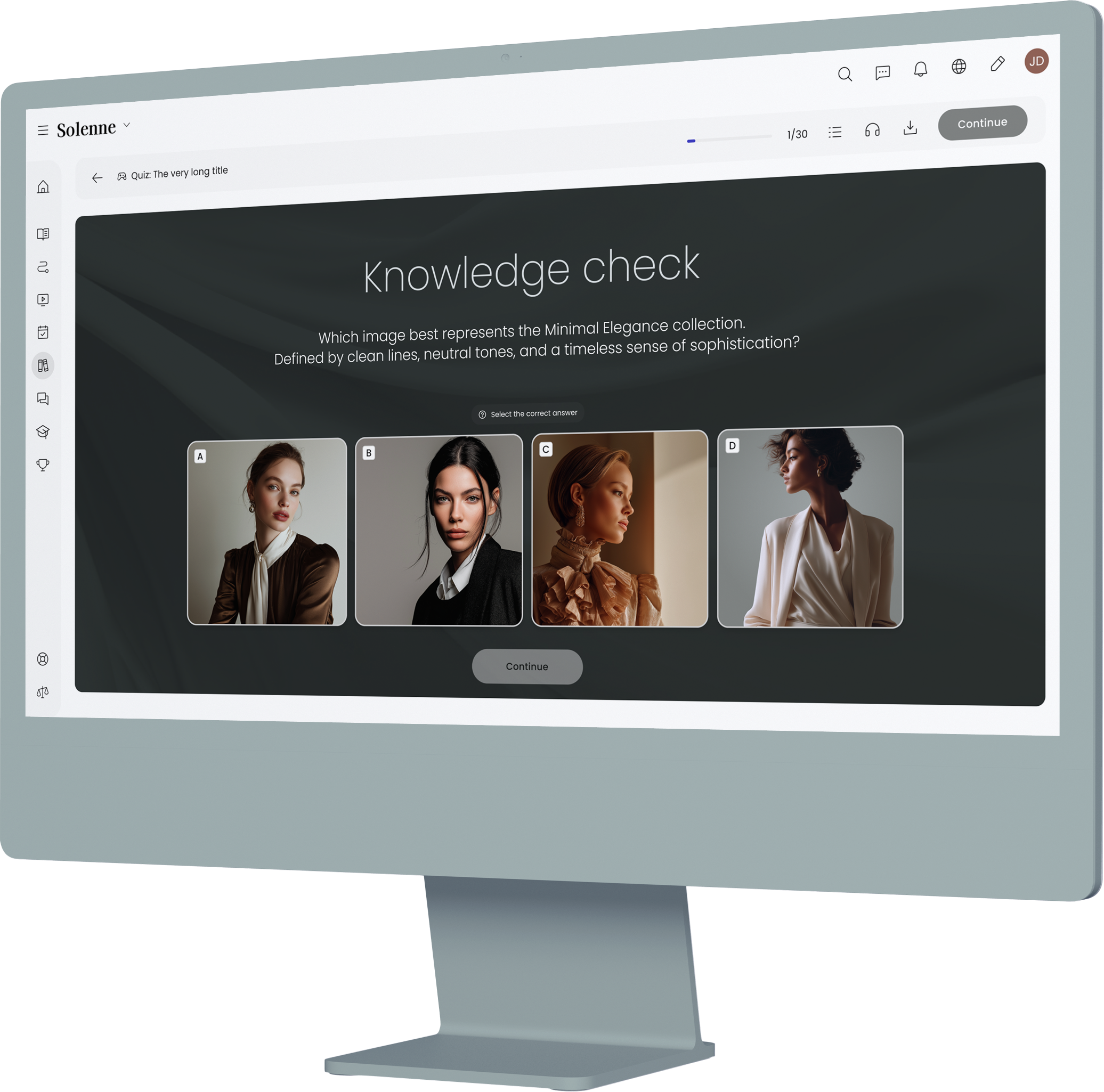
Turning promotions into branded learning moments, instalearning and fast paced comunications
Promotional learning works best in short, branded bursts.
Promotions are often too fast for traditional training formats, which is why they need a lighter and more responsive learning model. The Learning Lab includes InstaLearning, described as short, focused, mobile first learning bursts designed to fit the rhythm of retail and reinforce product knowledge, selling techniques, and operational updates in minutes.
This is exactly the right logic for promotions in mainstream beverages. A summer offer, a cooler challenge, a visibility push, or a retail activation does not need a long course. It needs a short branded learning moment that tells teams what is happening, what matters most, what the customer should notice, and how the promotion should be executed.
Fast paced communications strengthen this further. Notifications, mobile delivery, social learning, and quick video or quiz based content help turn a promotional message into immediate action. For soft drink brands, that means promotions become part of the learning culture rather than one more message lost in operational noise.
Useful points to emphasize in this chapter.
InstaLearning delivers short mobile first modules for retail rhythm.
Promotional learning can reinforce product knowledge and selling techniques in minutes.
Notifications and mobile access help speed up campaign communication.
Short visual content keeps promotions aligned with the brand image.
Social learning features help teams share fast market feedback during activations.
The dashboard is where consistency becomes measurable
Linking brand consistency to customer trust and repeat purchase, data analysis, training in webinar and physical, with hybrid video examples
Brand consistency matters commercially because it shapes trust, and trust supports repeat purchase. The LMS supports this by giving teams a way to monitor whether learning is actually being completed, understood, and applied across markets, stores, and partner groups. The Learning Lab includes reporting and analytics, richer reporting and export controls, learning path reports, store manager data, webinar record statistics, and audit tracking of content access and interaction.
This matters because managers need a clear data view of who is engaged, who is ready, which content is working, and where support is still needed. A responsive dashboard gives visibility into completion, access states, time spent, quiz performance, certification counts, category level reporting, group level reporting, and user level insights. That is the link between consistency and action. You can only improve what you can clearly see.
The platform also supports blended learning, hybrid adaptive learning, webinars, in person events, event attendance tracking, post event polls, video based learning, and webinar recording statistics. That means a soft drink brand can combine digital modules, live webinars, physical training, coaching, and video examples inside one ecosystem, then measure how all of it performs. In 2026, that is what a serious beverage brand LMS should do.
Useful points to emphasize in this chapter.
Reporting and analytics show progress from different perspectives.
Richer reporting includes completion, access, time spent, quiz performance, and exports.
Store manager data brings performance visibility to mobile devices.
Webinar statistics show who watched and how far they progressed.
Blended learning and hybrid adaptive learning connect digital, live, coaching, and in store practice.
In person events and post event polls support physical training with measurable follow up.
Beverages brand need this LMS
Soft drink brand training becomes far more powerful when the LMS is treated as a branded operating environment rather than a neutral content repository. Brand DNA is best transmitted through a white label, no code platform that truly represents the brand image. Mobile first design improves adaptability and engagement. The internal authoring tool helps train the customer journey and selling ceremony. Branching and user managers support standardized execution. Notifications drive launch clarity. InstaLearning turns promotions into fast learning moments. Dashboards and blended analytics connect consistency to trust and repeat purchase.
That is why The Learning Lab is a strong fit for beverage brands in 2026. Its feature set combines white label branding, no code control, mobile learning, authoring, branching, communication tools, notifications, libraries, webinars, in person training, and advanced reporting in one retail focused LMS. For soft drink brands that want better launches, cleaner execution, and stronger brand consistency across the market, that is a very credible platform story to own.
