

How eLearning Drives Retail Performance
How Smart eLearning Transforms Retail Performance
In premium retail, the right learning strategy isn’t just “training” it’s a performance engine.
Short, interactive, mobile-first modules boost completion rates to 65–90%, compared to just 30–40% for traditional long courses. Learners return to nano/micro content 1.5–2× more often when gamification or peer interaction is part of the journey.
The sweet spot? 7–10 minutes—the ideal session length to keep retail teams focused, motivated, and operationally ready.
Add social learning elements like forums, polls, or peer-sharing, and engagement jumps by 20–35%. When training is fast, social, and on-brand, store teams learn more—and sell better.

From Engagement to Impact: How eLearning Drives Retail Performance
In retail, engagement isn’t a “nice to have” it’s the fuel that turns product knowledge, brand storytelling, and daily behaviors into measurable business impact.
When training is short, mobile-first, and interactive, completion rates soar and store teams return more often to refresh their skills.
Microlearning creates a continuous learning rhythm that fits the pace of boutiques, while social learning features spark community, motivation, and deeper retention. The result is a learning ecosystem where engagement is not only higher but directly connected to better service, stronger conversion, and elevated brand experience.
Key Engagement Metrics in eLearning
Completion Rate:
Short, interactive, mobile-friendly modules achieve 65–90% completion, compared to only 30–40% for long traditional courses.
Repeat Visits:
Learners revisit nano/micro modules 1.5–2× more often when gamification, challenges, or peer discussions are included.
Session Duration:
The highest engagement consistently occurs with 7–10 minute modules—ideal for busy retail environments.
Social Learning Impact:
Adding forums, polls, Q&A, or peer-sharing boosts engagement by 20–35%, especially for retail teams who learn socially on the shop floor.
Impact on Sales & Retail KPIs: How Training Drives Measurable Performance
In premium retail, the link between learning and sales is no longer abstract data proves that well-designed eLearning directly boosts store performance.
When training reinforces clienteling, product storytelling, and upselling techniques, teams sell with more confidence and consistency.
Targeted learning touchpoints improve conversion, raise average basket size, accelerate onboarding, and even reduce turnover. The result is a clear business case: engaged learners don’t just complete training they perform better, stay longer, and drive stronger results on the shop floor.
Key Retail Performance Metrics
Sales Uplift:
Stores with highly engaged learners report +10–18% higher sales versus stores with low participation.
Conversion Rate Improvement:
Focused eLearning campaigns lift conversion by 8–12% within just 4–6 weeks.
Upselling & Basket Size:
Product-specific training increases average basket size by 15–20%, especially in beauty, accessories, and seasonal collections.
Speed to Competency:
Digital and blended onboarding reduces time to full performance by 30–40%, accelerating new hire productivity.
Employee Retention:
Engaged learners are 25–35% less likely to leave within their first year, strengthening consistency and client experience.
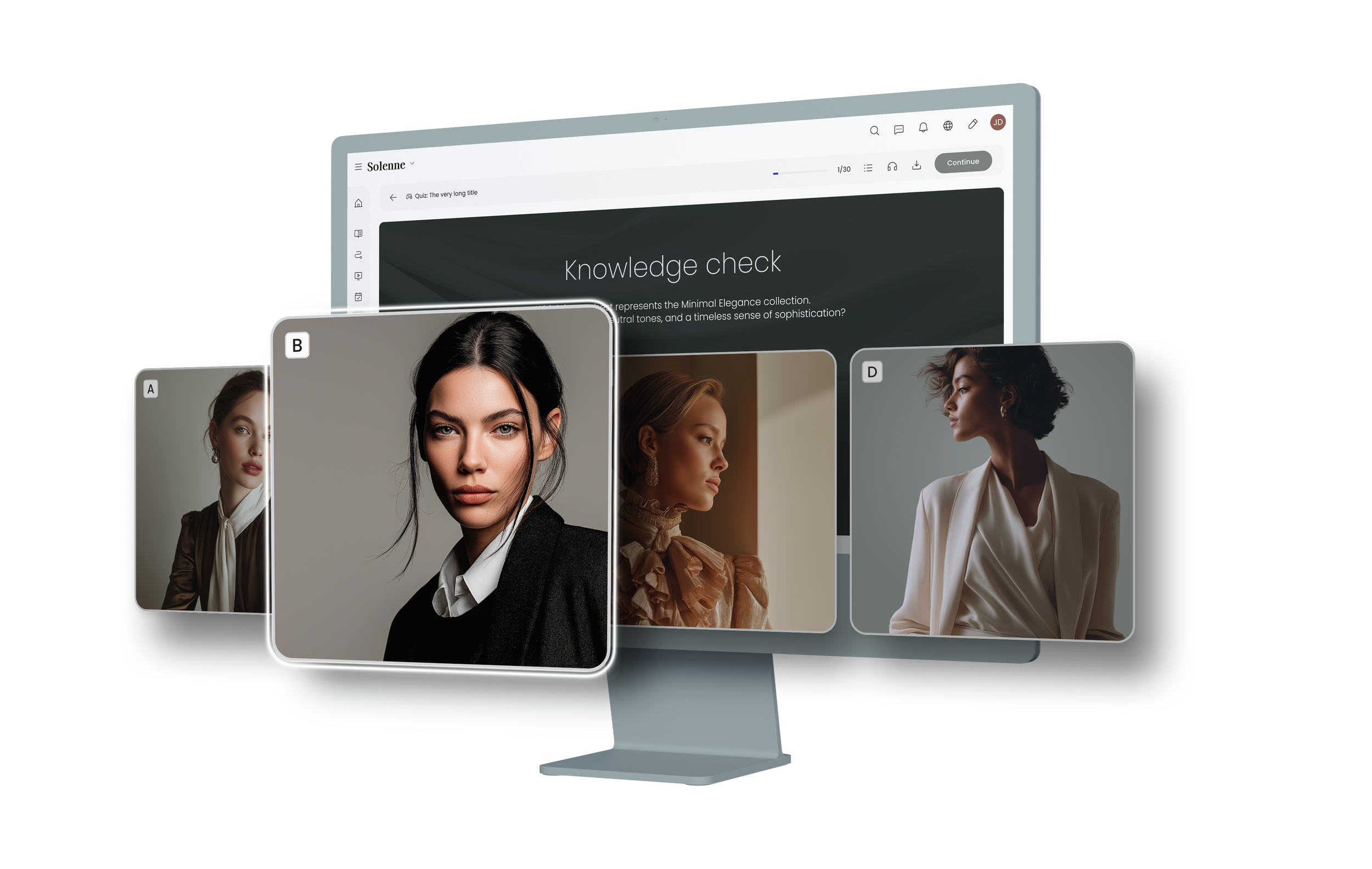
What Drives Higher Engagement → Higher Sales Impact
In retail, engagement is not just an educational metric it’s a sales accelerator.
The most successful brands create a learning ecosystem where motivation, relevance, and coaching come together to drive measurable business results.
Industry benchmarks and real LMS implementations (including Learning Lab–style programs) show that when training feels immersive, supported by managers, and reinforced across touchpoints, engagement rises and sales KPIs rise with it.
The path is clear: the more teams learn, the better they perform, convert, upsell, and elevate the client experience.
Key Drivers That Turn Engagement Into Sales Impact
1. Brand Immersion
Fully branded, on-DNA learning environments dramatically raise motivation and psychological ownership.
When the LMS feels like the brand—its colors, typography, tone of voice, visuals—learners perceive the content as more relevant and premium, which increases engagement and product confidence.
2. Blended Learning = Better Retention
Mixing digital training with live workshops, coaching, or product sessions leads to 40% better retention.
Retail teams absorb information faster, practice it immediately, and apply it on the shop floor with more consistency.
3. Data Feedback Loops
Modern LMS analytics surface knowledge gaps, low-engagement learners, or underperforming modules in real time.
This enables fast optimization of content and coaching, accelerating improvements in KPIs such as conversion, clienteling, and productivity.
4. Manager Coaching (The Multiplier Effect)
When store managers actively monitor progress, run short huddles, and reinforce learning, the sales uplift doubles.
Coaching translates learning into habits—making skills stick, improving behaviors, and elevating daily interactions with clients.
Typical ROI Indicators: Why Premium Retail Wins with High-Performing LMS Ecosystems
For luxury and premium retail brands, investing in a modern LMS isn’t a cost it’s a performance engine with a clear financial return.
When training is branded, data-driven, and designed around real retail behaviours, it accelerates onboarding, boosts conversion, and elevates client experience.
The impact is visible in every KPI: higher sales, faster productivity, and stronger learner engagement. High-performing LMS ecosystems consistently demonstrate that the more teams learn, the more value they generate for the brand.
Key ROI Indicators in Premium Retail
ROI per Learner
Brands typically generate $5–$8 in additional sales for every $1 invested in training through a high-performing LMS.
Engagement → Sales Correlation
A +10% increase in learner engagement usually translates into +1.5–2.5% sales growth, driven by better product knowledge, stronger clienteling, and improved behaviors.
Time to Productivity
Digital and blended onboarding reduces time to full performance by 25–35%, accelerating the contribution of new hires and reducing early inefficiencies.
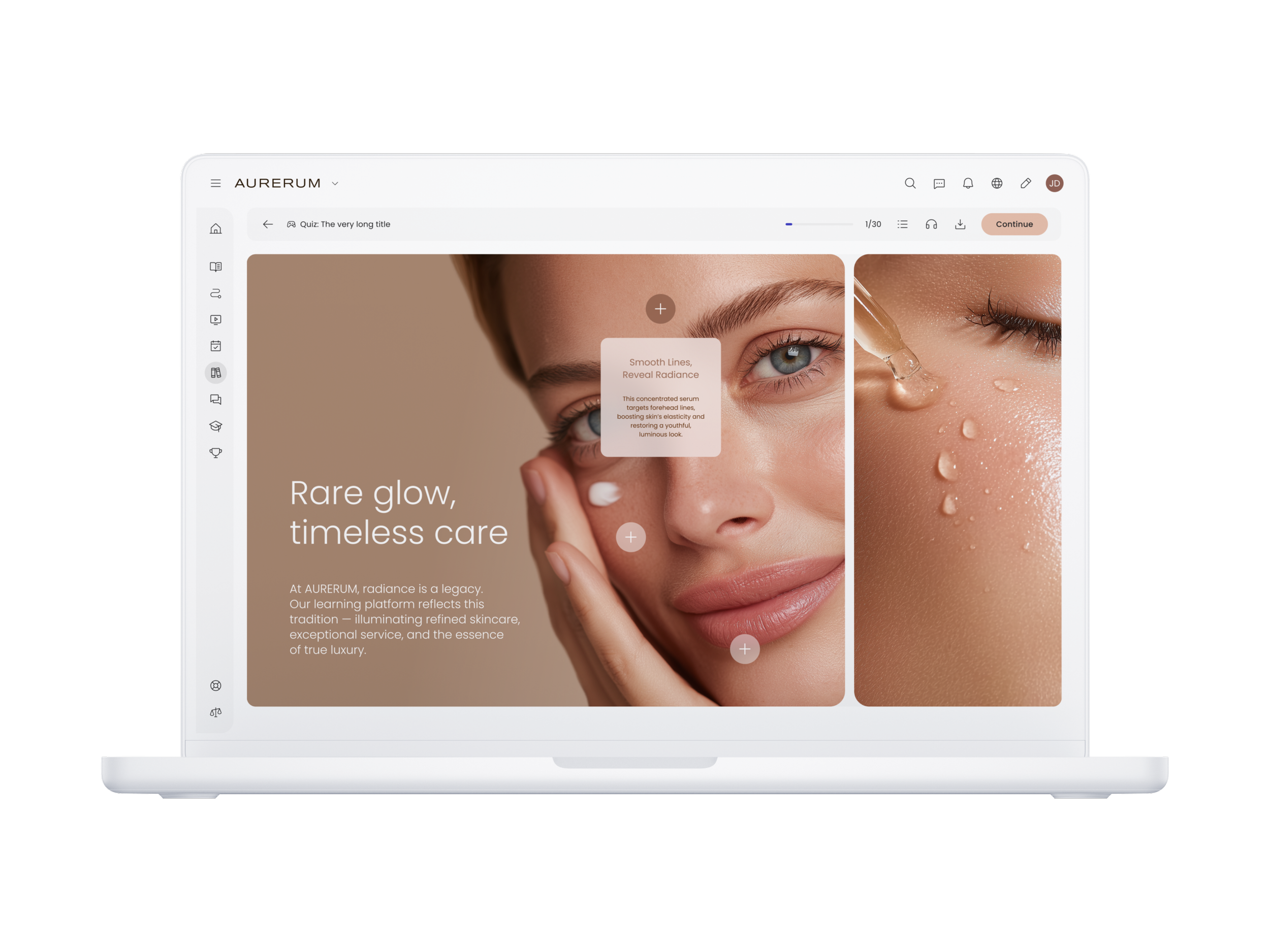
How The Learning Lab LMS Elevates Team Performance & Drives Retail Sales
The Learning Lab is built for one purpose: turning learning into measurable retail performance.
In premium and luxury environments where product expertise, storytelling, and client experience define success, our LMS provides the tools brands need to train smarter, retain knowledge longer, and convert that engagement into higher sales.
By combining brand-immersive design, microlearning, coaching tools, AI insights, and a mobile-first experience, The Learning Lab helps store teams stay informed, confident, and consistent—every day, on every shift.
Key Features That Boost Team Performance & Drive Sales
1. Fully Brand-Immersive Learning Experience
Your LMS looks and feels 100% on-brand—colors, visuals, tone, UX.
This increases motivation, emotional connection, and learning relevance, turning training into a true brand moment.
2. Microlearning & Nano Modules for Faster Mastery
Short 7–10 minute modules perfectly fit retail schedules.
Teams complete more training, retain more knowledge, and quickly apply skills on the floor.
3. AI-Powered Recommendations & Adaptive Learning
Learners receive personalized suggestions based on their role, boutique, performance, or product focus.
This keeps training relevant and accelerates readiness for launches and seasonal priorities.
4. Gamification & Peer Community
Badges, challenges, leaderboards, polls, and peer discussions increase repeat visits.
Motivation grows—and so does product confidence.
5. Manager Dashboards & Coaching Tools
Store managers can track progress, identify gaps, and run structured coaching sessions.
When coaching is reinforced, sales uplift doubles.
6. Integrated Product Training & Storytelling
Interactive videos, 3D product stories, expert interviews, and craftsmanship modules enrich knowledge.
Teams sell with more conviction and deliver a better client experience.
7. Real-Time Analytics & KPI Insights
Brands can track engagement, completion, content performance, and skill mastery.
Data feedback loops help optimize training and improve conversion, basket size, and productivity.
8. Fast, Blended Onboarding for New Hires
Digital onboarding reduces time-to-productivity by 25–35%, getting new staff floor-ready faster.
Business Impact for Premium Retail
Higher engagement → +1.5–2.5% sales growth for every +10% engagement gain
Stronger product knowledge → +15–20% increase in basket size
Smarter onboarding → 30–40% faster ramp-up
Motivated teams → up to 90% completion rates
Better coaching → double the sales uplift