

10 Top Retail eLearning Trends of 2026
The 10 eLearning Trends Shaping Retail (Fashion, Luxury, Cosmetics, Automotive…) Training in 2026
In 2026, retail eLearning is shifting from generic training programs to performance-driven, experience-led learningdesigned for the realities of the sales floor.
Retail teams expect short, mobile-first formats that fit between client interactions, while brands demand greater consistency, faster onboarding, and measurable impact on sales and service quality.
The most effective retail training strategies now combine microlearning, immersive scenarios, and AI-driven personalization to support teams in real time — transforming eLearning into a strategic lever that strengthens product mastery, clienteling, and brand execution across global retail networks.

01. InstaLearning: The Defining Retail Learning Trend of 2026
In 2026, InstaLearning has emerged as the most effective way to train frontline retail teams.
Built around ultra-short, visual, and mobile-first formats, InstaLearning mirrors how people naturally consume information quickly, visually, and in context.
Rather than pulling teams away from the sales floor, it delivers precise knowledge at the moment of need, turning learning into a seamless extension of daily work and brand execution.
Why InstaLearning leads in 2026 :
30–50% higher completion rates compared to traditional modules
2× more repeat visits thanks to short, scrollable formats
+60% knowledge retention when content is video-first and under 3 minutes
25–35% faster onboarding for new hires using daily micro-drops
+10–15% sales uplift in stores adopting just-in-time learning for product launches
What defines InstaLearning:
Bite-sized lessons (10 seconds – 1 minute)
Video-first, image-rich storytelling
Mobile-native, one-thumb navigation
Contextual delivery (product, clienteling, service moments)
Easy to update for launches, seasons, and campaigns
In 2026, the question is no longer whether to adopt InstaLearning, but how fast brands can embed it into their retail rhythm to drive consistency, confidence, and performance at scale.
02. Branching Scenarios & Smart Authoring Tools: The Power Skill of Retail Learning in 2026
In 2026, the most impactful retail training no longer explains what to do it lets teams practice decisions in realistic situations.
Modern authoring tools with branching scenarios have become essential, enabling brands to create interactive learning experiences that mirror real client interactions on the sales floor.
Associates don’t just consume content; they make choices, experience consequences, and learn how to adapt their approach in a safe, engaging environment.
Why branching scenarios are a top trend in 2026:
40–60% higher engagement than linear eLearning modules
+35% improvement in decision-making skills through scenario-based practice
2× higher skill transfer to real client situations
20–30% increase in confidence for sales and service conversations
Up to +18% conversion uplift when clienteling scenarios are used in training
What makes modern authoring tools essential:
No-code / low-code creation for rapid content updates
Visual flow builders for complex customer journeys
Role-based scenarios (new hire, senior advisor, manager)
Integrated video, audio, and product storytelling
Real-time analytics on choices, behaviors, and gaps
In 2026, branching scenarios are no longer optional. They are the fastest way to align learning with reality — helping retail teams master conversations, handle objections, and deliver brand-consistent experiences when it matters most.

03. Branded Learning Experience: From Custom LMS to Educative Content. The Retail Imperative of 2026
In 2026, retail brands no longer accept generic training environments.
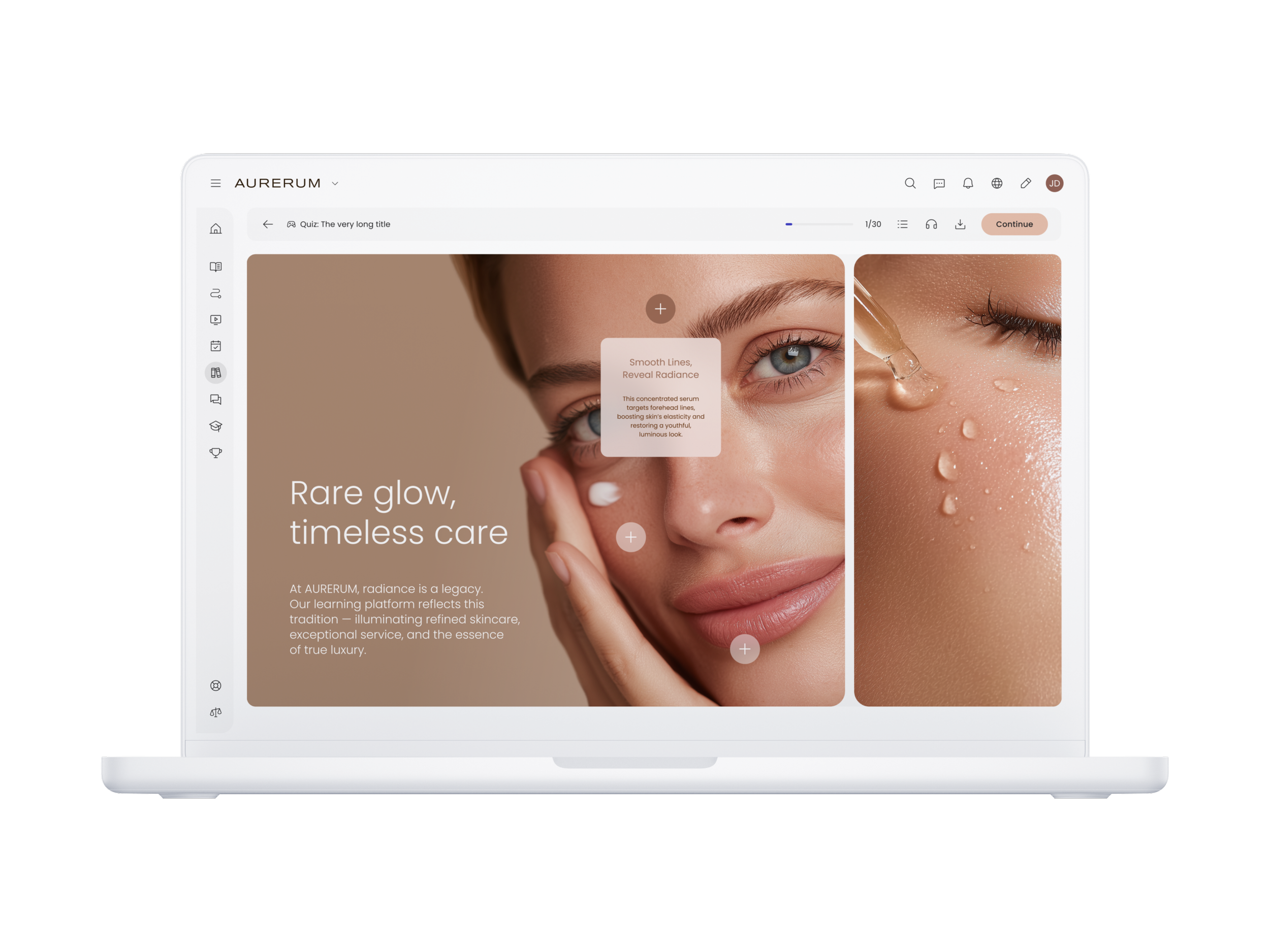
A Branded Learning Experience where the LMS, interface, tone of voice, and content are fully aligned with the brand’s DNA has become a strategic differentiator.
Learning is no longer a back-office tool; it is an extension of the brand universe, designed to feel as curated, immersive, and intentional as the boutique itself.
Why branded learning leads in 2026 (with data):
30–40% higher engagement in fully white-label LMS environments
25% longer session duration when visuals and storytelling reflect brand identity
+20% knowledge retention with coherent design and narrative continuity
15–25% faster onboarding when learners feel emotionally connected to the brand
+10–18% sales uplift in networks using brand-consistent training experiences
What defines a true branded learning experience:
Fully white-label LMS (UI, UX, colors, fonts, navigation)
Brand-specific tone of voice and storytelling
Video-first, editorial-quality content
Immersive formats (microlearning, scenarios, rituals)
Consistency across markets with localized adaptations
In 2026, the strongest retail brands train the way they sell: with intention, emotion, and consistency. A branded learning experience doesn’t just teach — it builds pride, confidence, and brand embodiment across every store, every market, every interaction.
04. AI Chatbots for Learners: The Always On Learning Companion of Retail in 2026
In 2026, AI chatbots have become a core pillar of retail learning ecosystems.
Designed as always-on learning companions, they support frontline teams in the flow of work answering questions, guiding decisions, and reinforcing brand standards in real time.
Rather than replacing human coaching, AI chatbots augment it, delivering instant, contextual support exactly when associates need it: before a client interaction, during a product launch, or after a challenging situation.
Why AI chatbots are a key retail learning trend in 2026:
50–70% faster access to information compared to searching LMS content
30–45% increase in learner engagement through conversational interfaces
Up to 40% reduction in support tickets to L&D and HQ teams
20–30% improvement in knowledge retention with instant, repeated reinforcement
+10–15% sales uplift when chatbots support product knowledge and clienteling prep
What makes AI chatbots effective for learners:
24/7 availability on mobile and desktop
Instant answers aligned with brand tone and content
Context-aware guidance (product, role, store, moment)
Multilingual support for global retail networks
Continuous learning from usage and questions
In 2026, AI chatbots are no longer a “nice to have.” They are the bridge between learning and action, helping retail teams feel supported, confident, and ready—every day, on every shift.
05. Blended Learning: The Cornerstone of High-Performance Retail Training in 2026
In 2026, the most effective retail training strategies rely on Blended Learning the seamless combination of digital learning, in-store practice, and human coaching.
Rather than choosing between online or in-person formats, leading brands design learning journeys that connect microlearning, workshops, and manager-led reinforcement. This approach reflects how retail teams truly learn: through repetition, feedback, and real-world application on the sales floor.
Why blended learning is essential in 2026:
40% higher knowledge retention compared to digital-only training
2× stronger behavior change when learning is reinforced by managers
25–35% faster time-to-productivity for new hires
+20% engagement rates when digital learning is paired with live moments
Up to +18% sales uplift in stores applying blended learning models
What defines effective blended learning in retail:
Mobile microlearning before and after workshops
In-store coaching and role-play sessions
Manager validation and feedback loops
Continuous reinforcement through challenges and reminders
Clear connection between learning, KPIs, and performance
In 2026, blended learning is not a compromise — it is the most realistic and impactful way to build confident, brand-consistent retail teams and turn learning into measurable business results.

06. Community, Social & Peer-to-Peer Learning: The Human Engine of Retail Performance in 2026
In 2026, retail learning thrives when it becomes social.
Community management and peer-to-peer learning turn training from a top-down process into a living ecosystem where teams learn with and from each other.
By enabling associates to share best practices, client stories, looks, rituals, and tips, brands unlock collective intelligence and reinforce culture at scale — especially across global retail networks.
Why community-driven learning leads in 2026:
30–45% higher engagement in learning communities vs. solo learning
2× faster knowledge spread when peers share real examples
+25% confidence boost through peer validation and recognition
20–30% increase in retention driven by social interaction
+10–15% performance uplift in stores with active learning communities
What makes social & peer learning effective:
Moderated communities aligned with brand values
User-generated content (photos, videos, routines, success stories)
Peer challenges, comments, and reactions
Manager and expert facilitation (not control)
Clear links between shared practices and KPIs
In 2026, community management is no longer optional. Learning becomes powerful when it is shared, when teams feel seen, heard, and connected — and when knowledge flows naturally across stores, markets, and cultures.
07. Mobile Learning: The Default Learning Format for Retail Teams in 2026
In 2026, mobile learning is no longer an alternative it is the primary way retail teams learn.
Designed for speed, accessibility, and real-life store conditions, mobile-first learning meets associates where they are: on the sales floor, between client interactions, and across shifts. When learning fits naturally into the rhythm of retail, engagement and performance follow.
Why mobile learning dominates retail training in 2026:
70–80% of retail learning sessions now happen on mobile devices
30–50% higher completion rates compared to desktop-only training
2× more frequent logins due to ease of access
+25% knowledge retention with short, mobile-optimized content
Up to +15% sales uplift when learning is accessible at the moment of need
What defines effective mobile learning in retail:
One-thumb navigation and fast loading
Microlearning and InstaLearning formats
Offline access for stores with limited connectivity
Push notifications for launches and priorities
Seamless integration with daily retail workflows
In 2026, mobile learning is not about shrinking content to fit a screen — it’s about redesigning learning for the way retail teams actually work, enabling faster onboarding, stronger execution, and consistent brand performance across every store.
08. Audio & Video-Based Learning: The Most Natural Way Retail Teams Learn in 2026
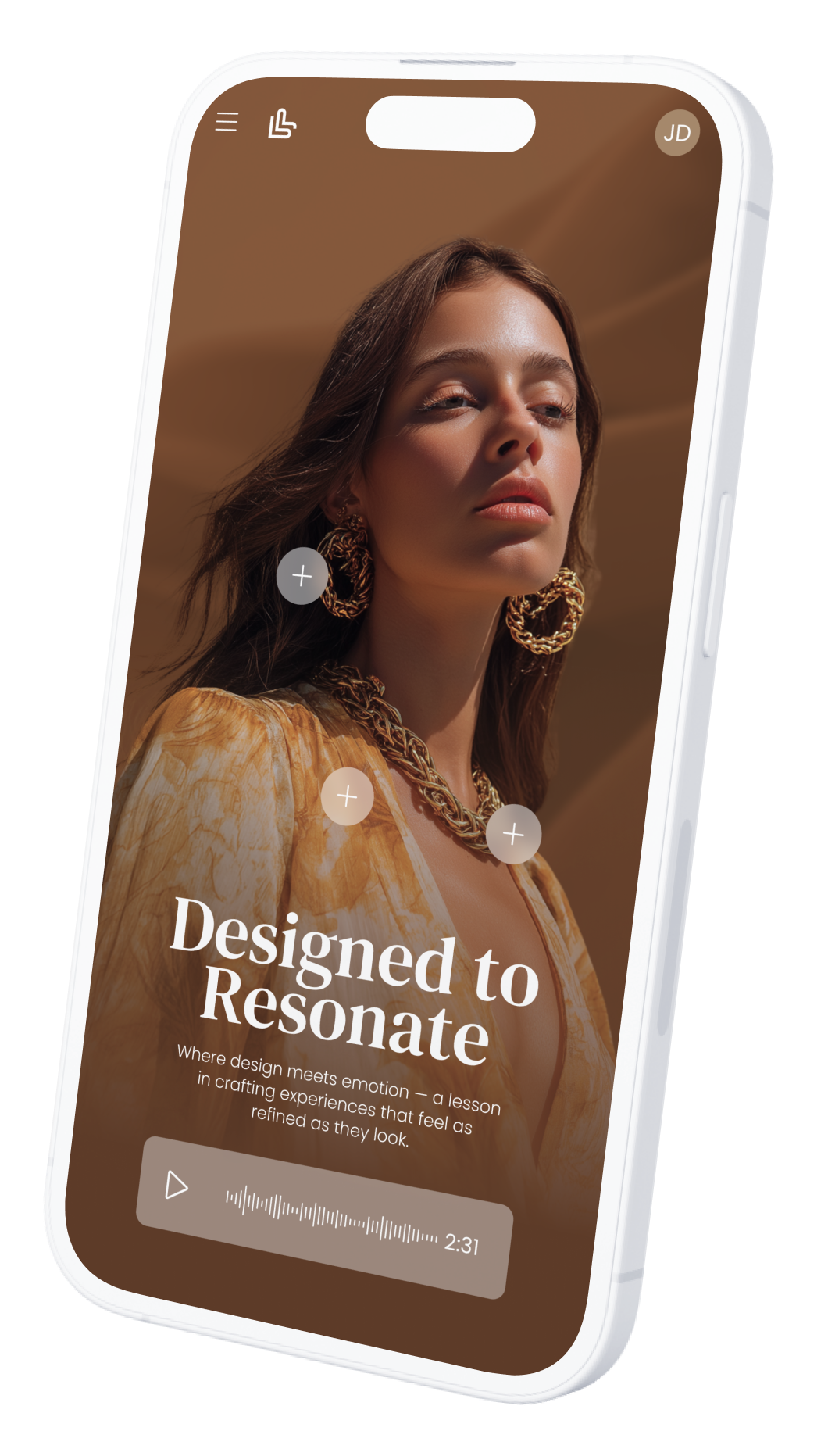
In 2026, audio and video-based learning have become central to effective retail training.
These formats align with how frontline teams naturally absorb information by watching, listening, and observing in context. From product demonstrations and service rituals to storytelling and coaching feedback, audio and video transform learning into an intuitive, human, and emotionally engaging experience.
Why audio & video learning lead in 2026:
60% higher knowledge retention compared to text-only content
2× higher engagement with video-based modules
30–40% faster skill acquisition through visual demonstration
25% increase in learner confidence after video practice and feedback
+10–18% performance uplift when video supports sales and service training
What makes audio & video learning effective in retail:
Short, high-quality, mobile-first videos
Demonstration of real gestures, rituals, and conversations
Learner-recorded videos for practice and validation
Audio feedback for personalized coaching
Multilingual content for global retail networks
In 2026, audio and video are not just content formats — they are the fastest bridge between knowing and doing, helping retail teams master behaviors, embody the brand, and deliver consistent, high-quality experiences on the sales floor.
Features :
· Video Assessement
· Interactive Video
· Video Quiz
· Podcast
· Interview
· Live session
· Video and audio discussions
· And much more
09. Next-Generation Authoring Tools: Why SCORM Is No Longer Enough in 2026
In 2026, SCORM is effectively obsolete for modern retail learning.
Built for static, linear courses and desktop usage, SCORM cannot support the speed, flexibility, and experience today’s retail teams require. Modern authoring tools have moved beyond packaging content to designing living learning experiences — interactive, mobile-first, data-rich, and continuously evolving. The shift is clear: from “courses” to learning flows.
Why SCORM no longer works in 2026:
0 real-time insight into learner behavior beyond completion
No native support for mobile-first, social, or activity-based learning
Limited analytics, unable to track decisions, practice, or performance
Slow update cycles, incompatible with retail launch rhythms
Up to 40% lower engagement compared to modern interactive formats
What replaces SCORM with modern authoring tools:
No-code / low-code creation for rapid updates
Native mobile, video, audio, and interactive components
Branching scenarios, challenges, and missions
Real-time analytics on actions, choices, and engagement
Seamless updates without re-exporting or redeploying files
The impact for retail brands:
30–50% higher engagement with interactive authoring
2× faster content deployment for launches and campaigns
+35% better skill transfer through experiential formats
25–30% reduction in content maintenance effort
In 2026, the question is no longer “Is your content SCORM-compliant?”
It’s “Can your authoring tool keep up with retail reality?”
Modern learning demands agility, intelligence, and experience — and SCORM was never built for that world.
10. Activity-Based Learning: Turning Training into Action on the Sales Floor in 2026
In 2026, Activity-Based Learning has become essential for retail organizations seeking real behavioral change. Instead of passive consumption, this approach embeds learning into concrete actions performed in-store: observing, practicing, applying, and reflecting. Learning no longer happens before or after work — it happens through work, reinforcing skills in real retail conditions.
Why activity-based learning is critical in 2026 (with data):
3× higher skill transfer compared to theory-only training
40% improvement in long-term retention through hands-on practice
+30% increase in learner engagement when tasks are action-driven
25–35% faster onboarding for new hires
Up to +18% sales uplift when learning is tied to in-store actions
What defines effective activity-based learning in retail:
In-store missions and challenges
Observation and application tasks with real clients
Photo, video, or audio proof of execution
Manager validation and feedback
Reflection moments to anchor learning
In 2026, activity-based learning ensures that training doesn’t stop at understanding — it drives execution, confidence, and measurable performance where it matters most: on the sales floor.

Conclusion: Turning Retail Learning Trends into Measurable Impact in 2026
In 2026, eLearning for retail is no longer about adopting isolated trends or adding new tools. It is about orchestrating experiences that fit the rhythm of the sales floor, reflect brand identity, and translate learning into action.
Whether through InstaLearning, AI-powered support, branded environments, community-driven learning, or activity-based formats, the common thread is clear: learning must be useful, human, and measurable.
This is exactly where The Learning Lab LMS positions itself. Designed specifically for fashion, luxury, cosmetics, and automotive retail, The Learning Lab combines a fully branded, mobile-first LMS with modern authoring tools, AI capabilities, social learning, and advanced analytics — all in one cohesive ecosystem. The platform enables brands to move fast, stay consistent globally, and empower teams with learning that drives confidence, client experience, and performance.
In 2026, the brands that win will be those that treat learning as a strategic asset, not a support function. With the right technology, design, and mindset, retail training becomes a powerful lever for growth — and The Learning Lab LMS is built to make that happen.