

5 Gamification Ideas for Luxury Sportswear Training
How challenges, badges, leaderboards, and scenario based missions can turn product knowledge into a premium learning experience
Luxury sportswear has become one of the most dynamic spaces in modern retail because it sits where performance, fashion, and daily lifestyle meet.
Luxury sportswear training often fails for a simple reason. Teams are asked to remember technical details, styling logic, and service expectations through formats that feel passive, forgettable, and far removed from the energy of the shop floor.
In a premium retail setting, knowledge has to stay alive. Staff need to recall product features quickly, explain them with confidence, and connect them to a client’s lifestyle in a way that feels polished rather than rehearsed.
That is where gamification becomes useful. When mobile challenges, community tasks, quizzes, branching scenarios, video assessments, and visible recognition are designed with the right tone, they can make learning more memorable without making the brand feel less refined.
For luxury sportswear brands, the goal is not to make training louder. It is to make it sharper, more social, and easier to apply in real selling moments, so product knowledge turns into confidence and confidence turns into better retail performance.
Mobile launch missions that fit the retail day
Community challenges that turn peers into momentum
Branching scenarios that teach premium selling rituals
Prestige based recognition through badges and leaderboards
Data driven game loops that improve rollout and sell through

1. Mobile launch missions that fit the retail day
Use the mobile app, short missions, and push moments to turn every product launch into a learning event that feels immediate and useful.
The first gamification idea is simple but powerful. Turn every collection drop, capsule release, or technical fabric story into a sequence of short mobile missions that teams can complete on the shop floor, during opening routines, or in the quiet moments between client interactions.
This works particularly well in luxury sportswear because the category changes fast and asks staff to hold both style and performance knowledge at the same time. The Learning Lab feature page highlights mobile app access, offline learning, mobile push notifications, learner calendar, and InstaLearning as ways to support short, fast, practical learning in retail reality rather than in a classroom mindset.
Instead of assigning one long module on a new collection, a brand can build a launch mission with five small steps. One piece might explain the story behind the collection, another might focus on fit and fabrication, another on styling pairings, another on a client objection, and the final one on a selling ritual that connects product knowledge to brand tone.
The game element comes from pacing and progression. A learner sees a clear challenge, completes one task at a time, unlocks the next step, and receives recognition for consistency and speed. That kind of structure feels far more natural for sportswear retail than asking a busy associate to sit through a long generic course after hours.
The mobile format also protects quality. Because the platform is already designed for video based learning, push reminders, and short learning units, the brand can keep the experience visually sharp and commercially focused without sacrificing accessibility.
Use mobile missions for every collection launch.
Break learning into small tasks tied to product, styling, and service.
Use push notifications to create momentum over several days.
Keep each step visual, concise, and easy to apply on the floor.
The point is not to make learning feel like a game show. It is to use mobile structure to create rhythm, urgency, and focus so that product knowledge lands at the exact moment teams need it most.
2. Community challenges that turn peers into momentum
Use community chat and social learning to let teams create, share, and recognize strong retail practice in a way that feels alive.
Luxury sportswear is a social category. People notice how a look is styled, how a story is told, how performance details are translated into simple language, and how a seller moves from technical explanation into a lifestyle proposition. That makes peer learning especially valuable.
The Learning Lab feature set includes social learning and branching communities, which gives brands room to build challenge formats inside a shared environment rather than keeping learning as a one way flow from head office to stores.
This is where community based gamification becomes interesting. A brand can launch weekly challenges that ask teams to post a short styling response to a new sneaker silhouette, record a quick product story about a technical jacket, or explain the difference between two fabric technologies in language a client would actually understand.
The value here is not only participation. When people create an answer rather than simply consume a lesson, they process the content more deeply, and when that answer is visible to peers, it creates both accountability and inspiration. Social energy starts doing part of the training work.
For luxury brands, tone matters. Community challenges should not feel noisy or childish. They should feel closer to an editorial brief or a retail performance prompt, with careful curation, visible quality standards, and recognition for elegance, clarity, and brand accuracy rather than pure volume.
Branching is useful here because it lets brands create separate communities for different markets, roles, or retail networks while keeping central direction intact. That means one challenge can be adapted for store teams, franchise partners, or regional ambassadors without losing the common brand frame.
Create weekly community challenges tied to launches or hero products.
Ask for short videos, styling ideas, or client ready explanations.
Use branches to localize challenges by market or audience.
Reward quality, clarity, and brand sensitivity rather than noise.
Done well, community chat turns training into a living culture rather than a one time upload. That is especially powerful for luxury sportswear because the category thrives on image, confidence, and shared momentum.
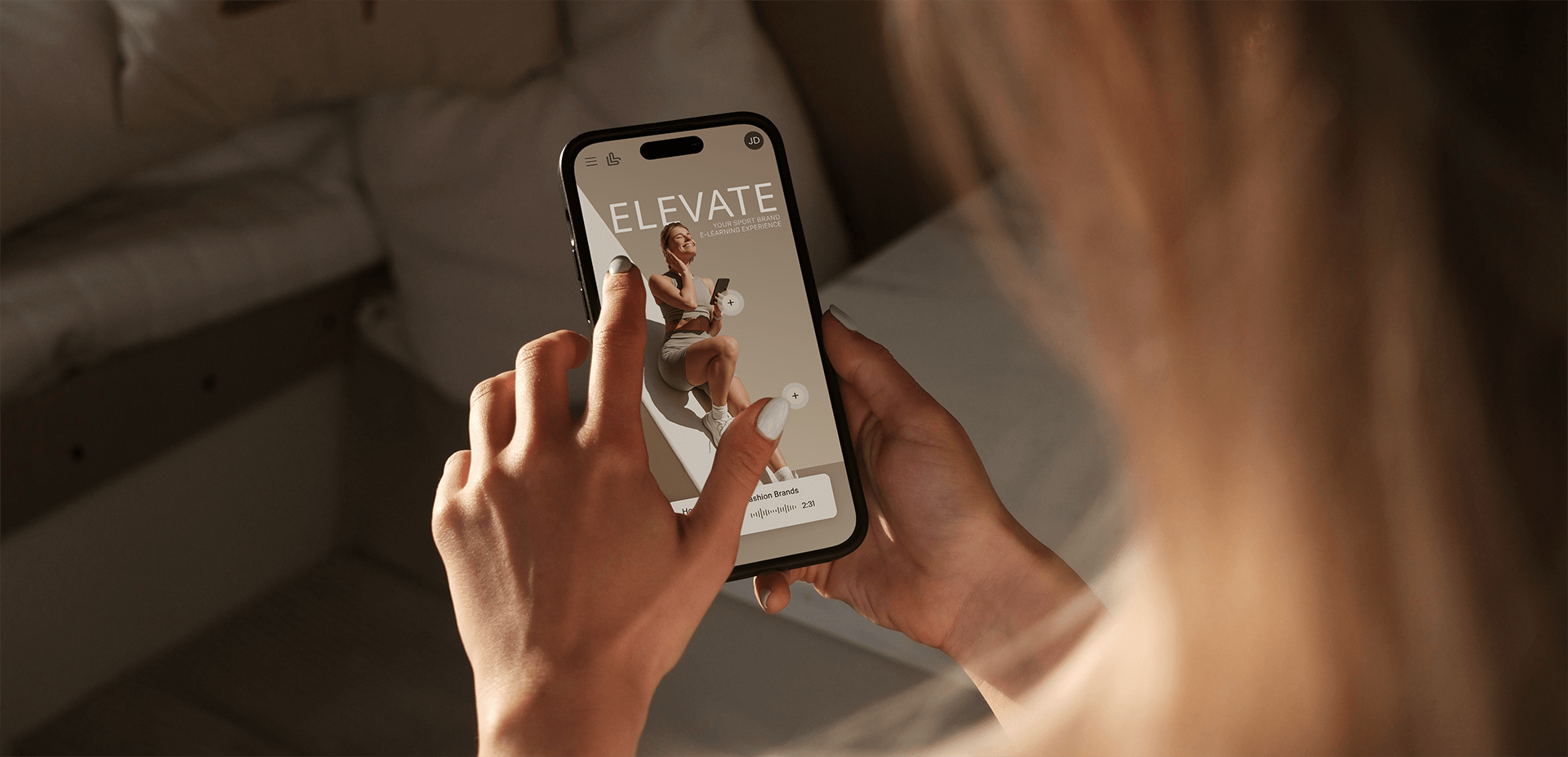
3. Branching scenarios that teach premium selling rituals
Use quizzes, decision paths, and video assessments to help staff practise the moments that actually define the client experience.
A strong gamification strategy should not stop at recall. It should train judgement. In luxury sportswear, some of the most important retail moments involve choices about tone, product framing, discovery questions, and how to connect technical details to a client’s lifestyle without sounding scripted.
This is why scenario based learning is so valuable. The Learning Lab feature page highlights branching, interactive assessments, video assessments, quizzes, hotspots, and interactive decision points, all of which can support structured missions where the learner must choose the next move in a realistic sales conversation.
Imagine a mission built around a premium running shoe. The learner meets three different client profiles on screen. One is fashion led and wants the silhouette first, one is performance obsessed and wants technical reassurance, and one is curious but skeptical about price. Each path requires different language, different proof points, and a different way of protecting brand tone.
That kind of design does more than test memory. It trains situational intelligence. The learner sees that product knowledge is not a pile of facts but a tool that must be used differently depending on the person in front of them.
Video assessments add another layer because they ask the learner to speak, present, or demonstrate. In luxury sportswear, that matters enormously because confidence, rhythm, posture, and clarity are part of performance, and they are hard to evaluate through text alone.
This is where gamification becomes genuinely useful. The mission structure creates tension and focus, the branching path creates consequence, and the assessment creates proof. The learner is not just passing through content. The learner is rehearsing brand behavior.
Build missions around real client scenarios rather than abstract theory.
Use branching paths to show that selling quality depends on judgement.
Add video responses to test confidence and delivery.
Make quizzes short and sharp so they reinforce decisions instead of interrupting them.
For a luxury sportswear brand, the sale is never only informational. It is performative, emotional, and highly contextual, which is exactly why scenario based gamification can raise the standard of frontline training so effectively.
4. Prestige based recognition through badges and leaderboards
Use recognition with restraint so competition strengthens pride, mastery, and consistency instead of creating noise.
Many luxury brands hesitate around gamification because they imagine bright animations, loud rewards, and a tone that clashes with brand sophistication. That concern is valid. Gamification only works in premium retail when recognition feels curated, elegant, and connected to real standards.
The answer is not to avoid recognition. The answer is to design it properly. Badges, leaderboards, and status markers can work in luxury sportswear when they are framed less as childish prizes and more as visible signals of mastery, launch readiness, service excellence, or storytelling quality.
The Learning Lab provides several of the foundations needed for this. Learning paths, reporting, notifications, group views, social learning, and manager visibility make it possible to track progress, spotlight strong contribution, and structure advancement across audiences and stores.
For example, a brand might award a badge for completing a seasonal launch path with high quiz accuracy, another for posting a high quality community styling response, and another for demonstrating strong performance in a video assessment. A leaderboard can then rank stores or teams by mission completion, challenge participation, or launch readiness rather than by raw points alone.
That distinction matters. In a premium environment, recognition should reinforce behaviors the brand genuinely values. The best leaderboard is not the loudest one. It is the one that encourages disciplined learning, healthy competition, and visible progress without reducing people to empty numbers.
Managers play an important role here. Since store manager views and analytics are part of the feature environment, recognition can be used as a coaching tool rather than a public stunt. A manager can see who is progressing, who needs support, and who deserves visibility for consistent quality.
Use badges to mark mastery, not just participation.
Build leaderboards around meaningful goals such as launch readiness or scenario performance.
Keep the visual tone refined and brand consistent.
Let managers use recognition as part of coaching and store culture.
Prestige works when it is earned. That is why recognition based gamification can fit luxury sportswear so well when the system celebrates expertise, confidence, and execution rather than superficial activity.
5. Data driven game loops that improve rollout and sell through
Use analytics, notifications, and group reporting to keep gamified learning tied to business outcomes instead of entertainment.
The fifth idea is the one that makes the rest commercially credible. A gamified learning strategy only earns its place when the brand can see what is working, where engagement is stalling, and how fast teams are getting launch ready across different regions and partner networks.
The Learning Lab feature page places strong emphasis on reporting and analytics, richer reporting, export functions, group metadata, project management, notifications, and integration support. That matters because gamification without visibility becomes theatre, while gamification with data becomes a way to improve execution.
This makes it possible to create repeatable game loops around real retail priorities. A brand can launch a mission, track completion by store group, identify which quiz question reveals the biggest product knowledge gap, send targeted reminders, and then adapt the next challenge based on what the data shows.
That loop is especially important in sportswear because content changes quickly. Seasonal drops, new technologies, athlete collaborations, and fabric innovations create a constant need for learning updates, and the sportswear training material from The Learning Lab stresses the importance of agile content creation and faster rollout.
Group reporting also helps brands manage complexity across owned retail and partners. A luxury sportswear maison may need one central view of performance while still comparing regions, franchise groups, or wholesale networks, and a retail first LMS makes that structure easier to manage.
This is also where gamification stops being a nice idea and becomes a sales support system. When the brand can see which stores completed training before a launch, which teams excel at scenario practice, and which markets need more reinforcement, learning starts to contribute directly to consistency and sell through.
Track mission completion and quiz results by audience and store group.
Use notification data to improve timing and participation.
Adjust the next challenge based on real learner behavior.
Connect training visibility to launch readiness and retail execution.
In luxury sportswear, speed is part of performance. Data keeps gamification honest by ensuring every challenge, badge, and mission feeds a sharper rollout and a better brand experience on the floor.

Luxury sportswear is growing because it speaks to how people want to live now, not only how they want to train.
That means brands need retail teams who can sell design, movement, performance, and identity with equal confidence, and that kind of ability does not come from static training alone.
Gamification offers a smarter route when it is designed with taste. Mobile launch missions, community challenges, branching scenarios, prestige based recognition, and data driven game loops can make learning more memorable, more social, and more commercially useful without compromising luxury tone.
That is why The Learning Lab feels like the right environment for this kind of strategy. Its feature set already brings together the elements that luxury sportswear brands actually need for modern training, including mobile app access, video and interactive content, social learning, branching, learning paths, notifications, reporting, and creative authoring strong enough to turn product education into a branded learning experience.
For a brand that wants gamification without gimmicks, The Learning Lab is a strong fit because it supports the emotional, visual, and operational side of retail learning at the same time. It gives sportswear maisons the structure to move fast, the flexibility to stay branded, and the tools to turn knowledge into a daily performance habit across stores and partners.
