

Product Training for Premium Retail: Turn Knowledge into Sales
Product Training for Fashion, Luxury, Cosmetic: Turn Knowledge into Sales
An associate knows a product’s specifications but hesitates when a customer asks, “Why is this right for me?”
That moment reveals the gap between remembering information and using it in a meaningful conversation. In fashion, luxury, and cosmetics, effective product training helps teams connect features with customer needs, tell relevant stories, demonstrate benefits, and exercise judgement when recommending.
Practice gives associates opportunities to develop these skills through realistic situations and feedback. Product knowledge then becomes a foundation for confidence, confidence supports thoughtful service, and thoughtful service creates stronger sales opportunities. The learning journey should prepare teams to explain each product’s value in a way that feels personal, accurate, and true to the brand.
Introduce the gap between remembering information and using it in a conversation.
Explain the importance of relevance, storytelling, demonstration, and judgement in premium retail.
Establish the article’s central connection: product knowledge → practice → confidence → effective service → sales opportunities.

Teach Customer Value, Not Just Product Features
Useful product training helps associates explain how a product’s qualities relate to what the customer wants.
Materials, ingredients, design, and craftsmanship become meaningful when connected with comfort, functionality, appearance, or personal preference.
Discovery questions establish that connection before a recommendation: how will the customer wear the garment, or what texture and finish do they prefer in a cosmetic product? Associates can then use accurate, brand-approved comparisons to explain the options clearly.
Brand heritage and product storytelling add context, helping customers understand the care and intention behind each choice. Through practical examples, teams learn to combine factual knowledge with a relevant explanation of value, making recommendations that feel considered, personal, and true to the brand.
Define what useful product training should help associates communicate.
Connect materials, ingredients, design, and craftsmanship with relevant customer benefits.
Explain differences between products through approved comparisons.
Combine factual knowledge with brand heritage and product storytelling.
Teach discovery questions before recommendations.
Examples: Explain how a garment’s construction suits a customer’s intended use, or compare cosmetic textures and finishes according to their preferences.
Create Product Training Faster with AI-Assisted Authoring
AI Assistant Authoring Tool
The Learning Lab’s AI Assistant Authoring Tool helps academy teams turn approved product briefs, launch materials, and brand resources into draft lessons.
It supports the development of learning objectives, product stories, video scripts, and knowledge checks, with variations for different roles and experience levels. This gives teams a starting point for each collection or campaign. The academy reviews and refines the output, retaining responsibility for product accuracy, creative direction, and publication approval.
Show how academy teams can use approved product briefs, launch materials, and brand resources to develop draft lessons.
Structure learning objectives, product stories, scripts, and knowledge checks.
Create variations for different roles and experience levels.
Keep product accuracy, creative direction, and publication approval with the academy.
Automatically Branded Content
AI-assisted creation works within approved branded templates, using established typography, colours, layouts, and visual assets to give training a recognisable identity across collections.
Reusable formats help teams maintain visual consistency while adapting content to new products and audiences. Automated formatting supports production; the brand team directs the story, checks the language, and approves the tone. The result is a faster creation process guided by the Maison’s standards.
Explain how AI-assisted creation works within approved branded templates.
Apply established typography, colours, layouts, and visual assets.
Maintain a recognisable learning experience across collections.
Distinguish automated formatting from editorial judgement: the brand still approves the story and tone.
Internal link: The Learning Lab’s authoring tool and branded slide gallery.
Use Adaptive Learning to Address Individual Knowledge Gaps
New associates often need a foundation in brand identity, product essentials, and service behaviours, while experienced advisors may need focused updates or practice around specific products.
The Learning Lab’s adaptive learning approach uses roles, progress, and assessment results to guide relevant next steps. An associate who understands a collection’s story but struggles to explain product differences can receive a targeted refresher or activity. Learning depth adapts to individual needs while shared brand standards remain consistent.
The academy defines the available pathways, content, and recommendation rules, keeping each journey aligned with its objectives. This helps teams focus their learning time where further understanding and practice are needed.
Explain why new associates and experienced advisors need different learning support.
Use roles, progress, and assessment results to guide relevant next steps.
Offer focused reinforcement where understanding is incomplete.
Adapt depth while retaining shared brand standards.
Keep learning pathways and recommendations within academy-defined rules.
Internal link: Hybrid adaptive learning in premium retail.
Turn Product Knowledge into Action with Activity-Based Learning
Activity-based learning gives associates opportunities to use product knowledge in tasks that reflect customer interactions.
They might match products to a customer brief, build a styling selection, or explain a cosmetic application sequence using approved guidance. Recording a product demonstration or recommendation makes their understanding visible: managers can assess accuracy, relevance, and delivery, then provide specific feedback.
Within The Learning Lab, these activities connect digital lessons with store coaching, giving teams a clear progression from learning to practice and refinement. Associates develop their ability to explain choices, demonstrate benefits, and adapt recommendations to customer needs before applying those skills on the floor.
Show how practical tasks help associates demonstrate understanding.
Match products to customer briefs.
Build a styling selection or explain a cosmetic application sequence.
Record a product demonstration or recommendation.
Use manager feedback to refine accuracy, relevance, and delivery.
Position activities as a bridge between digital lessons and store coaching.
Internal link: Designing online retail training activities.
Practise Customer Decisions with Branching Scenarios
Branching scenarios let associates rehearse customer conversations and explore how their choices shape the interaction.
Each scenario begins with a need or question, then asks learners to choose discovery questions, explanations, and recommendations. In fashion, a customer may like a garment but question its price, prompting the associate to explore their priorities and explain relevant value.
In cosmetics, a customer choosing between two finishes gives the associate an opportunity to clarify preferences, compare approved benefits, and propose a demonstration. The Learning Lab’s branching scenarios provide feedback and opportunities to try another approach, helping learners refine their judgement. This practice connects product knowledge with listening, thoughtful recommendations, and personalised service.
Develop branching scenarios as realistic opportunities to rehearse conversations.
Begin with a customer need or question.
Let learners choose discovery questions and recommendations.
Show how choices affect the conversation.
Provide feedback and opportunities to try another approach.
Fashion scenario: A customer likes a garment but questions its price. The associate chooses how to explore their priorities and explain relevant value.
Cosmetics scenario: A customer is choosing between two finishes. The associate asks questions, compares approved product benefits, and proposes a demonstration.
Feature reference: Branching scenarios in the authoring tool.
Support Understanding with an AI Learning Coach
The Learning Lab’s AI Learning Coach helps associates clarify questions and reinforce their understanding of approved training content.
When a product distinction or service concept remains unclear, learners can ask for an explanation, revisit the relevant material, and identify useful follow-up learning. This support helps them prepare for practical exercises and make better use of coaching time.
For example, an associate might clarify the differences between two products before practising a customer recommendation with their manager. The AI Learning Coach works alongside activities and human feedback, supporting understanding while store coaching develops judgement, delivery, and confidence in real customer interactions.
Explain the AI Learning Coach’s role in helping associates clarify and reinforce learning.
Support questions about approved training content.
Help learners revisit concepts they find difficult.
Connect questions with relevant follow-up learning.
Position AI support alongside practical exercises and human coaching.
Keep the article focused on support grounded in the brand’s validated knowledge. The Learning Lab’s approach to learner assistance.
Make Product Resources Easier to Find with AI-Enhanced Search
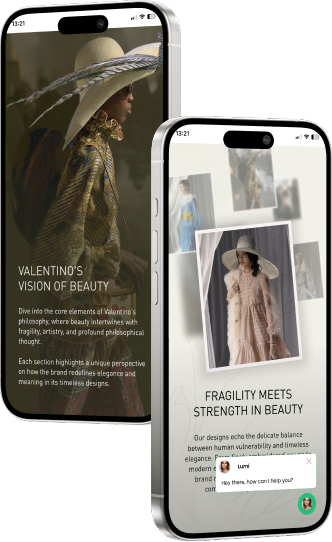
AI-enhanced search helps associates locate relevant product resources when questions arise, from garment care instructions and approved comparisons to cosmetic application guidance and collection stories.
Its usefulness depends on current, validated source material, making content review and updates an essential part of the academy’s work.
Finding an answer supports immediate preparation; developing the skill to explain or demonstrate it requires learning and practice. An associate might retrieve care guidance quickly, then revisit a demonstration or complete a related activity to understand how to communicate it clearly.
Within The Learning Lab, search connects access to information with the wider learning journey, helping teams move from a specific question towards deeper understanding and confident application.
Distinguish finding information from developing a skill.
Show how AI-enhanced search can help associates locate relevant product resources.
Use examples involving care instructions, comparisons, application guidance, and collection stories.
Explain the importance of current, approved source material.
Connect quick access with deeper learning when an answer requires further explanation.
Reinforce Key Knowledge with InstaLearn
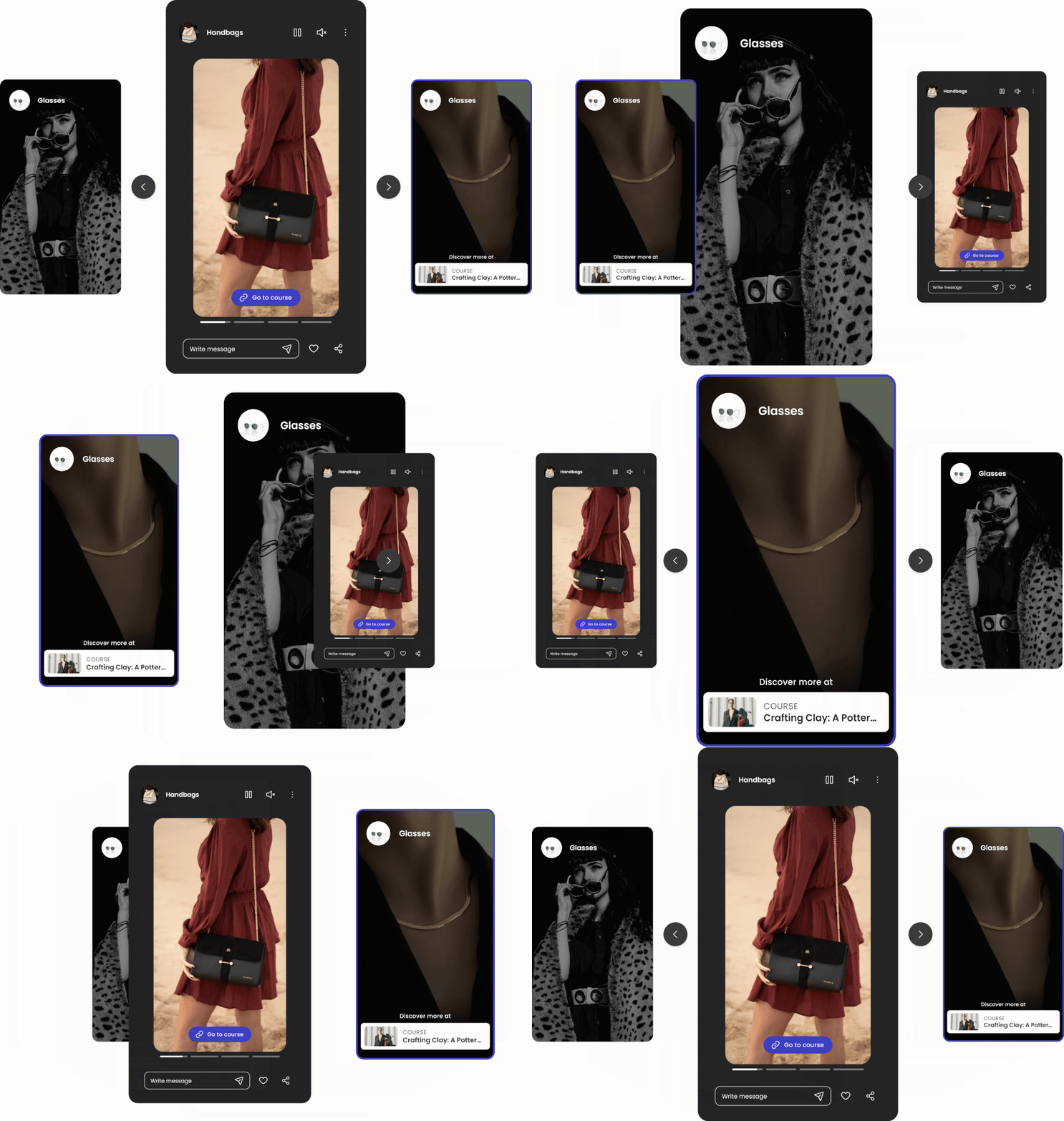
InstaLearn brings focused mobile learning into the rhythm of the retail day, helping associates prepare for launches and refresh knowledge between customer interactions.
Short product stories introduce what makes a new item distinctive, while videos, visual content, and interactive checks reinforce key differences, demonstrations, and relevant selling points.
Each learning moment has a clear purpose, such as reviewing a product benefit or revisiting an application technique. Within The Learning Lab, InstaLearn connects these refreshers with deeper modules, practical activities, and manager coaching. This gives teams opportunities to revisit essential knowledge and strengthen its application as collections evolve and new customer questions arise.
Explain how short mobile learning supports preparation and recall within the retail day.
Introduce focused product stories before launches.
Refresh key differences, demonstrations, or selling points.
Use short videos, interactive checks, and visual content.
Connect InstaLearn with deeper modules, activities, and coaching.
Feature reference: InstaLearning and interactive formats.

Show the Complete Journey: From Product Brief to Boutique Practice
For a new fashion collection, the academy starts with approved product details, collection stories, and care guidance.
The AI Authoring Assistant supports draft creation, while branded templates shape the materials into a consistent learning experience. Adaptive learning guides associates towards preparation suited to their roles and knowledge gaps.
They then practise matching garments to customer needs and navigate branching scenarios, such as responding to a question about price. The AI Learning Coach helps clarify concepts, while AI-enhanced search makes relevant resources easier to find. Before and after launch, InstaLearn refreshes key product stories and selling points through focused mobile content.
Managers complete the journey by observing recommendations on the floor, providing feedback, and identifying where further practice is needed.
Bring the assets together through one illustrative collection launch.
The academy selects approved product information.
The AI Authoring Assistant supports draft creation.
Branded templates shape the learning materials.
Adaptive learning guides relevant preparation.
Activities and branching scenarios provide practice.
The AI Learning Coach and search support questions.
InstaLearn reinforces key messages before and after launch.
Managers observe application and provide feedback.
Include localisation and local review where the launch spans several markets.
Measure Application and Refine the Next Launch
Assessing product training means checking how knowledge translates into customer-facing behaviour.
Knowledge checks, branching-scenario decisions, and practical assessments show where associates understand the content and where they need further practice. Confidence checks add context, while manager observations help verify the accuracy, relevance, and delivery of recommendations.
Reviewing readiness by product, role, store, and market helps teams target support. Where reliable data is available, conversion, sell-through, and customer experience can be examined alongside learning results, taking stock, footfall, promotions, and seasonality into account. These findings guide improvements to content, adaptive follow-ups, and coaching, giving the academy a stronger foundation for preparing teams for the next launch.
Explain how teams assess whether knowledge is becoming useful behaviour.
Track knowledge checks, scenario decisions, and practical assessments.
Combine confidence checks with manager observations.
Review readiness by product, role, store, and market.
Examine conversion, sell-through, and customer experience where reliable data is available.
Consider stock, footfall, promotions, and seasonality when interpreting commercial results.
Use findings to improve content, adaptive follow-ups, and coaching.
Conclusion: Make Product Knowledge Useful at the Moment of Sale
Product training creates value when associates can explain a product clearly, connect its benefits with customer needs, and make thoughtful recommendations.
Faster branded creation helps academies prepare content on time. Relevant learning paths and realistic practice help teams develop their skills, while accessible support and mobile reinforcement keep knowledge available as questions arise.
The Learning Lab brings these elements together: AI-assisted authoring and branded templates support production; adaptive learning, activities, and branching scenarios guide preparation; the AI Learning Coach, search, and InstaLearn support continued understanding. The academy directs the content, protects the brand’s voice, and approves the learning experience. Store teams bring that knowledge to life through demonstrations, personalised conversations, and service at the moment of sale.
Close by connecting faster branded creation, relevant learning paths, realistic practice, accessible support, and mobile reinforcement.
Position The Learning Lab as the environment that brings these elements together, with the academy directing the content and store teams applying it in customer interactions.