

Video Training for Apparel Teams
Video Training for Apparel Teams: What Works Between Two Clients
Apparel training that works is the training an associate can finish between two clients. Not a classroom. Not a 12-minute film.
A short, visual video on their phone 30 seconds to two minutes that they can use in the next conversation.
Fashion is sold with the eyes: fit, fabric, drape, how a piece moves, who it is for, what to pair it with. A vertical clip, a 60-second expert film, a hotspot on a jacket, or a two-question video quiz can show that in the time it takes to straighten a table.
The rule is simple. One idea, one garment, one line to say on the floor. If they cannot finish it before the door opens again, it is not store training.
The videos that stick are the ones that respect the floor: mobile, branded, shot on the product, and built so the associate walks back to the client able to style, explain, and sell not only to say they “did the module.”
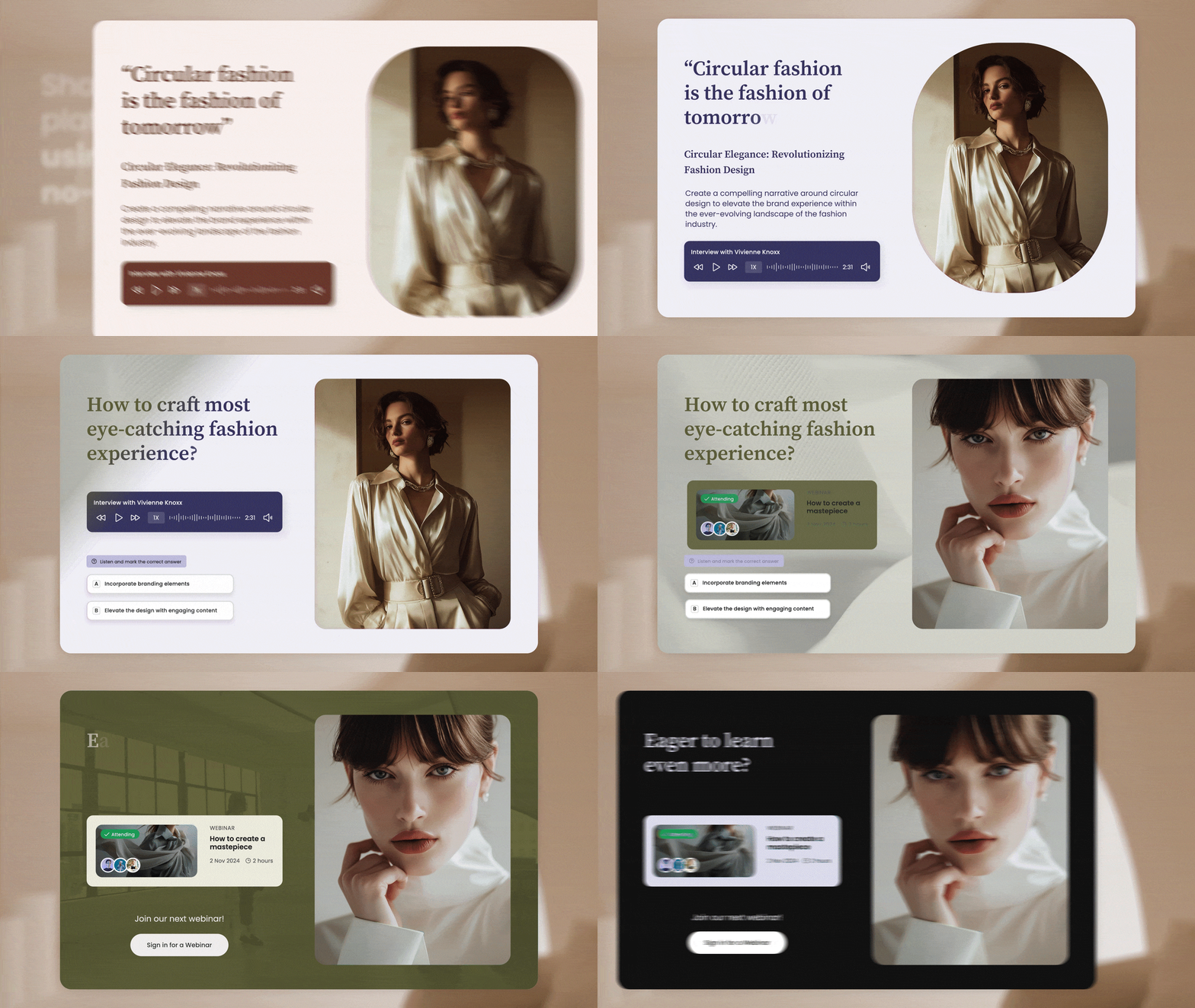
The real constraint: apparel training happens between two clients
The associate is not in a classroom. They are on the floor, between two clients.
That is the real constraint of apparel training, and most video programmes ignore it.
Attention is 30 seconds to 3 minutes the time to reset a table, fold a jumper, or wait for the next person through the door. A 12-minute module never starts.
A PDF never gets opened. Fashion is visual: fabric, fit, drop, look. Text cannot replace seeing how a piece sits on the body or how a new collection should be worn. The best video for apparel is not the most beautiful film from HQ.
It is the one they can finish before the door opens again — short enough to complete, clear enough to use, and close enough to the product that the next conversation is already better.
Summary
- They are not “in training” — they are between two clients; the floor always comes first
- The window is 30 seconds to 3 minutes — that is the real session length, not the academy calendar
- Long modules do not fail in theory — they fail because they never get pressed play
- A 12-minute course is homework — it does not belong in the gap between two shoppers
- Apparel is visual — fabric, fit, drop and look have to be seen, not only described
- Text cannot do this job — a spec sheet does not show drape, styling, or how to sell the piece
- The test is simple — can they finish the video before the next client walks in?
- The best video is the shortest useful one — one idea, one garment, one line they can use immediately
- Design for the interruption — mobile, vertical, easy to stop and still worth having started
- If it misses this constraint, it misses the store — beautiful content that never fits the shift is not training
Why apparel is different: you are not training a spec, you are training a look
Apparel is not like other retail, and generic LMS video treats it as if it were.
Product changes fast drops, seasons, capsules so knowledge has a short life. What was right last month is already in the back.
The knowledge itself is tactile: handfeel, drape, stretch, care. You cannot learn that from a paragraph. Selling is styling, not a spec sheet. The associate does not win by reciting composition. They win by knowing who the piece is for, how to wear it, and what to put with it. Brand tone matters as much as facts.
The wrong sentence, even with the right product, sounds off the House. That is why a talking head plus a quiz does not survive Saturday. It was built for a desk, not for a boutique in motion. Apparel training has to move at the speed of the range, show the garment as it is worn, and give people language that sounds like the brand or it will be skipped the moment the floor gets busy.
Summary
- The range does not sit still — drops, seasons and capsules make last month’s module obsolete
- Speed is part of the job — training has to land as fast as the product hits the floor
- Knowledge is tactile — handfeel, drape, stretch and care cannot be learned from text alone
- People need to see the garment move — fit and fabric only make sense on a body, in a video
- Selling is styling — who it is for, how to wear it, what to pair; not a list of specs
- The spec sheet does not close — clients buy a look and a feeling, not a composition line
- Tone is as important as facts — the House has a voice; the wrong phrase breaks the brand
- Generic LMS video fails here — a talking head and a quiz were built for an office, not a boutique
- Saturday is the real test — if it cannot be used on a busy floor, it is not apparel training
- Different product, different film — apparel needs short, visual, on-brand video, refreshed as often as the collection
What works between two clients: five video formats, one outcome each
On the floor, apparel teams do not need a full course. They need the right format for the next 90 seconds.
InstaLearn and vertical video win for a look of the week, a new drop, or one styling rule: one message, swipe, done it feels like content they already watch. 60-second expert films put the buyer, the stylist, or a top seller in frame with the garment: who this piece is for, why it exists, the line to use not a studio lecture.
Video hotspots let people tap the shoulder, the fabric, the lining, the wash; they are made for denim, tailoring, outerwear, and anything with construction. Video quizzes add two or three questions after a short clip on fit, care, or a selling point, so you know they are ready without stealing the shift.
Mini branching is worth it only if it stays short: “too expensive,” “too tight,” “not my style” — one path, 90 seconds, one better answer. The mistake is to dump every format into every module. Between two clients, the rule is strict: one format, one outcome. If they can use it in the next conversation, it worked. If they have to “come back later,” it did not.
Summary
- One format, one outcome — between two clients, do not stack a film, a quiz, hotspots and a scenario in the same sitting
- If it needs a back office, it is the wrong format — design for the phone, the floor, and an interruption
InstaLearn / vertical video
- What to film: look of the week, new drop, one styling rule, one client line
- How it works: one message, swipe, done — as natural as a story they already watch
- What not to do: carousels of 15 cards, HQ text on a still pack shot, anything that needs sound on for three minutes
60-second expert films
- What to film: buyer, stylist or top seller with the garment in frame — who it is for, why it exists, what to say
- How it works: authority and emotion in one minute; the face and the product together
- What not to do: studio lectures, talking heads with no piece in shot, “collection overviews” that run past 90 seconds
Video hotspots
- What to film: shoulder, fabric, lining, wash, seam, technical detail — the parts they will touch with a client
- How it works: tap to learn; ideal for denim, tailoring, outerwear and technical apparel
- What not to do: 20 hotspots on one still, details nobody can use in a sale, hotspots that open long videos
Video quizzes
- What to film: a short clip on fit, care or the selling point, then 2–3 questions
- How it works: proves they are ready; does not steal the shift
- What not to do: 15-question tests, trick questions, quizzes with no video of the actual garment
Mini branching
- What to film: one objection — too expensive, too tight, not their style — and one better answer
- How it works: 90 seconds, one path, practise the conversation before it happens

What to put in the video: five shots that earn their seconds
Apparel video does not fail because it is too short. It fails because it shows the wrong thing. Between two clients, every second has to sell.
Five shots always earn their place. First, the piece on a body fit, length, movement — so the associate sees how it actually wears, not how it hangs on a rail. Second, the fabric close-up — handfeel you can see: drape, texture, stretch, shine. Third, how to wear it one or two outfits, not a lookbook of twelve that nobody will remember.
Fourth, the client line the exact sentence for the floor, in the tone of the brand. Fifth, the alternative if this piece is not right, what to show next, so the conversation does not die. Add care, size advice, and what not to say: discount as a first reflex is not selling.
Film these, cut the rest. A video that shows a garment, a feel, a look, a line, and a next step is training the associate can use before the door opens again.
Summary
- Every second must sell — if a shot does not help the next client conversation, cut it
- Show the garment as it is worn — not only as it is packed, hung, or described
1. The piece on a body
- Fit, length, movement — how it sits, walks and moves
- A rail shot cannot replace a body
- What not to do: mannequin-only, static front view, no sense of proportion
2. The fabric close-up
- Handfeel you can see: drape, texture, stretch, weight, shine
- This is what the client will touch; the associate must already know it
- What not to do: a composition line on screen instead of the cloth itself
3. How to wear it
- One or two outfits, clearly styled, easy to copy on the floor
- Selling is styling: who it is for, what to pair
- What not to do: a lookbook of 12 — too many looks, nothing sticks
4. The client line
- One exact sentence they can say, in the tone of the House
- Facts without language do not close
- What not to do: a paragraph of talking points they will never remember
5. The alternative
- If it is not right — too tight, too formal, not their style — what to show next
- Keeps the conversation alive; protects the sale
- What not to do: a dead end that leaves the associate (and the client) stuck
Always add, never let it take over
- Care — how to keep it, in one line
- Size advice — who should size up, where it fits close
- What not to say — discount as the first reflex is not selling; show value first
The edit test
If the associate can name the fit, the feel, the look, the line, and the next piece — the video is long enough. Anything else is decoration.
How to produce without killing the academy
Apparel academies do not stall because they lack ideas. They stall because production is too heavy for the speed of the range.
The way through is to film like the store works. Shoot on the floor or in the stockroom: real light, real garment, no studio wait.
Script to one idea and cut the rest. Shoot vertical first, for the phone; horizontal only if the film will never be used between two clients. Drop weekly, like a collection — small and frequent, not one big launch that arrives after the product has already sold. Then reuse: one expert film becomes three InstaLearn cards and one quiz.
Local language can come later; the picture is already global. That is how you keep the academy alive when the floor is moving. Less ceremony, more drops, same brand. Training that can be made this week is training that will actually be used this week.
Summary
- Production is the bottleneck — not talent, not ideas; a process that is slower than the collection
- If it takes a studio and a month, the range has already moved on
Film where the work is
- Floor or stockroom: real light, real garment, real context
- Associates recognise the space; clients will see the same product
- What not to do: wait for a campaign crew, a set, and a perfect day
Script to one idea
- One garment, one message, one line for the floor
- Cut everything that does not help the next conversation
- What not to do: “collection overviews” that try to say everything and teach nothing
Vertical first
- Phone is the classroom; between two clients is the session
- Horizontal only if it will never be used on the floor
- What not to do: produce for a laptop and hope people watch it in the boutique
Drop weekly, like a collection
- Small and frequent beats one big launch
- Matches how apparel already works: drops, not annual catalogues
- What not to do: hold everything for a “proper” academy release after the product is out
Reuse once, publish three times
- Expert film → 3 InstaLearn cards → 1 quiz
- Same knowledge, three formats, no extra shoot
- What not to do: shoot a new film for every format from scratch
Picture first, language second
- The image of fit, fabric and look already travels
- Local language later; do not block the drop for every market
- What not to do: delay the whole network while one translation is pending
The academy test
If you cannot film it this week and put it on the phone, the process is killing the training — not protecting it.
Why The Learning Lab is the leader in video training for apparel teams
The Learning Lab is the leader because it was built for the constraint every apparel academy actually has: the associate is between two clients. Generic LMS platforms deliver courses.
We deliver a retail-first, video-first academy that fits a phone, a boutique, and a 90-second gap. Fashion, luxury and apparel need more than a talking head and a quiz.
They need InstaLearn, expert films, hotspots, short assessments and live client conversations — branded like the House, not like HR. Production has to move with the drop, not against it: film this week, publish this week, reuse one shoot across cards, quizzes and the floor.
That is why maisons trust us. We do not ask teams to leave the store in order to learn the store.
We make training that looks like the brand, works on the floor, and changes the next conversation. Leadership, here, is not a feature list. It is being the only LMS that treats apparel as apparel visual, fast, tactile, and sold between two clients.
Summary
- Retail-first, not a corporate LMS in a new skin — designed for boutiques, drops, and frontline teams, not for desk learning
- Built around the real session — 30 seconds to 3 minutes, on a phone, between two clients
- Apparel is the job, not a vertical we added — fashion, luxury, beauty, sport and lifestyle are the core, not an afterthought
- Video that sells, not video that fills a catalogue — garment on a body, fabric close-up, how to wear it, the client line, the alternative
- The formats that survive Saturday — InstaLearn, 60-second expert films, hotspots, video quizzes, short branching — one format, one outcome
- On-brand enough for a Maison — white-label, campaign-level design; training that looks like the House
- Fast enough for the range — no-code authoring, weekly drops, one film reused as cards and a quiz
- Global without slowing the floor — picture first, AI translation later; the same story in every door
- Proof, not hope — assessments and analytics that show who is floor-ready before the collection goes live
- A creative partner, not only a platform — academies stay alive because production, pedagogy and brand sit together
- Trusted by brands that cannot look generic — discreet, premium, built so the customer never meets an associate who “did the module” but cannot sell the piece
The difference in one line
Others ask apparel teams to adapt to the LMS. The Learning Lab adapted the LMS to the floor.