

From Retail Training Storytelling to StoryProving
From Storytelling to product-Proven Experience Focuses on client interaction and tangible impact.
In modern retail, product storytelling alone is no longer enough, what truly drives performance is the ability to translate that story into a tangible, client-proven experience.
Advisors must not only understand the inspiration, ingredients, or craftsmanship behind a product, but also demonstrate its value through meaningful client interactions: recommending the right product at the right moment, explaining its relevance, and adapting the message to individual needs.
This shift from storytelling to product-proven experience ensures that knowledge becomes action. When teams actively apply product knowledge in real conversations, demonstrations, and rituals, clients don’t just hear the story—they feel its relevance. The result is stronger trust, higher conversion, and more memorable brand experiences built on proof, not promises.
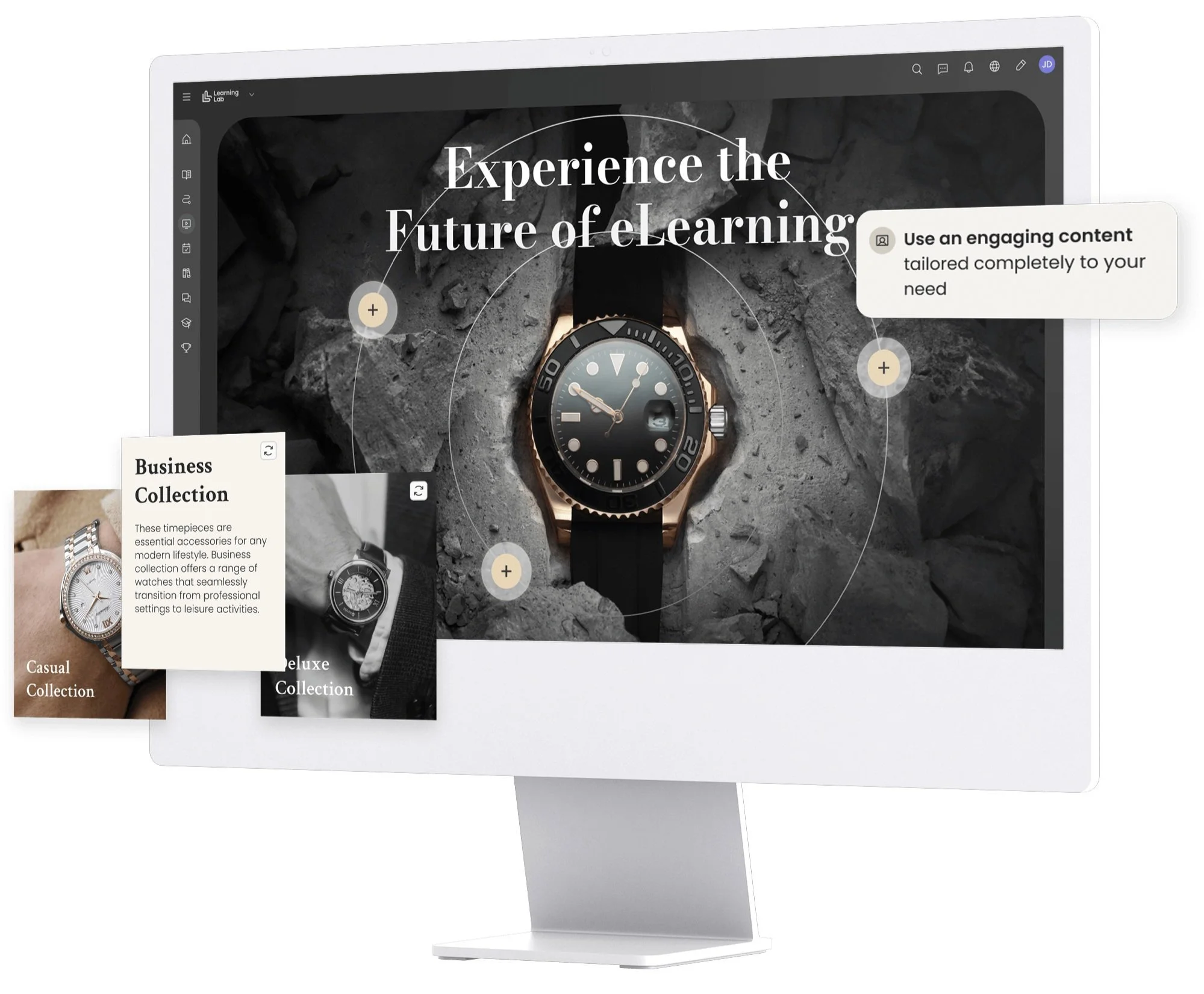
What Is a Product-Proven Experience in Retail Training?
A product-proven experience in retail training occurs when learning moves beyond theoretical knowledge and prepares advisors to apply product expertise confidently in real client situations.
Instead of memorising features or brand narratives, training focuses on enabling advisors to translate product knowledge into relevant, personalised conversations. Through practice, scenarios, and applied learning, advisors learn how to connect product attributes to individual client needs, preferences, and emotions.
In this approach, training develops not only knowledge, but the ability to use that knowledge effectively. Advisors learn how to demonstrate value, build credibility, and create meaningful client interactions.
As a result, the product is no longer just understood—it is experienced through confident storytelling, relevant recommendations, and authentic engagement. This leads to stronger advisor confidence, deeper client trust, and ultimately improved retail performance.
The Limits of Storytelling Alone
Storytelling has always been at the heart of premium and luxury retail training.
Teams are taught the heritage of the Maison, the craftsmanship behind each product, the origin of materials, and the design vision that defines the brand.
This knowledge is essential—but knowledge alone does not guarantee performance. Advisors may understand the story, yet still struggle to translate it into meaningful, relevant conversations with clients. The true differentiator today is not what advisors know, but what they are able to do with that knowledge in real situations.
Retail training must therefore evolve beyond storytelling toward story-proving—equipping teams to apply product knowledge dynamically, adapt to each client, and demonstrate value through interaction. The future of retail training is not measured by content delivered, but by the advisor’s ability to bring the story to life in a way that creates relevance, confidence, and conversion.
Why This Shift Is Critical in Modern Retail Training
Modern retail training must evolve to reflect a new reality: both clients and learners are more informed, more selective, and have less time than ever before.
Attention spans have dropped significantly, with studies showing the average focused attention window is now under 8 seconds, while expectations for personalisation continue to rise. At the same time, research demonstrates that learners retain up to 75% more information through active participation compared to passive listening.
This has a direct impact on performance, as advisor confidence built through applied practice rather than theoretical knowledge is one of the strongest predictors of sales success.
Advisors who can clearly translate product knowledge into relevant, client-centered benefits create stronger emotional connection, trust, and differentiation, ultimately driving higher conversion rates and client loyalty. Storytelling builds awareness, but product-proven experience builds capability, confidence, and measurable retail performance.
Research shows:
People retain up to 75% more information through active participation vs passive listening
Confidence is one of the strongest predictors of sales performance
Advisors who can clearly articulate product relevance drive higher conversion rates

The Role of Retail Training: Moving from Knowledge to Application
Traditional retail training has long focused on transmitting information—product features, technical specifications, and brand history.
While this knowledge is essential, it is often delivered in a passive format, with limited opportunities for practice, simulation, or real-life application. As a result, advisors may understand the product in theory but struggle to translate that knowledge into confident, relevant client conversations. This creates a critical gap between knowing and doing, where information exists but cannot be effectively activated on the shop floor.
Effective retail training must move beyond knowledge transfer to enable practical application. Advisors need opportunities to practice client interactions, test different approaches, and apply product knowledge in realistic scenarios that reflect the complexity of real retail environments.
Through active learning, repetition, and simulation, advisors develop reflexes, confidence, and the ability to adapt their message to each client. This shift transforms training from a passive experience into a performance driver—ensuring that knowledge becomes action, and action becomes measurable business impact.
How Activity-Based Learning Enables Product-Proven Experience
Activity-based learning transforms product knowledge into real capability by placing advisors in situations where they must act, decide, and apply what they know.
Instead of passively consuming information, learners engage in realistic scenarios that mirror the complexity of client interactions.
This approach strengthens decision-making, builds confidence, and develops the ability to translate product knowledge into meaningful, personalised conversations.
By practicing in context, advisors move from understanding products intellectually to demonstrating their value convincingly on the shop floor.
Examples of effective activity-based learning approaches include:
Branching scenarios
Learners navigate realistic client situations, make decisions, and immediately see the impact of their choices, strengthening judgment and adaptability.
Role-play simulations
Advisors practice conversations in a safe, guided environment, building confidence and refining their ability to respond to client needs naturally.
Interactive video training
Learners observe expert demonstrations and actively engage through questions, choices, or analysis, improving observation skills and behavioral alignment.
NanoLearning and InstaLearning modules
Short, focused learning bursts reinforce key product knowledge and selling reflexes in formats that fit naturally into the retail day.
Photo and video assessments
Advisors submit real-life examples from the shop floor, validating their ability to apply training and demonstrating tangible performance in context.
Together, these approaches ensure that learning does not remain theoretical. They create repeated opportunities for application, reinforcement, and feedback—enabling advisors to deliver product-proven experiences that increase confidence, client engagement, and ultimately conversion.

The Role of Managers: Reinforcing Application on the Shop Floor
Managers are the essential bridge between training and real performance.
While learning platforms provide knowledge and practice opportunities, it is managers who ensure that learning translates into consistent, high-quality client interactions. By observing advisors on the shop floor, managers can identify strengths, detect gaps, and provide timely, targeted coaching that reinforces the correct application of product knowledge in real situations.
This ongoing feedback loop transforms training from a theoretical exercise into a living process embedded in daily work. When managers actively coach, they help advisors refine their conversations, adapt their approach to different client profiles, and build the confidence needed to apply product knowledge naturally and effectively.
Most importantly, effective managers understand that training does not end when a module is completed. It continues through observation, feedback, and reinforcement over time. This continuous cycle ensures that knowledge becomes behavior, and behavior becomes performance.
Learning + Practice + Coaching = Performance.
When these three elements work together, advisors not only know the product—they know how to bring it to life for every client.
Technology as an Enabler: From LMS to Performance Platform
Technology plays a decisive role in enabling the shift from knowledge delivery to real performance.
Traditional LMS platforms were designed primarily to distribute content and track completion. However, modern retail environments require far more than static courses. Today’s LMS must actively support the application of knowledge, reinforce behavior, and empower teams directly within their daily workflow.
To achieve this, modern retail learning platforms must provide interactive, experience-driven learning, including scenario-based training, interactive video, and activity-based formats that allow advisors to practice real client situations. Mobile access is essential, enabling teams to learn, review product information, and receive guidance directly on the shop floor, exactly when it is needed. Integrated coaching and feedback tools allow managers to support their teams continuously, reinforcing learning through real observation and conversation.
Equally important is real-time performance data, which gives organizations visibility into engagement, skill development, and readiness. This data allows brands to move beyond completion metrics and focus on what truly matters: confidence, application, and business impact.
In this new paradigm, the LMS is no longer simply a content repository. It becomes a performance enablement platform—one that connects learning, practice, coaching, and performance into a continuous, measurable cycle.
This is precisely the vision behind platforms like The Learning Lab: transforming retail training from passive content consumption into an active system that empowers advisors, supports managers, and ultimately elevates client experience and business performance.
Business Impact: What Happens When Training Moves to Product-Proven Experience
When retail training shifts from passive knowledge delivery to product-proven experience, its impact becomes directly visible on the shop floor and in business performance.
Advisors who actively practice applying product knowledge develop stronger confidence, clearer communication, and greater credibility with clients. This confidence translates into more natural, relevant conversations—one of the strongest drivers of conversion and client trust.
Organizations adopting application-focused training consistently see measurable improvements across key performance indicators. Advisor confidence increases, enabling teams to engage clients more effectively and handle objections with clarity. Conversion rates improve, as advisors are able to connect product features to meaningful client benefits rather than relying on generic descriptions. The quality and consistency of product storytelling becomes stronger, ensuring every client interaction reflects the brand’s standards, regardless of store or region.
This approach also significantly reduces time to performance for new hires. Instead of waiting months to gain confidence through trial and error, advisors build reflexes faster through guided practice, simulation, and coaching. As a result, teams reach operational readiness sooner, improving both productivity and client experience.
Ultimately, training evolves from a support function into a strategic performance driver. Learning is no longer disconnected from business—it becomes one of the most powerful levers to improve client engagement, strengthen brand execution, and drive measurable retail results.

Conclusion: From Storytelling to Product-Proven Experience
In today’s retail landscape, storytelling remains important but it is no longer enough. Clients expect relevance, clarity, and tangible value in every interaction.
What differentiates high-performing brands is not the beauty of their narrative, but the advisor’s ability to transform that narrative into meaningful, personalized engagement.
A product-proven experience shifts the focus from what we say about the product to how we bring it to life for each client. It ensures that product knowledge is not simply delivered, but activated—through confident conversations, thoughtful recommendations, and real-time adaptation to client needs.
When training supports this shift, the impact becomes measurable. Advisors gain confidence. Client interactions become more precise and relevant. Conversion improves. Loyalty deepens.
Storytelling builds awareness.
Product-proven experience builds trust.
And in modern retail, trust is what ultimately drives performance and long-term brand value.